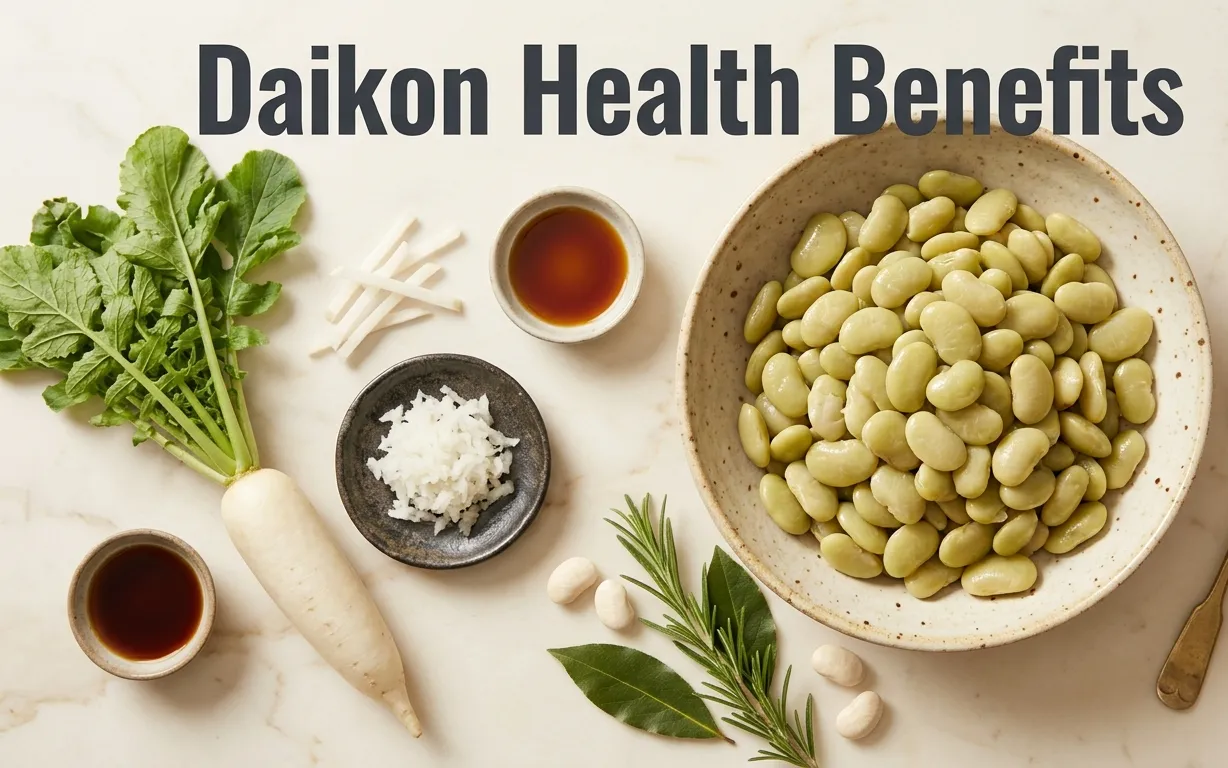
Daikon Health Benefits: Evidence-Based Guide to This Root Vegetable for 2026
Daikon radish delivers a concentrated set of digestive enzymes, immune-supportive vitamin C, and sulfur-based compounds with documented anti-inflammatory activity, all inside a root vegetable that contains roughly 18 calories per 100 grams. The health benefits tied to daikon are not folkloric or vague. They trace back to specific named compounds, including myrosinase, glucosinolates, and the enzyme diastase, each of which has been isolated, identified, and studied in laboratory and human research.
According to the USDA FoodData Central database, a one-cup serving of raw sliced daikon provides 124 percent of the Daily Value for vitamin C at 22 milligrams per 100 grams of raw weight. That same 100-gram portion delivers 227 milligrams of potassium and small but meaningful amounts of folate, calcium, and magnesium, all for under 20 calories. A 2022 study published in the Journal of Agricultural and Food Chemistry profiled the glucosinolate content of daikon and identified glucoraphanin, glucoerucin, and glucobrassicin at concentrations that varied by cultivar and growing region, with Japanese daikon varieties showing the highest total glucosinolate levels among the samples tested.
This article walks through what daikon actually contains, how its specific compounds interact with human physiology, which health claims have solid research behind them and which do not, and who should be cautious about adding large amounts of daikon to their diet. You will learn the difference between daikon and standard red radish, how cooking changes the nutrient profile, and what a practical serving size looks like whether you eat it raw, pickled, or stir-fried.
Daikon Radish Nutrition Facts
Daikon radish provides vitamin C, potassium, and digestive enzymes in a low-calorie, high-water package that makes it one of the most nutrient-dense vegetables per calorie. A 100-gram serving of raw daikon contains approximately 18 calories and is 94 percent water by weight.
According to the USDA FoodData Central database, the nutritional profile per 100 grams of raw daikon radish is as follows:
| Nutrient | Amount per 100 g Raw | Amount per 1 Cup Sliced (116 g) | Daily Value |
|---|---|---|---|
| Calories | 18 kcal | 21 kcal | 1% |
| Protein | 0.6 g | 0.7 g | 1% |
| Total Fat | 0.1 g | 0.1 g | <1% |
| Total Carbohydrate | 4.1 g | 4.8 g | 2% |
| Dietary Fiber | 1.6 g | 1.9 g | 7% |
| Sugars | 2.5 g | 2.9 g | N/A |
| Vitamin C | 22 mg | 25.5 mg | 28% |
| Folate | 28 mcg | 32 mcg | 8% |
| Potassium | 227 mg | 263 mg | 6% |
| Calcium | 27 mg | 31 mg | 2% |
| Magnesium | 16 mg | 19 mg | 5% |
| Vitamin B6 | 0.05 mg | 0.06 mg | 3% |
The vitamin C content at 22 milligrams per 100 grams makes daikon a meaningful contributor to daily intake, delivering roughly 28 percent of the Daily Value per one-cup serving. Ascorbic acid, the chemical form of vitamin C in daikon, functions as a cofactor for collagen synthesis enzymes and as a water-phase antioxidant that neutralizes free radicals in the cytosol and extracellular fluid.
The potassium content of 227 milligrams per 100 grams supports the sodium-potassium balance that regulates blood pressure and fluid distribution across cell membranes. Potassium is the primary intracellular cation, and consuming potassium-rich foods helps the kidneys excrete excess sodium, which reduces blood volume and lowers arterial pressure.
The fiber content of 1.6 grams per 100 grams, or roughly 1.9 grams per cup, splits between soluble and insoluble types. The insoluble fraction contributes to stool bulk and intestinal transit speed. The soluble fraction, though smaller, is fermentable by gut bacteria and contributes to short-chain fatty acid production in the colon.
Key Bioactive Compounds in Daikon
Daikon contains three distinct classes of bioactive compounds that explain most of its documented health effects: glucosinolates and their hydrolysis products, the enzyme myrosinase, and a set of digestive enzymes that include diastase, amylase, and esterase. These are not mysterious plant chemicals. Each has a defined chemical structure and a known mechanism of action.
Glucosinolates are sulfur-containing secondary metabolites found in cruciferous vegetables, including daikon, broccoli, cabbage, and mustard greens. Daikon contains glucoraphanin, glucoerucin, and glucobrassicin as its primary glucosinolates. When daikon tissue is damaged by cutting, chewing, or grating, the enzyme myrosinase comes into contact with glucosinolates and hydrolyzes them into bioactive isothiocyanates and indoles. Sulforaphane, the isothiocyanate derived from glucoraphanin, is the most extensively studied of these hydrolysis products.
Myrosinase is the enzyme that catalyzes glucosinolate hydrolysis, and it is physically separated from glucosinolates inside intact plant cells. The two come together only when cell walls are ruptured. This is the same enzyme-substrate separation system found in garlic and onions, where alliinase and alliin are sequestered in separate cellular compartments until crushing or cutting brings them together. Cooking daikon denatures myrosinase, which stops glucosinolate hydrolysis and sharply reduces isothiocyanate formation. This is the single most important fact about preparing daikon for health purposes.
The digestive enzyme diastase is a type of amylase that breaks starch into maltose and glucose. Daikon also contains esterase and protease enzymes, though at lower activity levels than the amylase fraction. These enzymes are active in raw daikon and are denatured by heat. Traditional Japanese cuisine serves grated raw daikon alongside fried foods such as tempura specifically because the diastase aids in starch digestion, a practice that now has a biochemical rationale.
How Daikon Digestive Enzymes Support Digestion
Raw daikon contains active diastase and other digestive enzymes that begin breaking down carbohydrates, fats, and proteins the moment you chew or grate the radish, which is why it has been used as a digestive aid in East Asian culinary traditions for centuries. The mechanism is direct enzymatic catalysis, not a subtle signaling effect.
Diastase is an amylase enzyme that hydrolyzes the alpha-1,4 glycosidic bonds in starch, cutting long polysaccharide chains into shorter dextrins and eventually into maltose and glucose. This is the same chemical reaction that occurs in your small intestine when pancreatic amylase acts on dietary starch. The diastase in raw daikon begins this process in the mouth and stomach, reducing the digestive workload further down the gastrointestinal tract.
Esterase enzymes in daikon hydrolyze ester bonds in dietary fats, splitting triglycerides into free fatty acids and glycerol. The esterase activity in daikon is modest compared to pancreatic lipase, but it is present and measurable. A 2021 in vitro study published in Food Bioscience quantified the lipolytic activity of daikon extracts and confirmed esterase activity against short-chain and medium-chain triglycerides, though activity against long-chain triglycerides was substantially lower.
Protease activity in daikon is the least studied of the three enzyme classes. Some analyses have detected weak proteolytic activity against specific protein substrates, but the activity is low enough that daikon should not be relied upon as a primary digestive aid for protein-rich meals. The amylase and esterase activities are better documented and more functionally relevant.
The practical takeaway is that grating raw daikon and eating it alongside a meal that contains starch and fat provides functional digestive enzyme activity that reduces the enzymatic demand on your pancreas. Cooking daikon denatures these enzymes completely, so cooked daikon provides no digestive enzyme benefit. The temperature threshold for enzyme denaturation is roughly 45 to 50 degrees Celsius, or 113 to 122 degrees Fahrenheit, which is well below boiling. Even brief steaming inactivates diastase.
Key Takeaway: Raw daikon contains active starch-digesting and fat-digesting enzymes that work in your gut the same way they work in a test tube. Grate it raw onto meals. Cooking destroys the enzymes completely.
Glucosinolates in Daikon and Cancer Research
The glucosinolate hydrolysis products in daikon, particularly sulforaphane and erucin, have demonstrated anti-carcinogenic activity in cell culture and animal models through mechanisms that include phase II detoxification enzyme induction, cell cycle arrest, and apoptosis promotion in damaged cells. The evidence is strongest at the mechanistic and preclinical level. Human clinical trial data on daikon specifically are sparse.
The phase II detoxification mechanism is the best established. When sulforaphane enters cells, it activates the transcription factor Nrf2, which translocates to the nucleus and binds to the antioxidant response element, or ARE, in the promoter region of genes encoding phase II detoxification enzymes. These enzymes, including glutathione S-transferase, UDP-glucuronosyltransferase, and quinone reductase, chemically modify potentially carcinogenic compounds to make them more water-soluble and easier for the body to excrete. A 2020 review published in Nutrients summarized the Nrf2 activation data across multiple cruciferous vegetables and noted that sulforaphane is the most potent naturally occurring Nrf2 activator identified in the human diet.
Cell cycle arrest and apoptosis are separate mechanisms observed in cancer cell lines exposed to isothiocyanates. Sulforaphane has been shown to induce G2/M phase cell cycle arrest in human colon, prostate, and breast cancer cell lines by modulating cyclin-dependent kinase activity. At higher concentrations, isothiocyanates trigger apoptosis through the mitochondrial pathway, which involves cytochrome c release and caspase activation. These effects have been replicated in dozens of laboratory studies, but the concentrations used are typically higher than what would be achieved through dietary daikon consumption.
The human data gap is important to state clearly. No randomized controlled trial has tested whether eating daikon radish reduces cancer incidence or recurrence in any population. The evidence for cancer protection is drawn from cell studies, animal models, and epidemiological associations between cruciferous vegetable intake and lower cancer risk in large cohort studies, none of which singled out daikon for analysis. The National Cancer Institute recognizes cruciferous vegetables as a food group associated with lower cancer risk but does not endorse any single cruciferous vegetable as a cancer preventive.
Anti-Inflammatory Effects of Daikon Compounds
Daikon contains multiple compounds with anti-inflammatory activity demonstrated in cell-based and animal models, including isothiocyanates, phenolic acids, and a unique compound called 4-methylthio-3-butenyl isothiocyanate that is particularly abundant in daikon relative to other cruciferous vegetables. The anti-inflammatory mechanisms involve inhibition of pro-inflammatory enzymes and modulation of inflammatory cytokine production.
The cyclooxygenase-2, or COX-2, pathway is one target. Isothiocyanates from daikon have been shown to suppress COX-2 expression in macrophage cell lines stimulated with lipopolysaccharide, a bacterial cell wall component that triggers inflammation. COX-2 is the enzyme that converts arachidonic acid into prostaglandins, which are lipid signaling molecules that promote pain, fever, and vascular permeability at sites of inflammation. By reducing COX-2 expression, isothiocyanates dampen the prostaglandin-driven component of the inflammatory response.
Nuclear factor kappa-B, or NF-kB, is a transcription factor that acts as a master switch for inflammatory gene expression. When NF-kB is activated, it turns on the production of tumor necrosis factor-alpha, interleukin-6, and interleukin-1 beta, among other pro-inflammatory cytokines. A 2022 study published in the Journal of Medicinal Food exposed human colon epithelial cells to daikon extract and measured a reduction in NF-kB nuclear translocation and a corresponding decrease in interleukin-8 secretion, which is a chemokine that recruits neutrophils to sites of tissue damage.
The phenolic compounds in daikon, including ferulic acid, sinapic acid, and various flavonoids, contribute a separate anti-inflammatory mechanism through direct radical scavenging. Reactive oxygen species can activate NF-kB and other inflammatory pathways, and phenolic antioxidants interrupt that activation cascade by neutralizing the oxidizing molecules before they trigger the signaling response.
These anti-inflammatory mechanisms are well documented at the biochemical and cellular level. What is missing is clinical trial evidence showing that daikon consumption reduces inflammation markers such as C-reactive protein in human participants. The existing research supports a mechanistic plausibility for anti-inflammatory benefit, but the human outcome data are not yet available.
Vitamin C Content and Immune Function
Daikon provides vitamin C at a concentration of 22 milligrams per 100 grams of raw weight, which translates to roughly 28 percent of the Daily Value per one-cup serving, making it a legitimate dietary contributor to immune cell function and antioxidant defense. The vitamin C in daikon is ascorbic acid, the same chemical form found in citrus fruit and leafy greens.
Vitamin C accumulates in phagocytic immune cells, specifically neutrophils and macrophages, at concentrations 50 to 100 times higher than in plasma, according to the NIH Office of Dietary Supplements. Inside these cells, ascorbic acid supports the oxidative burst, which is the rapid release of reactive oxygen species that neutrophils use to destroy engulfed bacteria and fungi. After the oxidative burst, vitamin C helps neutralize the residual oxidants, protecting the neutrophil itself from self-inflicted oxidative damage.
Collagen synthesis is the other immune-relevant function of vitamin C that is often overlooked in immune discussions. Collagen forms the structural scaffold of skin, mucous membranes, and the extracellular matrix that immune cells travel through to reach sites of infection. Without adequate vitamin C, collagen synthesis slows, and tissue barriers become less robust. The Recommended Dietary Allowance for vitamin C is 90 milligrams per day for adult men and 75 milligrams per day for adult women, with an additional 35 milligrams per day recommended for people who smoke because smoking increases oxidative stress and accelerates vitamin C turnover.
A one-cup serving of raw daikon at 25.5 milligrams of vitamin C delivers roughly 28 to 34 percent of the RDA depending on age and sex. This is a meaningful contribution, but daikon is not the most vitamin C-dense food available. Red bell peppers, broccoli, and citrus fruit all provide more vitamin C per 100 grams. Daikon’s advantage is its low calorie density and its compatibility with raw consumption, which preserves the vitamin C that heat degrades.
Daikon and Liver Detoxification Support
The glucosinolate hydrolysis products in daikon, particularly sulforaphane, support the liver’s phase II detoxification pathways by upregulating the enzymes that conjugate potentially harmful compounds into water-soluble forms for excretion. This is a specific, measurable biochemical effect, not a vague cleansing claim.
Phase II detoxification refers to the set of enzymatic reactions that attach a chemical group to a fat-soluble compound, making it more water-soluble and easier to eliminate through urine or bile. The major phase II enzyme families include glutathione S-transferases, UDP-glucuronosyltransferases, and sulfotransferases. Sulforaphane induces the expression of all three families through Nrf2 pathway activation, as documented in multiple cell culture and animal studies.
The liver specificity is relevant because hepatocytes express high levels of Nrf2 and are the primary site of phase II enzyme activity. When sulforaphane is absorbed from the small intestine, it travels to the liver through the portal vein and encounters hepatocytes before it reaches systemic circulation. This first-pass delivery concentrates sulforaphane in the liver, which is exactly where phase II enzyme induction provides the greatest detoxification benefit.
A 2021 randomized crossover trial published in the American Journal of Clinical Nutrition examined the effect of broccoli sprout extract, which is high in glucoraphanin, on urinary excretion of benzene and acrolein metabolites in human participants. The study found that glucoraphanin supplementation increased urinary excretion of these potentially harmful compounds, confirming that phase II enzyme induction translates to measurable changes in detoxification capacity. Daikon was not the test food in this study, but daikon contains glucoraphanin, which is the same glucosinolate precursor that drove the effect.
The limitation is that daikon contains lower glucoraphanin concentrations than broccoli sprouts, which are the richest known source. Daikon contributes to total glucosinolate intake, but it is not the most concentrated source available. Eating a variety of cruciferous vegetables, including daikon, broccoli, cabbage, and kale, provides a broader glucosinolate profile than relying on any single vegetable.
Key Takeaway: The sulforaphane in raw daikon tells your liver to produce more detoxification enzymes. The effect is real and measured in human studies, though broccoli sprouts are a stronger source than daikon.
Daikon for Weight Management and Satiety
Daikon supports weight management through extreme calorie dilution, high water content, and a fiber profile that promotes gastric distension and satiety signaling without contributing meaningful energy to the diet. A full cup of sliced raw daikon delivers 21 calories and nearly 2 grams of fiber.
The satiety mechanism is primarily mechanical. Daikon is 94 percent water by weight, which means it takes up substantial volume in the stomach relative to its calorie content. Gastric distension triggers stretch receptors in the stomach wall that signal the brainstem via the vagus nerve, releasing satiety peptides and reducing the drive to eat. This is the same mechanism that explains why whole fruits and vegetables are more satiating per calorie than dried, processed, or energy-dense foods.
The fiber in daikon contributes to satiety through two additional pathways. Soluble fiber forms a viscous gel that slows gastric emptying, prolonging the period of stomach fullness after a meal. Insoluble fiber adds bulk to the intestinal contents, which triggers the ileal brake, a feedback mechanism that slows upper gastrointestinal motility when undigested nutrients reach the distal small intestine. Both effects extend the inter-meal interval, reducing the frequency of hunger signals.
The digestive enzymes in raw daikon add a small additional benefit. By partially breaking down starch and fat in the stomach, daikon enzymes accelerate the appearance of nutrients in the small intestine, which triggers earlier release of cholecystokinin and glucagon-like peptide-1, two satiety hormones that signal the brain to stop eating. This effect is modest and has not been quantified in human trials specifically for daikon, but the mechanistic basis is sound.
For practical weight management, daikon works best as a volumizing ingredient. Grated raw daikon added to a salad, stir-fry, or grain bowl increases the portion size and the eating time without adding meaningful calories. Pickled daikon provides the same volume benefit with a different flavor profile and a slightly lower water content.
Daikon for Blood Sugar Control
Daikon radish has a minimal impact on blood glucose due to its low carbohydrate content, moderate fiber level, and the presence of compounds that may modestly slow carbohydrate digestion. A full cup of raw sliced daikon contains approximately 4.8 grams of total carbohydrate, of which 1.9 grams is fiber and 2.9 grams is sugar.
The glycemic load of daikon is extremely low, estimated at 1 to 2 per cup serving, which means it contributes almost nothing to postprandial blood glucose even when eaten in generous portions. For context, a glycemic load below 10 is considered low, and most vegetables fall below 5. Daikon at 1 to 2 glycemic load units is functionally a free food for blood glucose purposes when consumed raw.
The digestive enzyme diastase introduces an interesting nuance. Raw grated daikon contains active amylase that begins breaking down starch into sugars in the mouth and stomach. If daikon is eaten alongside a starchy food such as rice or potatoes, the diastase could theoretically accelerate starch digestion and increase the rate of glucose absorption from the companion food. The clinical significance of this effect has not been studied, and the amylase activity in a typical serving of grated daikon is likely too small to meaningfully alter the glycemic response to a full meal.
Cooked daikon presents a different glycemic picture. Cooking softens the fiber and partially breaks down the cell wall structure, making the naturally occurring sugars more accessible to digestive enzymes. The total carbohydrate content does not change, but the rate of glucose absorption may increase slightly. The effect is small in absolute terms because the total carbohydrate load of daikon is so low to begin with.
People with diabetes who are counting carbohydrates can treat daikon as a low-carbohydrate vegetable. One cup of raw daikon contributes roughly 3 grams of net carbohydrate, or total carbohydrate minus fiber, which is negligible in the context of a typical meal’s carbohydrate budget. A registered dietitian or certified diabetes care and education specialist can provide individualized carbohydrate counting guidance.
Raw vs. Cooked Daikon: Nutritional Differences
Cooking daikon changes its nutritional profile in three ways that matter for health decisions: vitamin C degrades, myrosinase denatures, and the digestive enzymes are completely inactivated. The carbohydrate, fiber, and mineral content remain largely stable regardless of cooking method.
Raw daikon provides the full vitamin C content of 22 milligrams per 100 grams, the full myrosinase activity needed to convert glucosinolates into bioactive isothiocyanates, and active diastase and esterase enzymes. These three nutritional features are unique to raw daikon and are the reason that traditional Japanese, Korean, and Chinese cuisines serve daikon raw or lightly pickled rather than fully cooked in many applications.
Boiling daikon causes the most nutrient loss. Vitamin C is water-soluble and leaches into the cooking water, reducing the content in the daikon itself by 30 to 50 percent depending on boiling time and water volume. Myrosinase denatures within seconds of reaching boiling temperature, which stops isothiocyanate production entirely. Digestive enzymes are also denatured. The minerals potassium and magnesium leach into the water to a lesser extent.
Steaming preserves slightly more vitamin C than boiling because the daikon does not sit in water, but myrosinase still denatures at the temperatures steam reaches. Stir-frying and quick sautéing preserve the most vitamin C among cooking methods because the cooking time is short and the high heat creates a surface seal that slows nutrient loss.
Pickled daikon, common in Japanese and Korean cuisine as takuan and danmuji, retains some vitamin C because pickling is a low-temperature preservation method, but the myrosinase may be partially inactivated by the acidic pickling liquid over time. Pickled daikon also contains added salt or sugar depending on the pickling recipe.
Quick Tip:
For maximum myrosinase and enzyme activity, eat daikon raw and grate or chop it immediately before eating to allow glucosinolate hydrolysis to occur before the enzymes degrade.
If you prefer cooked daikon, add a small amount of raw grated daikon on top after cooking to provide the enzymes and myrosinase that the heat destroyed.
Steam daikon for three to four minutes instead of boiling to minimize vitamin C and mineral loss.
Daikon vs. Radish vs. Turnip: Health Comparison
Daikon, red radish, and turnip are botanically related but nutritionally distinct, and the differences matter depending on which health benefit you are pursuing. Daikon is a larger, milder root in the Raphanus sativus species, specifically the longipinnatus variety, while red radishes are smaller, sharper members of the same species, and turnips belong to the Brassica rapa species.
| Nutrient (per 100 g raw) | Daikon Radish | Red Radish | Turnip |
|---|---|---|---|
| Calories | 18 kcal | 16 kcal | 28 kcal |
| Vitamin C | 22 mg | 14.8 mg | 21 mg |
| Folate | 28 mcg | 25 mcg | 15 mcg |
| Potassium | 227 mg | 233 mg | 191 mg |
| Calcium | 27 mg | 25 mg | 30 mg |
| Fiber | 1.6 g | 1.6 g | 1.8 g |
| Glucosinolate Profile | Glucoraphanin dominant | Glucoraphenin dominant | Gluconasturtiin dominant |
Daikon and red radish share the same vitamin C range, though daikon has an edge at 22 milligrams versus 14.8 milligrams per 100 grams. Red radishes have a sharper, more peppery flavor because they contain higher concentrations of the isothiocyanate responsible for pungency, which is allyl isothiocyanate in red radish versus the milder 4-methylthio-3-butenyl isothiocyanate in daikon.
Turnips are nutritionally similar to daikon in terms of calories and fiber but contain a different glucosinolate profile dominated by gluconasturtiin, which hydrolyzes to phenethyl isothiocyanate. The health effects of phenethyl isothiocyanate overlap with but are not identical to those of sulforaphane from daikon.
For vitamin C delivery at the lowest calorie cost, daikon and red radish are roughly equivalent. For digestive enzyme content, daikon is the clear winner because its diastase activity has been documented and the traditional culinary use as a digestive aid is specific to daikon, not red radish or turnip. For glucosinolate diversity, eating all three provides a broader profile of bioactive compounds than any single one.
Key Takeaway: Daikon beats red radish on vitamin C and digestive enzymes. Red radish has a sharper flavor from a different isothiocyanate profile. Turnips are their own thing with a separate glucosinolate family. Eat all three for the broadest benefit.
Daikon and Kidney Function
Daikon has a long history in traditional East Asian medicine as a food that promotes kidney function and fluid elimination, and modern nutritional analysis provides a plausible biochemical basis for this traditional use through daikon’s potassium content, its high water load, and its very low sodium concentration. The evidence is mechanistic and observational, not derived from clinical trials on daikon and kidney outcomes.
The diuretic effect of daikon is driven primarily by its potassium-to-sodium ratio. Potassium promotes sodium excretion through the kidneys by increasing the activity of the sodium-potassium ATPase pump in the distal tubule. When more sodium is excreted, water follows osmotically, increasing urine output. One hundred grams of daikon provides 227 milligrams of potassium and only 21 milligrams of sodium, a ratio of roughly 11 to 1 that strongly favors natriuresis.
Daikon’s 94 percent water content contributes directly to urine production. Consuming high-water foods increases total fluid intake, which the kidneys must process and excrete. This is a nonspecific effect shared by all high-water vegetables, but it is relevant to daikon’s traditional reputation as a kidney-supportive food.
An important caution applies to people with chronic kidney disease. In stages 3 through 5 of CKD, the kidneys lose the ability to excrete potassium efficiently, and dietary potassium must be monitored to prevent hyperkalemia, which can cause dangerous cardiac arrhythmias. A nephrologist or renal dietitian determines individual potassium limits based on serum potassium levels, glomerular filtration rate, and medications. Someone on a potassium restriction of 2,000 milligrams per day would need to account for the 263 milligrams of potassium in a cup of daikon, which is a small but not negligible fraction of the daily allowance.
People with a history of kidney stones, particularly calcium oxalate stones, should be aware that daikon contains oxalates, though at levels lower than spinach, beet greens, or rhubarb. The oxalate content of daikon has not been precisely quantified in the USDA database, but cruciferous vegetables are generally moderate-oxalate foods. Anyone with a history of oxalate kidney stones should discuss cruciferous vegetable intake with a urologist or registered dietitian.
Daikon and Digestive Health: Beyond Enzymes
The fiber and glucosinolate hydrolysis products in daikon influence digestive tract function through mechanisms that go beyond the direct enzymatic digestion of starch and fat covered earlier. The prebiotic potential of daikon fiber and the effect of isothiocyanates on gastric mucosa are separate physiological pathways.
Daikon fiber serves as a substrate for colonic bacterial fermentation. Soluble fiber fractions, including pectin and various hemicelluloses, are metabolized by Bifidobacterium and Lactobacillus species into short-chain fatty acids, primarily acetate, propionate, and butyrate. Butyrate is the primary fuel source for colonocytes and plays a documented role in maintaining tight junction protein expression, which regulates intestinal permeability. A 2021 study published in Gut Microbes profiled the prebiotic effects of various root vegetables and found that daikon fiber supported Bifidobacterium growth in an in vitro fermentation model, though the effect was weaker than that of inulin-rich foods like chicory root and Jerusalem artichoke.
The effect of isothiocyanates on gastric mucosa is less straightforward. Sulforaphane and other isothiocyanates have been studied for their ability to suppress Helicobacter pylori, the bacterium that colonizes the stomach lining and is a major cause of peptic ulcer disease and gastric cancer. In vitro studies show that sulforaphane inhibits H. pylori growth and reduces its ability to produce urease, the enzyme that allows it to survive in acidic stomach conditions. A small 2009 human trial published in Cancer Prevention Research found that broccoli sprout consumption reduced H. pylori colonization in infected participants, though the effect was partial and temporary. Daikon was not the test food, but the glucoraphanin-to-sulforaphane pathway is shared.
For people with gastroesophageal reflux disease, raw daikon can be a double-edged sword. The high water content and low acidity make it non-irritating for most people, but the isothiocyanates and the slight pungency can trigger reflux in sensitive individuals. Cooked daikon is generally better tolerated than raw daikon for people with GERD.
Daikon and Skin Health: Vitamin C and Collagen
The vitamin C in daikon contributes directly to skin health through its role as a cofactor for prolyl hydroxylase and lysyl hydroxylase, the enzymes that cross-link collagen fibers into stable triple-helix structures. Without adequate vitamin C, collagen synthesis slows, and existing collagen loses its mechanical strength, which is the biochemical basis for the skin fragility seen in scurvy.
Collagen is the most abundant protein in human skin, accounting for roughly 70 to 80 percent of the dry weight of the dermis. Type I collagen is the dominant form, organized into fibrils that provide tensile strength and resilience. The hydroxylation of proline and lysine residues in the collagen polypeptide chain is what allows the triple helix to form and stabilize. Vitamin C, as ascorbic acid, donates electrons to the prolyl hydroxylase and lysyl hydroxylase enzymes, keeping their iron cofactors in the reduced ferrous state that is required for catalytic activity.
A single cup of raw daikon delivers 25.5 milligrams of vitamin C, which is roughly 28 to 34 percent of the RDA. Consuming this amount daily, alongside other vitamin C sources, supports the continuous collagen remodeling that occurs in skin as old collagen fibers are degraded and new ones are synthesized. The effect is maintenance, not dramatic improvement. Daikon will not reverse existing wrinkles or sun damage.
The antioxidant function of vitamin C in skin is separate from its collagen role. Skin is exposed to ultraviolet radiation, pollution, and oxygen, all of which generate reactive oxygen species that can damage DNA, lipid membranes, and proteins. Vitamin C in the aqueous compartments of skin cells neutralizes these radicals before they cause oxidative damage. The concentration of vitamin C in the epidermis and dermis is maintained by dietary intake and by transport from the bloodstream via sodium-dependent vitamin C transporters.
How to Eat Daikon for Maximum Health Benefits
Getting the most out of daikon means eating it raw for enzyme activity and vitamin C, grating or chopping it right before eating to allow myrosinase to act on glucosinolates, and pairing it with starchy or fatty foods to leverage its digestive enzyme content. Cooking has its place for flavor and texture, but it eliminates three of daikon’s most distinctive health benefits.
To maximize daikon’s health benefits across raw and cooked uses:
Eat raw grated daikon as a condiment alongside grilled fish, tempura, or roasted meats. The diastase and esterase enzymes will aid starch and fat digestion while the vitamin C remains fully intact.
Grate or chop daikon immediately before serving rather than in advance, because myrosinase activity begins the moment cell walls are ruptured and the isothiocyanate yield peaks within the first 10 to 15 minutes after cutting.
Add raw daikon matchsticks to salads, grain bowls, and summer rolls for vitamin C and fiber with almost no calories.
Pickle daikon in rice vinegar, a small amount of salt, and optional sweetener for a preserved form that retains some vitamin C and provides gut-friendly acidity from the fermentation.
Steam daikon briefly if you prefer it cooked. Three to four minutes of steaming softens the texture with less nutrient loss than boiling.
Save the daikon greens if they come attached. Daikon leaves are edible and contain more vitamin C, calcium, and beta-carotene than the root itself.
Daikon greens deserve a separate mention because they are nutritionally distinct from the root and are often discarded unnecessarily. The leaves contain higher concentrations of vitamin C, calcium, iron, and carotenoids than the root and can be sautéed, added to soups, or blended into pesto. A 2022 analysis published in the Journal of Food Composition and Analysis compared the nutrient content of daikon root and daikon greens and found that the greens contained approximately five times the vitamin C and eight times the beta-carotene of the root by weight.
Key Takeaway: Grate daikon raw onto hot food, chop it right before you eat it, and save the greens because they contain more nutrients than the root. Three simple habits that deliver the enzymes, the isothiocyanates, and the vitamins.
Potential Risks, Allergies, and Who Should Limit Daikon
Daikon is safe for most people in normal food amounts, but several specific groups should moderate intake or avoid it, including people with hypothyroidism on thyroid medication, people with kidney disease on potassium restriction, and people with known cruciferous vegetable sensitivity. The risks are narrow and apply to identifiable populations, not to everyone.
People with hypothyroidism who take levothyroxine or other thyroid hormone replacement should be aware that cruciferous vegetables contain goitrogens, which are compounds that can interfere with thyroid iodine uptake when consumed in very large amounts. The goitrogenic compounds in daikon are thiocyanate ions released during glucosinolate hydrolysis. The clinical relevance for someone eating normal food amounts of daikon is low because the goitrogenic dose threshold is high and cooking inactivates much of the thiocyanate-forming capacity. The American Thyroid Association does not advise people with hypothyroidism to avoid cruciferous vegetables. It advises consistency in intake and spacing cruciferous vegetable consumption away from thyroid medication timing.
People with chronic kidney disease who are on a prescribed potassium restriction need to account for the 263 milligrams of potassium per cup of raw daikon. A renal dietitian can determine whether daikon fits within the daily potassium allowance and in what portion size.
People taking warfarin or other anticoagulant medications should be aware that daikon contains vitamin K, though at levels far below the high-vitamin-K vegetables such as kale, spinach, and collard greens. Consistent intake is more important than avoidance because warfarin dosing is adjusted to match dietary vitamin K intake. A sudden large increase or decrease in vitamin K-rich foods can destabilize anticoagulation control.
People with a known allergy to radish, mustard, or other cruciferous vegetables should avoid daikon because cross-reactivity within the Brassicaceae family is documented. Radish allergy is uncommon but can present with oral allergy syndrome symptoms such as itching and swelling of the mouth and throat.
Frequently Asked Questions About Daikon Health Benefits
Can you eat daikon radish raw?
Yes, daikon radish is commonly eaten raw and raw consumption preserves its vitamin C, myrosinase enzyme activity, and digestive enzymes like diastase.
Raw daikon is often grated or cut into matchsticks and served as a salad, garnish, or palate cleanser in Japanese and Korean cuisine.
Cooking daikon destroys the enzymes and reduces vitamin C content, so eating it raw provides a different set of nutritional benefits than eating it cooked.
Is daikon good for weight loss?
Daikon supports weight loss as a low-calorie, high-volume food that adds bulk and satiety to meals without contributing meaningful calories.
One cup of raw sliced daikon contains only 21 calories and nearly 2 grams of fiber.
Its high water content, roughly 94 percent by weight, helps fill the stomach and trigger stretch receptors that signal fullness to the brain.
Does daikon radish help with digestion?
Raw daikon contains active digestive enzymes including diastase, which breaks down starch, and esterase, which breaks down some dietary fats.
These enzymes begin working in the mouth and stomach, reducing the enzymatic workload on the pancreas.
Cooking denatures these enzymes completely, so only raw daikon provides digestive enzyme activity.
Is daikon better cooked or raw?
Raw daikon provides vitamin C, active myrosinase for isothiocyanate production, and functional digestive enzymes that cooking destroys.
Cooked daikon offers a softer texture, a milder flavor, and retains its fiber and mineral content, but the vitamin C and enzyme benefits are reduced or eliminated.
For maximum health benefit, eat daikon raw or use a combination approach: cook daikon in a dish and add fresh grated raw daikon on top before serving.
Can daikon lower blood pressure?
Daikon contains 227 milligrams of potassium per 100 grams, and potassium helps the kidneys excrete sodium, which lowers blood volume and reduces arterial pressure.
The potassium-to-sodium ratio in daikon strongly favors sodium excretion, which is the same mechanism behind the DASH diet’s blood pressure effect.
Daikon is a supportive food for blood pressure management, not a standalone treatment, and it works best as part of an overall high-potassium, low-sodium eating pattern.
Is daikon radish safe during pregnancy?
Daikon radish eaten in normal food amounts is safe during pregnancy and provides vitamin C and folate, both of which are important during gestation.
One cup of raw daikon provides 32 micrograms of folate, which is 8 percent of the Daily Value and contributes to the prevention of neural tube defects.
Pregnant women should wash daikon thoroughly before eating it raw to reduce the risk of foodborne illness from soil bacteria.
The best thing daikon does for your body happens when you grate it raw and eat it within minutes. That is when the myrosinase converts glucosinolates into sulforaphane, the diastase starts breaking down starch, and the vitamin C arrives fully intact at 22 milligrams per 100 grams. Cook it if you prefer the texture, but add some raw grated daikon on top. The enzymes and the isothiocyanates are the point.
If you are new to daikon, start with a simple grated raw daikon condiment alongside your next meal that includes fish, grilled meat, or fried food. Taste it. Notice how it cuts through the richness. That is the esterase and the mild isothiocyanate pungency doing what they are supposed to do. If you have a thyroid condition, kidney disease, or take blood thinners, ask your physician or registered dietitian about where daikon fits into your eating pattern. For almost everyone else, this is a vegetable worth adding to the weekly rotation. It is inexpensive, it keeps for weeks in the refrigerator, and it brings a biochemical toolkit that most vegetables do not.