Dino Nuggets Nutrition Facts: 2026 Complete Breakdown
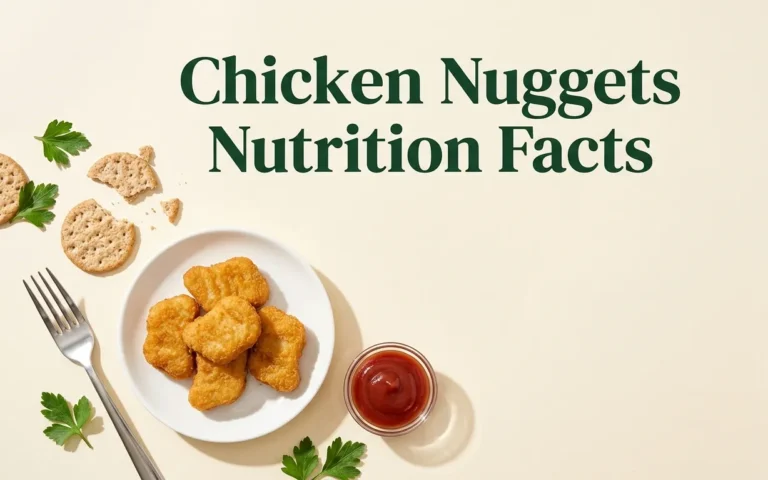
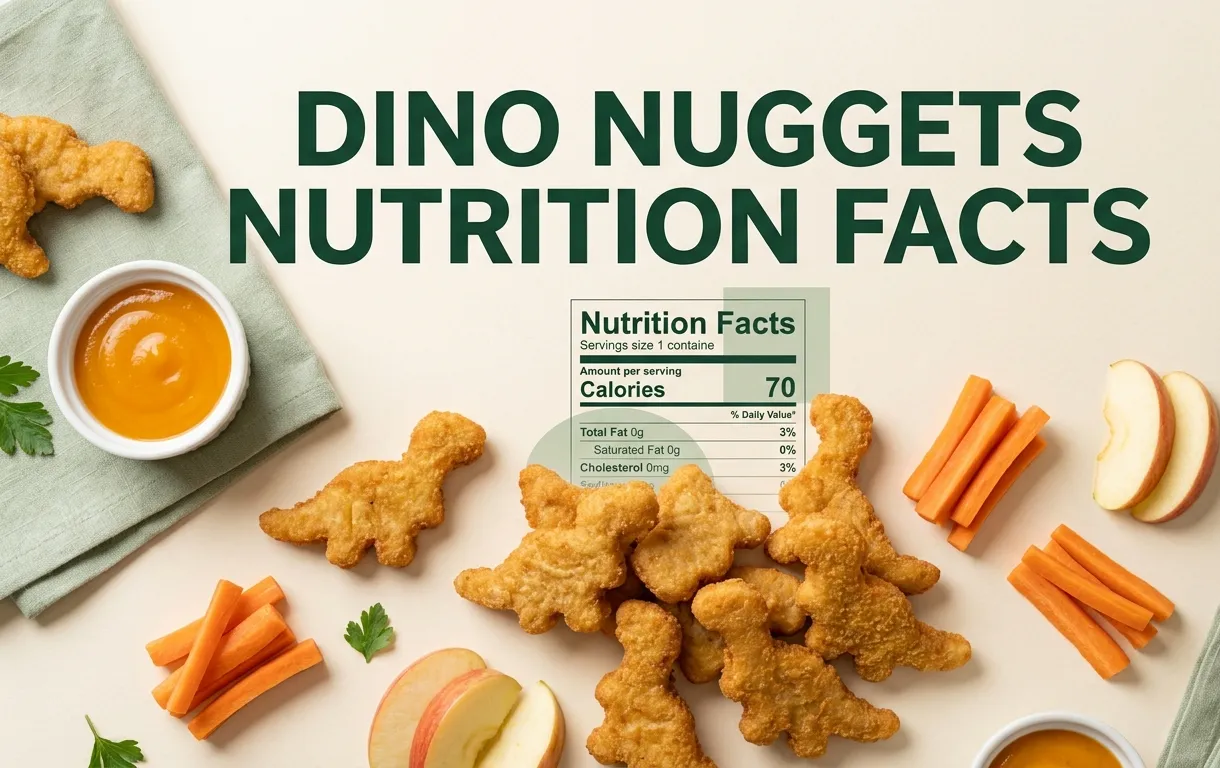
Dino nuggets are a processed breaded chicken product that delivers roughly 190 to 220 calories, 11 to 13 grams of protein, 9 to 12 grams of fat, and 350 to 470 milligrams of sodium per standard 5-piece serving. These dinosaur-shaped chicken pieces are not a nutritional disaster, but they are also not equivalent to a whole chicken breast, and understanding the actual numbers on the label determines whether they fit into your child’s weekly meal rotation or remain a once-in-a-while convenience food.
The reason this topic matters for millions of parents is that dino nuggets have become a staple food in American households with young children, with the frozen chicken nugget market exceeding $6 billion annually in the United States. The American Heart Association recommends that children aged 4 to 8 consume no more than 1,200 milligrams of sodium per day, and a single 5-piece serving of dino nuggets can deliver between 29 and 39 percent of that limit before you add any dipping sauce or side dish.
This article walks you through the complete nutritional profile of dino nuggets, breaking down the calories, protein, fat, sodium, and ingredients for the most popular brands in 2026. You will also see exactly how different cooking methods change the nutritional numbers, what a standard serving size actually looks like for a child, and the honest, evidence-based answer to whether dino nuggets belong in a reasonably healthy family eating pattern.
Dino Nuggets Nutrition Facts
Dino nuggets nutrition facts vary by brand, but the standard nutritional profile for a single 5-piece serving (approximately 84 to 90 grams) of oven-baked dino chicken nuggets delivers roughly 200 calories, 12 grams of protein, 10 grams of total fat, 15 grams of carbohydrate, and 400 milligrams of sodium. These numbers come from averaged data across the three most popular brands available in U.S. grocery stores as of 2026: Perdue, Tyson, and Pilgrim’s.
The USDA FoodData Central database does not maintain a single entry for dino nuggets because each brand formulates its product differently. The breading-to-chicken ratio, the type of chicken used, the oil content, and the seasoning blend all shift the final nutritional profile. A dino nugget made primarily from chicken breast with rib meat will have a different macro breakdown than one made with mechanically separated chicken and textured soy protein concentrate as the primary protein sources.
What matters most for parents reading these numbers is that a single serving of dino nuggets typically supplies about 14 to 17 percent of a 4 to 8-year-old child’s daily calorie needs, based on the Dietary Guidelines for Americans 2020-2025 recommendation of 1,200 to 1,400 calories per day for moderately active children in that age range. That is a reasonable share of daily intake for one component of a meal, provided the rest of the plate includes vegetables, a whole grain, or fruit rather than additional highly processed items.
Table: Standard Dino Nuggets Nutrition Facts Per Serving (5 Pieces, Oven-Baked)
| Nutrient | Average Amount Per Serving | Percent of Daily Needs (Child 4-8) |
|---|---|---|
| Calories | 200 | 14-17% of 1,200-1,400 daily |
| Protein | 12 g | 63% of 19 g RDA |
| Total Fat | 10 g | N/A (focus on fat type) |
| Saturated Fat | 2-3 g | AHA recommends under 10% of calories |
| Carbohydrates | 15 g | N/A |
| Dietary Fiber | 0-1 g | Under 3-7% of 25 g daily goal |
| Sodium | 400 mg | 33% of 1,200 mg AHA limit |
| Sugars | 0-1 g | Minimal (no added sugars) |
| Iron | 1 mg | 10% of 10 mg RDA |
The numbers shift noticeably when you change the cooking method. Oven baking, which is the default preparation method listed on most packaging, produces the baseline nutritional profile. Deep frying adds approximately 40 to 60 calories and 4 to 6 grams of fat per serving from oil absorption. Air frying, which has become the dominant preparation method in many households by 2026, lands closer to the oven-baked nutritional profile while producing a crispier exterior.
Dino Chicken Nuggets Nutrition Facts
Dino chicken nuggets nutrition facts center on the same core numbers as the broader dino nuggets category, but the phrase specifically refers to products that list chicken as the primary protein source rather than a blend of chicken and plant-based extenders. The USDA FoodData Central database confirms that chicken-based dino nuggets deliver between 11 and 13 grams of protein per 5-piece serving, with the variation depending on whether the product uses whole muscle chicken breast or a ground-and-formed chicken mixture.
The protein in dino chicken nuggets comes from multiple chicken sources that manufacturers list on the ingredient panel. Whole muscle chicken breast with rib meat provides the highest protein quality because it delivers the complete amino acid profile of intact chicken tissue. Mechanically separated chicken, a paste-like product created by forcing chicken carcass parts through a sieve under high pressure, still contains animal protein but has a different nutritional matrix that includes more connective tissue, small bone particles, and a higher fat-to-protein ratio.
A critical nutritional detail that most parents miss is that the breading on dino chicken nuggets is not just flour. Enriched wheat flour forms the base, which means the product contains added B vitamins including thiamine mononitrate, riboflavin, niacin, and folic acid, along with reduced iron, because U.S. law requires enrichment of refined wheat flour to replace nutrients lost during processing. This enrichment means your child gets approximately 1 milligram of iron per serving, which covers about 10 percent of the 10-milligram daily iron RDA for children aged 4 to 8 years.
The fat profile of dino chicken nuggets includes both the fat naturally present in the chicken and the fat added through the breading and par-frying process that occurs before freezing. Most brands use soybean oil or canola oil for par-frying, which contributes predominantly unsaturated fats. However, the saturated fat content still reaches 2 to 3 grams per serving because chicken skin and dark meat naturally contain saturated fat. The American Heart Association recommends that saturated fat make up less than 10 percent of a child’s total daily calories, which for a child eating 1,400 calories translates to a limit of roughly 15 grams of saturated fat per day. A serving of dino chicken nuggets uses about 13 to 20 percent of that limit.
Key Takeaway: Dino chicken nuggets provide a moderate amount of complete protein from chicken, along with enriched wheat flour that adds B vitamins and iron. The sodium and saturated fat content are the two nutritional numbers worth watching most closely.
Dinosaur Chicken Nuggets Nutrition Facts
Dinosaur chicken nuggets nutrition facts are functionally identical to dino nuggets nutrition facts because the search terms refer to the same product category, but people who search for the full word “dinosaur” tend to be looking for slightly different information. These searchers are often new parents encountering the product for the first time, or grandparents buying food for grandchildren, and they want the nutritional basics explained without brand-specific jargon.
The standard nutritional profile for a 5-piece dinosaur chicken nuggets serving, prepared according to package directions in a conventional oven or toaster oven, breaks down to roughly 200 calories with 12 grams of protein, 10 grams of fat, and 15 grams of carbohydrate. The protein content is respectable for a convenience food aimed at children, supplying more than half of the daily protein requirement for a young child in a single serving. A 4 to 8-year-old needs only about 19 grams of protein per day according to the Dietary Reference Intake tables published by the National Academies of Sciences, Engineering, and Medicine.
The carbohydrate content of dinosaur chicken nuggets comes almost entirely from the breading, which consists of enriched wheat flour, modified food starch, and various leavening agents that create the crispy exterior children respond to. There is typically less than 1 gram of sugar per serving, and the sugar that does appear comes from dextrose, a corn-derived simple sugar used in tiny amounts to promote browning during cooking. The product contains no meaningful dietary fiber unless the manufacturer specifically formulates with whole grain flour, which some newer 2024-2026 product lines have begun incorporating in response to school nutrition standards.
What dinosaur chicken nuggets do not contain is as informative as what they do contain. They contain no trans fat, a significant public health victory following the FDA’s 2018 determination that partially hydrogenated oils are no longer Generally Recognized As Safe (GRAS). They contain no artificial colors or synthetic dyes, as major manufacturers shifted away from these additives in response to consumer pressure during the 2018-2022 period. They contain no added sugars beyond the small amount of dextrose used for browning, which keeps the product compliant with the Dietary Guidelines for Americans 2020-2025 recommendation that children under age 2 consume no added sugars.
Nutrition Facts Dino Nuggets
Nutrition facts dino nuggets, phrased this way, represents the search pattern of someone who has a package in front of them or is viewing a nutrition facts panel online and wants the numbers explained in plain language. The nutrition facts panel on a package of dino nuggets follows the FDA’s standard format, listing serving size first, followed by calories, then the macronutrient breakdown, and finally the micronutrient content.
The serving size listed on dino nuggets packages is typically 5 pieces weighing 84 to 90 grams total. This serving size was established under the FDA’s 2016 nutrition facts label update, which required serving sizes to reflect what people actually consume rather than what they should consume. For a 4 to 6-year-old child, 5 pieces often represents an appropriate portion alongside vegetables and a starch. For a toddler aged 2 to 3, 3 to 4 pieces is usually sufficient, as their daily calorie needs sit around 1,000 to 1,200 calories. For an older child aged 7 to 10, 5 to 7 pieces may be appropriate depending on activity level and what else is on the plate.
The percent Daily Value column on the nutrition facts panel uses values based on adult daily intake standards, not pediatric standards, which creates a misleading picture for parents. When the label states that 400 milligrams of sodium represents 17 percent of the Daily Value, that percentage references the adult limit of 2,300 milligrams per day. For a child aged 4 to 8 with a recommended sodium limit of 1,200 milligrams per day, that same 400 milligrams actually represents 33 percent of their daily limit. This is the single most important label-reading insight for parents evaluating dino nuggets.
Table: Adult vs Child Daily Value Context for Dino Nuggets
| Nutrient | Amount Per Serving | Adult %DV (2,300 mg Na/2,000 cal) | Child %DV (1,200 mg Na/1,400 cal) |
|---|---|---|---|
| Sodium | 400 mg | 17% | 33% |
| Saturated Fat | 2.5 g | 13% (based on 20 g) | 17% (based on 15 g) |
| Protein | 12 g | 24% (based on 50 g) | 63% (based on 19 g) |
| Iron | 1 mg | 6% (based on 18 mg) | 10% (based on 10 mg) |
| Calcium | 15 mg | 1% (based on 1,300 mg) | 1% (based on 1,000 mg) |
The ingredients list on the nutrition facts panel follows FDA regulations that require ingredients to be listed in descending order by weight. On a typical dino nuggets package, the first ingredient is usually chicken breast with rib meat or mechanically separated chicken, followed by water, enriched wheat flour, and then the various binding agents, seasonings, and leavening compounds that create the nugget’s structure and flavor. The ingredient list length varies significantly by brand, with higher-quality products containing 12 to 15 recognizable ingredients and more heavily processed options containing 20 to 25 ingredients including multiple types of modified starches and phosphate compounds.
Key Takeaway: The adult-based Daily Value percentages on the nutrition facts panel significantly understate how much sodium a child gets from one serving of dino nuggets. For a 4 to 8-year-old, one serving delivers roughly one-third of their entire day’s sodium allowance.
Dino Nuggets Calories Per Piece
Dino nuggets contain approximately 38 to 44 calories per individual piece when oven-baked according to package directions. The exact per-piece calorie count depends on the brand, the size of the nuggets, and the chicken-to-breading ratio. A larger dino nugget from a brand that uses generous breading might reach 50 calories per piece, while a smaller nugget with thinner breading might sit closer to 35 calories.
The calorie distribution within a single dino nugget follows the same pattern as the full serving. Roughly 35 to 40 percent of the calories come from fat, 25 to 30 percent from protein, and 30 to 35 percent from carbohydrates. This macro split places dino nuggets in a category that nutritionists would describe as moderate-fat, moderate-protein, moderate-carbohydrate. The food is not a high-fat item like a fried chicken wing, nor is it a lean protein source like a grilled chicken breast.
Understanding the per-piece calorie count matters for portion control with children of different ages. A 3-year-old with a daily calorie need of approximately 1,000 calories might appropriately eat 3 dino nuggets for a total of 115 to 135 calories from the nugget portion of the meal. A 7-year-old with a daily need of 1,400 to 1,600 calories might eat 5 to 6 dino nuggets for 190 to 265 calories. The per-piece calorie count gives parents a flexible tool for scaling portions to their specific child rather than rigidly following the package serving suggestion.
Breading thickness drives much of the per-piece calorie variation across brands. A dino nugget with a thick, crunchy breading shell absorbs more oil during the par-frying process at the manufacturing facility than a nugget with a thin, delicate breading. The oil trapped in the breading during par-frying adds about 20 to 30 percent to the total calorie count compared to what the chicken alone would provide. This is the nutritional tradeoff for the crispy texture that makes dino nuggets appealing to children.
How Many Calories in 5 Dino Nuggets
There are approximately 190 to 220 calories in 5 dino nuggets when prepared by oven baking, which is the default preparation method listed on most product packaging. The 190-calorie figure typically corresponds to nuggets made primarily from chicken breast with a lighter breading, such as Perdue’s formulation, while the 220-calorie figure reflects nuggets with a heavier breading or those made with a higher proportion of dark meat chicken.
The calorie count changes measurably when you alter the cooking method. Five dino nuggets cooked in an air fryer deliver roughly 195 to 225 calories per serving, landing very close to the oven-baked baseline because air frying uses minimal to no added oil. Five dino nuggets submerged in hot oil and deep-fried deliver approximately 240 to 270 calories, adding 40 to 60 calories from oil absorption into the breading during the frying process.
These calorie figures represent the nuggets alone, without any dipping sauce or side dishes. Adding 1 tablespoon of ketchup contributes approximately 15 calories and 3 grams of sugar. Adding 1 tablespoon of ranch dressing contributes approximately 65 calories and 6 grams of fat. Adding 1 tablespoon of barbecue sauce contributes approximately 30 calories and 6 grams of sugar. The dipping sauce is often the hidden source of additional calories, fat, and sugar in a dino nuggets meal that parents overlook when estimating total intake.
Quick Tip:
- 5 oven-baked dino nuggets: 190-220 calories
- 5 air-fried dino nuggets: 195-225 calories
- 5 deep-fried dino nuggets: 240-270 calories
- Add 15-65 calories for dipping sauce depending on type and amount
- Serve with carrot sticks, cucumber slices, or apple wedges instead of fries to improve the overall nutritional quality of the meal without calorie negotiation
Key Takeaway: Five dino nuggets deliver roughly 200 calories, but the cooking method and dipping sauce can push the total to 300 calories or more. The oven or air fryer preparation keeps the calorie count closest to the package baseline.
Dino Nuggets Protein Per Serving
Dino nuggets provide 11 to 13 grams of protein per standard 5-piece serving, which represents approximately 58 to 68 percent of the 19-gram daily protein requirement for a child aged 4 to 8 years, according to the Dietary Reference Intake values published by the National Academies of Sciences, Engineering, and Medicine. This protein content is one of the stronger nutritional attributes of dino nuggets as a children’s convenience food.
The protein in dino nuggets comes from two primary sources. Chicken, whether listed as chicken breast with rib meat or mechanically separated chicken, supplies complete animal protein containing all nine essential amino acids that the human body cannot synthesize. Textured soy protein concentrate, which appears in some but not all dino nuggets formulations, supplies plant protein that is also complete but has a slightly lower digestibility score than chicken protein.
The protein quality question matters more than the raw protein number. Whole muscle chicken breast provides a Protein Digestibility Corrected Amino Acid Score (PDCAAS) of 1.0, the highest possible rating, meaning the protein is fully digestible and provides amino acids in proportions that match human biological needs. Mechanically separated chicken has a slightly lower PDCAAS because the processing method incorporates more connective tissue, which contains collagen rather than the myofibrillar proteins that dominate muscle tissue. Collagen lacks tryptophan and is low in several other essential amino acids, reducing the overall protein quality.
For a growing child, the protein from dino nuggets is adequate but not exceptional. A 5-piece serving covers more than half of the daily protein requirement, which makes dino nuggets a functional protein source for children who may be selective about meat. The concern from a nutritional perspective is not the protein amount or quality but rather what accompanies that protein, specifically the sodium, refined carbohydrates from the breading, and saturated fat from the chicken skin and par-frying oil.
Dino Nuggets Sodium Content
Dino nuggets sodium content ranges from approximately 350 to 470 milligrams per standard 5-piece serving, depending on the brand and formulation. The sodium level represents the most significant nutritional concern with dino nuggets because a single serving can deliver 29 to 39 percent of the American Heart Association’s recommended daily sodium limit of 1,200 milligrams for children aged 4 to 8 years.
Sodium appears in dino nuggets for multiple functional reasons beyond simple saltiness. Sodium chloride seasons the chicken and breading. Sodium phosphates act as emulsifiers and water-binding agents that help the ground chicken mixture hold together during forming and cooking. Autolyzed yeast extract, a natural source of glutamates, adds savory flavor without appearing as monosodium glutamate on the ingredient list. Sodium aluminum phosphate serves as a leavening agent in the breading, creating the air pockets that produce crispiness. Each of these ingredients contributes to the total sodium load.
The brand-level sodium differences are meaningful for parents who are comparing labels. Perdue Chicken Plus Dino Nuggets typically contain around 350 to 380 milligrams of sodium per serving, placing them at the lower end of the sodium range. Tyson Fun Nuggets Dinosaur Shapes typically contain 400 to 440 milligrams per serving. Some store-brand dino nuggets reach 470 milligrams per serving because they use higher levels of sodium phosphates and salt to compensate for less expensive chicken ingredients that have less inherent flavor.
Parents managing their child’s sodium intake should consider the full meal context. A meal consisting of 5 dino nuggets (400 mg sodium), a serving of boxed macaroni and cheese (350 mg sodium), and a small serving of ketchup (85 mg sodium) delivers approximately 835 milligrams of sodium in a single meal, which is 70 percent of the daily limit for a 4 to 8-year-old. The same nuggets served with fresh cucumber slices, apple wedges, and a small amount of low-sodium dipping sauce creates a more nutritionally balanced plate.
Key Takeaway: The sodium in one serving of dino nuggets uses up roughly one-third of a young child’s entire daily sodium budget. Building the rest of the meal around low-sodium whole foods like fresh fruits and vegetables is the simplest way to keep the total meal within reasonable limits.
Dino Nuggets Ingredients
Dino nuggets ingredients follow a standard pattern across major brands, with the primary components being chicken, water, enriched wheat flour, vegetable oil, modified food starch, and a series of functional additives that control texture, moisture, browning, and shelf stability. Reading the ingredient list from top to bottom tells the story of how a whole chicken breast becomes a dinosaur-shaped, freezer-stable, kid-friendly convenience food.
The chicken component varies in quality and specificity. Perdue lists “boneless skinless chicken breast with rib meat” as the first ingredient, which indicates whole muscle tissue from a specific cut. Tyson uses “chicken breast with rib meat” as the first ingredient in some product lines and “mechanically separated chicken” in others. Mechanically separated chicken is produced by forcing chicken bones with attached edible tissue through a sieve under high pressure, creating a paste-like product that is then shaped, breaded, and cooked. The USDA requires products containing mechanically separated chicken to state this on the label.
Textured soy protein concentrate appears in several dino nuggets formulations as a protein extender that reduces cost while adding water-holding capacity and bite texture. Soy protein concentrate is produced by removing soluble carbohydrates from defatted soy flour, leaving a product that is roughly 70 percent protein. For children with soy allergies, this ingredient makes those specific dino nuggets unsuitable. The allergen statement on the package will indicate the presence of soy.
The breading system is a complex engineered coating that includes enriched wheat flour as the base, modified food starch for crispness, dextrose for browning, leavening agents for lift, and spice extractives for flavor. Modified food starch, typically derived from corn or potato, has been physically or chemically altered to improve its thickening, gelling, or binding properties under the freezing, thawing, and reheating conditions that dino nuggets undergo. Sodium aluminum phosphate appears in the leavening system of many brands, reacting with sodium bicarbonate to produce carbon dioxide gas that creates the airy, crispy texture in the breading.
Bullet List: Common Dino Nuggets Ingredients by Category
- Protein base: Chicken breast with rib meat, mechanically separated chicken, textured soy protein concentrate
- Breading base: Enriched wheat flour (wheat flour, niacin, reduced iron, thiamine mononitrate, riboflavin, folic acid)
- Breading functional additives: Modified food starch, yellow corn flour, dextrose, salt, leavening agents (sodium aluminum phosphate, sodium bicarbonate), spice extractives, paprika extract (color)
- Binding and texture agents: Water, isolated oat product, sodium phosphates, soy protein concentrate
- Frying oil: Soybean oil, canola oil, or vegetable oil blend (used during par-frying at manufacturing facility)
Perdue Dino Nuggets Nutrition Facts
Perdue dino nuggets nutrition facts reflect the brand’s positioning as a premium chicken product that uses whole muscle chicken breast with rib meat and avoids mechanically separated chicken. A 5-piece serving of Perdue Chicken Plus Dino Nuggets, oven-baked, delivers approximately 190 calories, 12 grams of protein, 9 grams of total fat, 2 grams of saturated fat, 15 grams of carbohydrates, and 350 to 370 milligrams of sodium.
Perdue’s ingredient list is shorter than most competitors, typically running 12 to 14 ingredients compared to 20 or more for some store brands. The first ingredient is boneless skinless chicken breast with rib meat. Textured soy protein concentrate does not appear in the Perdue Chicken Plus line, though it does appear in some other Perdue nugget products. The breading uses enriched wheat flour, water, modified food starch, and a standard leavening system. Perdue uses sea salt rather than standard salt in some product lines, though the sodium content remains functionally equivalent.
The nutritional advantage Perdue offers is primarily in the ingredient quality and the protein integrity. Because the product uses whole muscle chicken breast, the protein has a complete amino acid profile with full digestibility. The sodium content sits at the lower end of the dino nuggets range at 350 to 370 milligrams, which while still significant for a child’s daily limit, represents roughly 15 percent less sodium than the highest-sodium competitors.
Perdue’s breading-to-chicken ratio appears leaner than some competitors based on the protein and carbohydrate numbers. With 12 grams of protein and 15 grams of carbohydrates, Perdue maintains a near-equal ratio, whereas some competitors show 11 grams of protein to 16 to 17 grams of carbohydrates, suggesting more breading relative to chicken. This ratio matters for parents prioritizing protein density in their child’s meals.
Tyson Dino Nuggets Nutrition Facts
Tyson dino nuggets nutrition facts, based on the company’s Fun Nuggets Dinosaur Shapes product line, show a 5-piece oven-baked serving delivering approximately 210 to 220 calories, 11 grams of protein, 12 grams of total fat, 2.5 grams of saturated fat, 15 grams of carbohydrates, and 400 to 440 milligrams of sodium. Tyson’s formulation uses chicken breast with rib meat in their standard dino nuggets, placing the protein quality in the same tier as Perdue.
The sodium content difference between Tyson and Perdue is notable, with Tyson averaging roughly 40 to 70 milligrams more sodium per serving. This difference comes primarily from Tyson’s seasoning blend and phosphate levels rather than from basic salt addition. Sodium phosphates serve functional roles in water binding and texture stability, and the exact amount used varies by manufacturer based on their specific formulation requirements.
Tyson’s ingredient list includes chicken breast with rib meat, water, enriched wheat flour, and a breading system that contains modified corn starch rather than the modified food starch listed by many competitors. Modified corn starch is a more specific designation that tells the consumer the botanical source of the starch. For children with corn allergies, this specificity matters, though wheat remains the primary allergen concern in the breading.
Tyson has introduced whole-grain breaded versions of their dino nuggets in some markets as part of a product line expansion driven by school nutrition standards. These whole-grain variants deliver 1 to 2 grams of dietary fiber per serving, compared to zero grams in the standard formulation. The fiber addition comes from whole wheat flour replacing a portion of the enriched white flour in the breading. Parents who want to improve the nutritional profile of dino nuggets without switching products should look for whole-grain labeling on Tyson packages where available.
Key Takeaway: Tyson and Perdue dino nuggets are nutritionally similar, with Perdue holding a slight advantage in lower sodium and higher protein per serving. Both use whole muscle chicken breast rather than mechanically separated chicken, making them better choices within the dino nuggets category than brands that use mechanically separated meat.
Air Fryer Dino Nuggets Nutrition
Air fryer dino nuggets nutrition closely mirrors oven-baked nutrition because the air fryer uses the same principle of hot air circulation to cook the nuggets without submerging them in oil. A 5-piece serving of dino nuggets cooked in an air fryer delivers roughly 195 to 225 calories, with the same protein and carbohydrate content as oven-baked nuggets and only a marginally higher fat content if you add a light oil spray to the nuggets before cooking.
The air fryer has become the dominant preparation method for dino nuggets in many households by 2026 because it produces a crispier exterior than a conventional oven while cooking the nuggets faster. The circulating hot air removes surface moisture more efficiently than the radiant heat of an oven, which creates a crisper, more fried-like texture without the oil absorption that characterizes deep frying. From a nutritional standpoint, air frying is functionally equivalent to oven baking with a slight textural improvement.
The one nutritional variable in air fryer preparation is whether you add oil to the nuggets before cooking. Spraying the nuggets lightly with a cooking oil spray adds approximately 5 to 10 calories and less than 1 gram of fat per serving. This step is not required for cooking but enhances browning and crispness. Without added oil, air fryer dino nuggets deliver essentially the same calorie and fat content as oven-baked nuggets.
The internal temperature requirement remains the same regardless of cooking method. The USDA Food Safety and Inspection Service states that all poultry products must reach an internal temperature of 165°F to ensure that Salmonella and Campylobacter bacteria are destroyed. The air fryer achieves this temperature faster than a conventional oven because of the concentrated hot air circulation, but parents should still verify the temperature with a food thermometer inserted into the center of the thickest nugget.
Bullet List: Air Fryer Dino Nuggets Preparation Tips
- Cook at 400°F for 8-10 minutes, flipping halfway through
- Do not overcrowd the basket; leave space between nuggets for air circulation
- Adding a light oil spray before cooking increases crispness with minimal calorie impact
- Verify internal temperature of 165°F with a food thermometer before serving
- Allow nuggets to cool for 2 to 3 minutes before serving to children to prevent mouth burns from the hot filling
Baked vs Fried Dino Nuggets Calories
Baked dino nuggets contain 190 to 220 calories per 5-piece serving, while deep-fried dino nuggets contain 240 to 270 calories for the same serving size, representing a calorie increase of approximately 25 to 30 percent driven entirely by oil absorption into the breading during submersion in hot oil. The protein content remains unchanged between cooking methods because the chicken does not gain or lose protein during cooking. The fat content increases by 4 to 6 grams per serving when deep-fried compared to baked.
The oil absorption mechanism works through a physical process called capillary action. When a frozen dino nugget enters hot oil at 350°F to 375°F, the water in the breading rapidly converts to steam, creating tiny channels in the breading structure. As the nugget cools after removal from the oil, the pressure inside these channels drops, and oil from the surface is drawn into the breading through capillary action. This is why deep-fried foods taste richer and feel heavier, and it is also why they carry more calories.
The type of oil used for deep frying influences the fat profile of the finished nuggets but not the total calorie count. Canola oil, soybean oil, and peanut oil all contain 120 calories and 14 grams of fat per tablespoon. The saturated fat content varies slightly by oil type, with canola oil containing 1 gram of saturated fat per tablespoon, soybean oil containing 2 grams, and palm oil containing 7 grams. Most home frying uses canola or vegetable oil, which keeps the saturated fat addition moderate.
Table: Cooking Method Comparison for 5 Dino Nuggets
| Cooking Method | Calories | Total Fat | Saturated Fat | Protein | Sodium | Texture Result |
|---|---|---|---|---|---|---|
| Oven Baked (400°F, 12-15 min) | 190-220 | 9-12 g | 2-3 g | 11-13 g | 350-470 mg | Crisp exterior, soft interior |
| Air Fried (400°F, 8-10 min) | 195-225 | 9-12.5 g | 2-3 g | 11-13 g | 350-470 mg | Very crisp exterior, moist interior |
| Deep Fried (350°F, 3-4 min) | 240-270 | 13-18 g | 3-5 g | 11-13 g | 350-470 mg | Very crisp exterior, rich mouthfeel |
| Pan Fried (1 tbsp oil) | 230-250 | 13-15 g | 2.5-3.5 g | 11-13 g | 350-470 mg | Crisp bottom, softer top |
The deep-frying calorie penalty is significant in the context of a child’s daily intake. A 50-calorie increase per serving might seem small, but for a 4-year-old eating 1,200 calories per day, that represents a 4 percent increase in total daily calories from a single preparation decision. Over the course of a year of weekly dino nuggets meals, the cooking method choice adds up.
Key Takeaway: Deep frying adds 40 to 60 calories and 4 to 6 grams of fat per serving compared to oven baking or air frying. The air fryer produces the best combination of crispy texture and nutritional profile closest to baking.
Are Dino Nuggets Processed Meat
Dino nuggets are classified as processed meat because they undergo mechanical forming, cooking, breading, par-frying, and freezing before reaching the consumer. The term processed meat encompasses any meat product that has been modified through salting, curing, fermentation, smoking, or other processes to enhance flavor or improve preservation, and dino nuggets meet this definition through their multi-step manufacturing process.
The processed meat classification carries different health implications depending on the type and degree of processing. The World Health Organization’s International Agency for Research on Cancer (IARC) classified processed meat as a Group 1 carcinogen in 2015 based on evidence linking processed meat consumption to colorectal cancer. However, this classification applies to products preserved through curing, smoking, or the addition of nitrates and nitrites, such as bacon, ham, salami, and hot dogs. Dino nuggets do not typically contain curing agents like sodium nitrate or sodium nitrite. They are classified as processed meat because of mechanical processing and cooking, not because of chemical preservation.
The nutritional characteristics that distinguish dino nuggets from fresh, minimally processed chicken breast include higher sodium density, the addition of refined carbohydrates from breading, the incorporation of functional additives like phosphates and modified starches, and the presence of par-frying oil that increases fat content. A fresh skinless chicken breast contains approximately 165 calories, 31 grams of protein, 3.6 grams of fat, and 74 milligrams of sodium per 100 grams. Dino nuggets, per 100 grams, contain approximately 235 calories, 14 grams of protein, 11 grams of fat, and 470 milligrams of sodium. The processing transforms the nutritional profile substantially.
For parents managing their child’s diet, the processed meat classification of dino nuggets warrants attention but not alarm. The product is not nutritionally equivalent to a fresh chicken breast, but it is also not in the same risk category as cured, nitrate-preserved processed meats that drove the IARC classification. The primary nutritional concerns with dino nuggets remain sodium, saturated fat, and refined carbohydrate content, not carcinogenic preservation compounds.
Are Dino Nuggets Healthy
Dino nuggets occupy a middle ground in the spectrum of children’s foods: they are not a health food, they are not a nutritional disaster, and they can fit into a balanced eating pattern when served in appropriate portions alongside vegetables, fruits, and whole grains rather than as the centerpiece of a meal built entirely from processed convenience foods. The honest nutritional assessment is that dino nuggets are a functional convenience food with specific strengths and specific weaknesses.
The strengths of dino nuggets from a nutritional perspective include their protein content, which covers more than half of a young child’s daily requirement in a single serving. The product contains zero grams of added sugar, which distinguishes it favorably from many children’s breakfast cereals, yogurts, and snack bars that pack 10 to 15 grams of added sugar per serving. The enriched flour in the breading adds B vitamins and iron, nutrients that children sometimes under-consume. Dino nuggets are also a familiar, accepted food for many picky eaters, which means they can serve as a vehicle for introducing new vegetables and whole grains on the same plate.
The weaknesses are the sodium content, which uses roughly one-third of a child’s daily limit, the saturated fat from chicken skin and par-frying oil, the refined carbohydrate breading that provides calories without fiber, and the overall processed nature of the product that makes it less nutrient-dense than whole chicken. A food can be acceptable in a dietary pattern without being individually healthy in the way that a steamed broccoli floret or a fresh apple is individually healthy.
The Dietary Guidelines for Americans 2020-2025 uses a dietary pattern approach rather than labeling individual foods as healthy or unhealthy. Under this framework, dino nuggets can be part of a healthy dietary pattern if the overall pattern includes adequate vegetables, fruits, whole grains, lean proteins, and dairy, and limits sodium, saturated fat, and added sugars across the total diet. The key variable is what surrounds the dino nuggets on the plate and across the week.
Key Takeaway: Dino nuggets are not individually a health food, but they can be part of a healthy overall dietary pattern for children when served in appropriate portions alongside vegetables, fruits, and whole grains, and when balanced by less processed foods across the rest of the week.
Are Dinosaur Nuggets Bad for Kids
Dinosaur nuggets are not inherently bad for kids when served as part of a varied diet, but the product does carry nutritional concerns that make it a food best served in rotation with less processed protein sources rather than as a daily staple. The question reflects a genuine parental concern about feeding children a convenient food that they actually eat while trying to establish healthy long-term eating habits.
The sodium content is the single strongest argument for moderation with dinosaur nuggets. The American Heart Association recommends a daily sodium limit of 1,200 milligrams for children aged 4 to 8. One serving of dinosaur nuggets without any sauce or sides already contributes roughly one-third of that limit. If the meal includes other processed foods like canned vegetables, boxed macaroni and cheese, or commercial dipping sauces, the sodium total can easily exceed the daily recommendation in a single meal. High sodium intake in childhood is associated with elevated blood pressure in adolescence, and dietary patterns established in early childhood tend to persist.
The protein quality and satiety factor represent arguments in favor of dinosaur nuggets. A child who eats 5 dinosaur nuggets consumes 12 grams of protein, which promotes satiety and stable blood sugar compared to a meal built around refined carbohydrates. The protein and fat in the nuggets slow gastric emptying, which means the child feels full and satisfied for longer than they would after eating a comparable calorie amount of crackers, cereal, or other carbohydrate-heavy snack foods.
The practical feeding reality that pediatric dietitians acknowledge is that dinosaur nuggets solve a real problem for parents of selective eaters. A child who reliably eats dinosaur nuggets consumes protein, calories, and some micronutrients. A child who rejects every food offered at a meal consumes none of those things. The nutritional calculus shifts when the alternative is a child not eating at all. The Academy of Nutrition and Dietetics recognizes that feeding children involves balancing nutritional ideals with practical realities, and dinosaur nuggets occupy a valid place in that balance for many families.
A pediatric registered dietitian can provide personalized guidance for families where a child eats dinosaur nuggets more than 3 to 4 times per week or where the child’s overall dietary pattern is heavily weighted toward processed convenience foods. The dietitian can assess the child’s full nutritional intake and suggest practical substitutions or additions that improve dietary quality without triggering the food refusal that parents of selective eaters fear.
Frequently Asked Questions About Dino Nuggets
How many dino nuggets should a child eat per serving?
A child aged 4 to 8 should typically eat 4 to 5 dino nuggets per serving as the protein component of a meal.
A child aged 2 to 3 should eat 3 to 4 nuggets based on their lower daily calorie requirement of roughly 1,000 to 1,200 calories.
A child aged 9 to 12 may appropriately eat 5 to 7 nuggets depending on their activity level and what else is on the plate.
Are dino nuggets real chicken?
Yes, dino nuggets contain real chicken, with most major brands using chicken breast with rib meat as the primary ingredient.
Some brands use mechanically separated chicken, which is real chicken meat that has been processed to separate it from the bone.
The first ingredient on the package label indicates the primary chicken source used in that specific product.
What is the healthiest way to cook dino nuggets?
Air frying and oven baking are the healthiest cooking methods because they require no added oil.
Air frying produces a crispier texture than oven baking while maintaining the same nutritional profile.
Deep frying adds 40 to 60 calories and 4 to 6 grams of fat per serving and is the least healthy preparation method.
Do dino nuggets have a lot of sodium?
One 5-piece serving of dino nuggets contains 350 to 470 milligrams of sodium.
This represents roughly 29 to 39 percent of the American Heart Association’s 1,200-milligram daily sodium limit for children aged 4 to 8.
Serving dino nuggets with fresh vegetables and fruits rather than additional processed foods helps manage the total meal sodium content.
Can dino nuggets be part of a healthy diet for kids?
Dino nuggets can be part of a healthy dietary pattern when served in appropriate portions alongside vegetables, fruits, and whole grains.
The Dietary Guidelines for Americans 2020-2025 evaluates overall dietary patterns rather than labeling individual foods as healthy or unhealthy.
The key variable is the overall nutritional quality of the child’s total diet across the week, not any single food at a single meal.
What are the main ingredients in dino nuggets?
The main ingredients in dino nuggets are chicken, water, enriched wheat flour, vegetable oil, modified food starch, salt, and leavening agents.
Most brands list chicken breast with rib meat as the first ingredient.
The breading includes enriched wheat flour that adds B vitamins and iron, along with functional additives that create texture and crispiness.
Dino nuggets are a processed convenience food that delivers real nutritional value in the form of protein, iron, and B vitamins alongside nutritional concerns in the form of sodium and refined carbohydrates. The product is not a health food, but it is not a dietary villain either. It is a tool that parents can use strategically as part of a child’s overall eating pattern.
The single most actionable takeaway from this complete nutritional breakdown is that cooking method and plate composition matter as much as the nuggets themselves. Air-fried or oven-baked nuggets served with fresh vegetables and fruit create a meaningfully different meal than deep-fried nuggets served with fries and sugary dipping sauce. The nuggets are the same product in both scenarios. The context changes the nutritional outcome.
If your child eats dino nuggets regularly, look at the ingredient list and the sodium number when choosing a brand. Perdue and Tyson both use whole muscle chicken breast and sit at the lower end of the sodium range. Store brands vary more widely. When you serve them, fill half the plate with colorful vegetables or fruit, use a small amount of dipping sauce, and feel confident that you are feeding your child a reasonable meal that fits within a balanced week of eating.