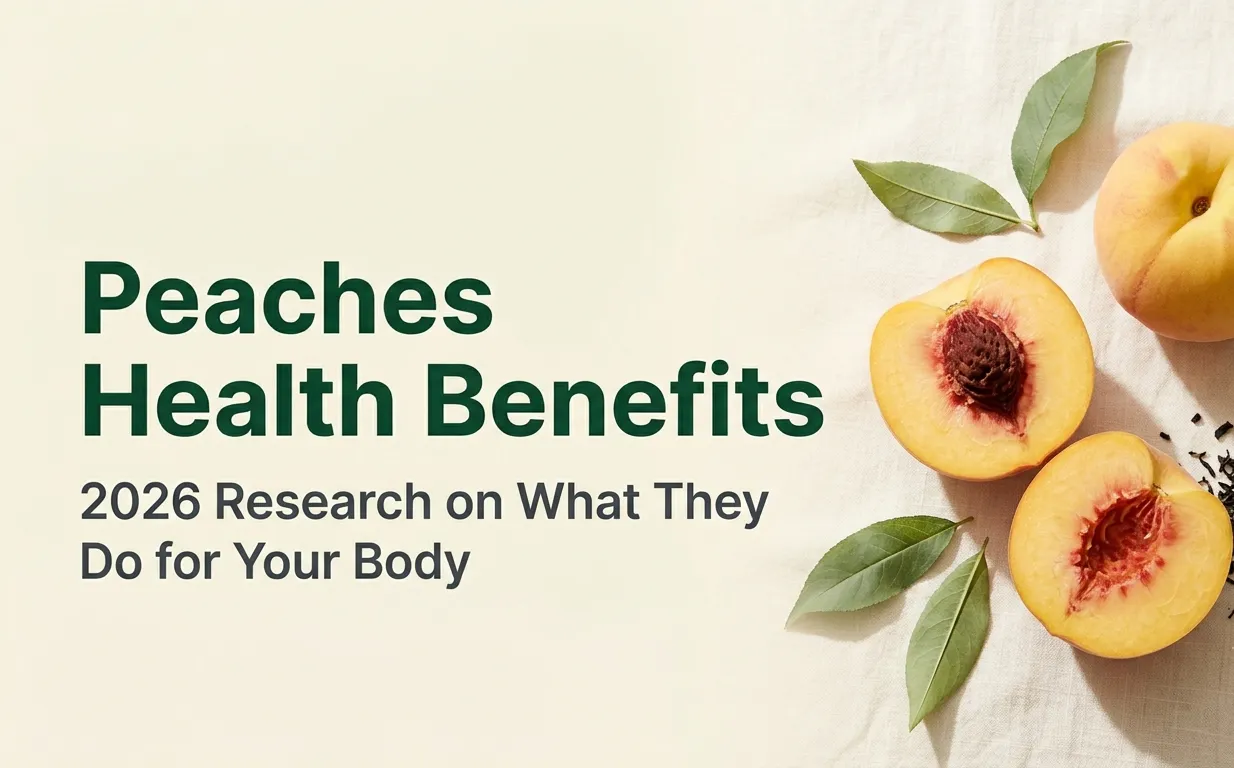
Peaches Health Benefits: 2026 Research on What They Do for You
Peaches deliver real, research-backed health benefits including improved digestive function, measurable antioxidant protection, and support for skin health, driven by their specific combination of dietary fiber, vitamin C, beta-carotene, and polyphenolic compounds like chlorogenic acid. These benefits are not hype. They are grounded in the biochemistry of what happens when the compounds in peach flesh and skin interact with your body’s systems.
The USDA FoodData Central database records that a single medium peach provides roughly 60 calories, 2.3 grams of fiber, and meaningful amounts of vitamin C, vitamin A, potassium, and niacin. Those numbers are solid. What makes peaches genuinely interesting from a nutrition science perspective is the collection of bioactive compounds, chlorogenic acid, caffeic acid, catechins, and carotenoids, that work through specific cellular mechanisms researchers are still actively mapping.
This article walks you through each documented health benefit of peaches with the mechanism behind it, the strength of the evidence, and the practical details that matter. You will learn which compounds do what, how peach ripeness changes the nutritional equation, whether canned peaches hold up against fresh, and exactly what to expect if you start eating peaches more regularly.
Peaches Health Benefits
Peaches health benefits center on four well-documented physiological effects: digestive system support through soluble and insoluble fiber, cellular protection from oxidative damage via polyphenolic compounds, skin health contributions through vitamin C and carotenoid activity, and blood sugar management through a favorable glycemic response profile. These four benefits have the strongest evidence base in human nutrition research as of 2026.
The Academy of Nutrition and Dietetics recognizes whole fruit consumption, including stone fruits like peaches, as a core component of a dietary pattern that reduces risk for cardiovascular disease, type 2 diabetes, and certain cancers. These protective associations are documented in large prospective cohort studies where higher fruit intake correlates with lower disease incidence. Peaches contribute to that overall pattern rather than acting as a standalone disease-prevention food.
What distinguishes peach benefits from generic fruit benefits is the specific compound profile. Chlorogenic acid, one of the dominant polyphenols in peach flesh, has been studied for its effects on glucose metabolism and blood pressure regulation. A 2022 randomized controlled trial published in the American Journal of Clinical Nutrition found that chlorogenic acid intake at levels achievable through diet was associated with modest improvements in post-meal blood glucose responses in adults with insulin resistance. Peaches are one of the richest dietary sources of this compound among commonly consumed fruits.
The fiber in peaches also deserves specific attention. A medium peach delivers approximately 2.3 grams of total fiber, split between soluble fiber in the form of pectin and insoluble fiber from the cell wall structures of the fruit. Soluble fiber forms a gel in the digestive tract that slows gastric emptying and can bind to cholesterol compounds. Insoluble fiber adds bulk to stool and speeds transit time. Both types contribute to digestive health through distinct but complementary mechanisms.
Evidence quality varies across the benefit categories. Digestive benefits from fiber are well-established with decades of clinical evidence. Antioxidant effects are mechanistically sound and supported by laboratory and animal research, with human data accumulating. Skin health benefits from carotenoids are moderate, with some direct research and more inferred from carotenoid-rich food studies. Blood sugar effects are supported by glycemic index testing and some clinical trials but still an active research area.
Health Benefits Peaches
Health benefits peaches provide extend beyond the core four categories into areas where evidence is emerging but not yet conclusive, including anti-inflammatory activity, eye health support from lutein and zeaxanthin, and potential roles in weight management due to low caloric density and high water content. These secondary benefits have plausible mechanisms and some supporting data but fewer human randomized controlled trials.
The water content of a fresh peach runs at approximately 88 to 89 percent by weight, according to USDA FoodData Central. This makes peaches a low-energy-density food. Foods with high water content and moderate fiber tend to promote satiety with fewer calories, a principle well-established in weight management research. A 2023 review in Nutrients examined the role of whole fruit in satiety and found that whole fruit consumption consistently led to lower subsequent energy intake compared to fruit juice or dried fruit equivalents. Peaches, eaten whole with the skin, fit this satiety-supporting profile.
The anti-inflammatory potential of peaches comes from the same polyphenol compounds that drive their antioxidant activity. Chlorogenic acid and caffeic acid have demonstrated the ability to downregulate pro-inflammatory cytokines in cell culture and animal models. A 2021 study published in the Journal of Nutritional Biochemistry found that peach polyphenol extracts reduced markers of inflammation in human endothelial cell cultures. Extrapolating cell culture findings to whole-body effects in humans requires caution. The compounds must survive digestion, be absorbed in sufficient quantities, and reach target tissues. That chain of events is plausible but not fully quantified for peach polyphenols specifically.
Eye health support is another emerging area. Peaches contain lutein and zeaxanthin, two carotenoids that concentrate in the macula of the human eye and protect retinal cells from blue light damage and oxidative stress. The NIH Office of Dietary Supplements notes that dietary intake of lutein and zeaxanthin is associated with reduced risk of age-related macular degeneration. Peaches are not the richest source of these carotenoids, leafy greens hold that title, but they contribute to total dietary intake in a meaningful way.
For these secondary benefits, the practical takeaway is that peaches fit into a dietary pattern that supports these outcomes. The evidence for peaches specifically is developing. The evidence for the dietary pattern that includes peaches, fiber-rich, polyphenol-rich, carotenoid-containing, is strong.
Key Takeaway: Peaches have four well-supported health benefits (digestion, antioxidants, skin, blood sugar) and several emerging ones (anti-inflammatory, eye health, weight management) where the compound mechanisms are understood but human trial data is still building.
Benefits of Eating Peaches
Benefits of eating peaches include daily contributions to your vitamin C intake, fiber goals, and potassium balance, all from a fruit that costs roughly 60 calories per medium serving. These benefits are additive rather than transformative. Peaches will not single-handedly change your health. They will nudge your nutrient intake in the right direction when eaten consistently as part of a varied diet.
One medium peach provides approximately 10 milligrams of vitamin C. The RDA for vitamin C is 90 milligrams for adult men and 75 milligrams for adult women per the NIH Office of Dietary Supplements. A single peach covers 11 to 13 percent of that requirement. That might sound modest, but it arrives in a package with other co-occurring compounds that may enhance vitamin C’s function. Whole food sources of vitamin C often perform differently in the body than isolated ascorbic acid supplements, possibly because flavonoids and other polyphenols in the fruit matrix stabilize the vitamin and influence its absorption.
The potassium content of peaches deserves attention because potassium is a nutrient of public health concern. The Dietary Guidelines for Americans 2020-2025 identify potassium as underconsumed in the US population relative to recommendations. One medium peach provides approximately 285 milligrams of potassium, roughly 6 percent of the 4,700-milligram Adequate Intake for adults. That number is not large, but it accumulates across the day alongside other potassium sources like potatoes, bananas, beans, and leafy greens.
Here is the nutritional contribution of one medium peach to key daily intake targets:
| Nutrient | Amount per Medium Peach | % of Daily Target (Adult) |
|---|---|---|
| Calories | 60 | ~3% of 2,000-calorie diet |
| Dietary Fiber | 2.3 g | 8-9% of 25-30g target |
| Vitamin C | 10 mg | 11-13% of RDA |
| Vitamin A (as beta-carotene) | 489 IU | ~10% of DV |
| Potassium | 285 mg | 6% of 4,700mg AI |
| Niacin (Vitamin B3) | 1.2 mg | 8% of RDA |
| Vitamin E | 1.1 mg | 7% of RDA |
The fiber contribution matters in the context of how few Americans meet fiber recommendations. The Academy of Nutrition and Dietetics reports that the average US adult consumes approximately 15 to 17 grams of fiber per day, well below the recommended 25 grams for women and 38 grams for men. One peach provides about 9 percent of the minimum target. That is not a solution to a fiber deficit on its own, but it is a meaningful contribution from a single piece of fruit.
Are Peaches Good for You
Yes, peaches are good for you, and the evidence for their health benefits is strong enough to recommend them as a regular part of a fruit rotation, with the understanding that individual responses vary depending on digestive tolerance, allergy status, and overall dietary context. The question of whether a food is good for you always requires answering who you are and what else you are eating.
For most people without specific sensitivities, peaches offer a favorable nutritional package. They provide nutrients that are widely underconsumed in the US population (fiber, potassium, vitamin C) while delivering few calories and no added sugars, saturated fat, or sodium. They contain bioactive compounds with documented antioxidant and anti-inflammatory properties. They have a low glycemic index, typically measured between 28 and 56 depending on variety and ripeness, placing them in the low to moderate glycemic response category.
The Dietary Guidelines for Americans 2020-2025 recommend that adults consume 1.5 to 2 cup-equivalents of fruit per day. One medium peach counts as roughly one cup-equivalent toward that goal. Peaches fit squarely within a recommended dietary pattern.
For people with irritable bowel syndrome or general digestive sensitivity, the answer shifts. Peaches contain sorbitol and fermentable oligosaccharides, placing them on the higher end of FODMAP content among fruits. Monash University, which maintains the FODMAP database used clinically by registered dietitians, classifies peaches as high-FODMAP at a typical serving size. A gastroenterologist or registered dietitian trained in the low-FODMAP diet can help determine whether peaches trigger symptoms for you.
For people with birch pollen allergy, raw peaches can trigger oral allergy syndrome. The immune system mistakes peach proteins for birch pollen proteins and mounts a localized reaction. Cooking peaches denatures these proteins and typically eliminates the reaction. This is not a reason to declare peaches unhealthy. It is a reason to know your own allergy status and adjust preparation accordingly.
Peach Fruit Benefits
Peach fruit benefits extend to both the flesh and the skin, with the skin containing higher concentrations of dietary fiber, certain polyphenols, and carotenoids than the flesh alone, making whole unpeeled peach consumption the nutritionally optimal choice for people who tolerate the skin. The fuzzy exterior that some people find texturally off-putting is also the site of concentrated nutritional value.
A 2019 study published in the Journal of Agricultural and Food Chemistry analyzed the polyphenol distribution in different parts of the peach fruit. The peel contained total phenolic concentrations 2 to 3 times higher than the flesh in yellow-fleshed varieties. Chlorogenic acid, the dominant phenolic compound in peaches, was concentrated in the peel along with catechin and epicatechin. The carotenoids beta-carotene, lutein, and zeaxanthin also showed higher concentrations in the peel and the flesh directly beneath it.
The fiber content of peach skin is insoluble fiber, primarily cellulose and hemicellulose, which contributes to the mechanical action of digestion. This fiber adds bulk to stool, speeds intestinal transit time, and provides substrate for beneficial gut bacteria to ferment. Peeling a peach removes this fiber fraction and reduces the total fiber content of the fruit by approximately 0.5 to 1 gram per serving depending on the thickness of the peel removed.
Peach variety influences the nutritional profile of both flesh and skin. Yellow-fleshed varieties contain more beta-carotene than white-fleshed varieties, which is why their flesh appears more deeply colored. White-fleshed peaches tend to be sweeter and slightly lower in acidity, which can make them more palatable but does not necessarily translate to a nutritional advantage.
| Peach Variety Type | Key Nutritional Characteristics |
|---|---|
| Yellow-fleshed freestone | Higher beta-carotene, firmer texture, flesh separates easily from pit |
| White-fleshed freestone | Lower carotenoids, higher sugar-to-acid ratio, sweeter taste |
| Clingstone (yellow or white) | Flesh clings to pit, often used for canning, similar nutrient profile to freestone |
| Red-fleshed or blood peaches | Higher anthocyanin content, additional polyphenol diversity |
| Doughnut or flat peaches | Slightly lower fiber per gram due to higher flesh-to-skin ratio |
The USDA FoodData Central database provides nutritional data for a generic medium peach without distinguishing variety, so the numbers in this article reflect that composite. If you eat a variety with darker flesh, you are likely getting more carotenoids. If you eat a white-fleshed variety, slightly less. The differences matter directionally but not enough to override the core message: peaches are nutritionally worthwhile across all common varieties.
Key Takeaway: Eat the skin. The fuzzy layer contains 2 to 3 times the polyphenol concentration of the flesh, plus additional fiber and carotenoids. The skin is where a disproportionate share of the nutritional value lives.
What Do Peaches Do for Your Body
What peaches do for your body is deliver a package of soluble fiber, insoluble fiber, polyphenol antioxidants, carotenoid pigments, and water that collectively supports digestive regularity, contributes to cellular protection against oxidative damage, provides substrate for vitamin A production, and aids hydration at a low caloric cost of roughly 60 calories per fruit.
The digestive system receives the most immediate and reliably observable effect. The 2.3 grams of fiber in a medium peach split between soluble and insoluble fractions, each with distinct functions. Soluble fiber absorbs water in the intestines, forming a viscous gel that slows gastric emptying and can bind bile acids for excretion. Insoluble fiber adds physical bulk to the stool, which stimulates peristalsis, the wave-like muscle contractions that move material through the colon. You may notice more regular bowel movements within a day or two of consistently eating peaches if your baseline fiber intake is low.
The antioxidant compounds in peaches enter your bloodstream in measurable quantities after consumption. A 2020 clinical trial published in Nutrients measured plasma antioxidant capacity in healthy adults after consuming 300 grams of fresh peach daily for two weeks. The researchers documented increased plasma total antioxidant capacity and reduced markers of lipid peroxidation compared to a control period. The effect was modest but statistically detectable. What this means in practical terms is that peach polyphenols survive digestion, get absorbed, and measurably reduce oxidative stress markers in circulation. Whether this translates to long-term health protection depends on consistency and overall dietary context.
Carotenoid absorption from peaches contributes to your body’s vitamin A status and to the carotenoid concentration in your tissues, including skin and eyes. Beta-carotene from peaches is converted to retinol, the active form of vitamin A, in the intestinal mucosa and liver. This conversion is not perfectly efficient. The NIH Office of Dietary Supplements notes that the conversion factor for beta-carotene from food to retinol is approximately 12 to 1 by weight. Even with that inefficiency, a medium peach contributes meaningfully to your daily vitamin A requirement, especially when eaten as part of a meal that contains some dietary fat to facilitate carotenoid absorption.
The hydration contribution is underrated. A peach is 88 to 89 percent water by weight. Eating a medium peach adds roughly 130 grams of water to your daily fluid intake. That is not a substitute for drinking water, but it is a meaningful contribution, particularly during summer months when peaches are in season and hydration demands are higher.
Peaches Nutrition Benefits
Peaches nutrition benefits are documented in the USDA FoodData Central database and include per medium peach approximately 60 calories, 15 grams of carbohydrate, 2.3 grams of fiber, 13 grams of naturally occurring sugar, 1.4 grams of protein, and less than half a gram of fat, along with measurable amounts of vitamin C, vitamin A, potassium, niacin, vitamin E, and vitamin K.
The macronutrient profile of a peach tells a specific nutritional story. Nearly all of the calories come from carbohydrate, with the sugar fraction dominated by sucrose, glucose, and fructose in roughly equal proportions depending on ripeness. The protein content is low at 1.4 grams, which is typical for fruit. The fat content is negligible at 0.4 grams. This macro pattern means peaches provide quick-digesting carbohydrate energy with a fiber buffer that moderates the absorption speed.
The micronutrient profile is where peaches differentiate themselves from many other common fruits. Here is the complete micronutrient breakdown per medium peach (150 grams) based on USDA FoodData Central:
| Micronutrient | Amount | % DV (Adult) |
|---|---|---|
| Vitamin C (ascorbic acid) | 10.0 mg | 11% |
| Niacin (Vitamin B3) | 1.2 mg | 8% |
| Vitamin E (alpha-tocopherol) | 1.1 mg | 7% |
| Potassium | 285 mg | 6% |
| Vitamin A (IU) | 489 IU | 10% |
| Copper | 0.1 mg | 6% |
| Magnesium | 12.0 mg | 3% |
| Vitamin K (phylloquinone) | 4.0 mcg | 3% |
| Phosphorus | 31.0 mg | 2% |
Peaches also contain trace amounts of zinc, manganese, iron, calcium, and several B vitamins including pantothenic acid, riboflavin, and thiamin. These amounts are small individually but contribute to total dietary intake across the day.
The sugar content deserves a specific comment because it is sometimes misunderstood. The 13 grams of sugar in a medium peach are intrinsic sugars, meaning they are naturally present in the fruit matrix along with fiber, water, and micronutrients. The Dietary Guidelines for Americans distinguish between intrinsic sugars and added sugars. There is no recommended limit for intrinsic sugars from whole fruit. The fiber and water in peaches slow the absorption of these sugars, blunting the blood glucose spike that would occur from an equivalent amount of added sugar in a beverage or processed food.
Peach Vitamins and Minerals
Peach vitamins and minerals include vitamin C as ascorbic acid, vitamin A precursors primarily as beta-carotene, potassium as the dominant mineral, and smaller but meaningful amounts of niacin (vitamin B3), vitamin E as alpha-tocopherol, and vitamin K as phylloquinone, each with specific and well-understood physiological roles in the body.
Vitamin C in peaches functions as a water-soluble antioxidant and as a co-factor for collagen synthesis. Collagen is the structural protein that maintains the integrity of skin, blood vessels, bones, and connective tissue. The enzyme reactions that produce stable collagen require vitamin C as a co-substrate. Without adequate vitamin C, collagen production falters, which is why vitamin C deficiency presents as poor wound healing, bleeding gums, and fragile capillaries. One peach provides roughly 11 percent of the daily vitamin C requirement, which helps maintain collagen synthesis capacity.
Beta-carotene in peaches serves dual functions. It acts as a provitamin A carotenoid, meaning your body cleaves it enzymatically to produce retinal and retinoic acid, the active forms of vitamin A. It also functions as an antioxidant in its own right within cell membranes and lipid-rich tissues. Vitamin A derived from beta-carotene supports vision in low light, immune function through effects on T-cell differentiation, and epithelial cell integrity. The 489 IU of vitamin A in a medium peach represents a meaningful contribution to the 2,300 to 3,000 IU daily recommendation for adults.
Potassium in peaches is the dominant mineral at 285 milligrams per medium fruit. Potassium is the primary intracellular cation, meaning it is the main positively charged ion inside your cells. The sodium-potassium pump embedded in cell membranes actively transports sodium out of cells and potassium into cells, maintaining the electrochemical gradient that allows nerve transmission, muscle contraction, and heart rhythm to function. The Dietary Guidelines for Americans 2020-2025 identify potassium as a nutrient of public health concern because inadequate intake is associated with higher blood pressure and increased cardiovascular risk.
Niacin (vitamin B3) at 1.2 milligrams per peach contributes to the 16-milligram RDA for adult men and 14-milligram RDA for adult women. Niacin is a precursor to the coenzymes NAD and NADP, which participate in hundreds of cellular oxidation-reduction reactions central to energy metabolism. Every cell in your body requires niacin-derived coenzymes to convert food energy into ATP, the cellular energy currency.
Key Takeaway: Peaches deliver a diverse micronutrient package headlined by vitamin C for collagen and immunity, beta-carotene for vision and epithelial health, and potassium for blood pressure and nerve function, all from a 60-calorie food.
Peaches Antioxidant Benefits
Peaches antioxidant benefits come from a specific collection of polyphenolic compounds including chlorogenic acid, caffeic acid, catechin, epicatechin, quercetin, and anthocyanins, which neutralize reactive oxygen species through electron donation and metal chelation mechanisms, reducing oxidative damage to lipids, proteins, and DNA at the cellular level.
Oxidative stress is the state that occurs when the production of reactive oxygen species (ROS) exceeds your body’s endogenous antioxidant capacity. ROS are generated as byproducts of normal metabolism, particularly in the mitochondria during ATP production. They also increase with exposure to ultraviolet radiation, pollution, cigarette smoke, and inflammation. When ROS accumulate unchecked, they damage cell membranes through lipid peroxidation, alter proteins through oxidation, and cause DNA strand breaks that, over decades, contribute to cancer initiation and aging processes.
Chlorogenic acid is the most abundant polyphenol in peach flesh, present at concentrations of approximately 50 to 150 milligrams per 100 grams depending on variety and ripeness. This compound neutralizes ROS by donating hydrogen atoms from its hydroxyl groups to stabilize free radicals. The resulting chlorogenic acid radical is far less reactive than the original free radical. Chlorogenic acid also chelates transition metals like iron and copper that catalyze the most damaging free radical reactions through the Fenton reaction.
Caffeic acid, present in lower concentrations, shares similar electron-donating capacity and has been studied specifically for its ability to protect low-density lipoprotein (LDL) cholesterol particles from oxidation. Oxidized LDL is more atherogenic, meaning it is more likely to contribute to arterial plaque formation, than native LDL. A 2018 in vitro study published in the Journal of Agricultural and Food Chemistry found that peach-derived caffeic acid inhibited copper-induced LDL oxidation in a dose-dependent manner. Extrapolating from a laboratory assay to cardiovascular protection in humans involves many intermediate steps, so this finding is best categorized as mechanistic support rather than proven clinical benefit.
Catechins and epicatechins in peaches belong to the flavanol family of polyphenols, the same compound class responsible for green tea’s and dark chocolate’s antioxidant reputation. These compounds are particularly effective at scavenging superoxide anion and peroxynitrite, two highly reactive species involved in inflammatory tissue damage. The catechin content of peaches is lower than that of tea or cocoa, but contributes to total dietary flavanol intake across the day.
Anthocyanins are present primarily in red-fleshed and blood peach varieties, giving them their distinctive deep coloration. These compounds are potent radical scavengers and also exert anti-inflammatory effects through inhibition of cyclooxygenase enzymes and nuclear factor-kappa B signaling. Anthocyanin content is largely determined by peach variety, with white-fleshed peaches containing negligible amounts.
Peaches Benefits for Digestion
Peaches benefits for digestion are driven by the 2.3 grams of total dietary fiber per medium fruit, split into soluble fiber in the form of pectin and insoluble fiber from cellulose and hemicellulose, plus the fruit’s high water content of 88 to 89 percent, which together promote bowel regularity, support beneficial gut bacteria, and soften stool consistency.
Soluble fiber from pectin dissolves in the aqueous environment of the digestive tract to form a viscous gel. This gel slows gastric emptying, which moderates the rate at which sugars enter the bloodstream from the small intestine. The gel also binds bile acids secreted by the liver to emulsify dietary fats. When bile acids are bound to soluble fiber and carried into the large intestine for excretion rather than reabsorbed in the ileum, the liver must draw cholesterol from the blood to synthesize replacement bile acids. This is the mechanism by which soluble fiber modestly lowers serum LDL cholesterol. Oat beta-glucan is the most studied soluble fiber for this effect, but peach pectin contributes through the same pathway.
Insoluble fiber from peach cell walls does not dissolve. It passes through the digestive tract largely intact, adding physical bulk to the stool. This bulk stretches the colon wall, triggering stretch receptors that initiate peristaltic contractions. Insoluble fiber also accelerates intestinal transit time, reducing the duration that potentially harmful compounds in the stool remain in contact with the colon lining. The Academy of Nutrition and Dietetics notes that faster colonic transit time is associated with reduced risk of diverticular disease and may reduce risk for colorectal cancer, though the cancer data remain observational.
The water content of peaches works in concert with fiber for digestive function. Fiber absorbs water. If you eat high-fiber foods without adequate fluid intake, you can develop harder stools and constipation rather than improved regularity. Peaches solve this problem internally by packaging fiber with their own water supply. Eating a peach provides both the fiber and the fluid needed for that fiber to function properly in the colon.
Peach digestion does have a caveat for a subset of people. Peaches contain sorbitol, a sugar alcohol that acts as an osmotic laxative when consumed in large quantities. They also contain fermentable oligosaccharides, which gut bacteria rapidly ferment, producing gas as a byproduct. These properties place peaches on the list of high-FODMAP foods. For people with irritable bowel syndrome or general FODMAP sensitivity, peach consumption can trigger bloating, gas, cramping, or altered bowel habits. This is not toxicity. It is individual carbohydrate tolerance. A registered dietitian trained in FODMAP dietary management can guide you through elimination and reintroduction testing if you suspect peaches trigger your digestive symptoms.
Key Takeaway: Peach fiber works two ways, soluble pectin slows sugar absorption and binds cholesterol, insoluble fiber speeds transit and adds stool bulk, while the fruit’s water content prevents the constipation that dry fiber sources can cause.
Peaches Benefits for Skin
Peaches benefits for skin operate through three distinct pathways: vitamin C acting as a co-factor for collagen synthesis, beta-carotene and other carotenoids accumulating in skin tissue and providing photoprotection, and polyphenolic compounds reducing oxidative damage to skin cells exposed to ultraviolet radiation and environmental pollutants.
Collagen is the structural scaffold of your skin, comprising roughly 70 to 80 percent of the skin’s dry weight. Fibroblast cells in the dermis synthesize procollagen, which undergoes enzymatic modification to become mature, cross-linked collagen fibrils. Two of the enzymes in this modification pathway, prolyl hydroxylase and lysyl hydroxylase, require vitamin C as a co-factor. Without adequate vitamin C, these enzymes cannot hydroxylate the proline and lysine residues on the nascent collagen chain, and stable triple-helix formation fails. The vitamin C in peaches, roughly 10 milligrams per fruit, contributes to maintaining the body’s vitamin C pool needed for ongoing collagen turnover. Collagen turns over slowly, with a half-life measured in years, so consistent daily vitamin C intake matters more than occasional large doses.
Carotenoids including beta-carotene, lutein, and zeaxanthin accumulate in the epidermis and dermis after dietary intake. Once deposited in skin tissue, these compounds absorb ultraviolet radiation in the visible and UV-adjacent spectrum and quench singlet oxygen generated when UV photons interact with skin cell membranes. A 2021 study published in the British Journal of Dermatology measured skin carotenoid levels non-invasively in adults following increased carotenoid-rich fruit intake and found that higher skin carotenoid concentrations correlated with reduced UV-induced erythema, the redness associated with sunburn. This photoprotective effect is not a replacement for sunscreen. It is an additional layer of endogenous protection.
Peach polyphenols may contribute to skin health through local and systemic anti-inflammatory effects. Chlorogenic acid and caffeic acid have both demonstrated the ability to inhibit matrix metalloproteinases, enzymes that break down collagen and elastin in sun-exposed skin. This inhibition has been demonstrated in skin cell cultures exposed to UV radiation. Whether peach consumption at dietary levels produces this effect in living human skin is not directly tested in clinical trials. The compound mechanism is established. The whole-food, whole-body translation is plausible but unconfirmed.
Peaches and Blood Sugar
Peaches and blood sugar interact favorably, with peaches classified as a low to moderate glycemic index food typically testing between 28 and 56 on the glycemic index scale depending on variety and ripeness, and their fiber and polyphenol content working to blunt the post-meal glucose response that large blood sugar swings cause.
The glycemic index (GI) is a numerical system that ranks carbohydrate-containing foods by how much they raise blood glucose over a two-hour period compared to a reference food, usually pure glucose. Foods with a GI below 55 are considered low-GI. Foods between 55 and 69 are moderate. Peaches typically land in the low-to-moderate zone, but here is the nuance: ripeness changes the number. A firm, underripe peach has a lower GI because more of its carbohydrate is in the form of starch and complex cell wall polysaccharides. As the fruit ripens, starches convert to sugars, and the GI rises within the peach’s natural range. This does not make ripe peaches unhealthy. It means the blood glucose response to a peach is not one fixed number.
Glycemic load (GL) adds serving size context to the glycemic index. The formula is GI multiplied by grams of carbohydrate per serving, divided by 100. A medium peach with 15 grams of carbohydrate and an average GI of 42 has a GL of approximately 6.3. A GL below 10 is considered low. This means a single peach delivers a manageable blood glucose load for most people, including many with type 2 diabetes who monitor their post-meal glucose responses.
The fiber in peaches contributes to this moderated glucose response. Soluble fiber forms a gel in the small intestine that physically slows the diffusion of glucose molecules into the intestinal wall. This spreads glucose absorption over a longer period rather than delivering it as a rapid bolus. The result is a lower peak blood glucose concentration and a more gradual return to baseline. This matters because large glucose excursions trigger proportionally large insulin releases, and repeated large insulin responses over years contribute to insulin resistance progression.
Peach polyphenols, particularly chlorogenic acid, may independently influence glucose metabolism. Chlorogenic acid has been shown in randomized controlled trials to reduce glucose absorption from the small intestine by inhibiting the enzyme alpha-glucosidase, which breaks down complex carbohydrates into absorbable simple sugars. A 2022 meta-analysis published in the American Journal of Clinical Nutrition examined chlorogenic acid intake across multiple trials and found a small but statistically significant reduction in post-meal blood glucose when chlorogenic acid was consumed alongside a carbohydrate-containing meal. Peaches provide dietary chlorogenic acid in a whole-food context.
People with diabetes should count the 15 grams of carbohydrate in a medium peach toward their meal plan, as recommended by the American Diabetes Association. Peaches are a fruit option that provides fiber, vitamins, and polyphenols alongside those carbohydrates, making them nutritionally favorable compared to carbohydrate sources without these accompanying nutrients. Individual blood glucose responses vary, and anyone with diabetes can check their personal response with a glucose meter two hours after eating to see how peaches affect them specifically.
Key Takeaway: Peaches have a low glycemic load of about 6 per medium fruit, thanks to fiber, water, and polyphenols that slow sugar absorption, and their chlorogenic acid may independently improve post-meal glucose handling.
Canned Peaches vs Fresh Peaches Health Benefits
Canned peaches versus fresh peaches health benefits comparison reveals that fresh peaches retain superior vitamin C content and polyphenol concentrations, while canned peaches packed in juice or water can still provide fiber, potassium, and carotenoids, though vitamin C degrades significantly during the canning process and syrup-packed varieties add considerable unnecessary sugar.
The canning process involves heat sterilization at temperatures typically exceeding 240 degrees Fahrenheit for a duration determined by can size and food density. Vitamin C is a heat-labile, water-soluble vitamin. The combination of high heat and leaching into the surrounding liquid degrades a large fraction of the vitamin C present in fresh peaches. USDA FoodData Central records show that canned peaches in juice contain approximately 2 to 3 milligrams of vitamin C per half-cup serving compared to 7 to 10 milligrams in an equivalent amount of fresh peach. The loss is substantial.
Carotenoids, including beta-carotene, survive canning better than vitamin C. These compounds are fat-soluble and remain within the peach flesh rather than leaching into the canning liquid. Some research even suggests that the heat treatment of canning can increase carotenoid bioavailability by disrupting the plant cell matrix and making these compounds more accessible to digestive enzymes. A 2019 study in the Journal of Agricultural and Food Chemistry found that canned peaches retained approximately 80 to 90 percent of their original carotenoid content.
The choice of packing medium matters enormously for the nutritional quality of canned peaches. Here is the comparison:
| Packing Medium | Calories (1/2 cup) | Added Sugar | Nutritional Verdict |
|---|---|---|---|
| Heavy syrup | 100-110 | 15-20 g | Avoid. Added sugar exceeds nutritional benefit. |
| Light syrup | 70-85 | 8-12 g | Occasional use if rinsed. |
| Fruit juice | 50-60 | 0 g added (natural juice sugars) | Good option. No added sugar. |
| Water | 35-40 | 0 g | Best option. Lowest calorie, no added sugar. |
| Fresh, whole | 30-35 | 0 g | Gold standard. Intact nutrients, no processing. |
Fiber content survives canning largely intact because fiber is a structural component of the fruit that the heat process does not destroy. Canned peaches retain approximately the same fiber content as fresh peaches on an equivalent weight basis. Potassium and magnesium also remain largely preserved through canning because these minerals are heat-stable.
The liquid in the can is worth a specific mention. When peaches sit in packing liquid for weeks or months on the shelf, water-soluble nutrients including vitamin C, B vitamins, and some polyphenols leach into that liquid. If you drain and discard the liquid, you discard those nutrients. If you use the liquid in smoothies, oatmeal, or cooking, you recapture some of what leached out. The liquid from juice-packed or water-packed peaches contains modest amounts of potassium and flavor compounds and is worth using rather than discarding.
Key Takeaway: Fresh peaches are nutritionally superior for vitamin C and polyphenols. Canned peaches packed in water or juice and consumed with their liquid are a reasonable off-season alternative that preserves fiber, potassium, and carotenoids, as long as you avoid heavy syrup packs.
Frequently Asked Questions About Peaches Health Benefits
What are the main health benefits of eating peaches?
The main health benefits of eating peaches are improved digestive regularity from 2.3 grams of fiber per fruit, antioxidant protection from chlorogenic acid and other polyphenols, skin support from vitamin C for collagen synthesis, and favorable blood sugar response due to low glycemic load. Peaches also provide potassium for blood pressure regulation and beta-carotene for vitamin A status and eye health.
How many peaches should you eat in a day?
One to two peaches per day fits within the 1.5 to 2 cup-equivalent daily fruit recommendation from the Dietary Guidelines for Americans for most adults. Two medium peaches provide approximately 120 calories, 4 to 5 grams of fiber, and meaningful vitamin C, potassium, and beta-carotene. Eating more than two is not harmful for most people but begins to crowd dietary space for other fruit varieties that provide different nutrient and polyphenol profiles.
Are canned peaches as healthy as fresh peaches?
Canned peaches are not as nutritious as fresh peaches, though water-packed or juice-packed canned peaches retain fiber, potassium, and most carotenoids while losing significant vitamin C and some polyphenols during heat processing. Syrup-packed canned peaches introduce unnecessary added sugars that offset the health benefits of the fruit. Canned peaches in water make an acceptable off-season alternative when fresh peaches are unavailable.
Do peaches help with weight loss?
Peaches can support weight loss indirectly because they provide satiety-promoting fiber and water at only 60 calories per medium fruit, making them a low-energy-density food that helps fill stomach volume and slow gastric emptying without contributing many calories. They work as a replacement for higher-calorie, lower-nutrient desserts or snacks. Peaches do not have unique fat-burning properties and will not cause weight loss independent of overall caloric balance.
Can eating peaches improve your skin?
Eating peaches may improve skin health through vitamin C supporting collagen synthesis in the dermis and carotenoids accumulating in skin tissue to provide some protection against ultraviolet radiation damage. These effects require consistent intake over weeks to months because skin collagen turnover is slow and carotenoid accumulation in tissue is gradual. The vitamin C and carotenoids in peaches contribute to skin health but do not produce immediate visible results.
Are peaches safe for people with diabetes?
Yes, peaches are generally safe and appropriate for people with diabetes when the 15 grams of carbohydrate per medium peach are counted toward the meal plan. Peaches have a low glycemic load of approximately 6 and contain fiber and polyphenols that moderate blood glucose response. The American Diabetes Association includes peaches as a fruit option that can be part of a diabetes eating pattern, though individuals should monitor their personal blood glucose response.
The research on peaches tells a clear story. These fruits deliver fiber for digestive function, polyphenols for cellular protection, vitamin C for collagen synthesis, carotenoids for skin and eye health, and potassium for blood pressure, all in a 60-calorie package with a favorable glycemic profile.
The practical guidance is straightforward. Eat peaches whole with the skin on to capture the polyphenol and fiber concentrated there. Choose fresh when they are in season during summer months. Choose water-packed or juice-packed canned peaches when fresh are not available, and drink or use the liquid. Count one to two peaches per day as your fruit serving contribution. Adjust or avoid if you have birch pollen allergy, FODMAP sensitivity, or specific digestive intolerance.
You now know which peach benefits are well-supported by clinical evidence and which are still emerging from the laboratory. The compounds have names and mechanisms. The evidence has texture rather than uniform certainty. That is what honest nutrition science looks like, and it is enough to recommend peaches as a genuinely worthwhile fruit.