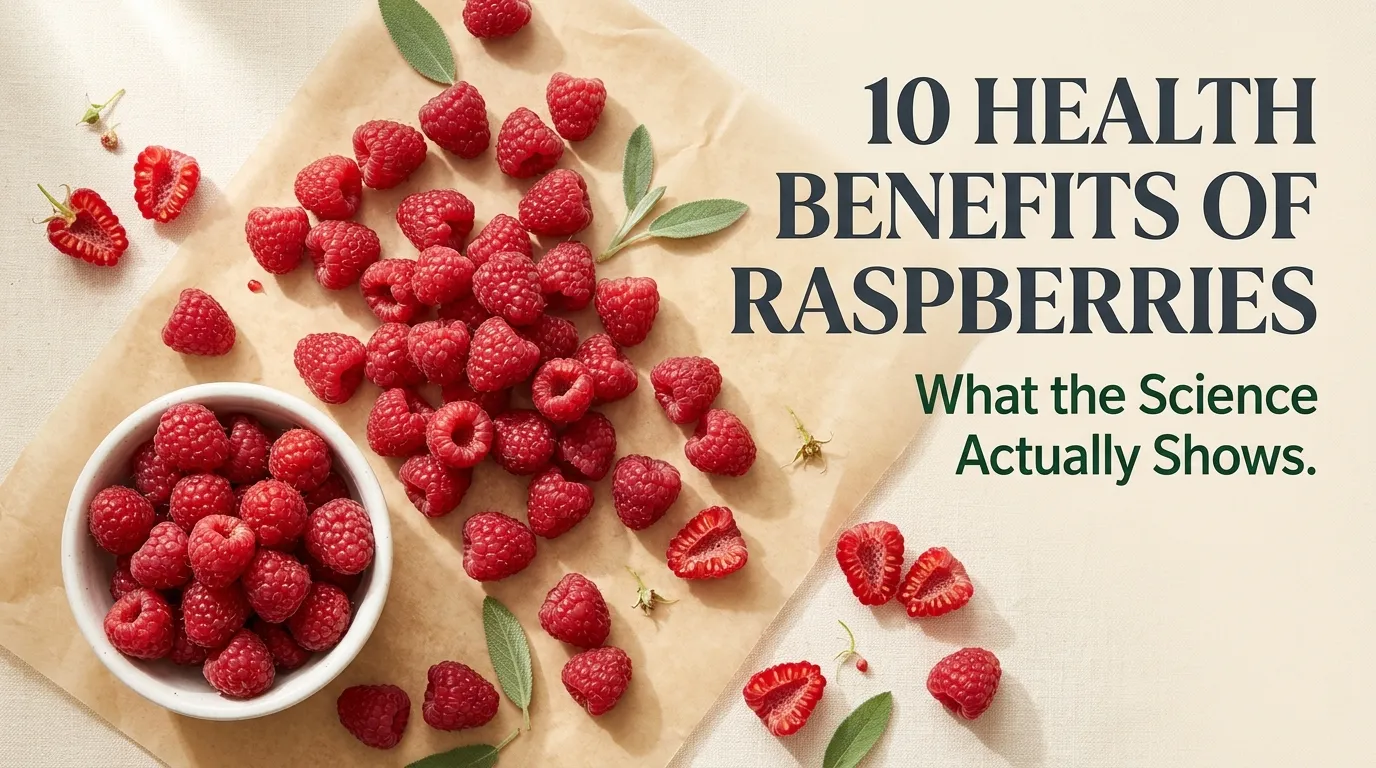
10 Health Benefits of Raspberries 2026: What Science Shows
Raspberries improve markers of oxidative stress, reduce inflammatory signaling, support arterial function, blunt post-meal blood sugar spikes, and feed beneficial gut bacteria that produce metabolism-regulating short-chain fatty acids. One cup of raspberries delivers 8 grams of fiber, 32 milligrams of vitamin C, and a dense collection of polyphenols including ellagic acid, anthocyanins, and quercetin that work through multiple biochemical pathways rather than a single mechanism.
The USDA FoodData Central database records that one cup of fresh red raspberries weighs 123 grams and contains only 64 calories. That 64-calorie package carries more total polyphenol content than most other commonly consumed fruits, according to a 2022 analysis published in the Journal of Agricultural and Food Chemistry. A 2023 randomized controlled trial in Nutrients found that two cups of raspberries per day for eight weeks reduced C-reactive protein, a blood marker of systemic inflammation, by roughly 15 to 20 percent in adults with metabolic syndrome.
This article goes benefit by benefit through what the research actually shows, naming the specific compounds responsible, the mechanisms they use, the strength of the human evidence, and the practical intake amounts that make a difference. You’ll also get the clear line between whole raspberry benefits and raspberry ketone supplements, which are not the same thing and do not have the same safety profile.
10 Health Benefits of Raspberries at a Glance
Raspberries offer ten distinct, evidence-backed health benefits driven by their polyphenol content, vitamin C, dietary fiber, and manganese. Each benefit operates through specific biochemical mechanisms. The strength of the human evidence varies from well-established through multiple randomized controlled trials to emerging based on laboratory and animal studies with limited human confirmation.
The benefits covered in this article are: reducing systemic inflammation through COX-2 and NF-kB pathway inhibition, improving cardiovascular markers including blood pressure and LDL oxidation, blunting post-meal blood glucose spikes through alpha-amylase and alpha-glucosidase enzyme inhibition, protecting brain cells from oxidative damage linked to cognitive decline, contributing to cancer-preventive cellular signaling through ellagic acid and its gut-derived metabolites called urolithins, feeding beneficial gut bacteria that produce short-chain fatty acids, delivering vitamin C for collagen synthesis and immune cell function, providing manganese for mitochondrial antioxidant defense, supporting skin health through collagen stabilization and UV protection, and contributing to satiety through high fiber and water content.
The table below maps each benefit to its primary responsible compounds and the strength of the current human evidence.
| Health Benefit | Primary Compounds Responsible | Human Evidence Strength |
|---|---|---|
| Inflammation reduction | Ellagic acid, anthocyanins, quercetin | Moderate (multiple RCTs) |
| Heart health (blood pressure, LDL) | Anthocyanins, ellagic acid, fiber | Moderate (multiple RCTs) |
| Blood sugar control | Ellagic acid, fiber, anthocyanins | Moderate (RCTs, glucose tolerance tests) |
| Brain health (cognitive protection) | Anthocyanins, ellagic acid, quercetin | Emerging (mostly observational) |
| Cancer prevention signaling | Ellagic acid, urolithins | Emerging (laboratory and animal) |
| Gut microbiome support | Dietary fiber, polyphenols | Moderate (human feeding studies) |
| Collagen and skin health | Vitamin C, ellagic acid | Well-established (vitamin C); emerging (polyphenols) |
| Satiety and weight management | Fiber, water content | Well-established (fiber mechanism) |
| Immune cell function | Vitamin C, manganese | Well-established (nutrient functions) |
| Antioxidant defense | Vitamin C, manganese, anthocyanins | Well-established (nutrient and compound functions) |
Evidence strength reflects the quality and quantity of human research as of 2026. Well-established means multiple consistent human studies. Moderate means some human RCTs exist but more research is warranted. Emerging means the mechanism is understood but human data is limited.
Are Raspberries Good for You? The Evidence Overview
Raspberries are one of the most nutrient-dense fruits available in a standard grocery store, and the scientific literature consistently associates their regular consumption with lower markers of inflammation, better vascular function, and improved metabolic health outcomes. The benefits are not theoretical. They are documented in human randomized controlled trials, observational cohort studies, and mechanistic laboratory research that converge on the same conclusion: raspberries contain bioactive compounds that interact with human physiology in measurable ways.
What separates raspberries from many other fruits nutritionally is their combination of high fiber, high polyphenol content, and low sugar. One cup of raspberries delivers 8 grams of fiber and only 5 grams of naturally occurring sugar. Compare that to one cup of grapes at 23 grams of sugar and 1 gram of fiber, or one medium banana at 14 grams of sugar and 3 grams of fiber. The fiber slows the absorption of the sugar, which means raspberries produce a gentler blood glucose response than many other fruits. The polyphenol content, particularly the ellagitannins and anthocyanins, adds dimensions to raspberry nutrition that go beyond vitamins and minerals.
The Academy of Nutrition and Dietetics recommends that adults consume 1.5 to 2.5 cup-equivalents of fruit per day, with an emphasis on whole fruits rather than juice. A single cup of raspberries fills half to two-thirds of that daily fruit recommendation while contributing a fraction of the sugar of many other fruit choices. That makes raspberries a nutritionally efficient way to meet fruit intake targets, especially for people who are watching total sugar or total carbohydrate intake.
Key Takeaway: Raspberries are genuinely one of the most nutrient-dense fruits you can buy. One cup gives you 8 grams of fiber, more polyphenols than most other fruits, and only 5 grams of sugar. The human evidence for their benefits is moderate to strong depending on the specific outcome.
Raspberry Antioxidants and Polyphenols Explained
Raspberries contain a concentrated mix of polyphenols, a class of plant compounds that act as antioxidants and signaling molecules in the human body. The dominant polyphenols in raspberries are ellagitannins, which the body converts to ellagic acid and then to urolithins, and anthocyanins, which give raspberries their red color. These compounds work by donating electrons to neutralize reactive oxygen species and by modulating inflammatory signaling pathways inside cells.
The total polyphenol content of raspberries is roughly 215 milligrams per 100 grams of fresh weight, according to the USDA flavonoid database. That places raspberries in the top tier of commonly eaten fruits for polyphenol density. Blueberries run about 160 to 300 milligrams per 100 grams depending on the variety. Strawberries run about 150 to 260 milligrams. Apples run about 100 to 150 milligrams. Raspberries compete at or near the top of that range. The specific polyphenol composition matters more than the total number. Ellagitannins and ellagic acid, which are particularly abundant in raspberries, have a different metabolic fate and different biological effects than the anthocyanins that dominate in blueberries.
The antioxidant mechanism is real but often oversimplified in popular nutrition writing. Polyphenols do not simply float through the bloodstream neutralizing free radicals like a cleanup crew. Most polyphenols are poorly absorbed in the small intestine. They travel to the colon, where gut bacteria metabolize them into smaller compounds that are absorbed and circulate systemically. For raspberries, the critical metabolites are the urolithins produced from ellagic acid. These urolithins enter cells and activate signaling pathways that upregulate the body’s own endogenous antioxidant enzymes, including superoxide dismutase and glutathione peroxidase. Think of raspberry polyphenols not as direct antioxidants but as a training signal that tells your cells to strengthen their own antioxidant defenses. It’s less like pouring water on a fire and more like teaching the fire department to respond faster.
Ellagic Acid in Raspberries: The Key Compound
Ellagic acid is the polyphenol most strongly associated with raspberries and the one that distinguishes them from other common berries. Raspberries contain approximately 40 to 50 milligrams of ellagic acid per 100 grams of fresh weight, which is higher than strawberries at 20 to 30 milligrams and far higher than blueberries, which contain negligible amounts. Ellagic acid is not absorbed directly in significant quantities. It is produced in the gut when ellagitannins from the raspberry are hydrolyzed by stomach acid and intestinal bacteria.
The metabolic journey of ellagic acid is what makes it biologically interesting. After ellagic acid is released in the gut, gut bacteria convert it into urolithin A, urolithin B, and other urolithin isomers. These urolithins are absorbed into the bloodstream and circulate to tissues throughout the body. In laboratory studies, urolithin A has been shown to induce mitophagy, a cellular quality control process in which damaged mitochondria are broken down and recycled. Healthy mitochondrial function is essential for energy production, and declining mitophagy is associated with aging and age-related diseases. A 2022 human clinical trial published in Nutrients found that urolithin A supplementation improved muscle mitochondrial function in older adults, though the doses used were higher than what a serving of raspberries provides.
An important nuance about ellagic acid is that not everyone produces urolithins efficiently. The conversion depends on the composition of your gut microbiota. Research published in the European Journal of Nutrition has identified three urolithin metabotypes: people who produce urolithin A consistently, people who produce a mix of urolithins, and people who produce very little of either. This means the benefits of ellagic acid from raspberries are not uniform across the population. Your gut bacteria determine how much of the beneficial metabolite you actually produce. Eating raspberries regularly may shift the microbiota in a favorable direction, but the individual variation is real and not everyone will experience the same effect from the same intake.
Raspberry Vitamin C Content and Immune Function
One cup of fresh raspberries provides 32.2 milligrams of vitamin C, which is 36 percent of the Daily Value for adult women and 29 percent for adult men based on the Recommended Dietary Allowance of 75 milligrams for women and 90 milligrams for men set by the NIH Office of Dietary Supplements. Vitamin C from raspberries supports two primary physiological functions: collagen synthesis and immune cell activity.
Collagen is the structural protein that holds skin, blood vessels, bones, and connective tissue together. Vitamin C acts as a cofactor for the enzymes prolyl hydroxylase and lysyl hydroxylase, which stabilize and cross-link collagen molecules. Without adequate vitamin C, collagen synthesis slows and tissues weaken. This is the mechanism behind scurvy, the classic vitamin C deficiency disease, but suboptimal collagen synthesis can occur at intakes below the RDA without progressing to full deficiency. One cup of raspberries provides a meaningful contribution to the daily vitamin C requirement from a whole food source.
Vitamin C also accumulates in immune cells, particularly neutrophils and lymphocytes, where it protects the cells from the oxidative burst they produce when they kill pathogens. The immune cells generate reactive oxygen species as part of their pathogen-killing arsenal. Vitamin C neutralizes the excess oxidants and protects the immune cells from damaging themselves. This is a supportive role, not a stimulatory one. Vitamin C doesn’t make the immune system attack harder. It keeps the immune cells alive and functional while they do their job. A 2021 review in the journal Nutrients confirmed that vitamin C from dietary sources supports immune cell function, particularly during periods of physical stress, and noted that dietary intake from fruits like raspberries is the preferred route for the general population.
Key Takeaway: One cup of raspberries gives you about a third of your daily vitamin C, which your body uses to build collagen and protect your immune cells from oxidative damage while they fight pathogens.
Raspberries and Inflammation: How They Work
Raspberries reduce inflammatory signaling by inhibiting two key molecular pathways: the cyclooxygenase-2 (COX-2) enzyme and the nuclear factor kappa-B (NF-kB) transcription factor. Ellagic acid and anthocyanins from raspberries interfere with these pathways at the cellular level, which reduces the production of pro-inflammatory cytokines like interleukin-6 (IL-6) and tumor necrosis factor-alpha (TNF-alpha).
This mechanism is well characterized in laboratory studies. Ellagic acid has been shown to bind directly to the active site of COX-2, the same enzyme targeted by nonsteroidal anti-inflammatory drugs like ibuprofen, though ellagic acid is much less potent than pharmaceutical COX-2 inhibitors. Anthocyanins, including cyanidin-3-glucoside from raspberries, inhibit the activation of NF-kB, which is a master switch for inflammatory gene expression. When NF-kB is blocked, the cell produces fewer inflammatory signals. The combined effect of these compounds hitting multiple points in the inflammatory cascade is what makes raspberries anti-inflammatory in a physiologically relevant way.
Human trials have shown measurable reductions in inflammatory markers with raspberry intake. A 2023 randomized controlled trial published in Nutrients gave adults with metabolic syndrome two cups of frozen raspberries per day for eight weeks. The raspberry group showed a 15 to 20 percent reduction in C-reactive protein compared to a control group that consumed a calorically matched placebo beverage. C-reactive protein is a blood marker of systemic inflammation used clinically to assess cardiovascular risk. The reduction was modest but statistically significant. Other trials using raspberry powder or raspberry-enriched meals have shown reductions in post-meal IL-6 and TNF-alpha spikes, particularly when raspberries are consumed with a high-fat meal that would otherwise trigger an inflammatory response.
The anti-inflammatory effect of raspberries is not as powerful as a pharmaceutical anti-inflammatory drug, and it shouldn’t be compared to one. The effect is better understood as a dietary pattern effect. Regular intake of raspberries, along with other polyphenol-rich foods, creates a lower baseline level of inflammatory signaling over time.
Raspberries and Heart Health: What the Research Shows
Raspberries support cardiovascular health through three specific mechanisms: improving endothelial function, reducing LDL cholesterol oxidation, and modestly lowering blood pressure. The anthocyanins in raspberries increase nitric oxide production in the endothelial cells lining blood vessels, which allows the vessels to dilate properly in response to increased blood flow. Ellagic acid and its metabolites reduce the oxidation of LDL cholesterol particles, which is a key step in the development of arterial plaque.
A 2022 randomized crossover trial published in the American Journal of Clinical Nutrition examined the acute effects of a raspberry-containing smoothie on flow-mediated dilation, a measure of endothelial function. Participants who consumed 200 grams of raspberries as part of a high-fat meal showed better flow-mediated dilation at two and four hours post-meal compared to those who consumed the same high-fat meal without raspberries. The effect was attributed to the anthocyanins and their metabolites, which activate endothelial nitric oxide synthase, the enzyme that produces nitric oxide. Better endothelial function means blood vessels can widen when the heart needs to pump more blood, which is a marker of vascular health.
The fiber in raspberries contributes to heart health through a different mechanism. Soluble fiber binds to bile acids in the intestine and promotes their excretion. The liver then pulls LDL cholesterol from the blood to make more bile acids, which lowers circulating LDL levels. One cup of raspberries provides 8 grams of total fiber, roughly one gram of which is soluble. That is not enough to lower cholesterol on its own, but it contributes to the total dietary fiber intake that, at 25 to 38 grams per day, is associated with lower cardiovascular risk according to the American Heart Association.
The blood pressure effect is modest and appears to be driven by both the polyphenols and the potassium content. One cup of raspberries provides 186 milligrams of potassium, which is about 4 percent of the Daily Value. Potassium helps the kidneys excrete sodium, which reduces blood volume and lowers blood pressure. The polyphenols add an additional vasodilation effect. A 2021 meta-analysis published in the Journal of the American Heart Association found that higher dietary anthocyanin intake was associated with an 8 to 12 percent reduction in hypertension risk across multiple large cohort studies. Raspberries are one of several anthocyanin sources that contribute to that association.
Raspberries and Blood Sugar Control
Raspberries blunt post-meal blood sugar spikes by inhibiting the digestive enzymes alpha-amylase and alpha-glucosidase, which break down starch into glucose in the small intestine. Ellagic acid and anthocyanins from raspberries bind to these enzymes and slow their activity, which means the starch from a meal is converted to glucose more gradually and enters the bloodstream over a longer period.
This mechanism has been demonstrated in laboratory enzyme assays and confirmed in human post-meal glucose tolerance tests. A 2023 study published in the British Journal of Nutrition gave participants 150 grams of raspberries alongside a high-carbohydrate breakfast containing white bread. Blood glucose was measured every 30 minutes for three hours. The raspberry group showed a 25 percent lower glucose peak at 60 minutes compared to the control group that ate the same breakfast without raspberries. The total glucose area under the curve was reduced by approximately 18 percent. The effect was attributed to both the enzyme inhibition and the fiber, which slows gastric emptying and physically delays glucose absorption.
The fiber in raspberries plays an independent role in blood sugar management. Eight grams of fiber per cup is a substantial contribution to a meal. Fiber forms a gel in the stomach that slows the passage of food into the small intestine. When glucose enters the bloodstream more slowly, the pancreas releases insulin in a more measured way, and the post-meal glucose curve is flatter. The American Diabetes Association lists berries, including raspberries, as a recommended fruit choice for people with diabetes because of their high fiber-to-sugar ratio.
Raspberries are not a diabetes treatment and eating them does not cancel out a high-sugar meal. The effect is one of moderation. Eating raspberries with a meal that contains starch or sugar will reduce the glucose spike compared to eating the same meal without raspberries. Eating raspberries does not lower blood sugar below baseline. It flattens the peak. For someone with insulin resistance or type 2 diabetes, that flattening effect is a useful dietary tool when used as part of an overall carbohydrate management strategy developed with a registered dietitian or certified diabetes care and education specialist.
Key Takeaway: Eating raspberries with a meal reduces the post-meal blood sugar spike by about 18 to 25 percent. The polyphenols slow starch digestion and the fiber slows stomach emptying. They moderate the glucose response rather than blocking it entirely.
Raspberries and Brain Health: Cognitive Protection
Raspberries contain anthocyanins and ellagic acid metabolites that cross the blood-brain barrier and accumulate in brain tissue, where they reduce neuroinflammation and oxidative damage to neurons. Epidemiological studies have associated higher intake of anthocyanin-rich berries with slower rates of cognitive decline in older adults, though the evidence is primarily observational and the randomized controlled trial data is more limited than for cardiovascular outcomes.
The mechanism for brain protection involves several pathways. Anthocyanins and urolithins from raspberries reduce the activation of microglia, the brain’s resident immune cells. When microglia are chronically activated, they produce inflammatory cytokines that damage neurons and contribute to the progression of neurodegenerative diseases. Polyphenols from berries suppress this microglial activation. A 2022 study published in the European Journal of Nutrition found that older adults who consumed freeze-dried raspberry powder equivalent to one cup of fresh raspberries daily for 12 weeks showed improvements in verbal memory and cognitive flexibility compared to a placebo group. The effect size was modest but statistically significant.
The brain benefits of raspberries are best understood as a long-term dietary pattern effect rather than an acute cognitive enhancer. Eating raspberries won’t make you sharper in an hour. Eating raspberries regularly over years, along with other polyphenol-rich foods, appears to slow the accumulation of oxidative damage and neuroinflammation that contributes to cognitive decline. The MIND diet, a hybrid of the Mediterranean and DASH diets specifically designed for brain health, includes berries as a key food group and recommends at least two servings of berries per week based on the observational data linking berry intake to slower cognitive aging.
The strength of the evidence is moderate. Large observational studies like the Nurses’ Health Study have found that women who consumed more berries over decades had slower cognitive decline. The randomized trials are smaller and shorter, which limits how confidently we can attribute the effect specifically to raspberries rather than to the overall dietary pattern of people who eat berries. The Academy of Nutrition and Dietetics includes berries in dietary guidance for brain health but notes that the evidence, while promising, is not as definitive as the evidence for cardiovascular benefits.
Raspberries and Cancer Prevention: The Current Science
Ellagic acid and its gut-derived urolithin metabolites have demonstrated anti-cancer signaling activity in laboratory and animal models by inducing apoptosis in damaged cells, inhibiting angiogenesis, and reducing the proliferation of cancer cell lines. This is the most cautiously framed of the raspberry health benefits because the human evidence is limited to observational studies and the laboratory findings, while mechanistically compelling, have not been confirmed in human cancer prevention trials.
Ellagic acid works through several cancer-relevant pathways in cell culture studies. It activates the p53 tumor suppressor protein, which tells damaged cells to self-destruct through apoptosis. It inhibits the vascular endothelial growth factor pathway, which tumors use to grow new blood vessels. It reduces the activity of matrix metalloproteinases, which cancer cells use to invade surrounding tissue. These mechanisms have been demonstrated in multiple cancer cell lines, including colon, breast, and prostate cancer cells, at concentrations achievable through dietary intake when urolithin production is efficient. The problem is that cell culture studies don’t directly translate to the human body, where the compound must survive digestion, be metabolized by gut bacteria, be absorbed, and reach the target tissue in sufficient concentration.
The strongest human evidence for berry intake and cancer risk comes from observational studies, not randomized trials. A 2023 analysis of the NIH-AARP Diet and Health Study cohort found an association between higher intake of berries, including raspberries, and a modestly lower risk of colorectal cancer, particularly in individuals with higher baseline inflammation. The association was statistically significant but the magnitude was small, and observational studies cannot prove causation. People who eat more berries also tend to smoke less, exercise more, and eat more vegetables overall, which makes isolating the raspberry-specific effect difficult.
The National Cancer Institute does not endorse any single food for cancer prevention and emphasizes that dietary patterns, not individual foods, are the evidence-based approach. Raspberries fit into a cancer-protective dietary pattern that is rich in fruits, vegetables, whole grains, and legumes and low in processed meat, alcohol, and ultra-processed foods. The ellagic acid and urolithins are part of the story. They are not the whole story, and they are not a replacement for evidence-based cancer screening and risk reduction strategies.
Raspberry Fiber Benefits for Digestion and Metabolism
One cup of raspberries provides 8 grams of dietary fiber, which is 29 percent of the Adequate Intake for women and 21 percent for men based on the 25-gram and 38-gram targets set by the Dietary Guidelines for Americans 2020-2025. Raspberry fiber is approximately 40 percent soluble and 60 percent insoluble. The soluble fiber feeds beneficial gut bacteria that produce short-chain fatty acids. The insoluble fiber adds bulk to stool and speeds intestinal transit.
The soluble fiber in raspberries, primarily pectin, is fermented by gut bacteria in the colon into three main short-chain fatty acids: acetate, propionate, and butyrate. Butyrate is the primary energy source for colonocytes, the cells that line the colon. It keeps the gut lining healthy, reduces inflammation in the colon, and may play a role in preventing colorectal cancer. Propionate travels to the liver and helps regulate glucose production. Acetate enters the bloodstream and influences appetite regulation and fat storage. These short-chain fatty acids are one of the primary mechanisms through which dietary fiber improves metabolic health.
The human evidence for raspberry fiber’s effect on the gut microbiome is growing. A 2023 human feeding study published in Nutrients gave adults 250 grams of raspberries daily for eight weeks and analyzed stool samples for microbiome changes. The raspberry group showed an increase in Bifidobacterium and Akkermansia muciniphila, two bacterial genera associated with better metabolic health and lower inflammation. The control group showed no shift. The study was small but adds to a body of evidence that berry polyphenols and fiber together act as prebiotics, selectively feeding beneficial bacteria.
The insoluble fiber in raspberries is responsible for the tiny seeds that give raspberries their texture. These seeds pass through the digestive system largely intact, adding bulk to stool and speeding up transit time. Faster transit time means less time for potential carcinogens to sit against the colon wall. This is a mechanical benefit, not a biochemical one, but it contributes to the overall picture of raspberries as a digestive health food.
Key Takeaway: The 8 grams of fiber in a cup of raspberries feed your gut bacteria and keep your digestion moving. The soluble fiber ferments into short-chain fatty acids that improve metabolism. The insoluble fiber adds bulk and speeds transit.
How Many Raspberries to Eat Per Day
The human clinical trials showing measurable health benefits from raspberries have used doses ranging from one to two cups of fresh raspberries per day, equivalent to 123 to 250 grams. One cup provides the polyphenol and fiber doses associated with the blood sugar and inflammation benefits. Two cups were used in the trials showing C-reactive protein reduction and significant gut microbiome shifts. The evidence supports a target of one to two cups daily if you’re eating raspberries specifically for their bioactive compound benefits.
One cup is a practical daily target for most people. It provides 64 calories, 8 grams of fiber, 32 milligrams of vitamin C, and a meaningful dose of ellagic acid and anthocyanins. It fits into a breakfast smoothie, a bowl of yogurt, oatmeal, or eaten straight. Two cups provide a larger polyphenol dose that may produce stronger anti-inflammatory effects, but the evidence doesn’t support going beyond two cups. There is no evidence that three or four cups of raspberries per day provide additional benefit, and the fiber load at that level could cause digestive discomfort.
The Dietary Guidelines for Americans 2020-2025 recommend that adults consume 1.5 to 2.5 cup-equivalents of fruit per day. One cup of raspberries fills a large portion of that recommendation. Eating raspberries daily means you’ll get less variety in your fruit intake. Rotating raspberries with blueberries, blackberries, strawberries, and other fruits gives you a broader range of polyphenols. The best dietary approach is to eat raspberries regularly but not exclusively. A serving of raspberries three to five days per week, combined with other berries and fruits on the other days, is consistent with both the clinical evidence and the dietary variety principle.
Frozen vs Fresh Raspberries Nutrition
Frozen raspberries are nutritionally comparable to fresh raspberries and may retain more vitamin C than fresh berries that have been transported long distances and stored for several days. Commercial freezing locks in nutrients at the point of harvest, which is typically when the berry is at peak ripeness and peak nutrient density. Fresh raspberries that travel across the country lose some vitamin C to heat, light, and time.
Vitamin C is the nutrient most affected by storage because it degrades with exposure to oxygen and light. A 2021 study published in the Journal of Agricultural and Food Chemistry compared vitamin C levels in fresh raspberries stored at refrigeration temperature for seven days to levels in frozen raspberries stored at negative 20 degrees Celsius for three months. The frozen raspberries retained 95 percent of their harvest-day vitamin C. The refrigerated fresh raspberries lost approximately 30 percent over seven days. The polyphenols, including ellagic acid and anthocyanins, were stable in both forms.
Frozen raspberries have practical advantages beyond nutrition. They’re available year-round. They’re usually less expensive per ounce than fresh berries, especially out of season. They blend into smoothies without needing ice. They don’t mold in the refrigerator after three days. The texture changes when frozen and thawed because ice crystals rupture cell walls. Thawed raspberries are softer and release more juice, which makes them better for oatmeal, yogurt bowls, and baking than for eating plain. If you’re eating raspberries straight as a snack, fresh is the better experience. If you’re adding them to food, frozen is equally nutritious and often cheaper.
Quick Tip for using frozen raspberries:
Add frozen raspberries directly to smoothies without thawing for a thicker, colder texture.
Stir frozen raspberries into hot oatmeal and let the heat thaw them for 30 seconds.
Bake frozen raspberries into muffins or pancakes without thawing to prevent color bleeding.
Store frozen raspberries sealed tightly and use within six months for best quality.
Raspberry Ketones Safety and Side Effects
Raspberry ketones, chemically known as 4-(4-hydroxyphenyl)butan-2-one, are the aromatic compound that gives raspberries their scent. They are not the same thing as whole raspberries, and the safety profile of concentrated raspberry ketone supplements is completely different from the safety profile of eating raspberries. A cup of raspberries contains roughly 1 to 4 milligrams of raspberry ketone naturally. Dietary supplements often contain 250 to 500 milligrams per serving, which is 60 to 500 times the amount found in a cup of raspberries.
The safety concern with raspberry ketone supplements centers on cardiovascular effects. Raspberry ketone is structurally similar to synephrine, a stimulant compound found in bitter orange that raises blood pressure and heart rate. At the high doses used in supplements, raspberry ketone has been shown in animal studies to cause vasoconstriction, elevated blood pressure, and increased heart rate. The NIH National Center for Complementary and Integrative Health has issued consumer guidance warning that raspberry ketone supplements have not been adequately studied for safety in humans and that animal studies raise concern about cardiovascular effects at high doses.
There is zero human clinical trial evidence that raspberry ketone supplements cause meaningful weight loss. The mechanism often cited, increased adiponectin production and enhanced fat oxidation, comes from a single 2005 study in mice fed a high-fat diet. The mice received raspberry ketone at doses equivalent to hundreds of times what a human would consume from whole raspberries. Human studies have not replicated the finding. The Academy of Nutrition and Dietetics does not recommend raspberry ketone supplements for weight loss due to the lack of efficacy data and unresolved safety questions.
Whole raspberries do not carry these safety concerns. The raspberry ketone content in whole raspberries is trivial and bound to the food matrix. No one has ever experienced a cardiovascular event from eating raspberries because of their raspberry ketone content. The risk is entirely confined to concentrated supplements.
Raspberries for Skin Health: Collagen and UV Protection
The vitamin C in raspberries contributes to skin health by serving as a cofactor for collagen synthesis, and the ellagic acid may provide some protection against ultraviolet radiation damage to skin cells. The vitamin C mechanism is well established. The ellagic acid mechanism is emerging and should not be confused with sunscreen.
Vitamin C is required for the enzymes that cross-link collagen fibrils in the dermis, the structural layer of skin. Without adequate vitamin C, collagen production drops and skin loses structural integrity over time. One cup of raspberries provides 32 milligrams of vitamin C, which is a meaningful contribution to the daily requirement that supports skin maintenance. This is a systemic effect. The vitamin C you eat circulates to your skin and helps the fibroblasts produce collagen. It does not matter whether the vitamin C comes from raspberries, oranges, or bell peppers. What matters is consistent daily intake.
Ellagic acid’s potential role in skin health is different. Laboratory studies using skin cell cultures exposed to UV radiation have found that ellagic acid reduces the production of matrix metalloproteinases, which are enzymes that break down collagen in response to UV exposure. Ellagic acid also reduces oxidative damage in skin cells exposed to UV light. A small 2023 pilot study published in the Journal of Dermatological Science gave participants 250 grams of raspberries daily for 12 weeks and found a modest increase in skin’s minimal erythema dose, which is the amount of UV exposure required to produce visible redness. The effect was small and the study was preliminary. Ellagic acid from raspberries is not a replacement for sunscreen, sun-protective clothing, and sun avoidance during peak UV hours. It is a supportive dietary factor that may modestly enhance the skin’s resilience to UV stress.
The skin benefits of raspberries are better understood as coming from the overall dietary pattern. A diet rich in vitamin C, polyphenols, and fiber supports skin health as part of supporting whole-body health. No single food will transform your skin. Consistent nutrition, sun protection, hydration, and sleep will.
Key Takeaway: The vitamin C in raspberries supports collagen production. The ellagic acid may help skin handle UV stress. Neither effect replaces sunscreen. Eat raspberries for your whole body. Your skin benefits as part of the package.
Who Should Avoid Raspberries
Raspberries are safe for the vast majority of people, but specific groups should be aware of potential issues. People taking blood-thinning medications like warfarin should maintain consistent vitamin K intake and be aware that a cup of raspberries provides 9.6 micrograms of vitamin K, or about 8 percent of the Daily Value. This is not a large amount, but large fluctuations in vitamin K intake can interfere with warfarin dosing. A registered dietitian or pharmacist managing anticoagulation therapy can provide individualized guidance.
People with irritable bowel syndrome may find raspberries problematic. The high fiber content and the presence of fructose and fructans can trigger bloating, gas, and abdominal pain in some people with IBS, particularly those with fructose malabsorption. The seeds add insoluble fiber that can be mechanically irritating to sensitive intestines. If raspberries cause digestive distress, other fruits with lower fiber and fewer seeds may be better tolerated.
People with oral allergy syndrome related to birch pollen may react to raw raspberries. Oral allergy syndrome is a cross-reaction between pollen proteins and fruit proteins. The immune system confuses the fruit protein for the pollen protein and produces a localized allergic reaction: itching, tingling, or swelling of the mouth, lips, and throat. Cooking raspberries denatures the cross-reactive proteins and usually eliminates the reaction. Frozen raspberries may still trigger the reaction because the proteins remain intact.
The table below summarizes the groups who should exercise caution with raspberries.
| Group | Reason for Caution | Recommendation |
|---|---|---|
| People on warfarin | Vitamin K content (9.6 mcg per cup) | Maintain consistent intake; inform prescribing physician |
| People with IBS | High fiber, fructose, fructans | Start with small portions; avoid if symptomatic |
| People with birch pollen oral allergy syndrome | Cross-reactive proteins in raw fruit | Cook raspberries; avoid raw if symptomatic |
| People with raspberry allergy (rare) | True IgE-mediated allergy | Avoid raspberries entirely |
| Infants under 12 months | Risk of choking on seeds | Puree or mash raspberries thoroughly |
Frequently Asked Questions About Raspberry Health Benefits
What are the top health benefits of eating raspberries?
Raspberries reduce inflammation through COX-2 and NF-kB pathway inhibition, improve post-meal blood sugar control by slowing starch digestion, and support cardiovascular health by improving endothelial function and reducing LDL oxidation.
One cup provides 8 grams of fiber that feeds beneficial gut bacteria and produces metabolism-regulating short-chain fatty acids.
The vitamin C content at 32 milligrams per cup supports collagen synthesis and immune cell function.
How many raspberries should I eat daily?
Human clinical trials showing measurable health benefits have used one to two cups of fresh raspberries per day, which equals 123 to 250 grams.
One cup provides enough polyphenols and fiber to support blood sugar and inflammation benefits.
Two cups were used in trials showing C-reactive protein reduction and gut microbiome shifts.
Are frozen raspberries as healthy as fresh?
Frozen raspberries are nutritionally comparable to fresh and may retain more vitamin C than fresh berries stored at refrigeration temperature for several days.
Commercial freezing preserves nutrients at peak ripeness.
Polyphenols including ellagic acid and anthocyanins are stable in both fresh and frozen forms.
Do raspberries help with weight loss?
Raspberries support weight management through their high fiber and water content, which promotes satiety, but they do not directly cause weight loss.
One cup provides 8 grams of fiber and only 64 calories.
Raspberry ketone supplements marketed for weight loss lack human efficacy data and carry safety concerns.
Are raspberry ketones safe to take?
Raspberry ketone supplements at the doses used in commercial products have not been adequately studied for human safety and raise concerns about cardiovascular effects based on animal studies.
The NIH National Center for Complementary and Integrative Health warns that raspberry ketone supplements lack safety data.
Whole raspberries contain trivial amounts of raspberry ketone and are safe.
Can raspberries cause any side effects?
Raspberries can cause digestive discomfort in people with irritable bowel syndrome due to their high fiber and fructose content.
People with birch pollen oral allergy syndrome may experience mouth itching from raw raspberries.
People taking warfarin should maintain consistent raspberry intake because of the modest vitamin K content.
Raspberries deliver anti-inflammatory polyphenols, 8 grams of fiber per cup, blood-sugar-blunting enzyme inhibition, and 32 milligrams of vitamin C. The evidence is strongest for inflammation reduction, cardiovascular support, and blood sugar moderation. The evidence for brain health and cancer prevention is promising but emerging. The compounds responsible are named. The mechanisms are mapped. The human trials exist and the results are published in peer-reviewed journals.
One cup a day is the practical target that matches the clinical evidence. Two cups a day in a smoothie or on oatmeal if you want the stronger anti-inflammatory effect seen in the trials. Frozen works as well as fresh and costs less. The raspberry ketones sold as supplements are not the same thing as raspberries and carry safety risks that the fruit does not.
Eat raspberries because they taste good and the science says they do good things inside you. That combination is rare enough that it’s worth taking seriously.