Costco Food Court Nutrition: 2026 Calories, Macros & Guide
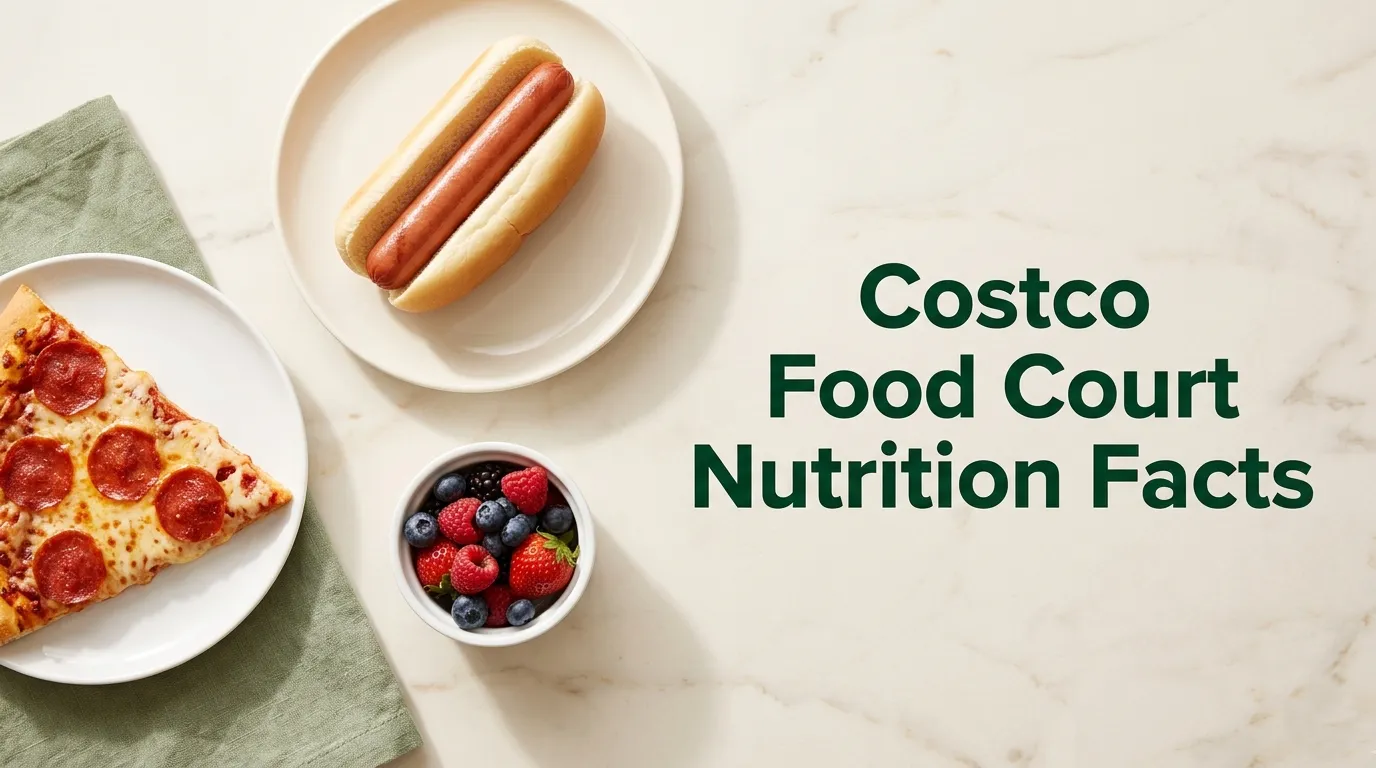
The Costco food court nutrition facts reveal that most items contain between 400 and 800 calories per serving, with sodium levels that frequently exceed half of the daily recommended limit in a single item. You can eat at the Costco food court and still support your health goals, but you need to know exactly which numbers you’re working with and where the biggest nutritional concerns actually sit.
The American Heart Association recommends that adults consume no more than 2,300 milligrams of sodium per day, with an ideal limit of 1,500 milligrams for most adults. One Costco hot dog and soda combo delivers roughly 1,700 milligrams of sodium and 550 calories before you factor in the drink. That single meal uses up nearly three-quarters of your daily sodium budget. The Dietary Guidelines for Americans 2020-2025 similarly cap saturated fat at less than 10 percent of total daily calories, which means roughly 20 grams on a standard 2,000-calorie eating pattern. Several Costco food court items approach or cross that threshold in one sitting.
This guide walks you through every major Costco food court item with complete macronutrient and micronutrient breakdowns, sodium and saturated fat context, sugar content analysis, and practical modification strategies. You’ll learn exactly which numbers matter most for your specific health situation and how to make an informed decision the next time you’re standing in line.
Costco Food Court Nutrition Facts: The Complete Overview
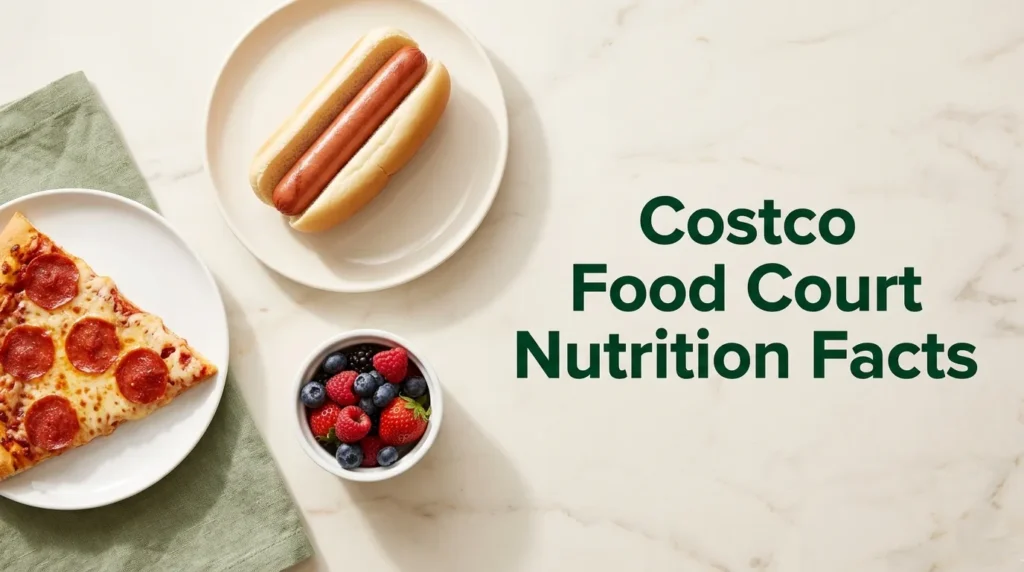
Costco food court nutrition facts show a menu built for value and indulgence, where most items range from 400 to 800 calories and deliver protein amounts between 15 and 40 grams, but also pack sodium levels that regularly exceed 1,000 milligrams per serving. The food court menu in 2026 includes the all-beef hot dog, cheese pizza slice, pepperoni pizza slice, chicken bake, churro, berry smoothie, and rotating seasonal items that vary by warehouse location.
The nutritional profile of Costco food court food follows a consistent pattern across the menu: generous portions, refined carbohydrates, moderate to high protein, and sodium levels that dominate the nutritional conversation. Enriched wheat flour forms the base of the pizza dough, hot dog bun, chicken bake crust, and churro. Soybean oil and palm oil appear across multiple items as the primary fat sources. The protein comes from beef, chicken, and cheese, which also contribute saturated fat and additional sodium.
Understanding these nutrition facts matters because Costco does not prominently display nutritional information at the food court counter itself. The FDA Menu Labeling Rule requires chain restaurants with 20 or more locations to provide calorie information on menus, and Costco complies by making nutritional data available through their website and upon request. You won’t see a calorie count posted above the pizza warmer while you’re ordering, which means knowing the numbers before you go changes how you order.
| Nutrient | Daily Target (2,000-Calorie Diet) | Where Costco Items Typically Land |
|---|---|---|
| Calories | 2,000 (weight maintenance) | 400 to 800 per single item |
| Total Fat | 65g (20-35% of calories) | 18g to 40g per item |
| Saturated Fat | Less than 20g (AHA guideline) | 7g to 20g per item |
| Sodium | Less than 2,300mg (AHA) | 500mg to 2,100mg per item |
| Protein | 50g (minimum RDA) | 15g to 40g per item |
| Added Sugars | Less than 50g (USDA) | 0g to 70g per item |
| Fiber | 25g to 30g (USDA) | 1g to 4g per item |
The Dietary Guidelines for Americans 2020-2025 emphasize that most adults underconsume dietary fiber, potassium, calcium, and vitamin D while overconsuming sodium, saturated fat, and added sugars. Costco food court items amplify this pattern. You’ll get plenty of sodium and refined carbohydrates. You’ll get almost no fiber. The protein numbers are genuinely useful, but they come packaged with nutritional trade-offs worth understanding before you order.
Complete Nutritional Breakdown: Every Costco Food Court Item Analyzed
A complete nutritional breakdown of Costco food court items shows the hot dog at 550 calories, a cheese pizza slice at 700 calories, pepperoni pizza at 710 calories, the chicken bake at 770 calories, a churro at 400 calories, and the berry smoothie at 290 calories for a 16-ounce serving. These numbers represent the standard serving as served, without modifications or condiment changes.
Each item carries a distinct nutritional fingerprint that goes well beyond calorie count. The hot dog delivers the highest sodium per calorie of any menu item. The chicken bake packs the most total calories and the most protein. The cheese pizza slice lands in the middle on most metrics but contributes meaningful saturated fat. The berry smoothie looks moderate in calories but contains more sugar than a standard candy bar.
Macronutrient distribution varies dramatically across the menu. The hot dog and chicken bake deliver protein-to-fat ratios that lean useful for satiety, while the churro and smoothie tilt heavily toward carbohydrates with minimal protein. None of the items provide meaningful fiber content. The USDA FoodData Central database confirms that comparable fast-food and food-court items typically deliver fiber amounts under 4 grams per serving, and Costco’s menu aligns with this pattern.
| Item | Calories | Total Fat | Saturated Fat | Carbs | Protein | Sodium | Fiber | Sugar |
|---|---|---|---|---|---|---|---|---|
| Hot Dog | 550 | 32g | 12g | 46g | 26g | 1,700mg | 2g | 8g |
| Cheese Pizza (1 slice) | 700 | 28g | 13g | 78g | 34g | 1,370mg | 4g | 8g |
| Pepperoni Pizza (1 slice) | 710 | 30g | 14g | 76g | 34g | 1,590mg | 3g | 8g |
| Chicken Bake | 770 | 30g | 11g | 79g | 40g | 2,100mg | 3g | 6g |
| Churro | 400 | 20g | 4g | 54g | 4g | 500mg | 1g | 24g |
| Berry Smoothie (16 oz) | 290 | 1.5g | 0.5g | 67g | 2g | 120mg | 1g | 55g |
Micronutrient content across Costco food court items remains limited. Enriched wheat flour adds thiamine, riboflavin, niacin, folic acid, and reduced iron to the pizza crust, hot dog bun, and chicken bake crust. The cheese on pizza items contributes calcium at roughly 20 to 30 percent of the Daily Value per slice. The beef hot dog delivers iron at approximately 20 percent DV. Beyond these contributions, Costco food court food does not provide meaningful amounts of potassium, vitamin D, vitamin C, or magnesium. The Academy of Nutrition and Dietetics notes that restaurant and food court meals often lack the fruit, vegetable, and whole-grain components that supply the micronutrients most adults underconsume.
Key Takeaway: The Costco food court menu delivers substantial protein and calories in every savory item but consistently falls short on fiber, potassium, and most vitamins and minerals while overshooting sodium targets by a wide margin.
Costco Food Court Calories: How Each Item Compares
Costco food court calories range from 290 in a berry smoothie to 770 in a chicken bake, with the hot dog at 550, churro at 400, and pizza slices at 700 to 710 calories. Placed in the context of a standard 2,000-calorie eating pattern, a single Costco food court item represents 15 to 39 percent of your total daily calorie budget.
Calorie density varies significantly between items when you account for satiety. The chicken bake’s 770 calories come with 40 grams of protein, which research consistently links to greater post-meal fullness compared to refined carbohydrates or fat alone. The berry smoothie’s 290 calories seem modest on paper, but 55 grams of sugar in liquid form does not trigger the same satiety signaling as solid food. A 2020 review published in the journal Nutrients found that liquid calories from sugar-sweetened beverages produce weaker satiety responses than solid foods matched for calorie content, which means you may feel hungrier sooner after a smoothie than after a protein-containing solid item even when calorie counts are lower.
Practical calorie management at the Costco food court comes down to portion awareness. A single pizza slice is large, roughly double the size of a standard frozen pizza slice. The hot dog bun alone contributes approximately 200 calories, all from refined flour. The churro, at 400 calories, functions nutritionally as a dessert item despite its frequent purchase alongside a main item. If you pair a hot dog with a churro, you’re at 950 calories before considering a drink.
| Item | Calories | % of 2,000-Calorie Day | Satiety Potential |
|---|---|---|---|
| Berry Smoothie (16 oz) | 290 | 14.5% | Low (liquid sugar, minimal protein) |
| Churro | 400 | 20% | Low (refined carbs, no protein) |
| Hot Dog | 550 | 27.5% | Moderate to high (26g protein) |
| Cheese Pizza (1 slice) | 700 | 35% | Moderate to high (34g protein) |
| Pepperoni Pizza (1 slice) | 710 | 35.5% | Moderate to high (34g protein) |
| Chicken Bake | 770 | 38.5% | High (40g protein) |
The calorie numbers alone don’t tell you whether an item supports your health goals. A 550-calorie hot dog eaten as a planned meal fits easily into a weight-maintenance or even weight-loss eating pattern when the rest of the day’s food is nutrient-dense and fiber-rich. The same 550 calories becomes a problem when the item replaces what would have been a vegetable-containing, fiber-providing, lower-sodium meal.
Key Takeaway: The chicken bake and pizza slices pack the most calories but also the most protein, while the smoothie and churro deliver fewer calories but far less nutritional staying power.
Costco Hot Dog Nutrition: What’s Really in That $1.50 Dog
Costco hot dog nutrition breaks down to 550 calories, 32 grams of total fat, 12 grams of saturated fat, 46 grams of carbohydrates, 26 grams of protein, and 1,700 milligrams of sodium per hot dog and bun combination. The hot dog itself is a quarter-pound all-beef frankfurter made from Kirkland Signature beef, and the bun is a steamed enriched wheat flour roll.
The protein content at 26 grams is genuinely useful. For context, the Recommended Dietary Allowance for protein is 0.8 grams per kilogram of body weight, which works out to roughly 55 grams per day for a 150-pound adult. The Costco hot dog covers nearly half of that minimum in a single item. The protein comes from beef, which provides all nine essential amino acids in proportions the body can use for muscle maintenance, enzyme production, and immune function.
The sodium number at 1,700 milligrams is the real story. The American Heart Association identifies 2,300 milligrams as the upper daily limit for sodium intake, with 1,500 milligrams as the ideal target for most adults, particularly those with hypertension, African American adults, and people over age 50. One Costco hot dog uses 74 percent of the upper limit and exceeds the ideal target entirely. Sodium in the hot dog comes from salt used in the beef frankfurter processing, sodium compounds in the bun’s leavening system, and any condiments added at the self-serve station.
| Nutrient | Hot Dog Amount | % Daily Value (2,000-Calorie Diet) |
|---|---|---|
| Calories | 550 | 27.5% |
| Total Fat | 32g | 41% (based on 78g target) |
| Saturated Fat | 12g | 60% (based on 20g AHA limit) |
| Cholesterol | 65mg | 22% |
| Sodium | 1,700mg | 74% (based on 2,300mg AHA limit) |
| Total Carbohydrates | 46g | 17% |
| Dietary Fiber | 2g | 7% |
| Total Sugars | 8g | N/A (no DV for total sugars) |
| Protein | 26g | 52% (based on 50g minimum) |
| Iron | 3.6mg | 20% |
| Calcium | 200mg | 15% |
| Potassium | 300mg | 6% |
The hot dog bun contains enriched wheat flour, which means refined white flour with added B vitamins and iron. This enrichment replaces some but not all of the nutrients lost during grain processing. The bun contributes roughly 200 calories, 38 grams of carbohydrates, and minimal fiber. If you were to eat the hot dog without the bun, you’d save approximately 200 calories and 38 grams of refined carbohydrates while keeping the protein intact, though the eating experience becomes notably less convenient.
People with hypertension, kidney disease, or heart failure should approach the Costco hot dog with genuine caution. The 1,700-milligram sodium load represents a physiologically meaningful amount for anyone on a sodium-restricted diet, which is typically capped at 1,500 to 2,000 milligrams per day when prescribed by a physician for these conditions. A registered dietitian can help you determine whether an occasional Costco hot dog fits within your specific sodium prescription.
Key Takeaway: The Costco hot dog delivers useful protein but the 1,700 milligrams of sodium makes it one of the saltiest single fast-food items available, using nearly three-quarters of your daily sodium limit in one serving.
Costco Pizza Slice Calories: Cheese vs. Pepperoni vs. Combo
A single slice of Costco cheese pizza contains 700 calories, and a pepperoni slice comes in at 710 calories. Costco pizza slices are notably large, weighing approximately 224 grams for cheese and 247 grams for pepperoni, which explains the higher calorie count compared to a standard chain pizza slice that typically lands between 250 and 350 calories.
The calorie difference between cheese and pepperoni is minimal at just 10 calories. The nutritional differences show up in the fat and sodium profiles rather than the calorie count. Pepperoni adds roughly 2 grams of additional total fat, 1 extra gram of saturated fat, and 220 additional milligrams of sodium. These differences come from the cured pork and beef pepperoni, which contributes fat, salt, and sodium nitrite as a curing agent.
Costco pizza uses a thick, yeasted crust made from enriched wheat flour, water, soybean oil, salt, sugar, and yeast. The cheese blend typically includes part-skim mozzarella and provolone. The tomato sauce base contains tomato puree, salt, sugar, and spices. The combination of refined flour crust, full-fat cheese, and oil creates a calorie-dense food that delivers 28 to 30 grams of fat per slice, of which 13 to 14 grams are saturated.
| Nutrient | Cheese Pizza (1 slice) | Pepperoni Pizza (1 slice) | Difference |
|---|---|---|---|
| Calories | 700 | 710 | +10 |
| Total Fat | 28g | 30g | +2g |
| Saturated Fat | 13g | 14g | +1g |
| Carbohydrates | 78g | 76g | -2g |
| Protein | 34g | 34g | 0g |
| Sodium | 1,370mg | 1,590mg | +220mg |
| Fiber | 4g | 3g | -1g |
| Sugar | 8g | 8g | 0g |
| Serving Weight | 224g | 247g | +23g |
The 34 grams of protein in a Costco pizza slice is a meaningful amount that contributes to satiety. The cheese provides casein and whey proteins, which are complete proteins containing all essential amino acids. The crust contributes roughly 10 to 12 grams of gluten protein from wheat, though this protein is incomplete on its own and becomes complementary when paired with the cheese’s amino acid profile.
If you’re tracking calories for weight management, the practical reality is that one Costco pizza slice functions as an entire meal’s worth of calories for many people. For a 2,000-calorie eating pattern divided into three meals, each meal ideally lands around 600 to 700 calories. The pizza slice fits that framework on calories alone, but the sodium and saturated fat numbers mean the rest of the day’s food should emphasize potassium-rich vegetables, whole grains, and lean protein to balance the nutritional ledger.
Costco Pepperoni Pizza Nutrition: A Closer Look
Costco pepperoni pizza nutrition per slice includes 710 calories, 30 grams of total fat, 14 grams of saturated fat, 76 grams of carbohydrates, 34 grams of protein, and 1,590 milligrams of sodium. The pepperoni adds cured pork and beef with seasoning that increases both the fat and sodium content beyond the cheese-only version.
The saturated fat in a pepperoni slice reaches 14 grams, which represents 70 percent of the American Heart Association’s recommended daily limit of 20 grams for a 2,000-calorie diet. Saturated fat intake is linked to increased low-density lipoprotein cholesterol levels when consumed in excess, and the AHA recommends limiting saturated fat to 5 to 6 percent of total calories for people who need to lower their cholesterol. For someone following that stricter guideline, 14 grams of saturated fat in a single item nearly exhausts or exceeds the entire day’s allowance.
The pepperoni itself undergoes a curing process that involves sodium nitrite, salt, sugar, and spices. Sodium nitrite serves as a preservative that inhibits bacterial growth and maintains the reddish color of cured meats. The International Agency for Research on Cancer classifies processed meat as a Group 1 carcinogen based on evidence linking high processed meat intake to colorectal cancer risk. This classification does not mean that eating one pepperoni pizza slice causes cancer. It means the weight of epidemiological evidence shows an association between regular, high-volume processed meat consumption and elevated cancer risk over time.
| Nutrient | Pepperoni Pizza Amount | % Daily Value or Guideline |
|---|---|---|
| Calories | 710 | 35.5% of 2,000-calorie diet |
| Saturated Fat | 14g | 70% of AHA 20g daily limit |
| Sodium | 1,590mg | 69% of AHA 2,300mg upper limit |
| Protein | 34g | 62% of 50g minimum RDA |
| Carbohydrates | 76g | 28% of 275g daily target |
| Fiber | 3g | 10% of 30g daily target |
The sodium at 1,590 milligrams is high enough that anyone monitoring blood pressure should take it seriously. The Dietary Guidelines for Americans 2020-2025 identifies sodium reduction as a key public health priority, noting that average American sodium intake hovers around 3,400 milligrams per day, well above the recommended limits. A single pepperoni pizza slice delivers nearly half of that average intake in one food item.
If you want the pepperoni pizza experience with a slightly better nutritional profile, blotting the surface oil with a napkin removes some of the rendered fat. This small action won’t meaningfully change the saturated fat absorbed into the cheese and crust during baking, but it can remove roughly 1 to 2 grams of surface fat. Asking for a half-slice, which some Costco locations may accommodate depending on staffing and policy, reduces all nutrient numbers by 50 percent.
Costco Cheese Pizza Slice Calories and Full Macro Profile
Costco cheese pizza slice calories total 700, with a macronutrient breakdown of 28 grams of fat, 78 grams of carbohydrates, and 34 grams of protein per 224-gram slice. The cheese pizza is the simplest pizza option on the menu and serves as the nutritional baseline against which the pepperoni version adds more fat and sodium.
The carbohydrate count at 78 grams is substantial. For someone managing type 2 diabetes or prediabetes, the American Diabetes Association suggests that a typical meal contain 45 to 60 grams of carbohydrates as a starting point, with individual adjustments based on blood glucose response. A single Costco cheese pizza slice exceeds the upper end of that general guidance by 30 percent before any side items or beverages enter the picture. The carbohydrates come almost entirely from the refined wheat flour crust and the sugars in the tomato sauce.
The 34 grams of protein in the cheese pizza slice ranks it among the higher-protein fast-food pizza options available. The combination of mozzarella and provolone cheeses delivers complete protein with a favorable amino acid profile. The protein content helps moderate the blood sugar response to the 78 grams of carbohydrates by slowing gastric emptying and stimulating insulin secretion, though the total carbohydrate load remains high.
| Nutrient | Cheese Pizza Amount | % Daily Value |
|---|---|---|
| Calories | 700 | 35% |
| Total Fat | 28g | 36% |
| Saturated Fat | 13g | 65% (of AHA 20g limit) |
| Trans Fat | 0.5g | N/A (should be as low as possible) |
| Cholesterol | 55mg | 18% |
| Sodium | 1,370mg | 60% (of AHA 2,300mg limit) |
| Total Carbohydrates | 78g | 28% |
| Dietary Fiber | 4g | 14% |
| Total Sugars | 8g | N/A |
| Protein | 34g | 68% (of 50g minimum) |
| Calcium | 350mg | 27% |
| Iron | 3.5mg | 19% |
| Potassium | 250mg | 5% |
The calcium content at 350 milligrams provides roughly 27 percent of the 1,000 to 1,200 milligram daily recommendation for adults. This calcium comes from the cheese and is reasonably bioavailable, though the high sodium content of the pizza partially offsets calcium retention because excess dietary sodium increases urinary calcium excretion. A 2021 study published in the journal Nutrients found that high-sodium meals acutely increase calciuria, the amount of calcium excreted in urine.
The 4 grams of fiber in the cheese pizza slice comes from the enriched flour crust, which retains a small amount of the wheat grain’s original fiber. This is not a meaningful fiber contribution. The USDA Dietary Guidelines recommend 25 to 30 grams of fiber daily for adults, and a single pizza slice covers only about 14 percent of that minimum. If the rest of your day does not include beans, lentils, vegetables, whole grains, or fruit, you will fall well short of the fiber target.
Costco Chicken Bake Nutrition Facts: The Complete Numbers
Costco chicken bake nutrition facts show 770 calories, 30 grams of total fat, 11 grams of saturated fat, 79 grams of carbohydrates, 40 grams of protein, and 2,100 milligrams of sodium per 397-gram serving. The chicken bake is the highest-calorie and highest-protein item on the standard Costco food court menu.
The chicken bake consists of a baked dough shell filled with chicken breast strips, mozzarella cheese, provolone cheese, Caesar dressing, bacon bits, and green onion. The dough is an enriched wheat flour-based bread similar to a pizza crust, brushed with oil or butter before baking to create a golden exterior. The filling combines protein from chicken and cheese with fat from cheese and Caesar dressing, wrapped in a refined carbohydrate shell.
The protein at 40 grams makes the chicken bake the most protein-dense item on the Costco food court menu. For someone aiming for 1.6 grams of protein per kilogram of body weight, which research published in the American Journal of Clinical Nutrition identifies as useful for muscle maintenance during weight loss, a 150-pound adult would target roughly 109 grams daily. The chicken bake covers 37 percent of that higher target in a single item.
| Nutrient | Chicken Bake Amount | Comparison Context |
|---|---|---|
| Calories | 770 | Highest on the standard menu |
| Total Fat | 30g | Equivalent to 6 pats of butter |
| Saturated Fat | 11g | 55% of AHA daily limit |
| Carbohydrates | 79g | Equivalent to 5 slices of bread |
| Protein | 40g | Highest protein item on the menu |
| Sodium | 2,100mg | 91% of AHA 2,300mg upper limit |
| Fiber | 3g | Equivalent to half an apple |
| Sugar | 6g | Relatively low for the calorie count |
The sodium at 2,100 milligrams is the highest of any Costco food court item and approaches the entire 2,300-milligram daily upper limit recommended by the American Heart Association. The sodium sources include salt in the dough, cheese, Caesar dressing, bacon, and chicken. The Caesar dressing alone typically contributes 200 to 400 milligrams of sodium per ounce, and the chicken bake contains several ounces of dressing mixed into the filling.
Anyone with hypertension, congestive heart failure, kidney disease, or a physician-prescribed sodium restriction should avoid the chicken bake or plan the rest of their day’s sodium intake near zero, which is extremely difficult without preparing all other food from scratch using no added salt. A registered dietitian can help you calculate whether an occasional chicken bake fits within a medically necessary sodium budget.
The ingredient list includes several additives worth noting. The Caesar dressing typically contains soybean oil, egg yolk, cheese, salt, and preservatives. The bacon adds additional sodium, saturated fat, and sodium nitrite. The enriched flour in the dough provides added B vitamins and iron. None of these ingredients individually make the chicken bake unhealthy, but the cumulative sodium load and the combination of refined carbohydrates with saturated fat make this an item best treated as an occasional indulgence rather than a routine lunch.
Key Takeaway: The chicken bake delivers the most protein of any Costco food court item at 40 grams, but the 2,100 milligrams of sodium pushes it to 91 percent of your daily sodium limit, making it the saltiest option on the menu.
Costco Berry Smoothie Nutrition: Sugar, Calories, and Ingredients
Costco berry smoothie nutrition reveals 290 calories, 1.5 grams of total fat, 67 grams of carbohydrates, 2 grams of protein, and 55 grams of sugar per 16-ounce serving. The smoothie appears moderate in calories but hides a sugar load that exceeds the American Heart Association’s daily added sugar recommendation of 36 grams for men and 25 grams for women in a single drink.
The berry smoothie ingredient list typically includes a berry puree blend of strawberries, blueberries, raspberries, and blackberries, combined with apple juice concentrate, nonfat yogurt, and ice. The sugar comes from both the naturally occurring fruit sugars in the berries and the concentrated fruit juice used as a sweetener and flavor base. The USDA and FDA define added sugars as sugars that are added during processing or packaged as such, which includes fruit juice concentrates used to sweeten foods. The Dietary Guidelines for Americans 2020-2025 recommend limiting added sugars to less than 10 percent of total daily calories, which equals 50 grams on a 2,000-calorie eating pattern.
The protein content at 2 grams is negligible and comes from the small amount of nonfat yogurt in the blend. This protein amount does not meaningfully slow the blood sugar response to the 55 grams of sugar. A 2019 study in the journal Nutrients found that sugar-sweetened beverages consumed without protein, fat, or fiber produce a rapid blood glucose spike followed by a reactive insulin response that can leave you feeling hungry and low-energy within an hour or two of consumption.
| Nutrient | Berry Smoothie Amount | Health Guideline Context |
|---|---|---|
| Calories | 290 | Moderate for a beverage |
| Total Fat | 1.5g | Low |
| Saturated Fat | 0.5g | Low |
| Carbohydrates | 67g | Equivalent to 4 slices of bread |
| Total Sugars | 55g | Exceeds AHA added sugar rec for all adults |
| Protein | 2g | Negligible for satiety |
| Sodium | 120mg | Low |
| Fiber | 1g | Very low for a fruit-based item |
| Vitamin C | 30mg | 33% DV (useful) |
| Calcium | 80mg | 6% DV |
The vitamin C content at roughly 30 milligrams, or 33 percent of the Daily Value, comes from the berry blend and represents one of the few meaningful micronutrient contributions on the Costco food court menu. Berries are naturally rich in vitamin C, anthocyanins, and other polyphenol antioxidants. The processing and pasteurization involved in a food-court smoothie likely reduces some of these heat-sensitive compounds, but the final product retains a portion of the original fruit’s micronutrient value.
If you enjoy the berry smoothie but want to reduce the sugar impact, ordering the smallest size available is your most straightforward strategy. Some Costco locations may offer a smaller cup size upon request. Drinking the smoothie alongside a protein-containing food item rather than on an empty stomach also moderates the blood sugar response by slowing gastric emptying. The smoothie’s 2 grams of protein on its own does not accomplish this.
Costco Churro Calories and What Makes It So Calorie-Dense
Costco churro calories total 400 for a single churro weighing approximately 70 grams. The churro is a fried dough pastry coated in cinnamon sugar, and its calorie density comes from the combination of refined wheat flour, frying oil, and sugar coating.
The churro’s 400 calories break down into roughly 20 grams of fat, 54 grams of carbohydrates, and 4 grams of protein. The fat comes primarily from the frying oil absorbed during preparation. Costco churros are fried in a vegetable oil blend that may include soybean oil, palm oil, or a combination depending on supply chain and regional sourcing. The frying process drives the calorie count up significantly compared to a baked version of the same dough, which would contain roughly half the fat.
The carbohydrate count at 54 grams includes approximately 24 grams of sugar, most of which comes from the cinnamon-sugar coating applied after frying. The dough itself contains some added sugar, but the coating is the primary source. The American Heart Association recommends that women limit added sugars to no more than 25 grams per day and men to no more than 36 grams. A single Costco churro delivers nearly the entire day’s added sugar allowance for a woman in one dessert item.
| Nutrient | Churro Amount | Daily Value Context |
|---|---|---|
| Calories | 400 | 20% of 2,000-calorie diet |
| Total Fat | 20g | 26% DV |
| Saturated Fat | 4g | 20% of AHA limit |
| Carbohydrates | 54g | 20% DV |
| Dietary Fiber | 1g | 3% DV |
| Total Sugars | 24g | N/A |
| Protein | 4g | 8% of 50g minimum |
| Sodium | 500mg | 22% of AHA limit |
| Iron | 1.8mg | 10% DV |
The sodium at 500 milligrams is moderate but worth noting when the churro is often purchased as an add-on to a main item. A hot dog plus a churro equals 1,050 calories and 2,200 milligrams of sodium. A pepperoni pizza slice plus a churro hits 1,110 calories and 2,090 milligrams of sodium. These pairings push sodium intake to or beyond the daily upper limit in a single food-court visit.
The churro provides almost no protein, fiber, or micronutrients beyond the iron added through enriched flour fortification. It functions as a pure treat food. There is no nutritional case to make for the churro as anything other than an occasional indulgence. The Academy of Nutrition and Dietetics uses the term “discretionary calories” for foods like this, referring to the calories remaining after meeting nutrient needs through whole, minimally processed foods. For most adults, discretionary calories range from 100 to 300 per day depending on activity level and calorie needs.
Key Takeaway: The Costco churro at 400 calories and 24 grams of sugar functions as a pure dessert item with minimal nutritional value, and pairing it with any main menu item pushes most people past their daily sodium and added sugar recommendations.
Costco Food Court Protein: Which Items Deliver the Most
Costco food court protein content ranges from 2 grams in the berry smoothie to 40 grams in the chicken bake, with the hot dog at 26 grams, cheese pizza at 34 grams, pepperoni pizza at 34 grams, and the churro at 4 grams. The savory menu items all deliver substantial protein that supports satiety and muscle maintenance.
The chicken bake’s 40 grams of protein leads the menu. This protein comes from the chicken breast strips and the mozzarella and provolone cheese blend. Chicken breast is a complete protein source with a high biological value, meaning the body efficiently uses the amino acids for tissue repair, enzyme production, and immune function. The cheese adds casein protein, which digests more slowly than the chicken’s muscle proteins and may contribute to prolonged satiety.
The pizza slices at 34 grams of protein each rank second on the menu. The cheese blend drives most of this protein content. Mozzarella and provolone are both cow’s milk cheeses that deliver roughly 7 grams of protein per ounce. Each Costco pizza slice contains approximately 4 to 5 ounces of cheese, accounting for 28 to 35 grams of protein before considering the crust’s contribution. The wheat gluten in the crust adds a few additional grams, though wheat protein is incomplete on its own.
The hot dog’s 26 grams of protein come from beef. Beef protein contains all essential amino acids and is particularly rich in leucine, the branched-chain amino acid that plays a key role in stimulating muscle protein synthesis. For older adults concerned about age-related muscle loss, a 2021 study in the journal Nutrients identified 25 to 30 grams of high-quality protein per meal as a threshold for optimally stimulating muscle protein synthesis. The Costco hot dog meets that threshold.
| Item | Protein (g) | Protein per 100 Calories | Protein Quality |
|---|---|---|---|
| Chicken Bake | 40g | 5.2g | High (chicken, cheese) |
| Cheese Pizza | 34g | 4.9g | Moderate to high (cheese, wheat) |
| Pepperoni Pizza | 34g | 4.8g | Moderate to high (cheese, pepperoni, wheat) |
| Hot Dog | 26g | 4.7g | Moderate to high (beef, wheat) |
| Churro | 4g | 1.0g | Low (refined wheat) |
| Berry Smoothie | 2g | 0.7g | Low (trace yogurt) |
The protein efficiency ratio, or grams of protein per 100 calories, provides another way to evaluate these items. The chicken bake leads at 5.2 grams of protein per 100 calories. The pizza and hot dog cluster closely together around 4.7 to 4.9 grams. These ratios mean that roughly 19 to 21 percent of calories in these items come from protein. While this is not as lean as a grilled chicken breast at roughly 80 percent protein calories, it is comparable to many standard mixed meals and meaningfully higher than most fast-food burger and fries combinations.
Costco Food Court Sodium: The Real Health Concern
Costco food court sodium content is the most significant nutritional concern on the entire menu. Every savory item exceeds 1,000 milligrams of sodium, with the chicken bake hitting 2,100 milligrams and the hot dog at 1,700 milligrams. The American Heart Association recommends a daily upper limit of 2,300 milligrams, with an ideal target of 1,500 milligrams for most adults.
Sodium functions as a preservative, flavor enhancer, and texture modifier in the Costco food court’s processed ingredients. The beef hot dog contains salt and sodium compounds for curing and flavor. The pizza dough includes salt for gluten development and taste. The cheese on the pizza delivers sodium both from the cheese-making process and from added salt. The chicken bake’s Caesar dressing, bacon, cheese, and dough each contribute sodium independently, which is how a single item reaches 2,100 milligrams.
Excess dietary sodium is strongly linked to hypertension, the leading preventable risk factor for cardiovascular disease worldwide. The Centers for Disease Control and Prevention estimates that approximately 47 percent of American adults have hypertension or are taking antihypertensive medication. For these individuals, reducing sodium intake is one of the most effective dietary strategies for blood pressure management. A 2021 meta-analysis published in the British Medical Journal found that sodium reduction lowers blood pressure in a dose-response manner, with greater reductions producing greater blood pressure benefits.
| Item | Sodium (mg) | % of AHA 2,300mg Limit | % of AHA 1,500mg Ideal |
|---|---|---|---|
| Chicken Bake | 2,100mg | 91% | 140% |
| Hot Dog | 1,700mg | 74% | 113% |
| Pepperoni Pizza | 1,590mg | 69% | 106% |
| Cheese Pizza | 1,370mg | 60% | 91% |
| Churro | 500mg | 22% | 33% |
| Berry Smoothie | 120mg | 5% | 8% |
If you consume a chicken bake, you have approximately 200 milligrams of sodium remaining for the entire rest of the day to stay within the 2,300-milligram upper limit. To put that number in perspective, one slice of standard whole-wheat bread contains roughly 130 to 160 milligrams of sodium. A cup of plain cooked oatmeal contains about 2 milligrams. The difference between eating mostly whole, unprocessed foods and eating processed or restaurant food is the difference between easily meeting sodium targets and exceeding them before lunch.
For anyone with a sodium-related health condition, a registered dietitian can provide individualized guidance on whether an occasional high-sodium Costco food court visit fits into your overall eating pattern. A physician may also recommend home blood pressure monitoring before and after high-sodium meals to observe your individual blood pressure response.
Key Takeaway: Sodium is the single biggest nutritional red flag on the Costco food court menu, with four of six standard items delivering more than 1,300 milligrams and two items exceeding 1,700 milligrams in a single serving.
Costco Food Court Saturated Fat: AHA Limits and How Items Stack Up
Costco food court saturated fat content ranges from 0.5 grams in the berry smoothie to 14 grams in the pepperoni pizza slice, with the cheese pizza at 13 grams, hot dog at 12 grams, chicken bake at 11 grams, churro at 4 grams, and the smoothie at 0.5 grams. The American Heart Association recommends limiting saturated fat to no more than 5 to 6 percent of total daily calories, which works out to approximately 13 grams on a 2,000-calorie diet.
Saturated fat in the Costco food court comes primarily from animal-based ingredients. The beef hot dog contains saturated fat from beef muscle and fat tissue. The pizza slices derive saturated fat from the mozzarella and provolone cheese blend. The chicken bake includes saturated fat from cheese, bacon, and Caesar dressing. The churro’s saturated fat comes from the frying oil, though the amount is modest because vegetable oils used in commercial frying are typically lower in saturated fat than butter or lard.
The saturated fat numbers become most concerning when viewed against the AHA’s stricter 5 to 6 percent guideline. At 13 grams, a single slice of cheese pizza reaches or slightly exceeds the entire day’s saturated fat allowance for someone following heart-healthy eating patterns. The pepperoni pizza at 14 grams definitively exceeds it. These figures don’t mean you can never eat a Costco pizza slice. They mean that if you do, the rest of your day’s food should emphasize unsaturated fat sources like olive oil, avocado, nuts, and fish while minimizing additional saturated fat from butter, cream, fatty meats, and cheese.
| Item | Saturated Fat | % of AHA 13g Limit (5-6% of 2,000 cal) | % of AHA 20g Limit (10% of 2,000 cal) |
|---|---|---|---|
| Pepperoni Pizza | 14g | 108% | 70% |
| Cheese Pizza | 13g | 100% | 65% |
| Hot Dog | 12g | 92% | 60% |
| Chicken Bake | 11g | 85% | 55% |
| Churro | 4g | 31% | 20% |
| Berry Smoothie | 0.5g | 4% | 2.5% |
The link between saturated fat intake and cardiovascular disease risk has been debated in nutrition science over the past decade. Some meta-analyses have questioned the strength of the association, while major health organizations maintain their recommendations based on the totality of evidence. The American Heart Association’s 2017 presidential advisory, published in the journal Circulation, reaffirmed that reducing saturated fat intake and replacing it with polyunsaturated and monounsaturated fat lowers cardiovascular disease risk. The Dietary Guidelines for Americans 2020-2025 similarly recommend limiting saturated fat to less than 10 percent of calories.
For most people without existing heart disease or elevated LDL cholesterol, an occasional high-saturated-fat meal is not a health crisis. The concern applies to the dietary pattern over time. If Costco food court visits are infrequent and the rest of your eating pattern emphasizes unsaturated fats, fiber, vegetables, and whole grains, a single pizza slice fits into an overall healthy diet. If Costco food court pizza is a weekly staple, the saturated fat adds up.
Costco Food Court Sugar Content: Hidden Sources to Know
Costco food court sugar content varies dramatically across the menu, from 6 grams in the chicken bake to 55 grams in the berry smoothie. The pizza slices contain 8 grams, the hot dog contains 8 grams, and the churro contains 24 grams. The berry smoothie is the outlier and the only item where sugar represents the dominant macronutrient.
The sugar in the berry smoothie comes primarily from fruit juice concentrates used to sweeten and flavor the berry puree base. The FDA requires that added sugars be listed on nutrition facts panels, and fruit juice concentrates used as sweeteners count as added sugars under this labeling rule. The Dietary Guidelines for Americans 2020-2025 recommend limiting added sugars to less than 10 percent of daily calories, or 50 grams on a 2,000-calorie diet. The smoothie’s 55 grams of total sugar, much of which qualifies as added sugar from juice concentrates, consumes the entire day’s added sugar allowance.
The sugar in the pizza slices and hot dog bun comes from small amounts added to the dough for yeast fermentation and flavor. These sugars are modest and not a primary nutritional concern when viewed in isolation. The hot dog’s 8 grams of sugar equals roughly 2 teaspoons. The pizza’s 8 grams equals the same. These amounts are not health-threatening on their own, though they contribute to the overall pattern of refined carbohydrate intake that characterizes the Costco food court menu.
| Item | Total Sugar | Added Sugar Estimate | AHA Daily Added Sugar Rec |
|---|---|---|---|
| Berry Smoothie | 55g | ~40-45g (juice concentrates) | Men: 36g / Women: 25g |
| Churro | 24g | ~22g (coating plus dough) | Near or at women’s limit alone |
| Cheese Pizza | 8g | ~4g (dough and sauce) | Low relative to limits |
| Pepperoni Pizza | 8g | ~4g (dough and sauce) | Low relative to limits |
| Hot Dog | 8g | ~5g (bun, condiments) | Low relative to limits |
| Chicken Bake | 6g | ~3g (dough, dressing) | Low relative to limits |
The churro’s 24 grams of sugar sits in the middle. For a woman following the AHA’s 25-gram added sugar guideline, one churro nearly hits the entire day’s limit. For a man at 36 grams, the churro uses two-thirds of the allowance. The sugar here is added sugar in the most straightforward sense: refined white sugar in the cinnamon-sugar coating, with additional sugar in the dough for flavor and browning.
People with type 2 diabetes, prediabetes, or insulin resistance should pay closest attention to the berry smoothie and the churro. These items deliver concentrated sugar with minimal protein, fat, or fiber to slow absorption. A registered dietitian or certified diabetes care and education specialist can help you understand your individual carbohydrate targets and whether these items can fit into your meal plan.
Key Takeaway: The berry smoothie is the sugar outlier at 55 grams per serving, while the savory items all contain modest sugar amounts under 10 grams, making the smoothie the item to watch most closely for sugar intake.
Is Costco Food Court Food Healthy? An Honest Assessment
Is Costco food court food healthy? The answer depends entirely on your definition of healthy, your individual health status, and how frequently you eat there. By the standards of the Dietary Guidelines for Americans 2020-2025, most Costco food court items overshoot sodium, saturated fat, and refined carbohydrate targets while undershooting fiber, potassium, and vegetable content. The food is not poisonous. It is also not nutrient-dense.
A single visit is not a health crisis. The human body has remarkable capacity to handle occasional high-sodium, high-saturated-fat meals without lasting harm. The liver and kidneys process excess sodium. The digestive system handles refined carbohydrates. Metabolic flexibility allows the body to use the energy and clear the waste products. The concern with Costco food court food, as with all fast food and food court fare, is the cumulative dietary pattern over weeks, months, and years.
The research on fast food and health outcomes consistently shows that frequency matters. A 2019 study published in the journal Circulation found that higher consumption of ultra-processed foods was associated with increased cardiovascular disease risk. A 2021 study in the American Journal of Clinical Nutrition linked frequent fast-food consumption to higher calorie intake, lower diet quality, and increased risk of obesity and type 2 diabetes. Costco food court items fall into the ultra-processed food category, defined by the NOVA classification system as formulations of ingredients, mostly of industrial use, that result from a series of industrial processes.
| Health Factor | Costco Food Court Reality | What a Healthy Eating Pattern Includes Instead |
|---|---|---|
| Sodium | 500-2,100mg per item | Less than 2,300mg per day total |
| Saturated Fat | 4-14g per item | Less than 13-20g per day total |
| Fiber | 1-4g per item | 25-30g per day minimum |
| Vegetables | None in meaningful amounts | 2-3 cups per day |
| Whole Grains | None | At least half of all grains |
| Added Sugars | 3-55g per item | Less than 50g per day |
| Protein | 2-40g per item | 0.8-1.6g per kg of body weight |
The Costco food court food is healthy in the sense that it provides calories, protein, and energy at a low price point. For someone who is food-insecure, skipping meals, or unable to access better options during a busy day, a Costco hot dog or pizza slice is a functional meal that prevents hunger. For someone with well-managed blood pressure, no cardiovascular disease, and a generally nutrient-dense eating pattern, an occasional Costco food court meal is a perfectly reasonable choice.
The food is not healthy in the sense of being nutrient-dense, disease-preventive, or aligned with dietary guidelines when eaten regularly. It lacks the vegetables, whole grains, legumes, and unsaturated fats that characterize eating patterns associated with reduced chronic disease risk. The way to think about Costco food court food is as a “sometimes food” in the framework used by pediatric dietitians. It’s fine sometimes. It should not be the default.
Costco Food Court Healthy Options: What to Order and How to Modify
Costco food court healthy options exist within the constraints of a menu that was not designed with health as a primary consideration. The most defensible choices from a nutritional standpoint depend on your specific health priorities, but some general patterns emerge when you compare the menu against standard dietary guidance.
If your primary concern is calorie control for weight management, the berry smoothie at 290 calories is the lowest-calorie complete item on the menu. If your primary concern is protein for muscle maintenance or satiety, the chicken bake at 40 grams or the pizza slices at 34 grams deliver the most. If your primary concern is sodium, the berry smoothie at 120 milligrams is the only genuinely low-sodium option. If your primary concern is sugar, avoid the berry smoothie and the churro. If your primary concern is saturated fat, the berry smoothie and churro are the lowest, though the churro brings its own sugar concerns.
The concept of a single healthiest Costco food court item is less useful than understanding how each item fits your specific health profile. The Academy of Nutrition and Dietetics emphasizes that healthy eating is about the overall dietary pattern, not individual foods or meals. An occasional Costco food court visit does not define your health.
Practical modification strategies for common items:
- Hot dog: Eat it without the bun to save roughly 200 calories, 38 grams of refined carbohydrates, and approximately 300 milligrams of sodium. The protein stays intact. Add mustard instead of ketchup to reduce sugar. Skip the soda and order water, which is available at the self-serve fountain.
- Pizza slice: Order one slice and eat half now, half later. Blot the surface oil with a napkin. Pair with a side salad if you have one available at home or work. The pizza alone will not provide vegetables or fiber.
- Chicken bake: Split it with someone. Half a chicken bake provides 385 calories and 20 grams of protein, which is a reasonable meal component when paired with vegetables or a piece of fruit. The sodium remains high even at half.
- Berry smoothie: Order the smallest size available. Drink it alongside or after a protein-containing food rather than on an empty stomach. Recognize that it functions as a dessert or treat in terms of sugar content, not as a health beverage.
- Churro: Share it. One churro split between two people cuts calories and sugar by 50 percent and turns it into a reasonable small treat rather than a 400-calorie sugar load.
| Goal | Better Choice | Why | Still Watch For |
|---|---|---|---|
| Lowest Calories | Berry Smoothie (290) | Fewest total calories | 55g sugar |
| Most Protein | Chicken Bake (40g) | Highest protein for satiety | 2,100mg sodium |
| Lowest Sodium | Berry Smoothie (120mg) | Only low-sodium option | Sugar content |
| Lowest Saturated Fat | Berry Smoothie (0.5g) | Near-zero saturated fat | Sugar content |
| Lowest Sugar | Chicken Bake (6g) | Lowest sugar savory item | Sodium and calories |
| Most Balanced | Hot Dog without bun (350 cal est.) | Moderate calories, 24g protein | Still high sodium (~1,400mg) |
If you have a specific health condition such as hypertension, type 2 diabetes, kidney disease, or heart disease, the safest approach is to review the nutritional numbers with a registered dietitian who understands your individual lab values, medications, and health goals. What works for a generally healthy 30-year-old may be inappropriate for someone managing multiple chronic conditions.
Key Takeaway: No Costco food court item checks every nutritional box, but understanding your own health priorities lets you choose the item that aligns best with your goals and modify it to reduce the biggest nutritional liabilities.
Frequently Asked Questions About Costco Food Court Nutrition
What is the healthiest item at the Costco food court?
The healthiest item depends on your specific health priority. For the lowest calories, the berry smoothie at 290 calories is the lightest option, but it contains 55 grams of sugar. For the best protein-to-calorie ratio, the chicken bake delivers 40 grams of protein but also packs 2,100 milligrams of sodium. For the lowest sodium, the berry smoothie at 120 milligrams is the only item under 500 milligrams. If you are generally healthy and want a balanced choice, the hot dog without the bun saves roughly 200 calories and 38 grams of carbohydrates while keeping 24 grams of protein, though sodium remains high at approximately 1,400 milligrams.
How many calories are in a Costco hot dog and drink combo?
A Costco hot dog and 20-ounce soda combo contains approximately 800 calories. The hot dog and bun account for 550 calories, and a 20-ounce regular soda adds roughly 240 calories and 65 grams of sugar. Choosing a diet soda or water eliminates the drink calories entirely. Adding a churro to the combo pushes the total to 1,200 calories, which is 60 percent of a standard 2,000-calorie daily intake.
Does Costco have nutritional information available in-store?
Costco does not post nutritional information on menu boards at the food court counter. The FDA Menu Labeling Rule requires calorie information to be available, and Costco complies by providing nutritional data through their website and upon request at the food court. You will need to look up the nutrition facts on your phone before ordering or review them ahead of time if you want to make an informed decision while standing in line.
How much sodium is in a Costco pizza slice?
A Costco cheese pizza slice contains 1,370 milligrams of sodium. A pepperoni pizza slice contains 1,590 milligrams of sodium. These amounts represent 60 percent and 69 percent of the American Heart Association’s 2,300-milligram daily upper limit respectively. For someone following the AHA’s ideal limit of 1,500 milligrams, a single cheese pizza slice nearly hits the entire day’s target.
Is the Costco chicken bake healthy?
The Costco chicken bake provides 40 grams of protein, which is the highest on the menu and genuinely useful for satiety and muscle maintenance. It is not healthy in the context of sodium, delivering 2,100 milligrams, or 91 percent of the daily upper limit, in a single item. The chicken bake also contains 11 grams of saturated fat and 770 calories. It is best treated as an occasional indulgence rather than a regular meal, particularly for anyone managing blood pressure or cardiovascular health.
Can I eat Costco food court food and still lose weight?
You can eat Costco food court food and still lose weight if you account for the calories within your overall daily energy deficit. A 550-calorie hot dog or a 400-calorie churro fits into a weight-loss eating pattern when the rest of the day’s food is lower in calories and higher in nutrients. The challenge is that Costco food court items are not particularly satiating relative to their calorie content because they lack fiber and vegetables. You may feel hungrier later in the day compared to eating a 550-calorie meal built around lean protein, vegetables, and whole grains.
What you now know that you did not know before is that the Costco food court menu is not a nutritional monolith. The chicken bake delivers the most protein but also the most sodium. The hot dog is a reasonable protein source that becomes far more defensible without the bun. The pizza slices are huge, protein-packed, and sodium-heavy. The berry smoothie masquerades as a health item but delivers more sugar than most desserts. The churro is exactly what it looks like.
The decision about what to order comes down to your specific health profile and how this single meal fits into your week. A pepperoni pizza slice on a Saturday afternoon surrounded by otherwise nutrient-dense eating is a non-issue. A daily Costco hot dog for lunch is a genuine concern for your long-term blood pressure and cardiovascular health.
The most practical takeaway is this: know your numbers before you order. Sodium is the biggest nutritional liability on this menu. If you are going to eat at the Costco food court, make the rest of your day’s food genuinely low in sodium, rich in potassium from vegetables and fruit, and built around whole-food protein sources. That one adjustment turns an occasional Costco food court meal from a nutritional liability into a manageable choice.