What Vitamin Is Good for Your Liver? Essential Nutrients for Liver Health
Your liver handles over 500 critical functions daily, from filtering toxins to processing nutrients and regulating metabolism. The answer to what vitamin is good for your liver depends on your specific liver health concerns—but vitamin E, vitamin D, vitamin C, and the B-complex family all show documented benefits for different aspects of liver function.
Research increasingly points to specific vitamins that support liver health, particularly for people with metabolic dysfunction-associated steatotic liver disease (MASLD), previously called nonalcoholic fatty liver disease. According to the National Institutes of Health (NIH), the anti-oxidant activities of vitamins C and E help mitigate hepatocyte injury, and alterations in serum levels of vitamin D, vitamin B12, and folate show a strong correlation with liver disease severity . With MASLD now affecting an estimated 24% of adults globally, understanding which vitamins genuinely support liver function matters more than ever.
This article draws on research from the NIH Office of Dietary Supplements, the American Association for the Study of Liver Diseases (AASLD), and peer-reviewed clinical trials to give you a clear, evidence-backed answer. You’ll learn which vitamins help the liver, how they work at a biochemical level, what the research actually says about each one, and practical guidance on food sources, supplementation safety, and when to talk with a healthcare provider. No vague claims. No “liver detox” hype. Just the real science of what vitamin is good for your liver.
Understanding Liver Health: Why Vitamins Matter for This Organ
The liver is a 3-pound powerhouse that stores vitamins and minerals, metabolizes fats and carbohydrates, produces energy, and manufactures proteins for tissue repair . All blood leaving your digestive system passes through the liver before reaching the rest of your body, which means this organ is strategically positioned to process nutrients and filter out harmful substances.
Oxidative stress is one of the primary threats to liver health. When your body produces more harmful molecules called free radicals than it can neutralize, these molecules damage liver cells through a process called lipid peroxidation—essentially, they attack the fatty membranes of hepatocytes (liver cells) . This damage triggers inflammation, can lead to fat accumulation, and eventually may cause scarring (fibrosis) that reduces liver function.
Vitamins support liver health in several distinct ways. Some act as antioxidants that directly neutralize free radicals. Others serve as essential cofactors for the cytochrome P450 enzymes that your liver uses to break down medications, alcohol, and environmental toxins . Certain vitamins help your liver regenerate damaged tissue, while others influence gene expression to guide healing and repair processes.
What vitamin is good for your liver isn’t a one-size-fits-all answer. The best vitamin for your specific situation depends on your health status, whether you have fatty liver disease or other liver conditions, your diet, and whether you’re taking medications that interact with certain nutrients. Here’s what the evidence actually shows about the most researched vitamins.
Vitamin E: The Most Researched Antioxidant for Liver Health
Vitamin E is the most studied vitamin for liver health, particularly for people with MASLD. According to a review published in the journal Liver Research, vitamin E has the most significant evidence of therapeutic benefit in liver disease among all vitamins . It works as a chain-breaking antioxidant that scavenges lipid peroxyl radicals by donating a hydrogen ion from its chromanol ring—essentially stopping the chain reaction of cell damage in its tracks .
The American Association for the Study of Liver Disease (AASLD) recommends vitamin E (800 IU/day) in non-diabetic adults with biopsy-proven MASH (metabolic dysfunction-associated steatohepatitis), the more severe form of fatty liver disease . The PIVENS trial (a randomized controlled trial in adults) showed significant improvement in steatosis and inflammation in patients treated with vitamin E for 96 weeks compared to placebo . A 2024 systematic review suggested that vitamin E moderately reduced markers of liver inflammation and increased the rate of MASH resolution .
More recent research reinforces these findings. A 2025 clinical trial in China with 124 participants who had MASH but no history of diabetes found that nearly 30% of participants receiving 300 mg of vitamin E daily had improved disease based on testing, compared to 14.1% in the placebo group . This lower-dose study suggests that the benefits may be accessible without the higher risk profile of larger doses.
Vitamin E also stimulates the action of other anti-oxidative enzymes including superoxide dismutase (SOD), catalase, and glutathione peroxidase . It suppresses pro-inflammatory cytokines such as TNF-α, interleukin (IL)-1, IL-6, and IL-8, reducing inflammatory response in the liver .
Key Takeaway: Vitamin E shows the strongest evidence for liver health benefits, particularly for non-diabetic adults with fatty liver disease. But it is not safe for everyone—people with serious liver scarring, type 2 diabetes, or a history of prostate cancer in their family should approach it with caution .
Vitamin D: The Emerging Liver Health Regulator
Vitamin D has emerged as a critical regulator of liver health, and low vitamin D levels are frequently observed in chronic liver diseases . The active form of vitamin D, calcitriol, signals through the vitamin D receptor (VDR) expressed in hepatic stellate cells, Kupffer cells, and cholangiocytes—all key cell types in liver function and disease .
A 2024 study examining 3,956 adults using data from the National Health and Nutrition Examination Survey found that higher serum 25(OH)D levels were associated with reduced odds of MASLD. People in the highest quartile of vitamin D levels had 59% lower odds of MASLD compared to those in the lowest quartile . This is a strong observational finding, though causation has not been proven.
Vitamin D-VDR signaling inhibits profibrotic TGF-β1/SMAD pathways, downregulates proinflammatory cytokines, and improves insulin sensitivity . These mechanisms are directly relevant to liver health because insulin resistance and inflammation are key drivers of fatty liver disease. Vitamin D also modulates bile acid homeostasis and immune responses within the liver .
Preclinical studies support vitamin D’s protective effects, though clinical trials of vitamin D supplementation have produced mixed results . This doesn’t mean vitamin D is ineffective for liver health—it suggests that the benefits may depend on identifying responsive patient subgroups and defining optimal dosing strategies.
What vitamin is good for your liver if you have low vitamin D levels? Getting adequate vitamin D matters for overall liver function, but simply taking a supplement without knowing your serum level may not produce the desired liver-specific benefits. The NIH Office of Dietary Supplements recommends that adults get 600 IU (15 mcg) of vitamin D daily, though people with documented deficiency may need higher doses under medical supervision.
Key Takeaway: Vitamin D appears to influence multiple pathways in liver disease pathophysiology, and correcting a documented deficiency may offer clinical benefits for liver health. But supplementation results have been inconsistent in trials, so individual assessment matters.
Vitamin C: The Potent Antioxidant Protector
Vitamin C protects the liver through two primary mechanisms: neutralizing oxidative stress directly and supporting the production of glutathione, your liver’s master antioxidant . Ascorbic acid neutralizes reactive oxygen species (ROS) and oxidative stress in hepatocytes .
Research suggests that vitamin C supplementation can lower markers of oxidative stress, such as malondialdehyde (MDA), and increase antioxidant enzyme activities including superoxide dismutase (SOD) and catalase (CAT) . It supports phase II liver detoxification by maintaining adequate levels of glutathione, which is critical for conjugation reactions that make toxins water-soluble and easier to eliminate .
Vitamin C may also exert inflammation-modulation effects by modulating cytokine production and mitigating hepatic injury . In combination with vitamin E, it may help protect against liver damage from toxins and excessive alcohol consumption .
The liver stores vitamin C, but your body doesn’t produce it—you need dietary sources like citrus fruits, strawberries, bell peppers, and broccoli. A typical supplement dose for liver support is around 500 mg per day, though your needs may vary based on oxidative stress levels and overall health .
Quick Tip: Take vitamin C with iron-rich foods if you’re trying to boost iron absorption—but the liver benefit comes from its antioxidant protection, not from its role in iron metabolism.
B-Complex Vitamins: The Metabolic Support Team
The B-complex vitamins work as essential cofactors for liver metabolism and detoxification. B vitamins, particularly B2 (riboflavin), B3 (niacin), B6 (pyridoxine), B9 (folate), and B12 (cobalamin), are essential cofactors for the cytochrome P450 enzymes—the primary enzyme system your liver uses to metabolize drugs, toxins, and hormones .
Vitamin B6 deserves special attention for liver health. A 2021 open-label trial of 22 patients with nonalcoholic fatty liver disease found that vitamin B6 (90 mg/day) for 12 weeks significantly reduced hepatic fat accumulation, as measured by MRI-based proton density fat fraction, despite no significant changes in body mass index . The study authors concluded that as an inexpensive agent with few side effects, vitamin B6 could be a novel therapeutic option for treating nonalcoholic fatty liver disease .
Vitamin B12 and folate are critical for the synthesis of S-adenosylmethionine (SAMe), a key methyl donor in numerous methylation reactions that take place in liver phase II detoxification . SAMe supports glutathione levels and helps protect liver cells from damage. Deficiency in B12 or folate can impair your liver’s ability to process and eliminate toxins effectively.
The B-complex vitamins work together—deficiency in one can affect the function of others. That’s why food sources like whole grains, eggs, meat, and leafy greens are often better than isolated B vitamin supplements. For people with alcohol-associated liver disease, B vitamin supplementation is particularly important because alcohol depletes B vitamins and impairs their absorption .
Key Takeaway: B-complex vitamins, especially B6 and B12, support liver fat metabolism and detoxification. A varied diet typically provides adequate amounts, but certain conditions may warrant supplementation.
Vitamin A: Helpful at the Right Dose, Harmful in Excess
Vitamin A plays a complex role in liver health—it’s essential for liver tissue regeneration but toxic in excess . Vitamin A helps maintain the health of liver cells and supports their ability to regenerate after damage. It’s found in foods like carrots, spinach, sweet potatoes, and liver itself.
The problem with vitamin A is that it’s fat-soluble, meaning your body stores it in your liver rather than excreting it through urine. When vitamin A accumulates to excessive levels, it becomes hepatotoxic—it can actually damage the very liver cells it supports at appropriate doses .
This creates a tricky situation for anyone asking what vitamin is good for your liver and considering vitamin A. A deficiency can impair liver health and regeneration, but supplementation beyond what your body needs can cause harm. The NIH Office of Dietary Supplements notes that the Tolerable Upper Intake Level for vitamin A is 3,000 mcg (10,000 IU) per day for adults, but liver toxicity can occur at much lower doses in people with pre-existing liver disease.
Food sources of beta-carotene (the precursor to vitamin A found in colorful fruits and vegetables) are generally safe because your body converts only what it needs. Carotenoids have shown protective associations with liver health—a 2024 study found inverse associations between various carotenoids (α-carotene, β-carotene, lycopene) and MASLD risk .
Key Takeaway: If you’re considering vitamin A for liver health, prioritize food sources rich in beta-carotene over supplements. People with liver disease should be especially cautious about vitamin A supplementation and discuss it with a healthcare provider first.
Vitamin K: Essential for Clotting and Liver Support
Vitamin K is essential for blood clotting, and liver damage can compromise the liver’s ability to produce the clotting factors that depend on vitamin K . Vitamin K exists in two forms: K1 (phylloquinone) found in leafy green vegetables and K2 (menaquinone) found in fermented foods and animal products.
The liver relies on vitamin K to produce several proteins involved in blood coagulation, including prothrombin and factors VII, IX, and X. When liver function declines, the production of these proteins may be impaired, increasing bleeding risk. Adequate vitamin K status helps maintain the liver’s ability to produce these critical proteins .
Vitamin K also has a role in bone health and calcium metabolism, but its liver-specific benefit primarily relates to supporting the production of these clotting factors. Unlike vitamins E and C, vitamin K doesn’t act as an antioxidant in the liver, but its function is still vital for people with compromised liver function.
For most people, dietary vitamin K from green vegetables and fermented foods is sufficient. If you have liver disease and are at risk of bleeding complications, your healthcare provider may recommend monitoring your vitamin K status and possibly supplementing.
Key Takeaway: Vitamin K supports the liver’s role in blood clotting, but it’s not a treatment for liver damage. People with liver disease should discuss their vitamin K status with their healthcare provider.
What About Liver Cleanses and Detox Products?
Products that promise to “cleanse” or “detox” the liver are usually a bad idea. Some supplements that claim to help the liver can actually harm it . While others, such as milk thistle, are generally safe, they haven’t proved effective for improving liver health in well-designed clinical trials .
The liver is your body’s natural detoxification system—it doesn’t need additional help from expensive products that make unsubstantiated claims. The best way to keep your liver healthy is to adopt good self-care practices: reach a healthy weight, eat a balanced diet rich in fruits and vegetables, stay physically active, limit alcohol, and maintain a healthy weight .
If you’re considering any supplement for liver health, remember that vitamins and supplements can’t cure liver disease, and they’re not a substitute for healthy habits . Researchers are exploring how certain vitamins might support liver health when used alongside lifestyle changes, but no supplement should replace evidence-based treatment.
The 2026 Evidence Summary: Which Vitamin Is Good for Your Liver?
Based on the most current evidence available in 2026, here’s what we know about what vitamin is good for your liver:
Vitamin E has the strongest evidence, particularly for non-diabetic adults with biopsy-proven MASH. The AASLD recommends it as a treatment option . But it carries risks—high doses can thin the blood, increase bleeding risk, and may be associated with prostate cancer risk in men .
Vitamin D shows strong associations with reduced MASLD risk and appears to modulate multiple pathways in liver disease pathophysiology. However, clinical trial results on supplementation have been mixed .
Vitamin C provides antioxidant protection and supports glutathione production, but its liver-specific benefits are less well-established than those of vitamin E .
B-complex vitamins, especially B6 and B12, support liver metabolism and detoxification. The B6 trial showed significant reduction in liver fat .
Here are the current recommendations:
| Vitamin | Key Liver Benefit | Research Quality | Primary Caution |
|---|---|---|---|
| Vitamin E (α-tocopherol) | Reduces inflammation and steatosis | Well-established (RCTs) | Bleeding risk; not for diabetes patients; prostate cancer concern |
| Vitamin D (cholecalciferol) | Associated with lower MASLD risk | Emerging (observational + mechanistic) | Mixed trial results; dosing uncertainty |
| Vitamin C (ascorbic acid) | Antioxidant protection; supports glutathione | Well-established (biochemical) | High doses may cause GI distress |
| Vitamin B6 (pyridoxine) | Reduces hepatic fat accumulation | Promising (one RCT) | More research needed |
| B12/Folate (cobalamin, folic acid) | Supports SAMe synthesis; detoxification | Mechanistically established | Deficiency concerns in certain populations |
Frequently Asked Questions About Liver Health Vitamins
Which vitamin is best for fatty liver disease?
Vitamin E is the most researched and recommended vitamin for fatty liver disease, specifically for non-diabetic adults with MASH. According to AASLD guidelines, vitamin E (800 IU/day) can improve liver histology, reduce inflammation, and slow disease progression. However, it is not recommended for everyone—people with type 2 diabetes or significant liver scarring should avoid high-dose vitamin E. A 2025 study found that a lower dose (300 mg daily) may also provide benefits with fewer safety concerns.
How long does it take for vitamins to improve liver health?
Liver health improvements from vitamin supplementation typically take 3 to 24 months to measure, depending on the specific vitamin, dose, and underlying condition. The PIVENS trial measured changes after 96 weeks (just under 2 years). Vitamin B6 showed significant fat reduction after 12 weeks in one trial. Individual response varies based on deficiency severity, age, body weight, and whether an underlying absorption issue is involved.
Can I get enough liver-supporting vitamins from food?
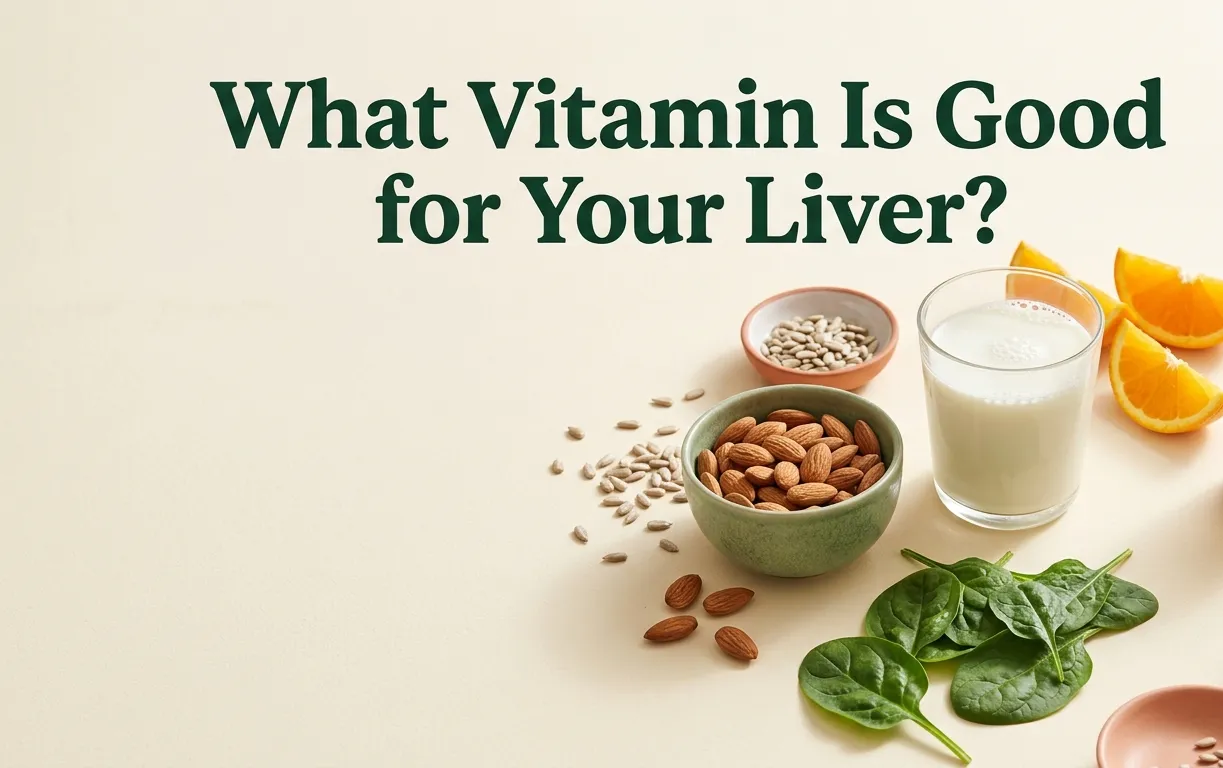
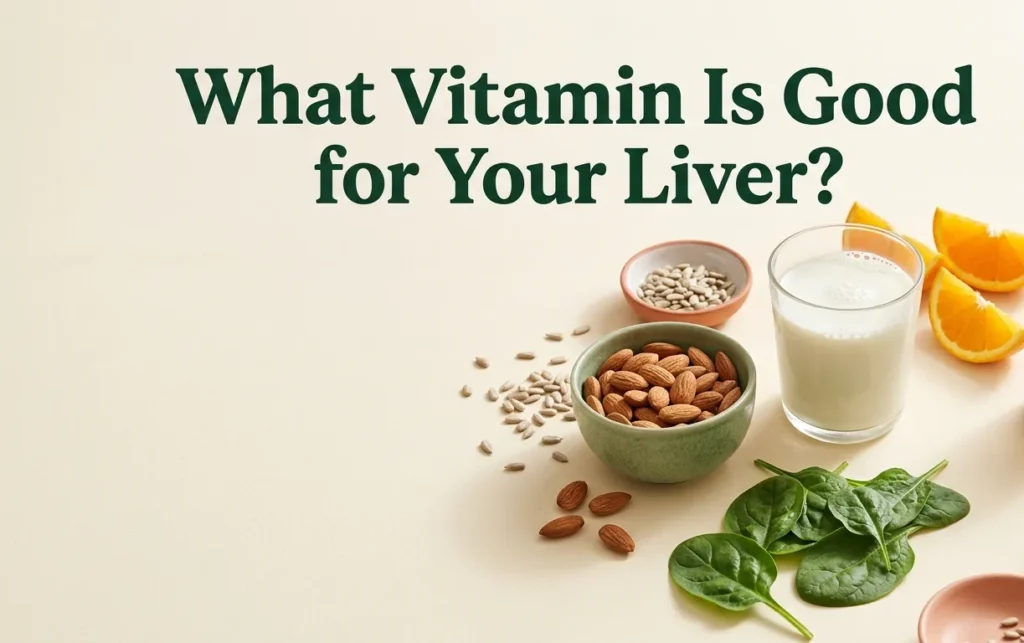
Most healthy people can get sufficient vitamins for liver health through diet. Vitamin E is found in almonds, sunflower seeds, spinach, and avocados. Vitamin D is in fatty fish, fortified milk, and egg yolks. Vitamin C is in citrus fruits, bell peppers, and broccoli. B vitamins are widespread in whole grains, meat, eggs, and leafy greens. Supplements are generally only recommended for people with documented deficiencies or specific medical conditions.
Are there any risks to taking vitamins for my liver?
Yes, particularly with fat-soluble vitamins that can accumulate in your body. High-dose vitamin E can increase bleeding risk and may be associated with prostate cancer. Vitamin A is hepatotoxic in excess. Vitamin D toxicity can cause calcium imbalances. Some “liver support” supplements can actually harm your liver. Always tell your healthcare team about all supplements you take, even if you think they’re safe, and closely follow dosing guidelines.
What vitamin is good for liver repair?
Vitamin E and C work together to support liver tissue repair. Vitamin E protects liver cells from oxidative damage, reduces inflammation, and has been shown to improve liver histology in clinical trials. It may influence how some genes are turned on or off, guiding the body’s healing and repair processes. Vitamin C supports glutathione production, which protects liver cells during the repair process.
Do I need to take supplements for liver health?
Most people don’t need liver-specific supplements if they eat a balanced diet, maintain a healthy weight, limit alcohol, and stay physically active. Supplements may be appropriate for people with diagnosed liver conditions, documented deficiencies, or specific risk factors—but always under medical supervision. No supplement should replace lifestyle changes or approved medical treatments.
What You Should Do Next for Your Liver Health
The answer to what vitamin is good for your liver is not a single vitamin but a strategy based on your individual health status. If you have confirmed MASLD or MASH, vitamin E has the strongest evidence—but it carries risks that require medical supervision. If you’re generally healthy and want to support your liver, focus on a varied, colorful diet rich in antioxidant vitamins from food sources rather than supplements.
Before starting any supplement, have an honest conversation with a healthcare provider who can assess your specific situation. If you have liver disease, diabetes, a history of heart attack or stroke, or cancer, some supplements may be unsafe for you . If you’re taking blood-thinning medications, avoid vitamin E supplements unless specifically prescribed . And if you’re a man with a family history of prostate cancer, discuss vitamin E risks with your doctor.
The most effective ways to support your liver are within your control: reaching a healthy weight, eating well, staying active, limiting alcohol, and getting regular check-ups that include liver function tests when appropriate . Supplements can be a useful addition in certain situations, but they’re not a substitute for the basics. Your liver works hard for you—support it with evidence-based choices, not hype.