Flank Steak Nutrition Facts 2026: Full Macro, Vitamin, and Mineral Data
A 3-ounce cooked serving of flank steak delivers approximately 170 to 180 calories, 23 grams of complete protein, 8 grams of total fat, and zero carbohydrates. This lean beef cut also packs substantial amounts of iron, zinc, and vitamin B12 into a single serving.
According to the USDA FoodData Central database, flank steak qualifies as a lean beef cut under the Dietary Guidelines for Americans 2020-2025 definition, containing less than 10 grams of total fat per 3-ounce cooked portion. Few single-food protein sources combine this much iron, zinc, and vitamin B12 in a form the body absorbs with notable efficiency.
You are about to see the full nutritional architecture of flank steak. Not just the numbers you find on a standard label. This article covers the specific amino acids that make flank steak protein useful for muscle repair, the distinct difference between heme and non-heme iron absorption, what happens to those nutrients when you grill versus pan-sear, the documented differences between grass-fed and grain-fed flank steak, and who genuinely needs to limit their intake based on specific health conditions.
Flank Steak Nutrition Facts
Flank steak is the lean beef cut from the abdominal region of the cow containing approximately 170 to 180 calories, 23 grams of protein, and 8 grams of fat per 3-ounce cooked serving with zero carbohydrates and a dense concentration of iron, zinc, and vitamin B12.
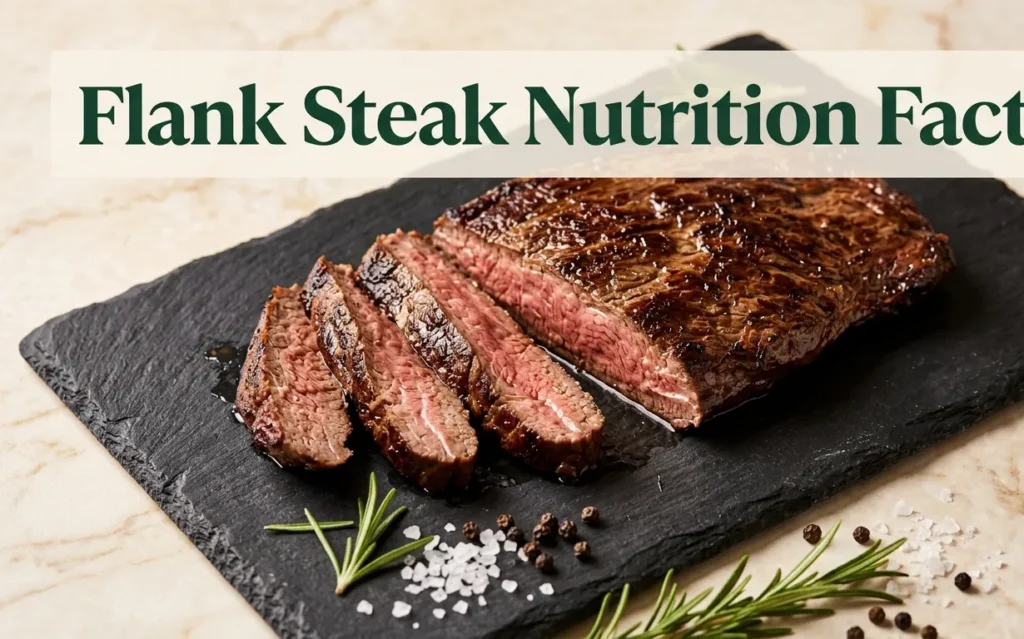
The USDA FoodData Central database classifies flank steak under the beef flank primal cut, which means the muscle fibers run in a distinct, visible grain that requires slicing against the grain for tenderness. This cut works harder on the animal than tenderloin or ribeye cuts, which explains the leaner fat content and more pronounced muscle structure.
Here is the complete nutritional profile for a 3-ounce (85-gram) cooked flank steak, trimmed to 0-inch fat, as recorded by USDA FoodData Central:
| Nutrient | Amount per 3 oz (85g) Cooked | % Daily Value (DV) |
|---|---|---|
| Calories | 170-180 kcal | N/A |
| Protein | 23 g | 46% |
| Total Fat | 8 g | 10% |
| Saturated Fat | 3.2 g | 16% |
| Monounsaturated Fat | 3.3 g | N/A |
| Polyunsaturated Fat | 0.4 g | N/A |
| Cholesterol | 70 mg | 23% |
| Carbohydrates | 0 g | 0% |
| Fiber | 0 g | 0% |
| Iron | 2.1 mg | 12% |
| Zinc | 4.5 mg | 41% |
| Vitamin B12 | 1.6 mcg | 67% |
| Niacin (B3) | 5.4 mg | 34% |
| Vitamin B6 | 0.5 mg | 29% |
| Phosphorus | 210 mg | 17% |
| Selenium | 27 mcg | 49% |
| Riboflavin (B2) | 0.2 mg | 15% |
| Potassium | 330 mg | 7% |
| Magnesium | 23 mg | 5% |
The zeros on carbohydrates and fiber make flank steak compatible with ketogenic, carnivore, and very-low-carbohydrate dietary patterns without any adjustment needed. These numbers shift slightly based on whether you choose grass-fed or grain-fed flank steak, a distinction covered in detail later in this article.
Flank Steak Calories, Macros, and Serving Size
A standard 3-ounce cooked serving of flank steak contains approximately 170 to 180 calories with a macronutrient split of roughly 55% protein-derived calories, 45% fat-derived calories, and 0% carbohydrate-derived calories.
Serving size accuracy changes the entire nutritional calculation. The USDA defines one serving of cooked beef as 3 ounces (85 grams), which is about the size of a deck of cards. Raw flank steak weighs approximately 4 ounces to yield a 3-ounce cooked portion after moisture loss during cooking, depending on your cooking method and final internal temperature.
Here is what happens to flank steak macros at different serving sizes:
| Serving Size | Calories | Protein (g) | Fat (g) | Saturated Fat (g) |
|---|---|---|---|---|
| 3 oz cooked (standard) | 170-180 | 23 | 8 | 3.2 |
| 4 oz cooked | 225-240 | 30 | 10.5 | 4.2 |
| 6 oz cooked | 340-360 | 46 | 16 | 6.4 |
| 8 oz cooked (restaurant portion) | 450-480 | 61 | 21 | 8.5 |
Quick Tip:
Weigh your flank steak after cooking for accurate calorie and macro tracking.
A raw 4-ounce portion typically yields a 3-ounce cooked serving due to approximately 25% moisture loss.
Restaurant portions often serve 6 to 8 ounces cooked, doubling or tripling the standard nutritional profile in a single plate.
The cooking method you choose affects the final fat content. Grilling allows rendered fat to drip away from the meat, potentially reducing total fat by 1 to 2 grams per serving compared to pan-searing where the meat cooks in its own rendered fat.
Flank Steak Protein Content and Amino Acid Profile
Flank steak provides 23 grams of complete protein per 3-ounce cooked serving, containing all nine essential amino acids in proportions that support muscle protein synthesis, tissue repair, and enzyme production without the need for complementary plant proteins.
A complete protein means the food delivers each essential amino acid your body cannot synthesize on its own. The leucine content in flank steak deserves specific attention. A 3-ounce serving provides approximately 1.8 to 2 grams of leucine, hitting the threshold researchers identify as necessary to stimulate muscle protein synthesis in a single meal. According to a 2021 study published in the American Journal of Clinical Nutrition, the leucine threshold for maximal muscle protein synthesis stimulation sits at roughly 2 to 3 grams per meal for most adults.
Here is the essential amino acid breakdown per 3-ounce cooked flank steak serving:
| Essential Amino Acid | Approximate Amount per 3 oz (g) |
|---|---|
| Leucine | 1.8 – 2.0 |
| Isoleucine | 1.0 – 1.2 |
| Valine | 1.1 – 1.3 |
| Lysine | 2.0 – 2.2 |
| Methionine | 0.6 – 0.7 |
| Phenylalanine | 1.0 – 1.2 |
| Threonine | 1.0 – 1.1 |
| Tryptophan | 0.2 – 0.3 |
| Histidine | 0.8 – 1.0 |
The branched-chain amino acids (leucine, isoleucine, valine) appear in concentrations that rival many protein supplement sources. The difference is flank steak delivers these amino acids alongside iron, zinc, and B12 in their most bioavailable forms, which no isolated protein powder offers.
For people over 50, the high leucine content becomes increasingly relevant. Age-related anabolic resistance means older adults require more leucine per meal to trigger the same muscle-building response that a younger person achieves with a lower dose. A 3-ounce serving of flank steak gets you most of the way to that elevated threshold in a single food.
Key Takeaway: Flank steak packs 23 grams of complete protein with all nine essential amino acids. A single 3-ounce serving delivers nearly the entire leucine threshold needed to trigger muscle protein synthesis, making it one of the most efficient lean protein sources available in a standard grocery cut.
Flank Steak Fat Composition and Saturated Fat Breakdown
Flank steak contains approximately 8 grams of total fat per 3-ounce cooked serving, with roughly 3.2 grams coming from saturated fat, 3.3 grams from monounsaturated fat, and 0.4 grams from polyunsaturated fat.
The saturated fat in flank steak is not a single compound. It breaks down into several specific fatty acids with different metabolic effects. Stearic acid, which makes up roughly one-third of the saturated fat in beef, converts to oleic acid (a monounsaturated fat) in the liver and does not appear to raise LDL cholesterol the way other saturated fatty acids do. This is one reason why population studies frequently fail to find the same cardiovascular risk associations with lean red meat that they find with processed red meat.
Here is the fatty acid composition of flank steak fat:
| Fatty Acid Type | Approximate Amount per 3 oz (g) | Metabolic Effect |
|---|---|---|
| Stearic acid (saturated) | 1.1 – 1.3 | Converted to oleic acid, neutral on LDL |
| Palmitic acid (saturated) | 1.5 – 1.7 | May raise LDL cholesterol |
| Myristic acid (saturated) | 0.3 – 0.4 | Most potent LDL-raising saturated fat |
| Oleic acid (monounsaturated) | 3.0 – 3.3 | Same fatty acid dominant in olive oil |
| Linoleic acid (polyunsaturated) | 0.3 – 0.4 | Essential omega-6 fatty acid |
| Alpha-linolenic acid (omega-3) | 0.02 – 0.05 | Trace amounts, higher in grass-fed |
The American Heart Association recommends limiting saturated fat to approximately 13 grams per day for a 2,000-calorie diet. A 3-ounce serving of flank steak uses roughly one-quarter of that daily allowance while also contributing monounsaturated fat that does not carry the same cardiovascular concern.
The fat content you actually consume depends heavily on trimming. The standard USDA values assume 0-inch external fat trim. If you purchase flank steak with a visible fat cap and do not trim it, your actual fat intake could increase by 3 to 5 grams per serving depending on thickness.
Flank Steak Vitamins and Mineral Density
Flank steak delivers concentrated amounts of multiple B vitamins and essential minerals, with a single 3-ounce serving providing more than 60% of the daily value for vitamin B12, over 40% for zinc, and roughly 50% for selenium.
The vitamin and mineral density of flank steak makes it a practical nutrient-delivery food. You get seven different micronutrients at 12% DV or higher from a single modest serving. That kind of nutrient clustering in a 170-calorie package makes flank steak remarkably efficient from a nutrient-per-calorie standpoint.
Here are the standout micronutrients ranked by percentage of daily value:
| Micronutrient | Amount per 3 oz | % DV | Primary Function |
|---|---|---|---|
| Vitamin B12 | 1.6 mcg | 67% | Red blood cell formation, neurological function, DNA synthesis |
| Selenium | 27 mcg | 49% | Thyroid hormone metabolism, antioxidant defense (glutathione peroxidase) |
| Zinc | 4.5 mg | 41% | Immune cell function, wound healing, testosterone production |
| Niacin (B3) | 5.4 mg | 34% | NAD+ synthesis, energy metabolism, DNA repair |
| Vitamin B6 | 0.5 mg | 29% | Neurotransmitter synthesis, homocysteine regulation, hemoglobin production |
| Phosphorus | 210 mg | 17% | Bone mineralization, ATP energy currency, cell membrane structure |
| Riboflavin (B2) | 0.2 mg | 15% | Electron transport chain, fat and drug metabolism |
| Iron | 2.1 mg | 12% | Oxygen transport (hemoglobin), electron transport, enzyme function |
| Potassium | 330 mg | 7% | Fluid balance, nerve signal transmission, blood pressure regulation |
| Magnesium | 23 mg | 5% | Over 300 enzymatic reactions, muscle relaxation, glucose control |
The iron value listed (12% DV) reflects the calculation based on an 18 mg DV for premenopausal women. For men and postmenopausal women whose RDA sits at 8 mg, that same 2.1 mg represents 26% of the daily target. Gender and life stage dramatically shift the nutritional math.
What you do not see in flank steak: it contains essentially zero vitamin C, zero vitamin D, zero vitamin A, and negligible calcium. This is not a one-food nutritional solution. The B vitamin and mineral strength is genuine, but it leaves clear gaps that other foods must fill.
Flank Steak Heme Iron Absorption and Bioavailability
Flank steak contains approximately 2.1 milligrams of heme iron per 3-ounce cooked serving, a form of iron the human body absorbs at a rate of 15% to 35% compared to the 2% to 20% absorption rate for non-heme iron from plant sources.
The absorption difference between heme and non-heme iron is not minor. It is a 5-to-10-fold advantage in many individuals depending on their current iron status. People with low ferritin levels absorb heme iron even more efficiently. People with adequate or high iron stores absorb less, which provides a natural regulatory mechanism.
This absorption advantage changes how you should calculate the nutritional value of that 2.1 mg on the label:
| Iron Source | Amount per Serving (mg) | Absorption Rate | Functional Iron Absorbed (mg) |
|---|---|---|---|
| Flank steak (heme) | 2.1 mg | 15-35% | 0.3 – 0.7 mg |
| Spinach, cooked (non-heme) | 3.6 mg (per 1/2 cup) | 2-10% | 0.07 – 0.36 mg |
| Lentils, cooked (non-heme) | 3.3 mg (per 1/2 cup) | 2-10% | 0.07 – 0.33 mg |
| Fortified breakfast cereal (non-heme) | 9 mg (per serving) | 2-10% | 0.18 – 0.9 mg |
The numbers tell the story clearly. You would need to eat roughly two to three times the labeled iron amount from plant sources to absorb the same functional iron as a single serving of flank steak. The NIH Office of Dietary Supplements confirms that heme iron contributes a disproportionate share of absorbed iron in mixed diets, even though it typically represents only 10% to 15% of total dietary iron intake in omnivorous populations.
Unlike non-heme iron, heme iron absorption does not improve with vitamin C co-consumption. The absorption pathway for heme iron operates independently. What does reduce heme iron absorption? Calcium in amounts above 300 mg can partially inhibit uptake. Tannins from tea and coffee also interfere, though less dramatically than with non-heme iron.
For anyone with diagnosed iron-deficiency anemia confirmed by a serum ferritin test and complete blood count ordered by their physician, flank steak offers a reliable, highly bioavailable dietary iron source. A registered dietitian can help calculate whether dietary iron alone will meet therapeutic needs or whether supplementation remains necessary during recovery.
Key Takeaway: Flank steak heme iron absorbs 5 to 10 times more efficiently than plant-based non-heme iron. A 2.1 mg label value often provides more functional iron than a 9 mg serving of fortified cereal. If you are managing low ferritin, the form of the iron matters as much as the total number on the label.
Flank Steak Zinc and Immune Function Support
A 3-ounce serving of flank steak delivers 4.5 milligrams of zinc, representing 41% of the daily value and covering roughly half the recommended dietary allowance for adult men and women in a single modest portion.
Zinc functions as a cofactor for more than 300 enzymes in the human body and plays a structural role in thousands of proteins, including transcription factors that control gene expression. The immune system depends on zinc for multiple processes: T-lymphocyte development and activation, natural killer cell function, and the production of cytokines that coordinate the immune response.
The zinc in flank steak arrives with an absorption advantage similar to iron. Animal-source zinc absorbs at roughly 20% to 40%, while zinc from legumes and whole grains often falls below 15% due to phytate binding. Phytates in plant foods chelate zinc, forming complexes the human digestive system cannot break down. Flank steak contains zero phytates.
Here is how flank steak zinc stacks up against common zinc sources:
| Food Source | Zinc per Serving (mg) | % DV | Absorption Inhibitors Present |
|---|---|---|---|
| Flank steak, 3 oz | 4.5 mg | 41% | None |
| Oysters, 3 oz | 74 mg | 673% | None |
| Chicken thigh, 3 oz | 2.4 mg | 22% | None |
| Chickpeas, 1 cup | 2.5 mg | 23% | High phytate |
| Pumpkin seeds, 1 oz | 2.2 mg | 20% | Moderate phytate |
| Fortified breakfast cereal | 3.8 mg (varies) | 35% | Varies by formula |
The NIH Office of Dietary Supplements zinc fact sheet identifies animal proteins as the most reliable zinc sources in the American diet. Plant-based diets require approximately 50% more total zinc intake to compensate for reduced absorption.
Zinc status is notoriously difficult to measure with standard blood tests. Plasma zinc represents less than 1% of total body zinc and does not reliably reflect tissue stores. For individuals concerned about zinc status, a registered dietitian can evaluate dietary intake patterns and identify whether supplementation or food-based strategies like regular flank steak consumption would be appropriate.
Flank Steak B12 and Energy Metabolism
A 3-ounce cooked flank steak contains 1.6 micrograms of vitamin B12, delivering 67% of the daily value and making it one of the most concentrated food sources of this essential water-soluble vitamin outside of organ meats and shellfish.
Vitamin B12, called cobalamin, serves as a cofactor for two critical enzymatic reactions in human metabolism. The first converts homocysteine to methionine, which regulates cardiovascular risk markers and supports methylation reactions throughout the body. The second enables the conversion of methylmalonyl-CoA to succinyl-CoA in the mitochondria, a reaction essential for extracting energy from certain fatty acids and amino acids.
The B12 in flank steak arrives in the same form your body uses directly. No conversion steps required. The stomach acid and intrinsic factor system in the digestive tract releases the B12 from the protein matrix and escorts it into circulation through a carefully regulated absorption process in the terminal ileum of the small intestine.
Flank steak B12 compared to other animal sources:
| Food Source | B12 per Serving (mcg) | % DV | Notes |
|---|---|---|---|
| Flank steak, 3 oz | 1.6 mcg | 67% | Lean, versatile cut |
| Beef liver, 3 oz | 70.7 mcg | 2,946% | Extreme concentration, high vitamin A |
| Salmon, 3 oz | 4.8 mcg | 200% | Also provides omega-3 fatty acids |
| Chicken breast, 3 oz | 0.3 mcg | 13% | Modest B12 source |
| Eggs, 2 large | 1.1 mcg | 46% | Absorption limited by binding proteins |
| Milk, 1 cup | 1.3 mcg | 54% | Reliable, but requires dairy tolerance |
The Academy of Nutrition and Dietetics identifies animal foods as the only naturally occurring reliable sources of vitamin B12. Plant foods do not contain B12 unless fortified. For omnivores, regular consumption of foods like flank steak provides a straightforward way to meet the 2.4 mcg RDA without supplementation.
Groups at elevated risk for B12 deficiency include adults over 60 (reduced stomach acid production impairs B12 release from food proteins), individuals taking metformin or proton pump inhibitors long-term, and anyone with a history of gastrointestinal surgery affecting the stomach or terminal ileum. For these groups, a physician can assess B12 status with a serum B12 test and potentially methylmalonic acid levels if borderline results require clarification.
Key Takeaway: Flank steak delivers 67% of your daily B12 requirement in a single serving. No plant food offers naturally occurring B12, making flank steak a practical, nutrient-dense option for meeting this requirement through diet rather than supplements. The form in flank steak is identical to the B12 your body uses directly.
Is Flank Steak Healthy for Weight Loss
Flank steak fits a weight loss eating pattern because it delivers approximately 23 grams of satiating protein for only 170 to 180 calories per 3-ounce serving, producing a high protein-to-energy ratio that supports appetite regulation and lean mass retention during calorie restriction.
Protein is the most satiating macronutrient. A 2019 study published in the American Journal of Clinical Nutrition found that higher-protein meals increase post-meal satiety signals including GLP-1 and PYY while reducing ghrelin, the primary hunger hormone. The 23 grams of protein in flank steak represents nearly half the daily protein target for many people on moderate-calorie weight loss plans.
The practical weight loss argument for flank steak breaks down into four components:
The protein amount per calorie is higher than most other common protein sources.
The iron and B12 content helps maintain energy levels during calorie restriction when micronutrient intake can easily drop below requirements.
The zero-carbohydrate profile means flank steak does not produce the insulin response that carbohydrate-containing protein sources like beans or protein bars trigger.
The chewing resistance and texture of whole-muscle meat produces greater satiety per calorie than ground or processed meat products.
A comparison of protein efficiency for weight loss across common protein sources:
| Food (3 oz cooked) | Calories | Protein (g) | Protein per 100 Calories |
|---|---|---|---|
| Flank steak | 175 | 23 | 13.1 g |
| Chicken breast | 140 | 26 | 18.6 g |
| Salmon | 175 | 19 | 10.9 g |
| Pork tenderloin | 160 | 22 | 13.8 g |
| Firm tofu | 70 | 8 | 11.4 g |
| Eggs (2 large) | 140 | 12 | 8.6 g |
Chicken breast wins the pure protein-per-calorie calculation, but flank steak provides iron, zinc, and B12 that chicken breast lacks in comparable amounts. The nutritional trade-off depends on your overall dietary pattern and which micronutrient gaps are most relevant to your individual intake.
For individuals following a calorie-restricted plan, flank steak works as a portion-controlled protein anchor around which you build a plate with non-starchy vegetables and a modest serving of complex carbohydrates.
Flank Steak Cholesterol and Heart Health
A 3-ounce serving of flank steak contains approximately 70 milligrams of dietary cholesterol and 3.2 grams of saturated fat, placing it in a moderate-risk category that requires individual cardiovascular context rather than blanket endorsement or avoidance.
The relationship between dietary cholesterol and blood cholesterol is more nuanced than nutritional guidance from previous decades suggested. The Dietary Guidelines for Americans 2020-2025 removed the previous 300 mg per day numerical cap on dietary cholesterol, acknowledging that saturated fat intake drives blood cholesterol changes more than dietary cholesterol itself. The current guidance emphasizes overall dietary pattern quality over any single nutrient.
The cardiovascular math for flank steak looks like this per serving:
| Cardiovascular Parameter | Flank Steak Value | Guideline Context |
|---|---|---|
| Saturated fat | 3.2 g | AHA limit: ~13 g/day (2,000-cal diet) |
| Dietary cholesterol | 70 mg | No numerical limit in current DGA |
| Sodium | 55 mg (unseasoned) | AHA limit: 2,300 mg/day |
| Stearic acid | 1.1-1.3 g | Neutral or minimal LDL effect |
| Trans fat | 0.2 g (naturally occurring) | Not the same risk as industrial trans fat |
The naturally occurring trans fat in beef, primarily vaccenic acid, does not carry the same cardiovascular risk profile as industrial trans fats from partially hydrogenated oils. Research published in the American Journal of Clinical Nutrition has distinguished between ruminant trans fats and industrial trans fats, finding the negative cardiovascular associations concentrated in the industrial category.
The American Heart Association recommends limiting red meat consumption and prioritizing lean cuts when consumed. Flank steak, at 3.2 grams of saturated fat per serving, fits the AHA definition of lean and can be included in a heart-healthy dietary pattern when portion size is controlled and preparation method avoids added saturated fat sources like butter basting.
For individuals with diagnosed cardiovascular disease or familial hypercholesterolemia, the context shifts. A registered dietitian or cardiologist can provide personalized guidance on saturated fat thresholds that account for genetic factors, medication effects, and the overall dietary pattern rather than isolated single-food analysis.
Flank Steak vs Skirt Steak Nutrition Comparison
Flank steak and skirt steak are distinct beef cuts from different anatomical regions with flank steak containing approximately 2 to 3 fewer grams of total fat per 3-ounce serving compared to skirt steak while providing similar protein content and micronutrient profiles.
The nutritional differences between these two cuts matter because they look similar, cook similarly over high heat, and often appear interchangeably in recipes. The differences come from the anatomical position: flank steak comes from the abdominal region while skirt steak comes from the diaphragm plate region, which carries more intramuscular fat.
Direct nutritional comparison per 3-ounce cooked serving:
| Nutrient | Flank Steak | Skirt Steak | Difference |
|---|---|---|---|
| Calories | 170-180 | 200-215 | +25-35 |
| Protein | 23 g | 22 g | Similar |
| Total Fat | 8 g | 11 g | +3 g |
| Saturated Fat | 3.2 g | 4.4 g | +1.2 g |
| Iron | 2.1 mg | 2.3 mg | Similar |
| Zinc | 4.5 mg | 4.8 mg | Similar |
| Vitamin B12 | 1.6 mcg | 1.8 mcg | Similar |
The practical takeaway: if you are tracking saturated fat intake closely or maintaining a specific calorie target, flank steak saves you roughly 35 calories and 1.2 grams of saturated fat per serving. If you prefer the more pronounced beef flavor and slightly more tender texture of skirt steak, the nutritional difference is modest enough that the choice matters less than your overall dietary pattern.
Both cuts share the same cooking requirement: high heat, quick sear, slice against the grain. Both respond well to marinades. The nutritional advantage of flank steak is real but small. Flavor preference and price at your local market should drive the decision more than a 35-calorie difference.
Flank Steak Grass-Fed vs Grain-Fed Nutritional Differences
Grass-fed flank steak contains a measurably different fatty acid profile compared to grain-fed flank steak, with higher omega-3 fatty acid content, a lower omega-6 to omega-3 ratio, and elevated conjugated linoleic acid (CLA) levels, while the total protein, iron, and zinc content remains largely similar between the two feeding systems.
The nutritional differences between grass-fed and grain-fed beef concentrate almost entirely in the fat fraction. The lean tissue (protein, iron, zinc, B12) shows minimal variation based on finishing diet.
Quantified differences per 3-ounce cooked flank steak serving based on research published in Nutrition Journal:
| Nutritional Component | Grain-Fed Flank Steak | Grass-Fed Flank Steak | Difference Magnitude |
|---|---|---|---|
| Total Fat | 8 g | 6-7 g | Slightly lower |
| Saturated Fat | 3.2 g | 2.5-2.8 g | ~15-20% lower |
| Omega-3 (ALA) | 0.02 g | 0.05-0.08 g | 2-3x higher |
| Omega-6 to Omega-3 Ratio | ~15:1 | ~3:1 to 5:1 | Improved |
| Conjugated Linoleic Acid (CLA) | 25-30 mg | 40-60 mg | ~50-100% higher |
| Total Calories | 175 | 160-165 | Modestly lower |
| Vitamin E | Trace | 0.3-0.5 mg | Detectable increase |
Conjugated linoleic acid deserves specific mention. CLA refers to a family of positional and geometric isomers of linoleic acid that have been studied for potential effects on body composition and metabolic health. The research on CLA supplementation in humans shows mixed results, with some studies finding modest body composition improvements and others finding no effect. The CLA content difference between grass-fed and grain-fed beef, while real, is small in absolute terms at 10 to 30 milligrams of difference per serving. Most CLA supplementation studies use doses of 3 to 6 grams per day, which is 100 to 600 times the amount in a single serving of flank steak.
The omega-3 content increase in grass-fed beef is genuine, but flank steak is not an omega-3-rich food in either feeding system. A 3-ounce serving of grass-fed flank steak provides roughly 50 to 80 milligrams of omega-3 ALA. A 3-ounce serving of salmon provides 1,500 to 2,000 milligrams of combined EPA and DHA. Different foods serve different nutritional purposes.
Key Takeaway: Grass-fed flank steak offers a better fatty acid profile with more omega-3s, more CLA, and less total fat. But flank steak is not a meaningful omega-3 source regardless of how the animal was fed. The grass-fed advantage matters most for overall dietary pattern quality, not for single-nutrient supplementation. Choose based on your values, budget, and taste preference.
Flank Steak Cooking Methods and Nutrient Retention
Cooking method directly affects the final nutrient content of flank steak, with grilling and broiling preserving slightly more protein per gram of cooked weight while pan-searing with added fat increases total caloric load by 40 to 100 calories per serving depending on the amount of oil used and absorbed.
The way you cook flank steak changes what ends up on your plate nutritionally. Different cooking methods produce different patterns of moisture loss, fat rendering, and heat-sensitive vitamin degradation.
Cooking method comparison for a 3-ounce (raw weight) flank steak:
| Cooking Method | Final Cooked Weight | Protein (g) | Fat (g) | Key Nutrient Changes |
|---|---|---|---|---|
| Grilling (direct heat) | 2.6-2.8 oz | 22-23 g | 7-8 g | Fat drips away, B vitamins partially heat-degraded |
| Broiling (top heat) | 2.6-2.8 oz | 22-23 g | 7-8 g | Similar to grilling, surface char = potential HCA formation |
| Pan-searing (no added fat) | 2.7-2.9 oz | 22-23 g | 8-9 g | Fat retained in pan, some reabsorption |
| Pan-searing (1 tbsp oil) | 2.7-2.9 oz | 22-23 g | 12-14 g | Absorbs 1-2 tsp oil, +40-60 calories |
| Sous vide (then sear) | 2.8-3.0 oz | 23 g | 8 g | Minimal moisture loss, gentle on B vitamins |
| Slow braising | 2.5-2.7 oz | 20-21 g | 7-8 g | More moisture loss, collagen converts to gelatin |
Heat-sensitive vitamins take a predictable hit across all high-heat methods. The B vitamins, particularly thiamine (B1) and vitamin B6, degrade measurably at temperatures above 300 degrees Fahrenheit. Expect approximately 10% to 25% loss of heat-sensitive B vitamins from grilling or pan-searing compared to raw values. Vitamin B12 and minerals like iron, zinc, and selenium remain stable across all standard cooking temperatures.
Internal cooking temperature also affects the nutritional result. The USDA recommends a minimum internal temperature of 145 degrees Fahrenheit with a 3-minute rest period for beef steaks. Cooking to higher internal temperatures (well-done, 160 degrees Fahrenheit plus) increases moisture loss, concentrates the remaining nutrients into a smaller portion weight, and produces more heterocyclic amines (HCAs) and polycyclic aromatic hydrocarbons (PAHs) from charring.
For maximum nutrient retention, cook flank steak to medium-rare (130 to 135 degrees Fahrenheit internal before resting), use a high-heat sear for flavor development while minimizing total cook time, and rest the meat for 3 to 5 minutes before slicing to retain internal juices.
Flank Steak for Carnivore Diet and Low-Carb Eating Patterns
Flank steak is fully compatible with carnivore and very-low-carbohydrate dietary patterns, containing zero grams of carbohydrates per serving while delivering complete protein, bioavailable heme iron, zinc, B12, and creatine in amounts that support the nutritional priorities of these eating approaches.
The carnivore diet and its low-carb variations (ketogenic, Atkins, zero-carb) prioritize animal foods and restrict or eliminate carbohydrate sources. Flank steak meets every nutritional criterion these dietary patterns require while offering variety beyond ribeye and ground beef.
Nutrients in flank steak that matter specifically for carnivore and very-low-carb contexts:
Creatine content is approximately 350 milligrams per 100 grams. Creatine supports the phosphocreatine energy system, the immediate energy source for high-intensity muscle contractions. Plant foods contain essentially zero creatine.
Carnosine content contributes to intracellular pH buffering during high-intensity exercise.
The complete amino acid profile provides every essential amino acid without requiring food combining or supplementation.
The sodium content in unseasoned flank steak is only approximately 55 milligrams per serving, which is relevant because carnivore dieters sometimes need to intentionally add sodium to compensate for the absence of processed foods in their eating pattern.
What flank steak does not provide for carnivore dieters: it is not a high-fat cut. At 8 grams of fat and 23 grams of protein per serving, the fat-to-protein ratio may be lower than some carnivore practitioners aim for. Many long-term carnivore dieters target a higher fat intake to maintain energy levels and hormonal function in the absence of carbohydrates. Adding a fat source like butter, tallow, or fatty cuts alongside flank steak helps adjust the macronutrient ratio.
The vitamin C content of flank steak is effectively zero, which would be concerning in a conventional dietary context. Carnivore diet advocates argue that vitamin C requirements decrease when carbohydrate intake drops to near zero, but this position remains outside mainstream nutritional consensus. The NIH Office of Dietary Supplements vitamin C fact sheet does not support lowering the RDA based on carbohydrate intake, and no long-term randomized controlled trials have tested vitamin C adequacy on zero-carbohydrate diets.
Key Takeaway: Flank steak works for carnivore and keto eating patterns as a lean protein anchor, but the fat-to-protein ratio may require adjustment for people targeting higher fat intake. Add butter, tallow, or an additional fat source if you need to increase the caloric contribution from fat. The creatine and carnosine in flank steak provide performance-supporting compounds that no plant food offers.
Flank Steak Safety Considerations and Who Should Limit Intake
Flank steak is safe for the general healthy adult population when cooked to a minimum internal temperature of 145 degrees Fahrenheit, but specific groups including individuals with hemochromatosis, advanced kidney disease, alpha-gal syndrome, and those managing severe cardiovascular disease should modify or limit intake based on their condition-specific dietary requirements.
Food safety and medical contraindications are distinct categories that deserve separate attention. The following groups have condition-specific reasons to evaluate flank steak consumption carefully:
Hemochromatosis: Individuals with hereditary hemochromatosis absorb iron at an elevated rate regardless of their body’s iron stores. Heme iron from flank steak absorbs efficiently through a pathway that partially bypasses the body’s normal iron regulation mechanisms. The Cleveland Clinic recommends that people with hemochromatosis significantly limit or avoid red meat specifically because of the heme iron absorption efficiency. A physician monitoring serum ferritin and transferrin saturation can provide individual guidance on whether complete avoidance or strict limitation is necessary.
Advanced Kidney Disease: Flank steak contains approximately 210 milligrams of phosphorus per serving. For individuals with stage 4 or 5 chronic kidney disease who require phosphorus restriction, this amount represents a substantial portion of their daily phosphorus budget. A renal dietitian typically calculates phosphorus allowances and determines whether animal protein sources like flank steak fit within the overall dietary prescription.
Alpha-Gal Syndrome: This tick-acquired red meat allergy, caused by lone star tick bites, produces an allergic reaction to galactose-alpha-1,3-galactose, a carbohydrate molecule present in mammalian meat. Flank steak contains this molecule and is not safe for individuals with confirmed alpha-gal syndrome. The allergy is diagnosed through specific IgE blood testing ordered by an allergist.
Cardiovascular Disease: The American Heart Association and Dietary Guidelines for Americans recommend limiting saturated fat intake and choosing lean protein sources. Flank steak at 3.2 grams of saturated fat per serving qualifies as lean but still counts toward the daily saturated fat allowance. A cardiologist or registered dietitian can help determine whether the individual cardiovascular risk profile supports regular flank steak consumption or favors replacement with fish, poultry, or plant proteins.
Pregnancy: Flank steak is safe during pregnancy when cooked to the USDA-recommended internal temperature of 145 degrees Fahrenheit with a 3-minute rest. The iron and B12 content are nutritionally beneficial during pregnancy. Undercooked steak of any cut presents toxoplasmosis risk. Order or prepare flank steak medium-well or well-done during pregnancy despite the nutrient losses from higher internal temperatures.
General food safety: Store raw flank steak in the refrigerator at 40 degrees Fahrenheit or below and use within 3 to 5 days. Freeze at 0 degrees Fahrenheit for long-term storage. Defrost in the refrigerator, cold water (changed every 30 minutes), or microwave, never on the counter at room temperature.
How to Select and Store Flank Steak for Maximum Nutritional Quality
Select flank steak labeled USDA Choice or USDA Select for consistent lean-to-fat ratio, look for bright cherry-red color with no gray or brown discoloration, and store it in the coldest section of the refrigerator at 40 degrees Fahrenheit or below for no more than 3 to 5 days before cooking or freezing.
Selection criteria directly affect the nutritional product you get. Higher USDA grades indicate more intramuscular marbling, which increases total fat and saturated fat content beyond the standard nutritional values. Flank steak is naturally lean enough that even USDA Prime flank steak stays within reasonable fat parameters, but the difference exists.
Visual quality indicators for flank steak selection:
Color should be bright cherry-red with no brown or gray patches. Fresh beef oxymyoglobin produces the red color. Browning indicates oxidation.
The grain of the muscle fibers should be visible, long, and consistent running the length of the cut.
The surface should appear moist but not wet or sitting in liquid. Excess liquid in the package indicates prior freezing or extended storage.
The fat, if any is visible on the edges, should be cream-white, not yellowed.
USDA grade comparison for flank steak:
| USDA Grade | Marbling | Expected Fat per 3 oz Cooked | Notes |
|---|---|---|---|
| Prime | Moderate | 9-10 g | Less common for flank, harder to find |
| Choice | Slight to small | 8 g | Most common retail option |
| Select | Slight | 6-7 g | Leanest option, can be less tender |
Storage protocol for quality and safety:
Refrigerator storage: Keep raw flank steak in its original packaging on a plate or tray on the lowest shelf of the refrigerator. Use within 3 to 5 days of purchase. The coldest part of the refrigerator, typically the back of the bottom shelf, maintains temperature best.
Freezer storage: Wrap flank steak tightly in freezer paper, heavy-duty aluminum foil, or vacuum-seal for optimal quality. Label with the date. Freeze at 0 degrees Fahrenheit for up to 6 to 12 months for best quality. Freezer burn degrades texture but does not create a food safety issue.
Thawing protocol: Thaw frozen flank steak in the refrigerator (24 hours for a 1 to 1.5 pound flank steak), in cold water changed every 30 minutes (1 to 2 hours), or in the microwave using the defrost setting with the plan to cook immediately. Never thaw on the counter at room temperature. The outer surface reaches the temperature danger zone (40 to 140 degrees Fahrenheit) while the center remains frozen.
Cooked flank steak storage: Refrigerate leftovers within 2 hours of cooking. Store in airtight containers. Consume within 3 to 4 days. Reheat to 165 degrees Fahrenheit internal temperature.
Key Takeaway: Select flank steak by color, grade, and visible grain. Store it cold, cook it or freeze it within 3 to 5 days, and never let raw beef sit in the temperature danger zone between 40 and 140 degrees Fahrenheit for more than 2 hours. USDA Choice flank steak represents the most common retail option with nutritional values matching standard reference data.
Frequently Asked Questions About Flank Steak Nutrition
How many calories are in a 3-ounce serving of cooked flank steak?
A 3-ounce cooked serving of flank steak contains approximately 170 to 180 calories.
The exact count depends on the fat trim level and whether the cut is grass-fed or grain-fed.
Grass-fed flank steak typically runs 5 to 15 calories lower per serving due to slightly reduced total fat content.
Is flank steak healthier than other cuts of beef?
Flank steak is one of the leanest beef cuts available, containing 8 grams of total fat and 3.2 grams of saturated fat per serving.
It compares favorably to ribeye (22 grams fat), strip steak (14 grams fat), and even sirloin (10 grams fat) on fat content.
The protein, iron, and zinc content remains comparable across cuts, making flank steak a nutritionally efficient choice within the lean beef category.
Does flank steak have more protein than chicken breast?
Chicken breast provides approximately 26 grams of protein per 3-ounce cooked serving compared to flank steak at 23 grams.
Chicken breast wins the pure protein-per-calorie comparison at 140 calories and 26 grams of protein versus 175 calories and 23 grams of protein.
Flank steak delivers iron, zinc, and vitamin B12 in amounts that chicken breast does not match, making the comparison a trade-off between slightly higher protein and substantially higher micronutrient density.
Is flank steak good for iron deficiency?
Flank steak is an excellent dietary source for addressing iron deficiency because it provides heme iron that absorbs at 15% to 35% efficiency.
A 3-ounce serving delivers 2.1 milligrams of highly bioavailable iron, often providing more functional absorbed iron than plant sources with higher label values.
Anyone with diagnosed iron-deficiency anemia should confirm their dietary strategy with the physician who ordered their serum ferritin test, as therapeutic supplementation may still be necessary depending on deficiency severity.
Can I eat flank steak every day?
You can eat flank steak daily as part of a varied dietary pattern, but nutritional diversity is the stronger approach.
Daily consumption would provide consistent protein, iron, zinc, and B12 intake at the cost of displacing other protein sources that offer different nutrient profiles, particularly fatty fish with omega-3 fatty acids and plant proteins with fiber and phytonutrients.
The American Heart Association recommends varying protein sources rather than relying on any single food daily.
Does marinating flank steak change its nutritional value?
Marinating flank steak adds calories, sodium, and potentially sugar depending on the marinade ingredients.
A typical oil-based marinade adds 30 to 60 calories per serving from absorbed oil and 200 to 400 milligrams of sodium per tablespoon of soy sauce or similar salty component.
Sugar-based marinades (teriyaki, barbecue) add 3 to 8 grams of carbohydrate per serving, shifting the macro profile from zero-carb to low-carb.
The nutritional case for flank steak rests on its efficiency. Few foods deliver 23 grams of complete protein, highly bioavailable iron and zinc, and two-thirds of your daily B12 requirement inside a 175-calorie package that also tastes like steak. The numbers are not complicated. The practical use of those numbers matters more.
Choose flank steak when you want the protein density of chicken breast with the micronutrient profile that plant proteins cannot match. The 3-ounce cooked serving standard keeps the saturated fat contribution manageable for most healthy adults. Cook it to medium-rare with a hard sear, slice it against the grain, and treat it as a protein anchor around which vegetables and complex carbohydrates build the rest of the plate.
If you have hemochromatosis, kidney disease, or a cardiovascular condition with specific saturated fat limits, the calculation shifts. For everyone else, flank steak offers one of the most nutritionally complete single-food protein sources in a standard grocery meat case. That is what the USDA data shows. That is what the absorption research supports. That is the nutritional reality behind the numbers on the label.