Where to Get a Vitamin D Injection in 2026
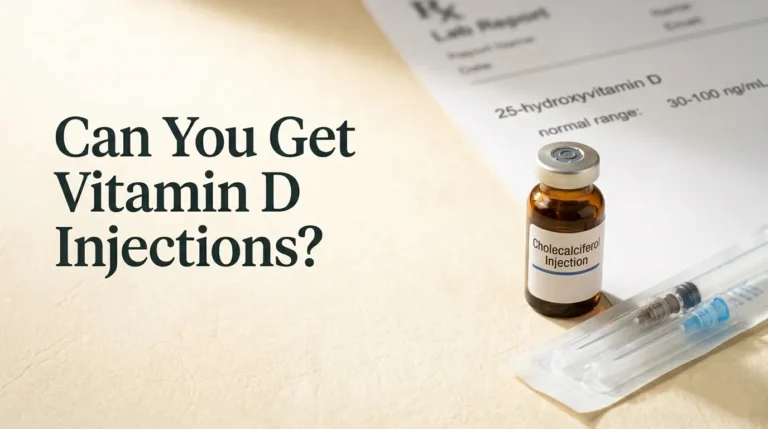
You can get a vitamin D injection at a doctor’s office, a specialized med spa, an IV hydration bar, or a retail pharmacy health clinic in 2026. The specific place you choose depends on whether you have a prescription, your budget, and your personal medical history. Getting the shot is not like buying a daily supplement off a shelf. The injection form of cholecalciferol is a potent fat-soluble depot that releases vitamin D into your bloodstream over several weeks.
The National Institutes of Health (NIH) Office of Dietary Supplements reports that nearly 24% of American adults have a serum 25-hydroxyvitamin D level below 20 ng/mL, which is the threshold for clinical deficiency. This is not a trivial statistic. Severe deficiency causes bone pain, fatigue, and muscle weakness, and standard oral supplements do not always work for people with gastrointestinal absorption problems. This article lays out exactly where you can get the shot, what it costs without insurance, who actually needs it, and what the risks look like in real clinical practice.
You will find no vague advice here. I have combed through the Endocrine Society’s clinical practice guidelines, NIH fact sheets, and 2026 cost data from major clinic chains to give you a complete, practical map. By the end, you will know which type of clinic to call, what question to ask the front desk before booking, and how to spot a risky operation versus a legitimate medical provider.
can i get a vitamin d shot
Yes, you can get a vitamin D shot if you have a confirmed deficiency and a prescription from a licensed provider, or if a medical director at a wellness clinic approves you after reviewing your labs. In the United States, vitamin D injections are a medical service. Injectable cholecalciferol is a prescription medication. You cannot buy it in a vial over the counter to self-inject, and any business offering to inject you without reviewing your medical history is operating dangerously.
The process starts with a blood test. A primary care physician, endocrinologist, or nurse practitioner will order a 25-hydroxyvitamin D serum test, also called 25(OH)D. If your level falls below 20 ng/mL, you are classified as deficient. Between 20 and 29 ng/mL, most doctors call it insufficient. The Endocrine Society guidelines recommend aggressive treatment with high-dose therapy for deficiency, especially in patients with malabsorption conditions. This is where the injection becomes a real option.
Legitimate providers will not inject you without seeing your serum levels first. Walk-in IV hydration chains and med spas have policies that require a recent lab result, usually within the past 90 days. Some have an on-site clinical director who can order a rapid finger-prick test to assess your baseline. If a spa offers you a vitamin D shot with zero questions asked and no lab verification, that is a red flag. The shot itself is an intramuscular bolus of cholecalciferol, usually 100,000 to 300,000 IU, delivered deep into the gluteal or deltoid muscle.
- You need a confirmed serum deficiency or diagnosed malabsorption condition.
- You need a prescription from a physician, nurse practitioner, or licensed clinical director.
- You need a follow-up plan to monitor serum calcium and 25(OH)D levels.
- You cannot legally self-inject at home without a prescription and professional training.
Key Takeaway: You can get a vitamin D shot only through a licensed clinical setting with lab-verified deficiency, not as an over-the-counter wellness impulse buy.
are there vitamin d shots
Yes, vitamin D shots exist and they are a standard pharmaceutical product used in clinical medicine for decades. The injectable solution is almost exclusively vitamin D3 in the form of cholecalciferol suspended in a sterile oil carrier. The most common brands in U.S. pharmacies are compounded cholecalciferol intramuscular solutions, typically dosed at 100,000 IU, 200,000 IU, or 600,000 IU per milliliter.
The vitamin D shot is not a new development. It has been used since the mid-20th century to treat osteomalacia, rickets, and severe hypovitaminosis D. Pharmacies that specialize in compounding will prepare sterile cholecalciferol vials in sesame seed oil or cottonseed oil as the carrier base. Large chain pharmacies like Walgreens and CVS can order it from their supplier networks, but it is rarely kept as a stock item on the shelf. It is almost always a special-order medication filled upon receipt of a valid prescription.
Unlike oral vitamin D capsules, the injectable form bypasses the entire gastrointestinal tract. For people with Crohn’s disease, ulcerative colitis, or who have undergone bariatric surgery, this is important. Their gut simply cannot emulsify and absorb the fat-soluble vitamin D from a pill or softgel. The injection places the cholecalciferol directly into a muscle bed, where it forms a slow-release reservoir. This is the clinical concept of a depot injection. The oil-based solution stays in the muscle tissue and diffuses gradually into the bloodstream over two to three months.
Vitamin D2 (ergocalciferol) injections exist but are far less common. D2 has a shorter biological half-life. Most clinicians prefer cholecalciferol because it is the physiologically native form produced in human skin from UVB sunlight exposure. The Endocrine Society specifically recommends vitamin D3 over D2 for both treatment and maintenance due to its superior potency in raising and sustaining serum 25(OH)D levels.
where can i get a vitamin d injection
You can find a vitamin D injection at five distinct types of clinical settings in 2026: a primary care physician’s office, a retail pharmacy health clinic, a medical spa with a licensed medical director, an IV hydration bar, or a registered nurse concierge service. Each of these settings operates differently in terms of cost, prescription requirements, and appointment speed.
A primary care office is the most common and medically conservative route. Your physician already has your lab results on file. They write the prescription. The injection is administered by a registered nurse during a standard office visit. The visit and the injection are often billed to insurance. You pay a copay. The downside is scheduling. Getting an appointment can take a week or two, and the process is not designed for walk-in convenience.
Retail health clinics inside pharmacies have changed the access game. Companies like CVS MinuteClinic and Walgreens Find Care now list vitamin injections as a service menu item in many states. A nurse practitioner or physician assistant reviews your labs, confirms the prescription, and administers the intramuscular shot on the spot. You can book a same-day appointment online. The retail setting is clean, regulated, and increasingly affordable.
Medical spas and IV hydration bars represent the fastest-growing access point. National chains like Restore Hyper Wellness and Next Health have expanded aggressively. These businesses position vitamin D shots as a wellness and performance service. You walk in. They review your most recent labs or perform a rapid point-of-care test. Their medical director signs off. A licensed practical nurse or RN gives you the injection. You pay a flat fee. The whole process takes 15 minutes.
Concierge registered nurse services, booked through apps and telehealth platforms, will dispatch an RN to your home or office. They bring the prescribed injectable, verify your identity and prescription, and administer the shot. This is the most expensive option, often over $150 per visit. It is convenient but requires that you already have a prescription in hand.
- Primary care physician: Insurance-billable, appointment delays possible, most medically thorough.
- Retail health clinic (MinuteClinic): Flat fee, same-day, lab review required, insurance sometimes accepted.
- Med spa or IV hydration bar (Restore Hyper Wellness): Fast, flat rate, must verify medical director on site.
- Concierge registered nurse: Most expensive, prescription required, home or office visit.
- Telehealth-integrated specialty clinic: Virtual consult first, then referred to a local partner site for the injection.
where can i get a vitamin d shot
You can walk into a Restore Hyper Wellness location, a Next Health studio, or a CVS MinuteClinic in most U.S. metro areas and get a vitamin D shot as a walk-in wellness service in 2026. These chains have standardized the offering. The cost is transparent. The appointment is often available within the hour. The process is built for people who want a clinical service without the friction of a traditional doctor’s office.
Restore Hyper Wellness operates over 200 locations nationwide. Their vitamin D shot protocol includes a mandatory review of your serum 25(OH)D lab work from the past 90 days. If you do not have recent labs, some locations offer a rapid test on site. The shot itself is a cholecalciferol intramuscular injection dosed between 100,000 and 300,000 IU. A registered nurse administers it in a private room. The flat fee ranges between $35 and $55 depending on the market.
CVS MinuteClinic has integrated vitamin injections into their “Health and Wellness” service tier. You schedule online. You arrive at a kiosk. You list your medical history and current labs. The nurse practitioner reviews everything and delivers the shot. MinuteClinic locations are inside existing CVS pharmacies, which means the medication is filled on the spot by the pharmacy. The convenience here is the integration of the clinical and pharmaceutical supply chain under one roof.
Next Health, a luxury wellness chain with locations in Los Angeles, New York, Austin, and Miami, offers a more elaborate version. They bundle a vitamin D3 injection with a consultation and sometimes an IV infusion add-on. Their price point is higher, typically $60 to $85 per injection. The environment is more spa-like. The medical oversight is provided by a staff medical director who reviews your intake forms and vitals. This is not a boutique gimmick. The intramuscular injection procedure is identical to the clinical standard, but the retail experience is designed for comfort.
where can i get vitamin d shots
You can get vitamin D shots at the same clinic categories listed above, but the phrasing matters. When people search for “vitamin D shots” in the plural, they are usually asking about a series or a package deal. Multiple clinics now offer a membership model for recurring injections. This is popular for maintenance dosing after an initial loading phase.
A typical loading phase involves an intramuscular megadose of 300,000 to 600,000 IU of cholecalciferol. This single injection raises serum 25(OH)D levels by 10 to 30 ng/mL over three months, depending on body weight and baseline status. After the loading phase, maintenance shots are given every two to four months at a lower dose, typically 50,000 to 100,000 IU. The maintenance series is what people mean when they ask about “shots” in the plural.
Med spa chains have built a business model around this exact need. You can purchase a package of four vitamin D maintenance shots for a discounted rate. Restore Hyper Wellness and similar competitors price a single shot at around $50, but a four-pack drops the per-unit cost to $35. This kind of pricing directly addresses the chronic nature of vitamin D insufficiency in people with ongoing malabsorption issues or limited sun exposure.
If you are a person who works nights, lives in a northern latitude, or has dark skin with high melanin content that reduces UVB synthesis, you might need a sustained maintenance schedule. Your provider will map out a shot frequency based on follow-up serum testing. You should never buy a package deal before confirming that your post-loading serum level remains in the target range of 30 to 50 ng/mL. A responsible clinic tests you again at the three-month mark before scheduling the next maintenance shot.
Key Takeaway: “Vitamin D shots” in the plural almost always refers to a maintenance series, not a one-time fix, and the best clinics offer transparent package pricing with mandatory follow-up lab testing.
vitamin d injection near me
Finding a “vitamin D injection near me” in 2026 comes down to three search pathways: a pharmacy chain health clinic locator tool, a direct Google Maps search with the keyword “vitamin D injection,” and the telehealth provider referral network built into apps like Zocdoc. The fastest route is the pharmacy chain locator.
Open the CVS MinuteClinic or Walgreens Find Care website on your phone. Enter your ZIP code. Filter by service type “injections” or “wellness shots.” The site will return a list of nearby locations with “Vitamin D3 Injection” listed as an active service. You can see real-time appointment availability and book instantly. This removes the phone tag and uncertainty of cold-calling a doctor’s office.
The direct Google Maps search is effective but requires filtering. Search “vitamin D injection.” The results will include med spas, weight loss clinics, hormone replacement therapy centers, and concierge nursing practices. You need to check each listing carefully. Look for a listed medical director’s name and credentials. The business website should clearly state that a licensed registered nurse or nurse practitioner administers the injection and that they require lab work review before treatment. If the website is all Instagram photos and no medical credentials, keep scrolling.
Telehealth platforms like Zocdoc let you search by procedure code or service name. You select “Vitamin D injection” as the reason for your visit. The app shows in-network providers, out-of-pocket cash prices, and real patient reviews. This is the safest method for someone who wants guaranteed medical oversight. The telehealth provider will often order the lab test themselves before authorizing the shot, which means your first visit might be a blood draw, not an injection. This is the correct clinical sequence.
- CVS MinuteClinic online scheduler: Fastest, lab review required, insurance sometimes accepted.
- Google Maps: Broad results, must manually verify medical director and lab policy.
- Zocdoc: Medically safest, may require a separate lab-draw appointment first.
- Concierge RN apps: Most convenient, most expensive, prescription required in advance.
vitamin d injection locations
Vitamin D injection locations in 2026 fall into five operational categories. Each has a different regulatory structure, pricing model, and appointment experience. Knowing the difference helps you choose the right one for your specific medical and financial situation.
Category one is the private physician practice. This includes general practitioners, family medicine doctors, and endocrinology clinics. The injection is administered by a nurse. It is billed to your insurance as an office visit plus an injection administration fee. The advantage is continuity of care. Your doctor knows your full medical history. They will coordinate follow-up labs. The disadvantage is limited appointment flexibility and potentially higher out-of-pocket costs if you are uninsured.
Category two is the retail pharmacy-based health clinic. CVS MinuteClinic, Walgreens Healthcare Clinic, and some independent pharmacy-affiliated clinics are now standard locations. They operate under standardized clinical protocols reviewed by a corporate medical advisory board. The care is protocol-driven, which means you will get exactly the same serum threshold verification at a CVS in Ohio as you would in Florida. The pricing is transparent and posted online.
Category three is the elective wellness and IV hydration bar. These are the most visible locations to the general public because they advertise heavily on social media. The facility is designed to look like a high-end lounge. The medical director oversees all injection protocols. Registered nurses or nurse practitioners administer the shots. You pay a flat cash rate. Insurance is not accepted. The experience is efficient and retail-oriented.
Category four is the mobile concierge practice. A registered nurse or nurse practitioner travels to your home, office, or hotel. These services are popular in large metropolitan areas like New York, Los Angeles, Miami, and Chicago. The nurse reviews your prescription and medical history on site. The injection fee is a premium. A typical concierge vitamin D shot costs between $120 and $200. This model is used by busy professionals who value time over money.
Category five is the telehealth-integrated hybrid clinic. You have a video consultation with a physician or nurse practitioner. They order a lab test at a local LabCorp or Quest Diagnostics near you. Once your serum 25(OH)D result comes back and confirms deficiency, they electronically send a prescription to a compounding pharmacy. The pharmacy ships the injectable to you, and a local partner clinic or mobile RN administers the shot. This model takes longer but follows the most rigorous clinical pathway.
| Location Type | Prescription Required | Average Cash Price | Insurance Accepted |
|---|---|---|---|
| Private Physician Office | Yes (in-house) | Copay + injection fee | Yes |
| Retail Health Clinic | Yes (lab review) | $40 to $65 | Sometimes |
| Wellness/IV Bar | Medical Director sign-off | $35 to $85 | No |
| Mobile Concierge RN | Yes (must have Rx in hand) | $120 to $200 | No |
| Telehealth Hybrid Clinic | Yes (virtual consult) | $90 to $150 | Sometimes |
who needs vitamin d injections
People who need vitamin D injections are those with a serum 25-hydroxyvitamin D level below 12 ng/mL despite oral supplementation, or patients with a diagnosed malabsorption condition that prevents them from absorbing oral vitamin D at all. The injection is a medical rescue therapy, not a wellness luxury. The Endocrine Society’s clinical practice guideline specifies that patients with malabsorption syndromes, including celiac disease, short bowel syndrome, gastric bypass surgery, and inflammatory bowel disease, are prime candidates for intramuscular vitamin D therapy.
The malabsorption group is often overlooked in wellness marketing. A person with Crohn’s disease can take 5,000 IU of vitamin D3 orally every day and still see their serum levels stay flat. The inflamed intestinal lining cannot emulsify and transport fat-soluble vitamins properly. The cholecalciferol never reaches the lymphatic system. It passes through the GI tract unabsorbed. An intramuscular injection bypasses this entire broken mechanism. The oil-based depot lands in the deltoid or gluteal muscle and diffuses directly into the bloodstream over several weeks.
Severe deficiency with a serum level below 12 ng/mL is another clear indication. At this level, a person may experience clinical osteomalacia symptoms: deep bone pain in the hips, ribs, or shins, proximal muscle weakness that makes it hard to stand up from a seated position, and chronic fatigue. Oral therapy with 50,000 IU of ergocalciferol once weekly for eight weeks is the first-line treatment. But if the patient fails to respond to oral loading or cannot comply with the weekly regimen, the intramuscular route is the next step.
Bariatric surgery patients form a distinct subgroup. The Roux-en-Y gastric bypass and biliopancreatic diversion procedures deliberately bypass the duodenum, where most vitamin D absorption occurs. These patients are at lifelong risk of deficiency. The standard post-operative protocol often includes vitamin D injections every three months alongside calcium supplementation. The American Society for Metabolic and Bariatric Surgery guidelines recognize intramuscular vitamin D as a necessary alternative when oral therapy fails to maintain serum levels above 30 ng/mL.
vitamin d injection vs oral supplements
The difference between a vitamin D injection and an oral supplement is the route of administration, the absorption reliability, and the pharmacokinetic release profile. An oral vitamin D3 softgel must dissolve in the stomach, emulsify with dietary fat, get absorbed through the intestinal wall, and travel through the lymphatic system before reaching the bloodstream. This process depends heavily on gut health and meal timing. An intramuscular injection of cholecalciferol deposits the vitamin directly into a muscle bed in an oil suspension, completely bypassing the gastrointestinal system.
Think of the muscle as a wax candle that melts slowly. The oil-based cholecalciferol solution sits in the muscle tissue. As blood flows through the surrounding capillaries, the vitamin D gradually leaches out of the depot and into circulation. This creates a sustained-release effect that lasts for two to three months depending on the dose. A daily 2,000 IU oral capsule produces a small, predictable spike in serum 25(OH)D each day. A single 300,000 IU injection produces a gradual rise over weeks, reaching a plateau at roughly week 6 to 8, then slowly declining.
The bioavailability difference matters most for the malabsorption patients described earlier. For a person with healthy gut function, oral cholecalciferol is highly effective and far more convenient. The NIH Office of Dietary Supplements notes that oral vitamin D3 raises serum 25(OH)D levels by approximately 1 ng/mL for every 100 IU of daily intake. The body’s absorption and conversion machinery works well when the gut is intact. There is no reason for a person with a healthy GI tract and a moderate deficiency to choose an injection over a high-quality oral supplement.
The practical advantage of the injection is compliance. A patient receives one shot and then has no daily pill burden for three months. This is a major factor for people with cognitive decline, psychiatric illness, or medication fatigue who struggle to take a daily capsule. In these cases, the injection serves a dual clinical function: it delivers the necessary vitamin D and removes the risk of a patient missing multiple weeks of doses and sliding back into severe deficiency.
- Oral D3: Requires dietary fat, functional GI absorption, daily compliance, 60 to 80% absorption efficiency in healthy adults.
- Intramuscular D3: 100% absorption into the bloodstream regardless of gut health, sustained release over 8 to 12 weeks, single-dose compliance.
- Pharmacokinetic profile: Oral produces a steady daily increment; injection produces a gradual rise to a plateau over 6 to 8 weeks, then a slow decline.
vitamin d3 injection benefits
The benefits of a vitamin D3 injection include reliable correction of severe deficiency, reversal of osteomalacia-related bone pain and muscle weakness, and the resolution of secondary hyperparathyroidism caused by chronic low vitamin D. The injection form, cholecalciferol, is the identical compound your skin produces when exposed to UVB sunlight. It is not a foreign substance. Your body recognizes it and metabolizes it through the same two-step hydroxylation process: first in the liver to form calcidiol, then in the kidneys to form calcitriol, the active hormone.
The first measurable benefit is the rapid normalization of parathyroid hormone levels. When vitamin D is chronically low, the parathyroid glands sense falling serum calcium and respond by pumping out excess parathyroid hormone. This condition, secondary hyperparathyroidism, leaches calcium from bone matrix. A single intramuscular dose of 300,000 IU of cholecalciferol can suppress elevated PTH within four to six weeks, halting the bone resorption process. This is well-documented in endocrine literature.
The second benefit is the reversal of myopathy. Severe vitamin D deficiency causes a specific proximal muscle weakness, particularly in the quadriceps and hip flexors. Patients report difficulty climbing stairs or rising from a squat. Vitamin D receptors exist on skeletal muscle fibers, and calcitriol directly stimulates protein synthesis and calcium transport into muscle cells. When the injection restores serum 25(OH)D above 30 ng/mL, muscle strength improves measurably over 8 to 12 weeks.
The immune modulation benefit is more subtle but biologically real. Vitamin D receptors are expressed on nearly all immune cells, including macrophages, dendritic cells, and activated T-cells. Calcitriol downregulates pro-inflammatory cytokines and stimulates the production of cathelicidin, an antimicrobial peptide. Observational studies have repeatedly found that people with serum levels above 30 ng/mL have fewer upper respiratory tract infections. A single injection is not a cold-prevention cure, but correcting severe deficiency restores the immune system’s baseline vitamin D-dependent defenses.
Key Takeaway: The injection’s most clinically important benefits are parathyroid hormone suppression, muscle strength restoration, and reliable bioavailability when the gut cannot absorb vitamin D.
vitamin d shot cost
The cash price for a vitamin D shot in 2026 ranges from $25 to $85 per injection at a retail health clinic, med spa, or IV hydration bar. The price variation depends on the city, the type of clinic, the dose administered, and whether the facility bundles the cost with a consultation fee. A CVS MinuteClinic charges a flat $49 for the injection visit plus the cost of the medication, which is often covered by a pharmacy discount program and runs between $15 and $30.
A Restore Hyper Wellness location charges a clean, all-inclusive flat rate that typically falls between $35 and $55. This covers the clinical intake, the lab review by the medical director, the medication, and the injection administration. There are no surprise line items. This transparent pricing model has made these chains popular with uninsured consumers who want to know the total cost before they walk in.
Private physician offices use a more opaque billing structure. The clinic bills your insurance for an office visit (CPT code 99213, which averages $120 to $160 nationally) plus an injection administration fee (CPT code 96372, approximately $25 to $40). If you have insurance, you pay your copay for each of these two line items. If you are uninsured and paying cash, you face the full chargemaster rate, which can exceed $200 total. The medication cost itself is separate. Compounded cholecalciferol injectable at 300,000 IU per vial costs the pharmacy between $30 and $70, and they add a dispensing markup.
The membership model reduces per-unit cost. Several med spa chains offer a $199 annual membership that cuts injection prices to $20 to $30 per visit. If you know you will need maintenance shots every two to three months, the math works in your favor. Four injections at $55 each total $220 a year. A $199 membership plus four $25 injections totals $299. The membership is worth it if you need five or more injections annually. Calculate your expected maintenance schedule before committing.
how much is a vitamin d shot without insurance
Without insurance, a vitamin D shot costs between $35 and $85 at a retail health clinic or med spa, and between $120 and $250 at a private physician’s office that charges full cash rates. The lowest legitimate price you will find in 2026 is approximately $35 at a wellness chain that runs a new-client promotion. The highest is a concierge nurse visit in a major city, which easily hits $200 per injection.
The single largest variable in the uninsured price is the consultation fee. A traditional doctor’s office cannot legally inject you without an established patient relationship and a recent office visit. That visit generates a $120 to $180 charge before you even see the injection. Walk-in clinics and med spas have unbundled this. They charge one fee that covers the brief medical review and the injection itself. This is why they dominate the cash-pay market.
You should also account for the cost of the required lab work. If you do not have a recent 25-hydroxyvitamin D test, you will need one before a legitimate clinic will inject you. The cash price for a vitamin D blood test at LabCorp or Quest Diagnostics runs between $45 and $110. Some med spas include a rapid point-of-care vitamin D test in their first-visit fee. Always ask on the phone: “Does the listed injection price include the lab review, or do I need a separate blood test I pay for out of pocket?”
The medication cost alone is the smallest piece. A compounding pharmacy sells a single 300,000 IU cholecalciferol vial to the clinic for roughly $40. The clinic doubles that to cover storage, handling, and disposal. By the time it appears on your invoice, the medication line item is typically $50 to $90. You are paying for the clinical access, the sterile injection procedure, and the medical oversight, not just the vitamin solution in the syringe.
| Cost Component | Retail Clinic/Med Spa | Private Physician (Cash) |
|---|---|---|
| Consultation/Intake | Included in flat fee | $120 to $180 |
| Lab Test (if needed) | $25 to $50 (rapid test) | $45 to $110 (third-party lab) |
| Medication (300K IU) | $40 to $70 | $50 to $90 |
| Injection Administration | Included in flat fee | $25 to $40 |
| Total Cash Price | $35 to $85 | $200 to $420 |
Key Takeaway: Always ask for the total cash price that includes the consultation, medication, and injection administration, and confirm whether a separate lab test is required at an additional charge.
vitamin d shot side effects
The most common side effects of a vitamin D shot are localized pain, redness, and swelling at the injection site, occurring in roughly one in four patients. The injection delivers an oil-based solution deep into the gluteal or deltoid muscle. The oil suspension is viscous. It can irritate the muscle tissue and cause a dull ache that lasts for 24 to 48 hours. This is called a post-injection flare. Applying a warm compress and moving the muscle gently reduces the discomfort.
Less common but clinically significant side effects include nausea, constipation, and a metallic taste in the mouth during the first 24 hours after the shot. These symptoms reflect a transient rise in serum calcium as the large dose of cholecalciferol begins to increase intestinal calcium absorption. Most people do not experience these symptoms at all. Those who do typically find they resolve without treatment within a day.
The serious adverse effects are linked to toxicity. Hypercalcemia, meaning a serum calcium level above 10.5 mg/dL, is the primary medical danger. Symptoms include confusion, excessive thirst, frequent urination, cardiac arrhythmia, and kidney stones. Toxicity occurs when the cumulative vitamin D dose far exceeds the body’s homeostatic capacity. The NIH Office of Dietary Supplements sets the Tolerable Upper Intake Level (UL) for daily oral intake at 4,000 IU. A single injection of 300,000 IU is a pharmacologic dose equivalent to 75 days of the UL all at once. It is safe when used to treat deficiency under supervision. It is dangerous when given to someone with normal vitamin D levels or an undiagnosed condition that predisposes them to high calcium, such as primary hyperparathyroidism or sarcoidosis.
- Common side effects: Injection site pain, redness, bruising, muscle ache for 24 to 48 hours.
- Less common side effects: Nausea, constipation, metallic taste, mild headache.
- Serious side effects (hypercalcemia): Confusion, excessive thirst, arrhythmia, kidney stones.
- Absolute risk: Hypercalcemia is rare when the shot is given to a confirmed deficient patient under medical supervision.
what to expect during a vitamin d shot
When you arrive for your vitamin D shot, the clinical staff will first review your medical history and your most recent 25-hydroxyvitamin D lab result. They will check the date on the test. Most clinics require the lab work to be less than 90 days old. They will ask you about any history of kidney stones, hypercalcemia, sarcoidosis, or heart rhythm disorders. This screening process takes approximately five to ten minutes.
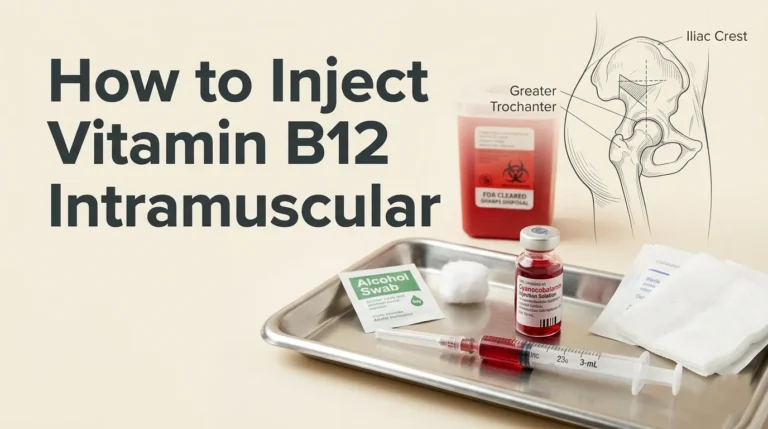
The injection itself takes less than 30 seconds. The nurse will ask you to lie on your stomach on an exam table if they are using the gluteal site, or sit with your arm relaxed if they are using the deltoid muscle. They will clean the skin with an alcohol swab. The oil-based cholecalciferol solution is drawn into a syringe with a needle gauge suitable for intramuscular injection, typically a 21- to 23-gauge, 1.5-inch needle for gluteal administration. You will feel a brief sharp pinch and then a deep pressure as the solution is pushed into the muscle. The volume is usually 1 milliliter. The injection is complete in five to ten seconds.
After the injection, the nurse will apply a small adhesive bandage and ask you to remain seated or lying down for approximately five minutes. This observation period is not optional. A small number of people experience a vasovagal reaction: a sudden drop in heart rate and blood pressure that causes lightheadedness. This is a reaction to the needle, not the medication. If it happens, the staff will have you lie flat and elevate your legs until the feeling passes, which usually takes under two minutes.
You can resume normal activities immediately. You should avoid heavy leg day at the gym for 24 hours if the injection was in the gluteal muscle, because the post-injection inflammation can make the muscle feel tender and weak. The vitamin D depot begins releasing cholecalciferol into your bloodstream immediately, but you will not feel any perceptible effect that day. The physiological benefits, such as improved muscle strength or reduced bone pain, take four to eight weeks to develop.
how often do you need vitamin d injections
The frequency of vitamin D injections depends on your baseline deficiency severity, your body weight, your ongoing sun exposure, and whether you have an ongoing malabsorption condition. A standard protocol involves a loading dose of one to two high-dose injections, followed by maintenance injections every two to four months. The goal is not to inject you forever. The goal is to correct the deficiency, stabilize you in the normal range, and then transition you to oral maintenance if your gut allows.
A single 300,000 IU intramuscular dose of cholecalciferol typically raises serum 25(OH)D by 10 to 25 ng/mL over two to three months, with the peak occurring around week 8. The magnitude of the increase is inversely proportional to body weight. A person weighing 120 pounds will see a larger serum increase than a person weighing 250 pounds from the same 300,000 IU dose. Adipose tissue sequesters vitamin D, which is fat-soluble. Higher body fat means a larger distribution volume and a smaller serum rise per unit of injected dose.
Maintenance dosing is determined by follow-up testing. Your provider will order a repeat 25-hydroxyvitamin D test approximately 12 weeks after your loading dose. If your level has risen to 35 to 45 ng/mL, you are in the target range. The Endocrine Society defines 30 to 100 ng/mL as sufficient. The maintenance injection dose is typically 50,000 to 100,000 IU every two to three months to keep you in that zone. Some clinicians prescribe a lower monthly dose of 25,000 to 50,000 IU if you tend to metabolize vitamin D quickly.
Lifestyle factors drive frequency adjustment. A person who works outdoors in a sunny climate during summer may need no injections from May through September and then resume maintenance dosing in October. A person with a complete GI absorption failure, such as a patient with short bowel syndrome on parenteral nutrition, may need 50,000 to 100,000 IU injected every single month indefinitely. The schedule is entirely individual.
- Loading phase: 300,000 to 600,000 IU total, given as one or two injections over one to two months.
- Follow-up blood test: 12 weeks after loading dose to assess response.
- Maintenance phase: 50,000 to 100,000 IU every 2 to 4 months, adjusted based on lab results.
- Individual factors: Body weight, adiposity, latitude, season, skin melanin content, and GI absorptive capacity.
Key Takeaway: Vitamin D injections are not a permanent cure; they are a cyclic therapy that requires follow-up testing and individualized maintenance scheduling.
vitamin d injection risks
The primary risk of a vitamin D injection is iatrogenic hypercalcemia caused by excessive dosing or injection into a patient who was not actually deficient. The fat-soluble nature of cholecalciferol means a massive intramuscular dose stays in the body for months. If the dose is too high, serum calcium levels climb. The kidneys work harder to excrete the excess calcium, increasing the risk of nephrocalcinosis and kidney stones. The heart muscle can become irritable, producing palpitations and, in extreme cases, arrhythmia.
A second risk is anaphylaxis to the carrier oil. Injectable cholecalciferol is suspended in either sesame seed oil or cottonseed oil. A person with a documented seed oil allergy should never receive a standard compounded vitamin D injection without the pharmacy preparing an alternative carrier. This is a rare allergy, but the reaction can be severe. The screening form you complete before the shot must specifically ask about seed, nut, and oil allergies. A responsible clinic keeps an epinephrine auto-injector in the treatment room.
The third risk is poor injection technique. An intramuscular injection into the gluteal muscle must avoid the sciatic nerve. The proper injection site is the upper outer quadrant of the gluteal muscle. A needle placed too low or too medially can strike the nerve, causing temporary or permanent sciatic nerve injury. This is a known complication of any gluteal intramuscular injection, not specific to vitamin D. The risk is minimized when the injection is administered by an experienced registered nurse or physician who uses proper anatomical landmarks.
Contraindications are the most overlooked risk factor. The following conditions are contraindications for high-dose vitamin D injection: primary hyperparathyroidism, sarcoidosis, tuberculosis, some lymphomas, and granulomatous diseases. In these conditions, the body’s immune cells produce excess calcitriol locally, driving up serum calcium independently of the normal regulatory feedback loop. Adding a large exogenous dose of cholecalciferol on top of this can cause severe, rapid-onset hypercalcemia requiring hospitalization. This is why the medical history screening is non-negotiable.
- Hypercalcemia risk: Avoid in patients with kidney stones, hyperparathyroidism, or granulomatous disease.
- Carrier oil allergy: Sesame oil is a common suspension; screen for seed allergies.
- Injection site injury: Sciatic nerve damage if gluteal injection is placed incorrectly.
- Contraindicated conditions: Sarcoidosis, tuberculosis, active lymphoma, primary hyperparathyroidism.
- Overdose risk: Cumulative toxicity from repeated high-dose injections without monitoring serum calcium.
Frequently Asked Questions About Vitamin D Injections
How much does a vitamin D injection cost without insurance?
Without insurance, a vitamin D injection costs between $35 and $85 at a retail walk-in clinic or med spa that uses a flat-rate cash pricing model.
At a private physician’s office, the combined cost of the office visit, injection administration, and medication can range from $200 to $420 if you pay entirely out of pocket.
Always ask for the all-inclusive cash price before booking and confirm whether a separate lab test fee applies.
Who qualifies for vitamin D injections?
You qualify for a vitamin D injection if you have a lab-confirmed serum 25-hydroxyvitamin D level below 20 ng/mL, or if you have a diagnosed malabsorption condition such as Crohn’s disease, celiac disease, or a history of gastric bypass surgery that prevents oral absorption.
A licensed medical provider must review your labs and medical history to determine medical necessity.
People with normal vitamin D levels or conditions like sarcoidosis that predispose them to high calcium generally do not qualify.
What is the difference between vitamin D2 and D3 injections?
Vitamin D3 (cholecalciferol) is the form produced in human skin and has a longer half-life in the bloodstream, making it the preferred injectable form.
Vitamin D2 (ergocalciferol) is a plant and yeast-derived form that clears from circulation faster and is less effective at sustaining serum levels over time.
The Endocrine Society guidelines recommend cholecalciferol (D3) over ergocalciferol (D2) for both treatment and maintenance.
How long does a vitamin D shot last in your system?
A single intramuscular injection of 300,000 IU of cholecalciferol raises and sustains serum 25-hydroxyvitamin D levels for approximately two to three months.
The oil-based depot in the muscle releases the vitamin gradually, with serum levels peaking around week 6 to 8 and then slowly declining.
Maintenance injections are typically needed every two to four months depending on your individual metabolism and follow-up lab results.
Can I just buy a vitamin D injection at a pharmacy?
No, you cannot buy a vitamin D injection over the counter at a pharmacy.
Cholecalciferol injectable is a prescription medication that requires a valid order from a licensed physician, nurse practitioner, or clinical medical director.
The pharmacy will only dispense the injectable vial to a clinic, a healthcare provider, or directly to you if you have a prescription and a documented plan for professional administration.
What hurts more, a B12 shot or a vitamin D shot?
A vitamin D shot often produces more post-injection soreness than a B12 shot because the cholecalciferol is suspended in a thick oil carrier that can irritate muscle tissue.
Vitamin B12 (cyanocobalamin or methylcobalamin) is a water-based solution that absorbs quickly and causes minimal localized inflammation.
The initial needle pinch is similar for both, but the vitamin D injection site may ache for 24 to 48 hours afterward, while B12 injection soreness usually fades within hours.
Getting a vitamin D injection is a specific medical intervention with a clear target patient, not a universal wellness trend. If you have a documented deficiency that has not responded to oral supplements, or if your gut simply cannot absorb vitamin D from pills, the injection is a legitimate, effective, and increasingly accessible option in 2026. You now know exactly where to look, what questions to ask, and what a fair price looks like.
The single most important piece of information to take from this article is that you need a recent 25-hydroxyvitamin D lab result before anyone legitimate will inject you. Do not waste your time or money walking into a clinic without it. If you do not have one, schedule the blood test first. The clinic will guide you on the specific test to order.
The landscape of vitamin D injections has matured beyond the doctor’s office. You can access safe, professionally administered care at a retail pharmacy clinic or a medically supervised wellness chain for less than the cost of a dinner out. But the responsibility for safety still sits with you. Screen the clinic for a medical director. Report any history of kidney stones or high calcium. Confirm the total cash price before you sit in the chair. The injection itself takes 30 seconds. The medical due diligence is what protects you.