De La Rosa Mazapan Nutrition Facts: Full 2026 Breakdown
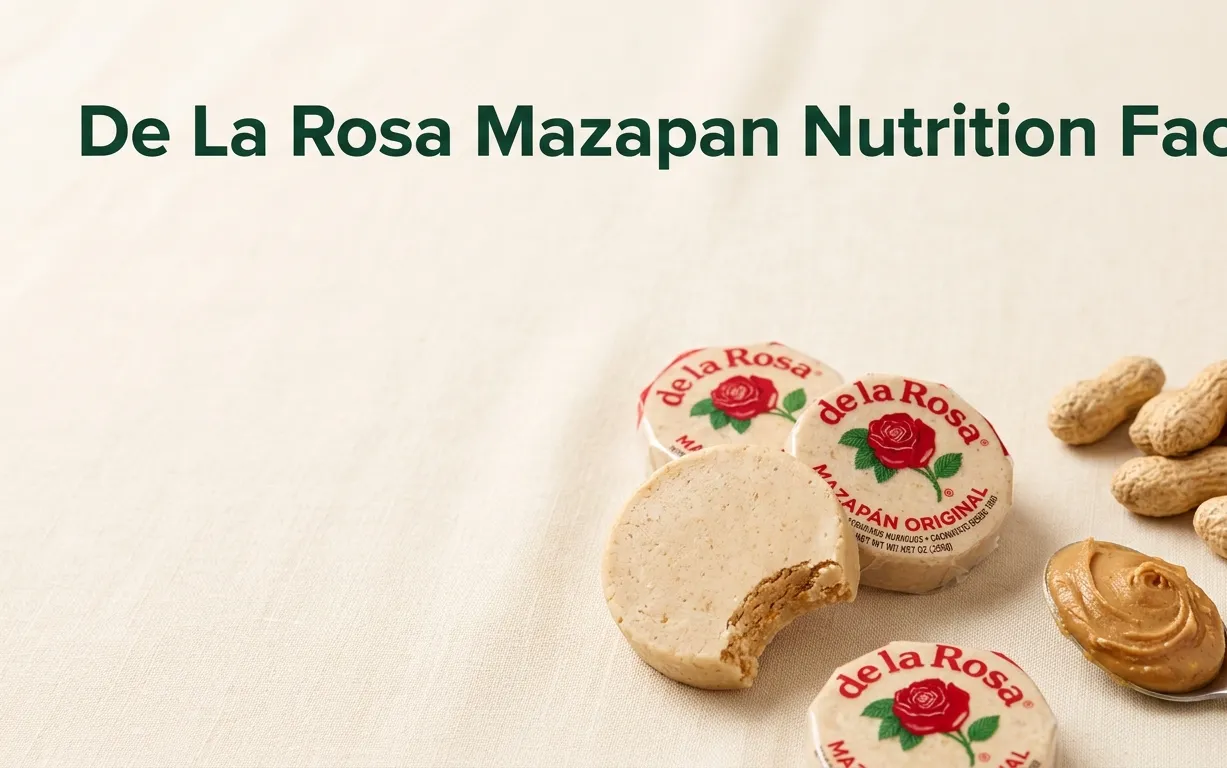
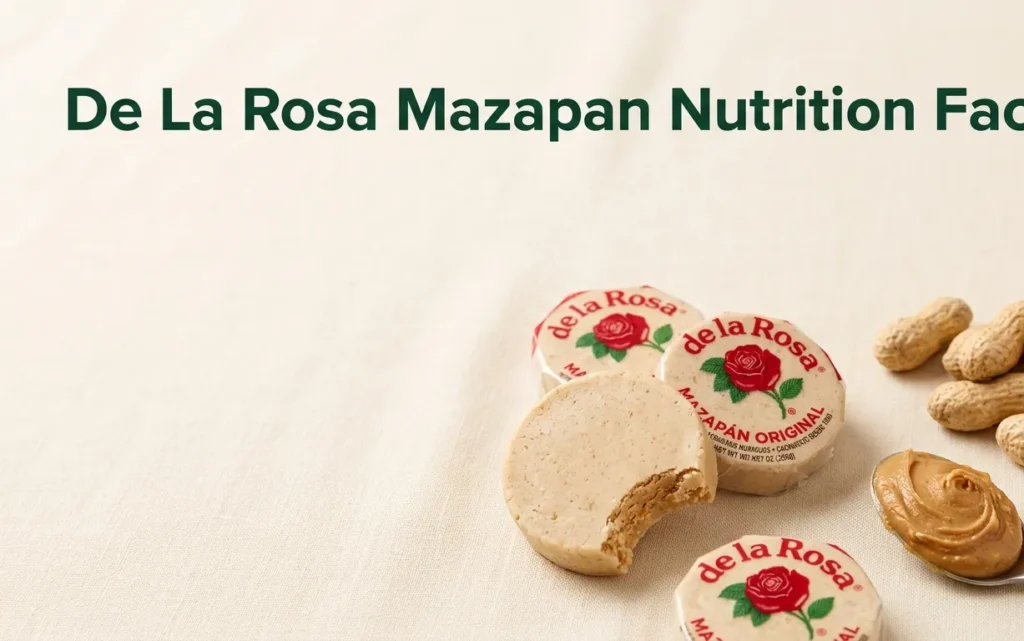
A single De La Rosa Mazapan piece, weighing 30 grams, contains 170 calories, 10 grams of fat, 17 grams of total carbohydrates, and 5 grams of protein. The primary ingredient is ground peanuts, which means this candy delivers a small but real amount of protein, healthy monounsaturated fat, and micronutrients like magnesium and vitamin E that pure sugar candies lack entirely. The tradeoff is that each piece also contains approximately 15 grams of added sugar.
The distinction matters because most people group mazapan with candy bars and hard candies, assuming it is nutritionally identical. It is not. The peanut base shifts its nutritional profile closer to a sweetened nut butter than a pure sugar confection. According to the USDA FoodData Central database, peanuts provide magnesium, phosphorus, vitamin E, niacin, and manganese, and these micronutrients are present in the finished mazapan in proportion to the peanut content.
This article breaks down the complete nutrition facts panel for De La Rosa Mazapan in 2026, including the exact ingredient list, the full macronutrient and micronutrient profile, the sugar content compared to the American Heart Association daily limits, the allergen status, and a practical guide for fitting this candy into a balanced diet. You will also learn how to read the label for yourself and how mazapan compares to other common candy options.
de la rosa mazapan nutrition facts
A standard one-piece serving of De La Rosa Mazapan provides 170 calories, 5 grams of protein, 17 grams of total carbohydrate including 15 grams of added sugar, and 10 grams of total fat. The nutrition profile reflects the candy’s composition as a ground peanut and sugar confection. The peanut base contributes the protein, the majority of the fat, and the small amount of dietary fiber. The sugar and glucose syrup contribute the carbohydrate total and the sweetness.
| Nutrient | Amount per 30g Piece | Percent Daily Value (DV) |
|---|---|---|
| Calories | 170 kcal | |
| Total Fat | 10 g | 13% |
| Saturated Fat | 2 g | 10% |
| Trans Fat | 0 g | |
| Cholesterol | 0 mg | 0% |
| Sodium | 35 mg | 2% |
| Total Carbohydrate | 17 g | 6% |
| Dietary Fiber | 1 g | 4% |
| Total Sugars | 15 g | |
| Added Sugars | 15 g | 30% |
| Protein | 5 g | 10% |
| Calcium | 10 mg | 1% |
| Iron | 0.5 mg | 3% |
| Potassium | 100 mg | 2% |
The daily values are based on a 2,000 calorie diet as defined by the FDA. The added sugars figure is the most nutritionally notable number on the label. At 15 grams per piece, a single mazapan provides 60 percent of the American Heart Association recommended daily limit of 25 grams of added sugar for women and 42 percent of the 36 gram limit for men. This places mazapan firmly in the treat category rather than a daily snack choice for anyone monitoring their added sugar intake.
de la rosa mazapan ingredients
The ingredient list for De La Rosa Mazapan is short and consists of peanuts, sugar, glucose syrup, partially hydrogenated vegetable oil, soy lecithin, and artificial flavor. The ingredient hierarchy matters because the FDA requires ingredients to be listed in descending order by weight. Peanuts appear first, meaning they are the single largest component by weight. This is why the protein and fat content are higher than what you find in most other candies.
The sugar and glucose syrup together form the sweetening system. Glucose syrup contributes sweetness, prevents sugar crystallization, and gives the candy its characteristic crumbly yet cohesive texture. Partially hydrogenated vegetable oil appears in the ingredient list, which may raise questions for consumers. The FDA banned partially hydrogenated oils as a food additive in 2018 due to artificial trans fat content, but products can still contain small amounts if the manufacturer has received a specific extension or if the processing results in negligible trans fat levels. The nutrition facts panel for De La Rosa Mazapan lists 0 grams of trans fat per serving, which means any amount present is below 0.5 grams per serving, the FDA threshold for rounding to zero.
Soy lecithin functions as an emulsifier that helps the peanut oils and sugars blend into a uniform texture. It is present in very small amounts. The artificial flavor provides the distinct taste that differentiates mazapan from plain ground peanuts and sugar. The ingredient panel is notably shorter than the typical commercial candy bar, which often contains 20 to 40 ingredients including multiple preservatives, stabilizers, artificial colors, and high-fructose corn syrup. The relative simplicity of the ingredient list is a minor positive for consumers who prioritize fewer processed ingredients.
de la rosa mazapan serving size
The standard serving size for De La Rosa Mazapan is one piece weighing 30 grams. The product is sold in individually wrapped round discs, each contained in its own cellophane wrapper. The single-piece packaging inherently supports portion control. Unlike a chocolate bar that may contain 2.5 servings in a single wrapper, the mazapan is pre-portioned into a defined unit.
The 30 gram serving is useful as a reference because it makes label reading straightforward. The numbers on the nutrition facts panel represent exactly what you eat when you unwrap and consume one piece. There is no multiplication required and no temptation to eat half a package. This transparent serving structure is an advantage from a mindful eating perspective.
A 30 gram candy piece is modest in physical size but energy dense because of the peanut and sugar combination. The 170 calories per piece is comparable to two tablespoons of peanut butter or a standard granola bar, but the volume of food is smaller and the satiety is lower because the candy is designed for rapid palatability rather than prolonged fullness. For someone tracking their food intake, the key practical point is that one piece equals one serving equals all the numbers on the label. There is no hidden math.
Key Takeaway: The pre-portioned single-piece packaging makes calorie and sugar tracking easy, which is a structural advantage over multi-serving candy bars. One piece is one serving with no label math required.
how many calories in de la rosa mazapan
A single De La Rosa Mazapan piece contains 170 calories. This calorie count comes almost entirely from the fat contributed by the ground peanuts and the carbohydrates contributed by the added sugar and glucose syrup. The macronutrient calorie breakdown is approximately 53 percent of calories from fat, 40 percent from carbohydrates, and 12 percent from protein.
The calorie density is moderate to high for a candy. At 170 calories per 30 grams, the product provides approximately 5.7 calories per gram. Pure sugar candy provides about 4 calories per gram. The higher calorie density of mazapan comes from the fat content in the peanut base. Fat provides 9 calories per gram, and the 10 grams of fat in a single piece contribute 90 of the 170 total calories.
To contextualize the 170 calorie figure, a 150-pound adult walking at a moderate pace of 3 miles per hour would need approximately 35 to 40 minutes of walking to expend the energy from one mazapan piece. This calorie expenditure comparison is included not to suggest that exercise is required to eat candy but to help readers understand the energy density of this food in practical terms. The Dietary Guidelines for Americans 2020-2025 allow for a discretionary calorie budget of approximately 100 to 300 calories per day for most adults, depending on their total energy needs. One mazapan at 170 calories fits within this budget but consumes a large portion of it.
de la rosa mazapan sugar content
Each De La Rosa Mazapan piece contains 15 grams of total sugar, all of which is classified as added sugar on the updated FDA Nutrition Facts panel. The sugar comes from two sources listed in the ingredients: granulated sugar and glucose syrup. There is no naturally occurring sugar in the peanut base, so the entire 15 grams is considered added sugar by regulatory definition.
The American Heart Association (AHA) recommends that adult women consume no more than 25 grams of added sugar per day and adult men no more than 36 grams. A single mazapan piece represents 60 percent of the daily limit for women and 42 percent for men. This single-data-point comparison is the most important practical nutrition fact about this product. Eating one mazapan is not a problem in the context of an otherwise low-added-sugar day. Eating one mazapan alongside a 20-ounce soda, which contains approximately 65 grams of added sugar, places a person far above the AHA limit in a single sitting.
The blood sugar impact of 15 grams of sugar consumed in a candy format is moderated slightly by the presence of 5 grams of protein and 10 grams of fat from the peanuts. Protein and fat slow gastric emptying and blunt the glucose absorption curve compared to a pure sugar candy. This does not make mazapan a low-glycemic food, but it does mean the blood sugar response is less sharp than what occurs after eating 15 grams of sugar in the form of gummy candies or hard candy, which are nearly pure carbohydrate.
de la rosa peanut candy carbs
The total carbohydrate content of one De La Rosa Mazapan piece is 17 grams, comprising 15 grams of sugar and 1 gram of dietary fiber. The remaining 1 gram of carbohydrate is likely starch from the peanut base, though it is not specifically broken out on the standard nutrition facts panel. The net carbohydrate count, which some people tracking carbohydrate intake for medical or dietary reasons use, is 16 grams per piece when you subtract the 1 gram of fiber.
For a person with diabetes or anyone counting carbohydrates for blood sugar management, 17 grams of total carbohydrate is classified as one carbohydrate exchange under standard medical nutrition therapy guidelines. The American Diabetes Association does not prohibit sugar-sweetened foods categorically but recommends that they be counted as part of the total carbohydrate budget for a meal or snack. A single mazapan provides slightly more carbohydrate than a slice of standard sandwich bread, which typically contains 12 to 15 grams.
The source of the carbohydrates matters for practical nutrition guidance. The sugar and glucose syrup in mazapan are refined, rapidly absorbed carbohydrates. The 1 gram of fiber is incidental and provides no meaningful blood sugar benefit. A person eating mazapan should understand that the carbohydrate load is essentially pure sugar from a metabolic perspective, even though the peanut fat and protein blunt the absorption speed slightly. This candy does not provide the slow-digesting complex carbohydrates that whole food sources offer.
de la rosa mazapan protein content
One De La Rosa Mazapan piece provides 5 grams of protein. This protein comes entirely from the ground peanuts, which are the first listed ingredient. Peanuts are approximately 25 percent protein by weight, and the 30 gram serving size reflects this. Five grams of protein is roughly equivalent to what you would find in half a cup of milk or three-quarters of a hard-boiled egg.
The protein in peanuts is plant-based and considered incomplete because it is lower in the amino acid methionine compared to animal proteins. This is not a practical concern when the candy is eaten as part of a varied diet that includes other protein sources throughout the day. The body pools amino acids from all foods consumed within a 24-hour period.
The presence of protein is the main nutritional differentiator between mazapan and most other candies. A typical chocolate bar contains 2 to 3 grams of protein per comparable serving. A serving of gummy candy contains zero. The 5 grams in mazapan is modest in the context of a daily protein target of 50 to 60 grams for an average adult, but it is a real contribution rather than a trace amount. For a child eating this candy as a snack, 5 grams of protein is more meaningful relative to their smaller body size and lower total protein needs.
Key Takeaway: The 5 grams of protein from the peanut base is what separates mazapan nutritionally from pure sugar candies. It is modest but real, and it helps moderate the blood sugar response compared to protein-free sweets.
mazapan candy fat profile
The total fat content of one De La Rosa Mazapan piece is 10 grams, with 2 grams of saturated fat and 0 grams of trans fat. The remaining 8 grams consist of unsaturated fats from the ground peanuts, primarily monounsaturated fatty acids. Peanuts are approximately 50 percent fat by weight, and the fat profile mirrors what is found in peanut butter. Oleic acid, the same monounsaturated fat that gives olive oil its heart-healthy reputation, is the predominant fatty acid in peanuts.
The 2 grams of saturated fat represent 10 percent of the FDA Daily Value based on a 2,000 calorie diet. The saturated fat in peanuts is naturally occurring and is part of the peanut matrix, which research suggests has a different metabolic effect than isolated saturated fat from processed sources. Whole peanuts and peanut butter have been associated with neutral or favorable cardiovascular outcomes in large observational studies, including the Harvard-based Nurses’ Health Study, likely because the saturated fat is accompanied by monounsaturated fat, fiber, phytosterols, and other bioactive compounds.
The ingredient list includes partially hydrogenated vegetable oil, which historically would have been a source of artificial trans fat. However, the nutrition facts panel lists trans fat at 0 grams, which means the amount present is below 0.5 grams per serving, the FDA threshold for rounding to zero. For consumers who prefer to avoid partially hydrogenated oils entirely, this is an ingredient to note. For consumers who are comfortable with the FDA-regulated labeling threshold and the 0 gram trans fat listing, the risk is negligible at the serving size consumed.
vitamins and minerals in de la rosa mazapan
The micronutrient profile of De La Rosa Mazapan is modest but not zero, and the nutrients present come from the ground peanut base. Peanuts are a good source of magnesium, phosphorus, vitamin E, niacin (vitamin B3), and manganese. The amounts in a single mazapan piece reflect the proportion of peanuts in the 30 gram serving.
| Micronutrient | Approximate Amount per Piece | Function |
|---|---|---|
| Magnesium | 30 to 40 mg (8-10% DV) | Supports muscle and nerve function, blood pressure regulation, and energy production. |
| Phosphorus | 50 to 70 mg (5-7% DV) | Bone health, cell membrane structure, energy metabolism. |
| Vitamin E | 1 to 2 mg (5-10% DV) | Antioxidant that protects cell membranes from oxidative damage. |
| Niacin (B3) | 1 to 2 mg (5-10% DV) | Supports energy metabolism and nervous system function. |
| Manganese | 0.3 to 0.5 mg (15-25% DV) | Cofactor for bone formation, blood clotting, and antioxidant enzyme function. |
The daily values cited are based on the FDA reference intakes. The micronutrient amounts are estimates derived from the USDA FoodData Central database values for ground peanuts scaled to the approximate peanut content of the 30 gram piece. The exact amounts will vary slightly by batch and peanut sourcing.
No candy should be relied upon as a primary source of micronutrients. Whole peanuts, peanut butter without added sugar, and other nut and seed sources provide these same nutrients in a more nutrient-dense format without the 15 grams of added sugar. The presence of these micronutrients is a minor nutritional positive that distinguishes mazapan from candies with no peanut content, but it does not reclassify the product as a health food.
is de la rosa mazapan gluten free
De La Rosa Mazapan does not contain gluten-containing ingredients in its listed formulation. The ingredient list includes peanuts, sugar, glucose syrup, partially hydrogenated vegetable oil, soy lecithin, and artificial flavor. None of these are derived from wheat, barley, rye, or other gluten-containing grains. However, the product is not labeled or certified gluten free by the manufacturer.
The absence of a gluten free certification means that cross-contamination during manufacturing or packaging cannot be ruled out. A facility that processes wheat flour products on shared equipment could introduce trace gluten into any product, including those without gluten in the ingredient list. For a person with celiac disease, the distinction between no gluten ingredients and certified gluten free is medically relevant. The only way to be certain is to contact De La Rosa directly and ask about their manufacturing facility practices and testing protocols.
For a person avoiding gluten by preference or with non-celiac gluten sensitivity, the ingredient list does not contain any red flags. For a person with celiac disease, the absence of a gluten free certification mark means the product carries an unknown level of risk that should be evaluated based on individual sensitivity and tolerance for possible trace exposure. A registered dietitian who specializes in celiac disease management can help interpret whether a product with no gluten ingredients but no certification is appropriate for an individual patient’s specific sensitivity threshold.
how much sugar in a mazapan vs daily limits
A single De La Rosa Mazapan contains 15 grams of added sugar, which is 60 percent of the American Heart Association daily limit of 25 grams for women and 42 percent of the 36 gram limit for men. To make this concrete, one mazapan uses up the majority of a woman’s added sugar budget for an entire day. If she also drinks a 12-ounce can of regular cola, which contains 39 grams of added sugar, she has consumed 54 grams, which is more than double the AHA limit.
The Dietary Guidelines for Americans 2020-2025 recommend that added sugars account for less than 10 percent of total daily calories. On a 2,000 calorie diet, that is a maximum of 50 grams of added sugar. The AHA limits are more conservative because they are based specifically on cardiovascular disease risk rather than on a percentage of total calories. The AHA recommendations are 25 grams for women and 36 grams for men.
Quick Tip:
- If you eat a mazapan, look at the rest of your day’s sugar intake from flavored yogurts, cereals, sauces, salad dressings, and beverages. These hidden sources can push your total well past the limit.
- A single 16-ounce flavored coffee drink can contain 40 to 60 grams of added sugar, which combined with a mazapan places you in excess of any guideline.
- The simplest way to keep your daily added sugar within limits is to choose water, unsweetened tea, or black coffee as your beverages and treat sweetened foods as occasional items rather than daily staples.
Key Takeaway: One mazapan uses up most of a woman’s daily added sugar allowance and nearly half of a man’s. The rest of the day’s food and beverage choices determine whether the total lands within or far above the AHA limits.
is mazapan healthy
De La Rosa Mazapan is not a health food, but it is also not nutritionally equivalent to a pure sugar candy. The peanut base provides 5 grams of protein, unsaturated fats, and small amounts of magnesium, vitamin E, and niacin that pure sugar confections lack. The 15 grams of added sugar per piece, however, firmly places it in the treat category that should be consumed occasionally and in moderation rather than as a daily staple.
The concept of “healthy” is always relative to the alternative. A mazapan is a better nutritional choice than a serving of gummy candy or hard candy of the same calorie count because those provide sugar and nothing else. A mazapan is a less nutrient-dense choice than a small handful of plain peanuts or a tablespoon of natural peanut butter spread on apple slices, which deliver the same peanut nutrients with far less added sugar and more satiety.
The Academy of Nutrition and Dietetics position on candy in the diet is that no single food determines the overall quality of a dietary pattern. What matters is the total context. A person who eats a varied diet rich in vegetables, fruits, whole grains, and lean protein and occasionally enjoys a mazapan is not harming their health. A person whose daily snack routine includes multiple high-sugar candy items is consuming a dietary pattern that consistently exceeds added sugar recommendations and is associated with higher risk of weight gain, type 2 diabetes, and cardiovascular disease.
de la rosa mazapan vs other candies
De La Rosa Mazapan holds a middle-ground nutritional position among popular candies. It outperforms pure sugar candies because of its peanut-derived protein and micronutrients. It underperforms dark chocolate with high cocoa content, which delivers more antioxidant polyphenols per calorie. The table below compares a single mazapan piece to comparable servings of other common candies.
| Candy (per standard serving) | Calories | Sugar (g) | Protein (g) | Fat (g) | Notable Nutrient |
|---|---|---|---|---|---|
| De La Rosa Mazapan (30g) | 170 | 15 | 5 | 10 | Magnesium, Vitamin E from peanuts |
| Snickers Bar (fun size, 34g) | 160 | 16 | 3 | 8 | Minimal micronutrients |
| Gummy Bears (30g) | 100 | 17 | 0 | 0 | Pure sugar, zero protein or fat |
| Dark Chocolate 70% (30g) | 170 | 8 | 2 | 12 | Iron, magnesium, flavanol antioxidants |
| Peanut M&Ms (fun size, 28g) | 140 | 14 | 3 | 7 | Trace peanut nutrients |
The comparison shows that mazapan and dark chocolate are the two options that bring real food nutrients along with their sugar. The dark chocolate provides more antioxidant compounds. The mazapan provides more protein. Both are sweet treats rather than health foods. The gummy bears and other pure sugar candies sit at the bottom of the comparison because they provide calories with essentially no micronutrient value.
peanut candy nutrition benefits and drawbacks
The primary nutritional benefit of peanut-based candy like De La Rosa Mazapan is the protein, unsaturated fat, and micronutrient content that comes from the peanut base. Peanuts are a whole food with an established body of research showing that regular peanut consumption is associated with reduced cardiovascular disease risk, improved satiety, and better weight management when eaten in place of less nutritious snacks. The benefit transfers partially but not completely to peanut candy.
The benefit that transfers is the nutrient composition. The protein, magnesium, vitamin E, and monounsaturated fat are present in proportion to the peanut content. The benefit that does not transfer is the satiety and metabolic advantage of whole peanuts. Whole peanuts require chewing, have intact cell walls that reduce fat absorption, and are less energy dense per gram of food consumed. Candy processing grinds the peanuts finely, which increases the bioavailability of the fat and calories and reduces the chewing time and satiety signal.
The primary nutritional drawback is the 15 grams of added sugar, which approaches or exceeds half of the AHA daily limit in a single small piece that provides minimal fullness. The second drawback is the calorie density. At 170 calories for a small 30 gram disc, it is easy to eat one piece and still feel hungry for more food shortly after. The third drawback is the presence of partially hydrogenated oil, which some consumers prefer to avoid entirely even when the trans fat level falls below the FDA labeling threshold. A person eating peanut candy gets some of the benefits of the peanut matrix but all of the sugar load of a processed confection.
how to fit mazapan into a balanced diet
Fitting De La Rosa Mazapan into a balanced diet means treating it as an occasional treat within your discretionary calorie budget, not as a daily snack or a source of protein or nutrients. The Dietary Guidelines for Americans 2020-2025 define discretionary calories as the remaining calories after meeting nutrient needs from whole food sources. For most adults, this is roughly 100 to 300 calories per day.
A single mazapan at 170 calories fits within a discretionary calorie budget when the rest of the day’s food is composed of vegetables, fruits, whole grains, lean proteins, and healthy fats. The key is that the mazapan replaces other discretionary calories, not nutrient-dense food. If you eat a mazapan, you have consumed a significant portion of your day’s added sugar allowance, and the remaining food choices should minimize added sugar.
A practical strategy for fitting this candy into a healthy pattern is to eat it as a deliberate dessert after a balanced meal rather than as a standalone snack. The protein and fat from the meal slow the absorption of the candy’s sugar further, and the context of a complete meal reduces the likelihood of reaching for a second piece. Another strategy is to crumble half a mazapan over a bowl of plain Greek yogurt with berries. The yogurt adds more protein, the berries add fiber and real fruit nutrients, and you still get the mazapan flavor with less sugar and more satiety than eating the candy alone.
Key Takeaway: Mazapan fits into a balanced diet as an occasional treat within your calorie and sugar budget. Eat it after a meal, not as a standalone snack. The rest of your day determines whether your total sugar intake lands within the AHA limits.
how to read a candy nutrition label correctly
Reading a candy nutrition label correctly requires you to look past the front-of-package claims and focus on three specific lines on the Nutrition Facts panel: the serving size, the added sugars, and the ingredient list. The front of a package is marketing. The Nutrition Facts panel and ingredient list are regulated data. The serving size is your reference point for every number below it. If the serving is half a piece and you eat a whole piece, you must double every number.
To read a candy nutrition label correctly:
- Start with the serving size line at the very top. Confirm how many pieces or grams equal one serving. For De La Rosa Mazapan, one piece at 30 grams is one serving, which makes label reading straightforward.
- Move directly to the Added Sugars line under Total Carbohydrates. This number tells you how much of the sugar was added during processing versus naturally occurring from the whole food ingredients. For a candy, almost all the sugar is added sugar. Compare this number to the American Heart Association daily limit of 25 grams for women and 36 grams for men.
- Scan the ingredient list for the shortest list you can find. The first three ingredients are the bulk of what you are eating. A short ingredient list with recognizable foods listed first is generally preferable to a long list with artificial colors, multiple preservatives, and hard-to-identify additives.
- Check the Allergen statement, usually printed in bold below the ingredient list. It must declare the top nine allergens: milk, eggs, fish, shellfish, tree nuts, peanuts, wheat, soybeans, and sesame. For De La Rosa Mazapan, peanuts and soy are declared.
The percentage daily values on the right side of the panel are based on a 2,000 calorie diet. Use them as rough guides rather than exact targets. A DV of 5 percent or less is considered low. A DV of 20 percent or more is considered high. This rule of thumb helps you quickly assess whether a nutrient is present in small or large amounts relative to your daily reference intake.
================================================================
Frequently Asked Questions About De La Rosa Mazapan Nutrition
How many calories does a De La Rosa Mazapan have?
A single De La Rosa Mazapan piece weighing 30 grams contains 170 calories.
The calories come from 10 grams of fat, 17 grams of carbohydrate, and 5 grams of protein.
This represents about 8.5 percent of a standard 2,000 calorie daily intake.
Is De La Rosa Mazapan gluten free?
De La Rosa Mazapan does not contain gluten ingredients such as wheat, barley, or rye in its listed formulation.
The product is not certified gluten free, which means cross-contamination during manufacturing is possible.
A person with celiac disease should contact the manufacturer directly to verify processing practices before consuming.
How much sugar is in one mazapan candy?
One De La Rosa Mazapan piece contains 15 grams of added sugar.
This is 60 percent of the American Heart Association daily limit for women and 42 percent for men.
The sugar comes from granulated sugar and glucose syrup added to the ground peanut base.
Is mazapan a healthy snack?
Mazapan is not a health food but offers more nutritional value than pure sugar candies because the peanut base contributes 5 grams of protein, unsaturated fats, and small amounts of magnesium and vitamin E.
The 15 grams of added sugar per piece places it firmly in the treat category.
It fits in a balanced diet as an occasional treat, not a daily snack.
What are the main ingredients in De La Rosa Mazapan?
The main ingredients in De La Rosa Mazapan, listed in order by weight, are peanuts, sugar, glucose syrup, partially hydrogenated vegetable oil, soy lecithin, and artificial flavor.
Peanuts are the first ingredient, which is why the candy provides protein and unsaturated fats.
The ingredient list is shorter than most commercial candy bars, with fewer additives and preservatives.
Does De La Rosa Mazapan contain protein?
Yes, a single De La Rosa Mazapan piece contains 5 grams of protein.
The protein comes entirely from the ground peanuts, which are the primary ingredient.
This amount is roughly equivalent to the protein in half a cup of milk or three-quarters of a hard-boiled egg.
De La Rosa Mazapan is a peanut-based candy that delivers a mix of real food nutrients and a substantial dose of added sugar. The ground peanut base provides 5 grams of protein, unsaturated fats, and small but real amounts of magnesium, vitamin E, and niacin. The 15 grams of added sugar per piece is the nutrition fact that matters most, consuming more than half of the American Heart Association daily limit for women.
If you enjoy this candy, the evidence-based way to fit it into your diet is to treat it as an occasional dessert rather than a routine snack. Eat it after a balanced meal. Keep the rest of your day low in added sugar. Do not rely on it for protein or micronutrients. The peanuts provide those nutrients more efficiently without the added sugar when eaten as whole nuts or peanut butter.
A registered dietitian can help you determine your individual added sugar target and build a dietary pattern that makes room for the foods you enjoy without exceeding the limits that protect your long-term health. You do not need to eliminate candy. You need to know what is in it and where it fits.