Chicken Wing Nutrition Facts: Calories, Protein & More 2026
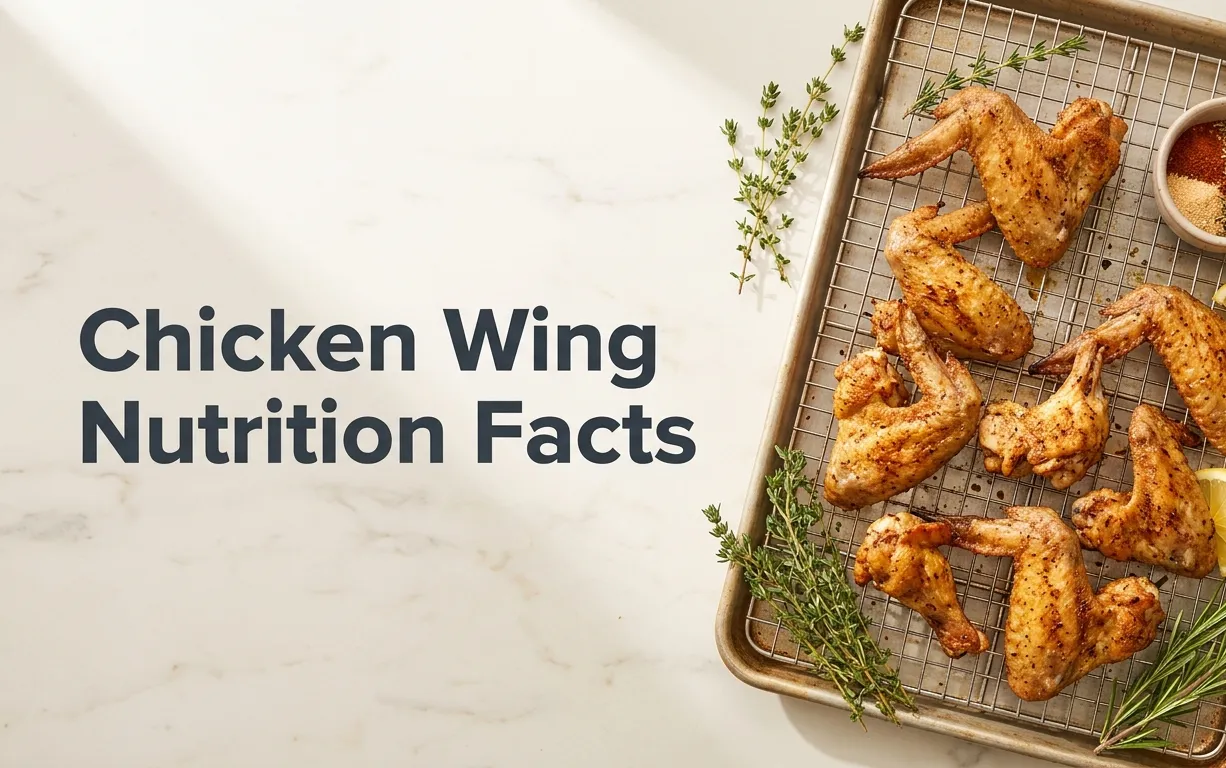
A single average chicken wing with skin, baked or roasted, contains approximately 140 calories, 15 grams of complete protein, and 9 grams of total fat, with the exact nutritional profile shifting dramatically based on whether the wing is baked, fried, skin-on, or skin-off. Chicken wings are not the nutritional void their reputation sometimes suggests. The protein quality is high, the micronutrient profile includes meaningful amounts of selenium, niacin, and vitamin B6, and the fat composition is predominantly unsaturated despite the saturated fat that comes with the skin. Your preparation method and portion size determine whether wings lean healthy or indulgent.
The USDA FoodData Central database records that 100 grams of baked skin-on chicken wing meat and skin delivers 254 calories and 27 grams of protein, a protein density that rivals chicken breast when adjusted for the skin and higher fat content. Americans consume roughly 1.4 billion chicken wings during Super Bowl weekend alone, according to the National Chicken Council, which means millions of people are eating a food they have not seen a complete nutrition label for. The numbers matter because wings are not inherently problematic. Fried wings drowned in butter sauce are. Baked wings with a dry rub are not. The gap between those two versions can exceed 200 calories per serving and represents entirely different nutritional identities.
This article gives you the exact USDA-sourced nutrition facts for chicken wings in 2026. You will get the full macro and micro breakdown per wing and per 100 grams, a direct comparison of baked versus fried nutrition, the difference skin makes, the truth about wing sections, and practical guidance for fitting wings into weight loss, fitness, and various dietary patterns. You will finish knowing exactly what you are eating when you reach for a wing.
Chicken Wing Nutrition Facts: A Complete Breakdown
A complete nutritional breakdown of a chicken wing with skin, baked, reveals 140 calories, 15 grams of protein, 8.8 grams of fat, and 0 grams of carbohydrates per average wing yielding approximately 55 grams of edible portion after cooking. This nutritional identity places chicken wings in the category of moderate-calorie, high-protein, zero-carb animal foods with a fat profile that is roughly half unsaturated and half saturated plus cholesterol. The numbers below come directly from the USDA FoodData Central database for roasted or baked chicken wings with skin, which represents the baseline preparation method without added breading, batter, or sauce.

The protein in chicken wings is complete, containing all nine essential amino acids in the proportions required for human muscle protein synthesis. One average wing provides roughly 27 percent of the daily protein requirement for an average adult woman and 24 percent for an average adult man, based on the 0.8 grams per kilogram of body weight protein RDA referenced by the NIH. The fat is distributed across saturated, monounsaturated, and polyunsaturated fatty acids, with oleic acid, the same monounsaturated fat found in olive oil, representing the largest single fatty acid fraction. The zero-carbohydrate profile makes wings compatible with low-carbohydrate and ketogenic dietary patterns without modification.
The table below presents the complete nutritional profile of one average baked chicken wing with skin and the same wing without skin, allowing a direct comparison of the nutritional impact of the skin alone. The difference is substantial but not as extreme as many people assume. The skin adds roughly 40 calories and 4 grams of fat per wing while also retaining fat-soluble nutrients and providing the crisp texture most wing eaters value.
| Nutrient | One Wing with Skin (55g) | One Wing without Skin (48g) | % Daily Value (Skin-On) |
|---|---|---|---|
| Calories | 140 | 100 | N/A |
| Protein | 14.9 g | 14.0 g | 30% |
| Total Fat | 8.8 g | 4.3 g | 11% |
| Saturated Fat | 2.4 g | 1.2 g | 12% |
| Monounsaturated Fat | 3.7 g | 1.8 g | N/A |
| Polyunsaturated Fat | 1.9 g | 0.9 g | N/A |
| Cholesterol | 45 mg | 42 mg | 15% |
| Carbohydrates | 0 g | 0 g | 0% |
| Sodium (no added salt) | 45 mg | 38 mg | 2% |
| Selenium | 14.0 mcg | 13.5 mcg | 25% |
| Niacin (B3) | 3.6 mg | 3.5 mg | 23% |
| Vitamin B6 | 0.3 mg | 0.3 mg | 18% |
Key Takeaway: A baked chicken wing with skin provides 140 calories and 15 grams of complete protein, and removing the skin saves about 40 calories and 4.5 grams of fat while preserving nearly all the protein and micronutrients.
Nutrition Facts Chicken Wings: What the USDA Data Shows
The USDA FoodData Central database identifies baked skin-on chicken wings as providing 254 calories, 27 grams of protein, and 16 grams of fat per 100-gram serving of cooked edible portion, a nutrient density that places wings in a middle ground between lean breast meat and fattier cuts like thighs or drumsticks. This official database entry is the reference standard for all nutritional claims about chicken wings, and it reveals several details that generic calorie-tracking apps often get wrong. The protein content per 100 grams is only slightly lower than chicken breast, which provides 31 grams per 100 grams. The fat content, at 16 grams per 100 grams, is higher than breast but lower than many people assume given the wing’s indulgent reputation.
The USDA data distinguishes between multiple preparation states: raw wing with skin, raw wing without skin, roasted wing with skin, roasted wing without skin, and fried wing with batter and skin. Each entry tells a different nutritional story. The raw to cooked weight loss, approximately 35 percent due to moisture and fat rendering during cooking, means that 100 grams of raw wings yields roughly 65 grams of cooked edible portion. This shrinkage factor is why per-wing nutrition facts based on cooked weight are more useful for dietary tracking than raw weight estimates.
The USDA database also confirms that chicken wings contain zero carbohydrates naturally. Any carbohydrate content in a chicken wing dish comes entirely from breading, batter, sauces, or coatings added during preparation. A plain baked wing is zero-carb. A breaded fried wing can contain 5 to 10 grams of carbohydrate per wing from the flour and starch coating. Buffalo sauce adds negligible carbohydrate from hot sauce alone but can add 2 to 5 grams per tablespoon when butter or sugar-containing sauces are used. The gap between the USDA baseline data and what ends up on a restaurant plate is where most nutritional confusion originates.
Quick Tip: When using a calorie tracking app, search for “USDA chicken wing roasted skin-on” rather than generic “chicken wing” entries. Generic entries often mix data from different preparation methods and can be off by 50 calories or more per serving.
Nutrition Facts for Chicken Wings: Per Wing vs Per 100g
Chicken wing nutrition facts expressed per individual wing differ from per-100-gram figures because an average cooked wing yields approximately 55 grams of edible portion, not 100 grams, making the per-wing values roughly 55 percent of the per-100-gram numbers. Understanding both reference points matters because nutrition labels and databases often default to 100-gram servings while real-world eating involves counting individual wings. The table below provides both measurements so you can apply the data to how you actually eat.
| Nutritional Measure | Per 100g (Skin-On, Baked) | Per Average Wing (55g, Skin-On) |
|---|---|---|
| Calories | 254 | 140 |
| Protein | 27.0 g | 14.9 g |
| Total Fat | 16.0 g | 8.8 g |
| Saturated Fat | 4.3 g | 2.4 g |
| Monounsaturated Fat | 6.8 g | 3.7 g |
| Polyunsaturated Fat | 3.5 g | 1.9 g |
| Cholesterol | 82 mg | 45 mg |
| Selenium | 25.5 mcg | 14.0 mcg |
| Niacin | 6.5 mg | 3.6 mg |
| Vitamin B6 | 0.5 mg | 0.3 mg |
| Phosphorus | 175 mg | 96 mg |
| Zinc | 1.8 mg | 1.0 mg |
An order of 10 wings at a restaurant, assuming they are baked or roasted without breading, provides approximately 1,400 calories, 149 grams of protein, and 88 grams of fat. That is a substantial meal by any measure. A 6-wing serving provides roughly 840 calories and 89 grams of protein, which is a more manageable main course. The per-wing framing helps with real-time decision making at a table or while cooking. You can count wings and estimate your intake without a calculator.
The per-100-gram framing is more useful for comparing wings to other protein sources on an equal-weight basis. Chicken breast provides 165 calories and 31 grams of protein per 100 grams. Chicken wings provide 254 calories and 27 grams of protein per 100 grams. The wing has 54 percent more calories per gram of protein, a meaningful difference for someone tracking energy density closely but not a disqualifying one for someone who accounts for it in their daily totals.
Chicken Wing Nutrition Facts Per Wing
A single average chicken wing with skin, baked or roasted without added fat or breading, contains 140 calories, 14.9 grams of protein, 8.8 grams of total fat, 2.4 grams of saturated fat, 45 milligrams of cholesterol, and 0 grams of carbohydrates. This per-wing breakdown serves as the most practical reference point for actual consumption because people eat wings by the piece, not by the gram. The values represent the edible portion, meaning bone weight has already been excluded.
The protein per wing, at nearly 15 grams, is substantial for a food often categorized as an appetizer or snack. Two wings provide more protein than a large egg. Four wings provide roughly the protein equivalent of a medium chicken breast. The protein quality is complete, with a PDCAAS (Protein Digestibility Corrected Amino Acid Score) near 1.0, meaning the amino acid profile matches human requirements with high digestibility. The branched-chain amino acids leucine, isoleucine, and valine are present in amounts that stimulate muscle protein synthesis through the mTOR signaling pathway, the same anabolic mechanism triggered by any high-quality animal protein.
The fat in one wing breaks down into approximately 2.4 grams of saturated fat, 3.7 grams of monounsaturated fat, and 1.9 grams of polyunsaturated fat. This fatty acid distribution is more favorable than many people expect. The monounsaturated fraction, primarily oleic acid, is the same fatty acid associated with the cardiovascular benefits of olive oil and the Mediterranean diet. The saturated fat content, at 2.4 grams per wing, is not negligible, but four wings contribute 9.6 grams of saturated fat, which is within the 20-gram daily limit suggested by the American Heart Association for a 2,000-calorie diet. The issue with wings is rarely the baseline fat profile. It is the added butter, frying oil, and creamy dipping sauces that multiply the saturated fat and calorie load.
- Per average wing (55g edible): 140 calories
- Protein: 15 grams (complete, all essential amino acids)
- Total fat: 8.8 grams (mostly unsaturated)
- Carbohydrates: 0 grams
- Cholesterol: 45 milligrams
- Significant micronutrients: selenium 14mcg, niacin 3.6mg, B6 0.3mg
Key Takeaway: One baked wing delivers 140 calories and 15 grams of complete protein, making it a reasonable protein source in moderation with a fat profile that is more unsaturated than saturated.
Chicken Wing Calories and Macronutrients
The calorie and macronutrient profile of chicken wings is defined by a near-total absence of carbohydrates, high-quality complete protein at roughly 27 grams per 100 grams cooked weight, and total fat content that varies between 4 grams per 100 grams without skin and 16 grams per 100 grams with skin, depending entirely on preparation method and whether the skin is retained. This macronutrient structure places wings firmly in the high-protein, high-fat, zero-carb category of animal foods, similar in structure to ribeye steak or chicken thighs but with a lower total calorie density than many beef cuts when skin is removed.
The calorie density of wings deserves direct comparison to other common protein foods to provide context. A 100-gram serving of baked skin-on wings at 254 calories is more energy-dense than chicken breast at 165 calories, less energy-dense than 80/20 ground beef at 271 calories, and significantly less energy-dense than pork ribs at 351 calories. The calorie per gram of protein ratio, a metric used to assess protein efficiency, is approximately 9.4 calories per gram of protein for skin-on wings versus 5.3 for chicken breast and 10.4 for 80/20 ground beef. Wings sit in the middle of the animal protein efficiency range, not at the lean extreme but not at the fatty extreme either.
The zero-carbohydrate macronutrient structure makes wings suitable for low-carbohydrate, ketogenic, and carnivore-style dietary patterns without modification. No special preparation is required to remove carbohydrates because there are none in the baseline food. This is a practical advantage for people following carbohydrate-restricted diets who want social eating options that do not require substitutions or special orders. The fat content, while higher than lean protein sources, provides energy on a low-carbohydrate diet where fat serves as the primary fuel source.
| Protein Source (per 100g cooked) | Calories | Protein | Fat | Carbs | Cal/g Protein |
|---|---|---|---|---|---|
| Chicken breast, skinless | 165 | 31 g | 3.6 g | 0 g | 5.3 |
| Chicken wing, skin-on baked | 254 | 27 g | 16 g | 0 g | 9.4 |
| Chicken wing, skinless baked | 203 | 28 g | 9 g | 0 g | 7.3 |
| Chicken thigh, skin-on | 229 | 25 g | 14 g | 0 g | 9.2 |
| 80/20 ground beef | 271 | 26 g | 18 g | 0 g | 10.4 |
| Pork ribs | 351 | 23 g | 28 g | 0 g | 15.3 |
Chicken Wing Protein Content
Chicken wings provide 27 grams of complete protein per 100 grams cooked weight and approximately 15 grams of protein per average wing, with a full essential amino acid profile that includes approximately 2.1 grams of leucine per 100 grams, the branched-chain amino acid most directly responsible for activating muscle protein synthesis through the mTOR signaling pathway. This protein quantity and quality make wings a legitimate muscle-building and muscle-maintenance food, not merely a indulgent snack food with incidental protein content.
The amino acid composition of chicken wing protein is identical to the composition of chicken breast protein because the muscle tissue itself is the same. The difference between wing and breast is the ratio of protein to fat, not the quality or type of protein. A chicken wing contains the same myofibrillar proteins, actin and myosin, the same sarcoplasmic proteins, and the same connective tissue proteins found throughout the chicken. The wing does contain slightly more connective tissue than breast because the wing muscles are smaller, more numerous, and surrounded by more collagen-rich fascia and tendon sheaths required for flight muscle attachment. During cooking, this connective tissue breaks down into gelatin and contributes glycine, proline, and hydroxyproline to the amino acid pool, the same amino acids associated with skin, joint, and gut lining support.
For athletes, bodybuilders, and older adults tracking protein intake to support muscle mass, wings can contribute meaningfully to daily protein targets. Four wings provide approximately 60 grams of protein, equivalent to a large chicken breast. The leucine content per four-wing serving, roughly 4.6 grams, exceeds the 2.5 to 3 gram per-meal threshold that research published in the American Journal of Clinical Nutrition suggests is required to maximally stimulate muscle protein synthesis in adults. From a purely protein perspective, wings work.
The practical limitation is not protein quality. It is protein density relative to calories. Getting 60 grams of protein from chicken wings with skin costs roughly 560 calories. Getting 60 grams of protein from chicken breast costs roughly 319 calories. The 241-calorie difference matters in a calorie deficit and matters less in maintenance or surplus. Someone prioritizing protein per calorie should choose breast or skinless wings. Someone who enjoys wings and accounts for the calories can absolutely meet protein targets with them.
- Complete protein: PDCAAS near 1.0
- 15 grams protein per average wing
- 2.1 grams leucine per 100g for mTOR activation
- Contains glycine, proline from connective tissue
- Four wings provide 60 grams protein and 4.6 grams leucine
- Protein quality identical to breast; fat ratio differs
Chicken Wing Fat and Cholesterol
A skin-on baked chicken wing contains 8.8 grams of total fat per wing, composed of 2.4 grams of saturated fat, 3.7 grams of monounsaturated fat, and 1.9 grams of polyunsaturated fat, with 45 milligrams of cholesterol, placing the fat profile in a moderate range that is more unsaturated than saturated when the baseline food is considered without added preparation fats. The Dietary Guidelines for Americans 2020-2025 recommend limiting saturated fat to less than 10 percent of total daily calories, which translates to approximately 20 grams on a 2,000-calorie diet. Four wings contribute roughly 9.6 grams of saturated fat, or 48 percent of that daily limit, which leaves room for other dietary fat sources but does not leave unlimited room.
The monounsaturated fat fraction, primarily oleic acid, is the same fatty acid found in olive oil, avocados, and almonds. It is associated with improved blood lipid profiles when it replaces saturated fat in the diet, according to the American Heart Association. The polyunsaturated fraction includes linoleic acid, an essential omega-6 fatty acid required for cell membrane structure and inflammatory signaling. Chicken wings are not a meaningful source of omega-3 fatty acids; the polyunsaturated content is almost entirely omega-6. People specifically seeking to increase omega-3 intake should look to fatty fish, not wings.
The cholesterol content of 45 milligrams per wing is moderate. Four wings provide 180 milligrams of dietary cholesterol. The Dietary Guidelines for Americans 2020-2025 removed the previous 300-milligram daily cholesterol limit, reflecting research showing that saturated fat intake, not dietary cholesterol, is the primary dietary driver of serum LDL cholesterol for most individuals. The cholesterol in wings travels with a saturated fat burden that is moderate but real. For the estimated 25 to 30 percent of the population who are dietary cholesterol hyper-responders, the combination of 2.4 grams of saturated fat and 45 milligrams of cholesterol per wing may raise serum LDL more than it would in non-responders. No test can identify hyper-responder status without blood work.
Key Takeaway: The fat in a plain baked wing is mostly unsaturated, but four wings still deliver nearly half the daily saturated fat limit, making sauce and preparation choices the real determinants of whether wings fit a heart-healthy eating pattern.
Chicken Wing Micronutrients and Vitamins
Chicken wings provide meaningful amounts of selenium, niacin (vitamin B3), vitamin B6, phosphorus, and zinc, with one average skin-on baked wing delivering 25 percent of the daily value for selenium, 23 percent for niacin, and 18 percent for vitamin B6. These micronutrients are concentrated in the muscle tissue rather than the skin, which means removing the skin does not remove the primary nutritional value of the wing. The USDA FoodData Central database confirms these micronutrient levels, and the table below shows the full profile per wing and per 100 grams.
| Micronutrient | Per 100g (Skin-On) | Per Wing (55g) | % Daily Value per Wing | Biochemical Role |
|---|---|---|---|---|
| Selenium | 25.5 mcg | 14.0 mcg | 25% | Glutathione peroxidase, thyroid hormone activation |
| Niacin (B3) | 6.5 mg | 3.6 mg | 23% | NAD/NADP synthesis, electron transport chain |
| Vitamin B6 | 0.5 mg | 0.3 mg | 18% | Amino acid metabolism, neurotransmitter synthesis |
| Phosphorus | 175 mg | 96 mg | 8% | ATP, bone mineralization, cell membranes |
| Zinc | 1.8 mg | 1.0 mg | 9% | Immune function, DNA synthesis, wound healing |
| Pantothenic Acid (B5) | 0.9 mg | 0.5 mg | 10% | Coenzyme A synthesis, fatty acid metabolism |
| Iron | 0.9 mg | 0.5 mg | 3% | Hemoglobin, myoglobin oxygen transport |
| Potassium | 200 mg | 110 mg | 2% | Electrolyte, nerve transmission, muscle contraction |
Selenium is the standout micronutrient in chicken wings. The NIH Office of Dietary Supplements identifies selenium as an essential component of selenoproteins, including the glutathione peroxidase family that functions as the body’s endogenous antioxidant defense system, neutralizing hydrogen peroxide and lipid hydroperoxides before they damage cell membranes. One wing provides a quarter of the daily 55-microgram selenium RDA, making wings a significant contributor to selenium status. The selenium content in chicken comes from the selenium in the feed the birds consume, which varies by region and farming practice. Wings from chickens raised on selenium-adequate feed consistently provide this nutrient.
Niacin and vitamin B6 both function as coenzyme precursors in energy metabolism pathways. Niacin is the precursor for nicotinamide adenine dinucleotide, the electron carrier essential for the mitochondrial electron transport chain and ATP production. Vitamin B6, in its active form pyridoxal phosphate, is a cofactor for over 100 enzymatic reactions, including glycogen breakdown, amino acid metabolism, and the synthesis of neurotransmitters including serotonin, dopamine, and gamma-aminobutyric acid. The 0.3 milligrams of B6 per wing represents a meaningful contribution to the 1.3 milligram daily RDA.
Baked vs Fried Chicken Wings Nutrition
Baked chicken wings contain approximately 140 calories and 8.8 grams of fat per wing, while fried chicken wings contain 180 to 220 calories and 13 to 18 grams of fat per wing depending on batter thickness and oil absorption, a nutritional difference that transforms wings from a moderate protein-fat food into a calorie-dense, high-fat food with significantly altered fatty acid composition. The USDA FoodData Central database entry for fried chicken wing with batter and skin records 321 calories per 100 grams and 22 grams of fat, compared to 254 calories and 16 grams of fat for the baked version. The per-wing difference of 40 to 80 calories per wing becomes substantial across a 6 or 10 wing serving.
The frying process changes more than just the calorie number. Submerging wings in hot oil at 350 to 375 degrees Fahrenheit causes the muscle proteins to contract rapidly, squeezing out moisture and creating space for oil to infiltrate the meat. The breading or batter absorbs oil like a sponge, and the high heat causes lipid peroxidation in the frying oil itself, generating oxidized lipid compounds and polar materials that contribute to oxidative stress in the body. A study published in the Journal of Food Science documented that deep-frying chicken increases lipid oxidation products by 300 to 500 percent compared to baking, depending on oil type, temperature, and duration. This is not about good food versus bad food. It is about knowing that frying introduces compounds that were not present in the raw ingredient and that your body must process through detoxification and antioxidant pathways.
The table below directly compares baked and fried chicken wing nutrition per average wing, using USDA FoodData Central data for both preparation methods. The fried values assume a standard flour-based batter and vegetable oil frying.
| Nutritional Measure | Baked Wing (55g) | Fried Wing (55g) | Difference |
|---|---|---|---|
| Calories | 140 | 195 | +55 |
| Protein | 14.9 g | 13.5 g | -1.4 g |
| Total Fat | 8.8 g | 15.0 g | +6.2 g |
| Saturated Fat | 2.4 g | 3.5 g | +1.1 g |
| Trans Fat | 0 g | 0.1-0.5 g | +0.1-0.5 g |
| Carbohydrates | 0 g | 6.0 g | +6.0 g |
| Sodium (no added salt) | 45 mg | 180-400 mg | +135-355 mg |
| Lipid Oxidation Products | Minimal | Significant | — |
Quick Tip: If you prefer fried texture but want the baked nutrition profile, an air fryer produces a crisp exterior with minimal oil addition. A light spray of oil before air-frying at 380 degrees Fahrenheit for 18 to 22 minutes yields wings that are nutritionally similar to baked wings with a texture closer to fried.
Chicken Wing Skin On vs Skin Off Nutrition
Removing the skin from a chicken wing before eating reduces the calorie content from 140 calories to approximately 100 calories per wing and cuts the total fat from 8.8 grams to 4.3 grams, while preserving 14 of the 15 grams of protein and virtually all of the micronutrient content that resides in the muscle tissue rather than the skin. The skin accounts for roughly 29 percent of the calories and 51 percent of the fat in a baked chicken wing but only about 7 percent of the protein. The skin is primarily subcutaneous fat with a layer of dermal connective tissue, and its nutritional contribution is almost entirely fat with trace amounts of collagen protein.
The decision to eat or remove the skin should be based on individual dietary goals rather than a universal judgment about the skin being unhealthy. For someone in a calorie deficit, removing the skin saves 40 calories per wing, which across a 6-wing serving saves 240 calories. That reduction can be the difference between wings fitting into a calorie budget and exceeding it. For someone on a low-carbohydrate ketogenic diet, the skin provides welcome fat calories that support the high-fat macronutrient target. For someone with cardiovascular concerns who is closely monitoring saturated fat, removing the skin cuts saturated fat from 2.4 grams to 1.2 grams per wing.
The skin does contain some nutritional value beyond fat. Chicken skin is a source of collagen and the amino acids glycine and proline. It also contains small amounts of the fat-soluble vitamins A, D, E, and K, though not in quantities that make it a significant dietary source of any of them. The skin’s fat also aids in the absorption of fat-soluble vitamins from other foods eaten at the same meal. A meal of skin-on wings with a side salad dressed with olive oil provides the fat needed to absorb the carotenoids and vitamin K from the vegetables.
- Skin-on wing: 140 calories, 8.8g fat, 2.4g saturated fat
- Skin-off wing: 100 calories, 4.3g fat, 1.2g saturated fat
- Protein preserved: 14g vs 15g (negligible loss)
- Micronutrients preserved: nearly identical without skin
- Skin provides collagen, glycine, proline, trace fat-soluble vitamins
- Choice depends on calorie budget and dietary fat targets
Key Takeaway: Removing the skin saves 40 calories and 4.5 grams of fat per wing while keeping nearly all the protein and micronutrients, making skin-off wings comparable to chicken breast in nutritional density.
Chicken Wing Sections Flat vs Drumette Nutrition
The flat wingette and drumette sections of a chicken wing have nearly identical nutritional profiles per gram of edible meat because both are composed of the same muscle tissue types, skin, and bone structure, with the drumette containing slightly more meat per piece due to its larger size and single-bone structure. The USDA FoodData Central database does not distinguish nutritionally between wing sections, treating the whole wing as a uniform nutritional unit. However, practical differences in meat yield and skin-to-meat ratio do create small nutritional variations between sections.
The drumette is the upper portion of the wing that attaches to the body. It contains a single bone surrounded by a relatively thick piece of dark meat and is covered in skin. The drumette typically yields approximately 30 to 35 grams of edible meat and skin per piece, making it the larger of the two primary sections. The flat, also called the wingette, contains two thin bones with meat and skin between them, yielding approximately 20 to 25 grams of edible portion per piece. The drumette provides roughly 30 to 40 percent more meat per piece, which means a drumette provides more protein and more calories than a flat. The skin-to-meat ratio is similar between the two sections, so the macronutrient proportions remain consistent.
The wing tip contains minimal meat, consisting mostly of skin, bone, and connective tissue. It contributes negligible protein and minimal calories. Many restaurants and home cooks remove wing tips before cooking or use them exclusively for stock. The tip is not typically counted in wing serving calculations, and when wings are sold as “party wings,” the tips have already been removed, leaving only the drumettes and flats.
| Wing Section | Edible Meat Yield | Approximate Calories | Approximate Protein | Fat |
|---|---|---|---|---|
| Drumette | 30-35g | 85-100 | 9-10g | 5-6g |
| Flat (Wingette) | 20-25g | 60-75 | 6-8g | 4-5g |
| Tip | 5-10g | 15-30 | 1-2g | 1-2g |
| Whole Wing (all sections) | 55-65g | 140-165 | 15-17g | 9-10g |
Chicken Wings and Dietary Patterns
Chicken wings can fit into Mediterranean, low-carbohydrate, ketogenic, and high-protein dietary patterns when prepared baked or grilled without breading and served with vegetable-forward sides, while standard restaurant fried wings with butter-based sauces and creamy dips conflict with most health-promoting dietary patterns due to high saturated fat, sodium, and calorie density. The compatibility of wings with any given eating pattern depends entirely on preparation method and what accompanies them on the plate.
In a Mediterranean dietary pattern, which emphasizes lean poultry, fish, olive oil, vegetables, and whole grains, baked skin-on wings can serve as an occasional poultry protein in moderate portions. The monounsaturated fat in chicken skin, primarily oleic acid, aligns with the olive oil-rich fat profile of the Mediterranean diet. A Mediterranean approach to wings might involve baking them with herbs, lemon, and garlic, serving 3 to 4 wings alongside a large salad, roasted vegetables, and a whole grain like farro or quinoa. The wings provide the protein and satiety while the vegetables and whole grain provide fiber and phytonutrients.
In a low-carbohydrate or ketogenic dietary pattern, plain baked wings without breading or sugary sauces are an ideal food. The zero-carb baseline, high protein, and moderate-to-high fat content align precisely with ketogenic macronutrient targets of 70 to 80 percent fat, 15 to 25 percent protein, and 5 percent carbohydrates. Six skin-on baked wings provide approximately 840 calories, 89 grams of protein, and 53 grams of fat with zero carbohydrates, fitting easily into a ketogenic day without modification. The challenge is not the wings themselves. It is the sauces. Traditional Buffalo sauce made from hot sauce and butter is ketogenic. Sweet barbecue sauce, honey garlic glaze, and sweet chili sauce add 10 to 20 grams of sugar per serving and break ketogenic compliance.
In a calorie-restricted weight loss pattern, wings require portion awareness. A 6-wing serving at 840 calories represents 42 percent of a 2,000-calorie budget and 56 percent of a 1,500-calorie budget. Wings can fit into a calorie deficit, but they cannot be eaten in unlimited quantities. Removing the skin, reducing portion size to 4 wings, and pairing with high-volume low-calorie vegetables makes inclusion more practical for someone in a deficit.
- Mediterranean: 3-4 baked wings with vegetables and whole grains
- Low-carb/keto: unlimited within calorie targets, avoid sugary sauces
- High-protein: excellent source, 4 wings equal one large breast
- Calorie-restricted: 4 skin-off wings with high-volume vegetables
- Low-sodium: avoid restaurant wings, season with herbs instead of salt
- Low-fat: skin-off only, limit portion size
How Cooking Method Changes Chicken Wing Nutrition
The cooking method applied to chicken wings directly changes their calorie density, fat content, micronutrient retention, and the formation of potentially harmful compounds including advanced glycation end-products and oxidized lipids, with baking and air-frying preserving the most favorable nutritional profile and deep-frying producing the most significant nutritional degradation. The temperature, cooking medium, duration, and whether batter or breading is used all contribute to the final nutritional identity of the wing.
Baking and roasting expose wings to dry heat at 375 to 425 degrees Fahrenheit for 40 to 50 minutes. The fat renders out of the skin, and some drips away from the wing, reducing total fat content compared to raw weight. Water-soluble B vitamins are relatively heat-stable in this temperature range, though some thiamin is lost. Protein denatures and becomes more digestible. No new fat is introduced, and no carbohydrate is added. The Maillard reaction between amino acids and reducing sugars in the skin creates the browned, flavorful exterior without the lipid oxidation burden of frying.
Frying submerges wings in 350 to 375 degree oil for 8 to 12 minutes, introducing absorbed oil, oxidized lipids, and, when battered, refined carbohydrates. The oil absorption adds 5 to 8 grams of fat per wing, and the type of oil used determines the fatty acid profile of that added fat. Restaurants that use partially hydrogenated oils introduce trans fats, though this practice has declined significantly since the FDA’s 2015 partially hydrogenated oil ban. Repeatedly heated frying oil, common in restaurant settings, contains higher concentrations of lipid peroxides and polar compounds. These are not inert calories. They are oxidative stressors.
Grilling wings over direct heat introduces a different concern: polycyclic aromatic hydrocarbons and heterocyclic amines formed when fat drips onto hot coals or heating elements and the resulting smoke deposits compounds on the meat surface. Marinating wings before grilling and avoiding charring reduces these compounds. Air-frying circulates hot air at high speed around the wings, producing a crisp exterior with minimal or no added oil, resulting in a nutritional profile closer to baking than frying.
| Cooking Method | Calories per Wing | Fat per Wing | Carbs per Wing | Nutrient Retention | Harmful Compounds |
|---|---|---|---|---|---|
| Baked | 140 | 8.8g | 0g | High | Minimal |
| Air-Fried | 140-155 | 9-10g | 0g | High | Minimal |
| Grilled (no char) | 140-150 | 9-10g | 0g | Moderate-High | PAHs if charred |
| Pan-Seared | 150-165 | 10-12g | 0g | Moderate | Moderate lipid oxidation |
| Deep-Fried (battered) | 195-220 | 15-18g | 6-10g | Low | High lipid oxidation, AGEs |
Key Takeaway: Baking, air-frying, and grilling preserve the baseline nutritional profile of wings, while deep-frying adds 50 to 80 calories per wing, introduces oxidized lipids, and reduces micronutrient retention.
Chicken Wings Weight Loss and Fitness
Chicken wings can be part of a weight loss or fitness-oriented eating plan when consumed in controlled portions, prepared by baking or air-frying rather than frying, served with vegetable-forward sides rather than fries or bread, and accounted for within daily calorie and macronutrient targets, but their moderate calorie density requires more deliberate portion awareness than leaner protein sources like chicken breast or fish. The 140 calories and 15 grams of protein per baked wing are not incompatible with a calorie deficit. The problem is that wings are typically eaten in large quantities, coated in high-calorie sauces, and served alongside calorie-dense sides and alcohol, turning a reasonable protein source into a hyper-palatable, high-calorie meal that can exceed 2,000 calories before most people realize it.
The protein in wings supports weight loss through three mechanisms. First, protein has the highest diet-induced thermogenesis of any macronutrient, with 20 to 30 percent of protein calories burned during digestion and metabolism. Second, protein stimulates the release of satiety hormones including cholecystokinin and peptide YY while suppressing ghrelin, keeping you fuller longer than an equivalent calorie load from carbohydrates or fat. Third, adequate protein intake during calorie restriction preserves lean body mass, maintaining the metabolically active tissue that keeps resting energy expenditure higher. Wings deliver these protein benefits as effectively as any other animal protein source.
A practical strategy for fitting wings into a weight loss eating pattern is the 4-wing plate method. Four baked skin-on wings provide 560 calories and 60 grams of protein. Served with a large volume of non-starchy vegetables, roasted broccoli, a side salad with vinaigrette, or steamed green beans, and optionally a small serving of complex carbohydrate like roasted sweet potato or quinoa, the total meal lands between 700 and 800 calories with 65 to 70 grams of protein. This is a filling, nutritionally complete meal that fits easily into a 1,500 to 2,000 calorie daily budget. The contrast with a restaurant order of 10 fried wings with blue cheese dressing, fries, and beer, which can exceed 2,500 calories, illustrates that the wings themselves are not the primary problem.
- 4 baked wings + vegetables: approximately 700-800 calories, nutrient-dense meal
- Protein supports satiety and lean mass retention during deficit
- Skin-off reduces calories without reducing protein
- Avoid creamy dips; use Greek yogurt-based alternatives or mustard
- Track wing count: restaurants serve 6-12 wings as standard portions
- Account for sauce calories separately (Buffalo butter sauce adds 50-100 calories per serving)
Healthy Chicken Wing Preparation Methods
Healthy chicken wing preparation starts with baking at 400 degrees Fahrenheit on a wire rack over a baking sheet, which allows fat to render and drip away, produces a crisp skin without added oil, and preserves micronutrient content without introducing the oxidized lipids, added carbohydrates, and excess sodium that characterize fried restaurant wings. The wire rack is the single most important piece of equipment for improving the nutritional profile of homemade wings because it prevents the wings from sitting in their own rendered fat during cooking, which would effectively shallow-fry the bottom surface.
Air-frying is an equally effective healthy preparation method. Air fryers circulate hot air at high speed around the wings, mimicking the convective heat transfer of deep-frying without submerging the food in oil. A light spray of avocado or olive oil before air-frying at 380 degrees Fahrenheit for 18 to 22 minutes, turning once halfway through, produces wings with a crisp exterior and a fully cooked interior reaching the 165 degree Fahrenheit safe internal temperature. The fat content of air-fried wings is nearly identical to baked wings because minimal oil is absorbed.
Grilling wings over medium indirect heat with the lid closed produces a smoky flavor without the need for frying. Marinating in a mixture of lemon juice, garlic, herbs, and a small amount of olive oil for 30 minutes to 2 hours before grilling adds flavor without significant calories and may reduce heterocyclic amine formation. Keeping the grill temperature moderate and avoiding charring prevents the deposition of polycyclic aromatic hydrocarbons. Using a meat thermometer ensures wings reach 165 degrees Fahrenheit without overcooking, which would dry the lean meat portion.
- Bake at 400 degrees Fahrenheit on a wire rack for 40-45 minutes
- Air-fry at 380 degrees Fahrenheit for 18-22 minutes with light oil spray
- Grill over medium indirect heat, avoid charring
- Season with dry rubs instead of sugary sauces
- Use herbs, spices, citrus, vinegar for flavor without calories
- Avoid batter and breading entirely
- Substitute Greek yogurt-based dips for creamy dressings
- Check internal temperature reaches 165 degrees Fahrenheit
Chicken Wings Serving Size and Portion Control
A reasonable single-meal serving of chicken wings for an adult is 4 to 6 baked wings, providing 560 to 840 calories and 60 to 90 grams of protein, with the lower end appropriate for a weight loss context and the higher end appropriate for a maintenance or athletic context when paired with vegetables rather than calorie-dense sides. Restaurant servings of 10 to 12 wings represent an oversized portion for most people, delivering 1,400 to 1,680 calories from the wings alone before sauces, sides, and beverages.
Portion control with wings is inherently challenging because of their social and recreational eating context. Wings are served in large baskets, eaten by the piece, and often consumed while distracted by television, conversation, or sporting events. The hand-to-mouth eating pattern and the small size of each piece override satiety signaling, allowing large quantities to be consumed before the brain registers fullness. Research in appetite and satiety demonstrates that foods eaten in small units, like wings or nuts, are consumed in greater quantities than foods requiring utensils because the repeated hand-to-mouth action delays satiety perception.
Practical portion control strategies include plating a predetermined number of wings rather than eating directly from a shared basket, pacing consumption by putting the wing down between bites, and filling half the plate with vegetables before adding wings. A plate with 4 wings, a large salad, and roasted vegetables looks like a complete meal. A basket of 10 wings alone looks like an appetizer but contains more calories than most main courses. The visual and behavioral cues matter as much as the nutritional numbers.
- Reasonable serving: 4-6 baked wings (560-840 calories)
- Oversized serving: 10-12 wings (1,400-1,680 calories before sides)
- Plate wings individually; avoid eating from shared baskets
- Fill half the plate with vegetables first
- Pace eating; wings consumed slowly increase satiety awareness
- Track sauces separately: Buffalo butter sauce adds 50-100 calories per 2 tablespoons
- Restaurant wing orders often exceed single-meal calorie needs
Key Takeaway: Four to six wings with vegetables is a nutritionally reasonable meal. Ten to twelve wings with sides and alcohol is a calorie surplus for most people, and the difference is portion awareness, not whether wings themselves are good or bad.
Frequently Asked Questions About Chicken Wing Nutrition
How many calories are in one chicken wing?
One average baked chicken wing with skin contains approximately 140 calories. A fried battered chicken wing contains 180 to 220 calories depending on batter thickness and oil absorption. A skinless baked wing contains approximately 100 calories.
Are chicken wings healthy or unhealthy?
Chicken wings are neither universally healthy nor unhealthy. Baked wings without breading provide high-quality protein, selenium, and B vitamins with a predominantly unsaturated fat profile and can fit into a balanced dietary pattern. Fried wings with heavy sauces and creamy dips add oxidized fats, excess sodium, and hundreds of additional calories that shift them toward occasional indulgence territory.
How much protein does a chicken wing have?
A single average baked chicken wing with skin provides 15 grams of complete protein containing all nine essential amino acids. Removing the skin preserves 14 of those 15 grams. Four wings deliver approximately 60 grams of protein, equivalent to a large chicken breast.
Are baked wings healthier than fried wings?
Yes, baked wings are nutritionally superior to fried wings by every measurable metric. Baking preserves micronutrients, avoids adding oxidized frying oil and batter carbohydrates, and results in 140 calories versus 195 to 220 calories per wing. A 6-wing baked serving saves 330 to 480 calories compared to the fried equivalent.
Is chicken wing skin bad for you?
Chicken wing skin is not inherently bad. It contains mostly monounsaturated fat and small amounts of collagen. It adds 40 calories and 4.5 grams of fat per wing, which is manageable for most dietary patterns. Removing the skin is beneficial for those in a strict calorie deficit or those limiting saturated fat due to cardiovascular concerns.
Can I eat chicken wings on a diet?
Yes, chicken wings can fit into a weight loss diet when prepared baked or air-fried, limited to a 4 to 6 wing serving, served with high-volume vegetables rather than fries or bread, and accounted for within your daily calorie budget. Four baked wings with vegetables create a 700 to 800 calorie protein-rich meal that supports satiety and lean mass retention.
Nutrition facts about chicken wings are simpler than the cultural noise around them suggests. Wings are pieces of chicken. They contain protein, fat, micronutrients, and zero carbohydrates in their natural state. Baking, air-frying, and grilling keep them in the reasonable range of 140 calories and 15 grams of protein per piece. Frying, heavy sauces, and eating a dozen of them in one sitting with blue cheese dressing and beer is where the nutritional wheels come off. The wings are not the variable. Your preparation method and portion size are.
Here is what to remember. Four to six baked wings with a generous portion of vegetables is a solid, high-protein meal that fits most healthy eating patterns. Ten fried wings with creamy dips and fries is a calorie surplus for nearly everyone. The numbers are clear. The choice is yours.
The next time you order or cook wings, you now know exactly what you are working with. Bake them on a wire rack. Serve them with vegetables. Count how many you eat. You do not need to avoid wings to eat well. You just need to know what is actually in them.