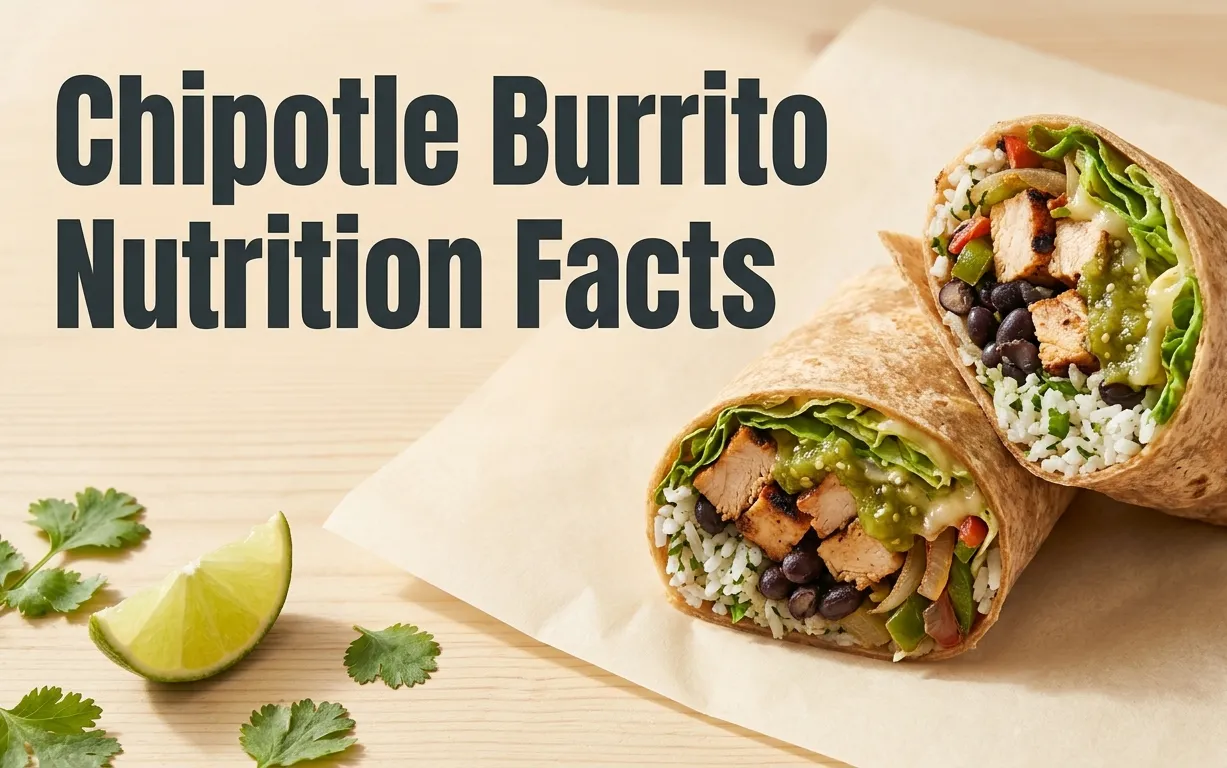
Chipotle Burrito Nutrition Facts: Every Protein, Macros, and Sodium Count for 2026
A standard Chipotle chicken burrito with white rice, black beans, fajita vegetables, tomatillo green salsa, cheese, and lettuce contains approximately 1,200 calories, 60 grams of protein, 155 grams of carbohydrates, and 2,400 milligrams of sodium. The exact nutritional profile of your burrito shifts dramatically based on your protein selection, with steak delivering more iron and saturated fat, carnitas adding the most sodium, and sofritas offering the lowest cholesterol. This is not a one-number-fits-all food; the protein you point at through the glass changes the entire nutritional equation.
The 2026 Chipotle Nutrition Calculator, the official data source for every number in this article, standardizes all values based on a fully assembled burrito using the chain’s exact portioning weights. These are not estimates pulled from a generic USDA food average. They represent the precise gram weight of adobo-marinated chicken off the grill, the specific milligram count of sodium in the braised carnitas, and the fat profile of the flour tortilla pressed fresh in each location. The Dietary Guidelines for Americans 2020-2025 recommend a 2,000-calorie daily intake with less than 2,300 milligrams of sodium. A single fully dressed burrito can supply over 60% of your daily energy and more than 100% of your ideal sodium cap, which is precisely why understanding the ingredient-level breakdown changes what you order tomorrow.
You will leave this article knowing the exact macros for all five proteins, the nutritional cost of the tortilla itself, the sodium trap hiding in the white rice, and the two specific swaps that transform this burrito from a post-lunch regret into a nutrient-dense meal that fits a weight loss phase. No vague “order a salad” advice. Just the numbers, the science, and the build strategy.
chipotle burrito nutrition facts overview
A fully assembled Chipotle burrito with any protein, white rice, black beans, fajita vegetables, tomatillo green salsa, cheese, and romaine lettuce falls within a caloric range of 1,100 to 1,300 calories, with protein spanning 45 to 60 grams, total fat from 35 to 52 grams, and sodium landing between 1,800 and 2,700 milligrams depending on the single protein decision made at the counter. The flour tortilla and the protein together account for roughly 65% of the total caloric load. Every other addition modulates the fiber, sodium, and micronutrient density without fundamentally altering the energy total.
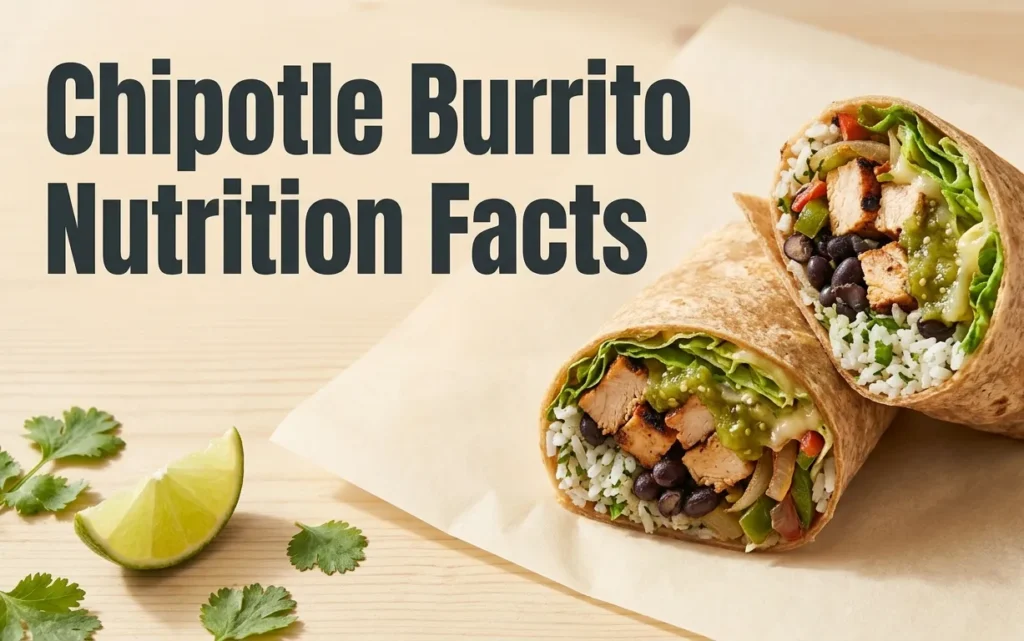
Think of the burrito assembly line as an additive nutritional spreadsheet. The tortilla is a fixed 320-calorie base cell that you cannot change unless you opt for a bowl. The rice adds 210 calories and a meaningful sodium hit. The beans layer on fiber and plant-based iron. The protein is the swing variable that shifts the saturated fat and heme iron numbers. The salsas and lettuce are so low in caloric density that they function primarily as micronutrient delivery vehicles, specifically vitamin C from the tomatillo salsa and vitamin A from the romaine. According to the USDA FoodData Central database, the combination of beans and rice in a single meal creates a complete essential amino acid profile, meaning the burrito functions as a complete protein source even before you select the meat.
The Daily Value percentages on a Chipotle nutrition label reference a 2,000-calorie diet, but that reference point fits only a subset of the population. A 6-foot-2 active male will process this 1,200-calorie load differently than a 5-foot-4 sedentary female. The micronutrient density of the burrito is genuinely high in the context of fast-casual food. You will see meaningful percentages of iron, potassium, calcium, and vitamin A on the label. The problem is never the vitamins; the problem is the sodium-to-potassium ratio, which skews heavily toward sodium and creates a temporary fluid shift that you might feel as bloating an hour after finishing the last bite.
Key Takeaway: A Chipotle burrito is a 1,200-calorie complete protein with high micronutrient density wrapped in a sodium-delivery system; the protein choice is the single biggest lever you can pull to change the health outcome.
chipotle chicken burrito nutrition facts
A Chipotle chicken burrito with white rice, black beans, fajita vegetables, tomatillo green salsa, cheese, and romaine lettuce contains 1,200 calories, 60 grams of protein, 42 grams of total fat, 17 grams of saturated fat, 155 grams of carbohydrates, 18 grams of dietary fiber, and 2,400 milligrams of sodium. The chicken is the leanest animal protein on the Chipotle line, delivering the highest protein-to-fat ratio of any meat option while keeping the cholesterol count at 155 milligrams per burrito. This is the nutritional middle ground that satisfies both the macro-tracker and the casual eater.
The chicken itself, Chipotle’s adobo-marinated grilled chicken thigh and breast blend, contributes 180 calories and 32 grams of protein in the standard 4-ounce serving portion. The marinade consists of chipotle pepper, cumin, garlic, and oil. The grilling process allows rendered fat to drip away from the meat, which is why the saturated fat content of the chicken burrito stays at 17 grams compared to the steak version’s 22 grams. The absence of a sugary glaze or a heavy cream-based sauce keeps the carbohydrate content almost entirely attributable to the tortilla and rice rather than the protein preparation, a distinction that matters if you are managing postprandial glucose levels.
This burrito’s micro-nutrient profile is driven by the combined iron from the chicken and beans. You will absorb approximately 8 milligrams of total iron, which is 45% of the Daily Value. The heme iron from the chicken thigh tissue absorbs through a dedicated intestinal transporter called the heme carrier protein 1, a pathway unaffected by the phytates in the beans. The non-heme iron from the black beans absorbs less efficiently but gets a meaningful bioavailability boost from the ascorbic acid in the tomatillo salsa. The calcium count lands around 400 milligrams, 30% of the Daily Value, mostly from the monterey jack cheese, which supplies both calcium phosphate and a dose of conjugated linoleic acid, a naturally occurring trans-fat that does not carry the cardiovascular risk profile of industrial trans-fats.
chipotle steak burrito nutrition facts
A Chipotle steak burrito with the identical standard build contains 1,250 calories, 58 grams of protein, 48 grams of total fat, 22 grams of saturated fat, 155 grams of carbohydrates, 18 grams of fiber, and 2,350 milligrams of sodium. The steak option adds 50 calories and 5 grams of saturated fat compared to the chicken build, a direct result of the higher intramuscular fat content of the beef sirloin and the grill preparation that sears fat onto the meat surface rather than rendering it off.
The steak is a grilled beef sirloin seasoned with black pepper, cumin, and salt. The 4-ounce portion provides 210 calories and 30 grams of protein. The nutritional advantage of the steak is its heme iron density. Sirloin delivers approximately 3.5 milligrams of heme iron per 4-ounce serving, which is absorbed at an efficiency of 20-25%, compared to the non-heme iron from plant sources that absorbs at 5-10%. For a menstruating female with borderline low ferritin stores, this absorption difference is physiologically meaningful. The steak also supplies zinc at roughly 7 milligrams per burrito, a mineral required for the catalytic function of over 300 enzymes, including those involved in DNA synthesis and immune cell production.
The trade-off is the saturated fat load. The Dietary Guidelines for Americans 2020-2025 recommend keeping saturated fat below 10% of total daily calories, which equals 22 grams on a 2,000-calorie diet. This single steak burrito hits that ceiling in one meal, leaving zero room for saturated fat from any other food consumed that day. The cholesterol count rises to 190 milligrams, which is 63% of the Daily Value. The current scientific consensus, per a 2024 review in the Journal of the American College of Cardiology, is that dietary cholesterol has a smaller effect on serum LDL cholesterol than saturated fat, so the saturated fat number should hold your attention more than the cholesterol number.
Key Takeaway: The steak burrito is an iron and zinc powerhouse at the cost of maxing out your daily saturated fat allowance in a single sitting; order it for the minerals but clear your fat budget for the rest of the day.
chipotle carnitas burrito nutrition facts
A Chipotle carnitas burrito with the standard build delivers 1,300 calories, 54 grams of protein, 52 grams of total fat, 20 grams of saturated fat, 155 grams of carbohydrates, 18 grams of fiber, and a category-leading 2,650 milligrams of sodium. Carnitas is the most calorically dense and sodium-heavy protein on the Chipotle line because the cooking method is braising, not grilling. The pork shoulder cooks submerged in its own rendered fat for hours, a process that concentrates sodium from the seasoning brine and locks saturated fat into the muscle fibers rather than letting it drip away over a flame.
The 4-ounce carnitas portion contributes 240 calories, 28 grams of protein, and a sodium load that exceeds the chicken by over 200 milligrams. Pork shoulder is a well-marbled cut, and the braising liquid typically includes salt, pepper, juniper berries, and thyme. The sodium does not sit on the surface like a sprinkle of finishing salt; it penetrates deep into the protein matrix during the long cook time. This means you cannot scrape off excess sodium the way you might wipe a sauce off a grilled piece of meat. The sodium is in the meat.
Nutritionally, carnitas provides a different fatty acid profile than steak. Pork fat contains a higher proportion of monounsaturated fats, specifically oleic acid, the same fatty acid that gives olive oil its favorable cardiovascular reputation. Approximately 45% of the fat in pork shoulder is monounsaturated. This does not negate the saturated fat content, but it does mean the fat quality is not identical to the beef tallow profile in the steak. Carnitas also supplies thiamin, vitamin B1, at a level higher than chicken or steak, because pork muscle tissue stores more of this B-vitamin, which is required for the pyruvate dehydrogenase complex to convert glucose into usable ATP energy. For someone with no hypertension concerns who wants the highest-calorie, most satiating protein option, carnitas is the choice.
chipotle sofritas burrito nutrition facts
A Chipotle sofritas burrito with the standard build, substituting sofritas for meat, contains 1,100 calories, 45 grams of plant-based protein, 38 grams of total fat, 10 grams of saturated fat, 150 grams of carbohydrates, 20 grams of dietary fiber, and 2,100 milligrams of sodium. Sofritas is the only vegan protein option, made from organic tofu braised with chipotle peppers, roasted poblanos, cumin, garlic, and tomato, and it produces a burrito with the lowest cholesterol count on the menu at 15 milligrams, attributable solely to the cheese.
The nutritional identity of sofritas is defined by its isoflavone content. Tofu, processed from whole soybeans, retains the phytoestrogen compounds genistein and daidzein. These polyphenolic molecules bind weakly to estrogen receptors and have been studied for their role in modulating serum lipid profiles. A 2022 meta-analysis in the journal Nutrients found that regular tofu consumption is associated with a modest reduction in LDL cholesterol, though the effect size depends heavily on baseline cholesterol levels and the displacement of saturated fat from animal sources. The 10 grams of saturated fat in this burrito come almost entirely from the cheese and sour cream, not the protein, meaning a vegan build without dairy would drop the saturated fat to roughly 3 grams total.
The protein quality of sofritas deserves honest assessment. Soy protein is a complete protein containing all nine essential amino acids, with a Protein Digestibility Corrected Amino Acid Score of 0.98, which is nearly equivalent to animal protein. The 45 grams of protein in this burrito includes adequate leucine to trigger the mTOR signaling pathway for muscle protein synthesis, dispelling the myth that plant protein cannot support muscle maintenance. The fiber count rises to 20 grams compared to the 18 grams in the meat versions because the tofu itself contributes a small amount of soluble fiber that the animal proteins do not. The sodium remains high at 2,100 milligrams because the braising liquid for the tofu contains salt, but it is the lowest sodium count of any protein option on the line.
Key Takeaway: The sofritas burrito is the lowest-saturated-fat and highest-fiber build with genuine complete protein at 45 grams, making it the objectively strongest nutritional play on the menu if you can tolerate soy.
chipotle flour tortilla calories and nutrition
A single Chipotle flour tortilla, before any ingredient touches its surface, delivers 320 calories, 9 grams of fat, 2 grams of saturated fat, 55 grams of carbohydrates, 2 grams of fiber, 1 gram of sugar, 7 grams of protein, and 600 milligrams of sodium. This flatbread wrapper is the single most calorically dense non-protein item in the entire restaurant, contributing more calories than a full serving of chicken and nearly as much sodium as the entire scoop of carnitas. The tortilla is the silent nutritional anchor of the burrito, and choosing a bowl instead instantly deletes all of these numbers from your meal.
The ingredient label on the Chipotle flour tortilla lists enriched wheat flour, water, canola oil, salt, sugar, and leavening agents. The enrichment process adds back synthetic B vitamins like folic acid, thiamin, and riboflavin, which means the tortilla is not a nutritional void, it provides small amounts of these water-soluble vitamins. However, the 55 grams of carbohydrate come from refined white flour with a glycemic index of approximately 70, which is considered high. When this carbohydrate load combines with the 55 grams of starch from a scoop of white rice, the total rapidly digestible carbohydrate in a single meal exceeds 110 grams, a number that will spike postprandial blood glucose in anyone whose pancreatic beta cells are not functioning with perfect insulin sensitivity.
The 600 milligrams of sodium in the tortilla comes from the salt dissolved in the dough water before baking. This sodium is structurally integrated into the bread matrix, not sprinkled on top, so you cannot brush it off. For comparison, the American Heart Association’s ideal daily sodium limit is 2,300 milligrams, and this tortilla alone consumes 26% of that budget before you add rice, beans, protein, salsa, or cheese. If hypertension, water retention, or kidney function monitoring is part of your health picture, the tortilla is the first ingredient to eliminate because it provides the worst sodium-to-nutrition ratio of any component in the burrito.
chipotle burrito with white rice nutrition
Adding a full scoop of Chipotle’s cilantro-lime white rice to a burrito contributes 210 calories, 4 grams of fat, 0.5 grams of saturated fat, 40 grams of carbohydrates, 0 grams of fiber, 1 gram of sugar, 3 grams of protein, and 350 milligrams of sodium. The white rice is a refined grain that has been milled to remove the bran and germ, stripping away the fiber, iron, magnesium, and B vitamins that are present in the whole grain brown rice version. What remains is a fast-digesting starch with a sodium payload from the cooking liquid that surprises most diners.
The 350 milligrams of sodium in a scoop of white rice is not from a visible seasoning sprinkle. Chipotle cooks the rice with bay leaf, lime juice, cilantro, and salt dissolved into the boiling water. The salt penetrates each grain during the gelatinization process, when starch granules absorb water and swell. The rice arrives on the serving line looking like a simple grain side, but functionally, it is a seasoned starch that tastes balanced because the lime acidity masks the salt perception on your tongue. Your palate registers the citrus and herb notes while your kidneys register the sodium.
The glycemic response to this white rice scoop is rapid. Polished white rice has a glycemic index of 73, which is classified as high. When eaten as part of a mixed meal with protein, fat, and fiber from the beans, the overall glycemic index of the burrito drops because gastric emptying slows. The fat from the cheese and the protein from the meat delay the rate at which the starch reaches the small intestine for enzymatic breakdown by pancreatic amylase. This mixed-meal effect is why a burrito does not produce the same glucose spike as a bowl of plain white rice, but the total carbohydrate load remains high enough that anyone with type 2 diabetes or insulin resistance should consider the brown rice substitution or a half-portion request at the counter.
Quick Tip:
- Ask the server for “half a scoop of white rice, please.” They will comply, and you will cut 105 calories and 175 milligrams of sodium from the final total.
- The lime and cilantro are calorie-free flavorings. If you love the taste but want less rice volume, ask for extra cilantro on top.
Key Takeaway: The white rice scoop adds more sodium than you can taste because the acid from the lime juice chemically masks the salt on your tongue while the sodium count silently climbs by 350 milligrams.
chipotle black beans vs pinto beans nutrition
A 4-ounce scoop of Chipotle black beans adds 130 calories, 1.5 grams of fat, 0 grams of saturated fat, 22 grams of carbohydrates, 8 grams of dietary fiber, 8 grams of protein, and 250 milligrams of sodium. A 4-ounce scoop of Chipotle pinto beans adds 130 calories, 1.5 grams of fat, 0 grams of saturated fat, 21 grams of carbohydrates, 8 grams of dietary fiber, 8 grams of protein, and 350 milligrams of sodium. The macronutrient profiles are functionally identical. The decision between black beans and pinto beans at Chipotle is a decision about 100 milligrams of sodium and a small difference in antioxidant content, not a decision that changes your calorie or protein total.
The 100-milligram sodium difference exists because the pinto beans are seasoned with a salt-and-spice blend that includes bacon, which contributes both flavor and sodium. The black beans are cooked with onion, garlic, cumin, and salt, without the smoked pork product. For a vegan or vegetarian build, the black beans are the only option compatible with a plant-only diet, because the pinto beans contain animal-derived bacon. This distinction matters for strict vegetarians who might not realize the pinto beans on the Chipotle line are not meat-free.
The phytochemical profiles diverge in a way that interests nutrition researchers but rarely changes a lunch order. Black beans derive their deep color from anthocyanins, the same flavonoid pigments found in blueberries and blackberries. These compounds have demonstrated antioxidant capacity in vitro, meaning they can neutralize reactive oxygen species in a test tube. Pinto beans contain kaempferol, a flavonol with anti-inflammatory signaling properties studied in cell culture models. The in vivo relevance of these compounds, meaning what actually happens inside a human body after digestion, is modest but directionally positive. You are eating 8 grams of fiber and 8 grams of plant protein per scoop, and those numbers matter more for your health than the anthocyanin content.
chipotle burrito macros breakdown
The full macro breakdown of a standard Chipotle chicken burrito is 1,200 calories, 60 grams of protein (20% of calories), 155 grams of carbohydrates (52% of calories), and 42 grams of fat (28% of calories), with 18 grams of fiber and an estimated net carbohydrate count of 137 grams. This macro split places the burrito firmly in the high-carbohydrate, moderate-protein, moderate-fat category, which matches the Acceptable Macronutrient Distribution Range set by the Dietary Guidelines for Americans 2020-2025 for a single meal but leaves almost no carbohydrate budget remaining for the other two meals of the day.
The 60 grams of protein in a single chicken burrito is a genuinely high number for one sitting. Research on muscle protein synthesis indicates that a 30 to 40 gram dose of high-quality protein maximally stimulates the mTOR pathway in most adults, after which excess amino acids are oxidized for energy or stored as fat rather than used for additional muscle repair. This means the chicken burrito provides roughly double the protein dose needed to hit the anabolic ceiling in one meal. The excess protein is not wasted in a nutritional sense; it contributes to satiety and provides substrate for gluconeogenesis if needed, but it does not double your muscle-building rate. Spreading protein intake across three meals is metabolically more efficient, but the burrito’s all-in-one format is not harmful.
The carbohydrate count of 155 grams is the number that defines how the rest of your eating day should look if you are tracking intake. The Institute of Medicine recommends a minimum of 130 grams of carbohydrate daily for brain function. This burrito clears that minimum in one sitting and adds 25 grams more. If you eat three meals a day with similar carbohydrate density, you will land at 450 grams daily, which is well above the 225 to 325 gram range recommended for a standard 2,000-calorie diet. The practical implication is that a burrito day should include two lower-carbohydrate meals to keep your total intake in a reasonable range.
chipotle burrito sodium content
A standard Chipotle chicken burrito contains 2,400 milligrams of sodium, which is 105% of the American Heart Association’s recommended daily upper limit of 2,300 milligrams. The sodium is distributed across nearly every ingredient, with the flour tortilla contributing 600 milligrams, the white rice adding 350 milligrams, the beans adding 250 milligrams, the chicken contributing 550 milligrams, the cheese contributing 250 milligrams, and the tomatillo salsa adding another 250 milligrams. There is no single sodium villain; the salt is systemically embedded in the burrito assembly line.
The physiological response to a 2,400-milligram sodium bolus in a single meal is a temporary increase in plasma osmolality. Your blood becomes saltier, triggering thirst and the release of antidiuretic hormone from the posterior pituitary gland. The kidneys conserve water to dilute the sodium load, expanding blood volume by roughly 200 to 300 milliliters. This fluid shift is measurable as a small increase in body weight on the scale the next morning, typically 0.5 to 1 pound of water weight, not fat. For a healthy person with responsive kidneys, this fluid equilibrates within 24 to 36 hours. For a person with hypertension, heart failure, or chronic kidney disease, the cardiac workload imposed by this extra volume can raise systolic blood pressure acutely and should be monitored by a physician.
The sodium-to-potassium ratio of the burrito is skewed unfavorably. The burrito contains approximately 1,500 milligrams of potassium from the beans, chicken, and vegetables, giving a sodium-to-potassium ratio of 1.6:1. A ratio below 1:1 is associated with lower cardiovascular risk in observational studies because potassium promotes natriuresis, the excretion of sodium through urine. You can improve this ratio by adding guacamole, which contributes 400 milligrams of potassium from the avocado for only 100 additional calories, pushing the ratio closer to 1.3:1 without significantly altering the calorie total.
Key Takeaway: The sodium is not in one ingredient you can remove; it is in everything, so the only way to meaningfully lower the count is to eliminate the tortilla (minus 600 milligrams) and reduce the rice portion (minus 175 milligrams for a half scoop).
chipotle burrito bowl vs burrito calories
Choosing a burrito bowl instead of a flour-tortilla-wrapped burrito with the identical ingredients removes 320 calories, 9 grams of fat, 600 milligrams of sodium, and 55 grams of refined carbohydrates from your meal. This single decision is the highest-impact nutritional modification you can make at Chipotle, eclipsing the protein choice, the rice choice, and the bean choice combined. The bowl is not a diet product; it is the exact same ingredients minus the tortilla, and that subtraction changes the entire nutritional profile.
The flour tortilla is a refined carbohydrate vehicle with a glycemic index of 70. When you remove it, the total carbohydrate load of your meal drops from 155 grams to 100 grams, and the fiber-to-carbohydrate ratio improves because the 18 grams of fiber from the beans and vegetables now represent a larger fraction of the total carbohydrate. The net carbohydrate count, total carbs minus fiber, falls from 137 grams to roughly 82 grams, which is a less aggressive insulin stimulus for anyone monitoring blood glucose levels.
The satiety difference between the burrito and the bowl is real and worth acknowledging. The tortilla provides structural eating, it lets you hold the meal in your hands and consume it without a fork. Psychologically, the burrito format can feel more satisfying because of the tactile eating experience. The bowl, eaten with a fork, tends to be consumed more slowly, which allows the gastric distension signals to reach the brain’s satiety centers in the hypothalamus before the meal is fully finished. A 2023 study in the journal Appetite found that meals eaten with utensils rather than hands were consumed 12% more slowly on average, providing more time for the peptide hormone cholecystokinin to signal fullness.
healthiest chipotle burrito protein
The healthiest Chipotle protein, judged by the combined criteria of lowest saturated fat, lowest sodium, highest protein per calorie, and highest micronutrient density, is the sofritas for cardiovascular health and the chicken for pure muscle-building efficiency. Sofritas wins on saturated fat at 10 grams per burrito versus chicken’s 17 grams. Chicken wins on the protein-to-calorie ratio, delivering 32 grams of protein for 180 calories, which equals 0.18 grams of protein per calorie, the highest efficiency on the line. The healthiest choice depends on which health outcome you are prioritizing.
For someone with elevated LDL cholesterol or a family history of atherosclerotic cardiovascular disease, the saturated fat number is the dominant variable, and sofritas is the unequivocal winner. The tofu-based protein replaces beef tallow and pork fat with soybean oil, which is predominantly polyunsaturated and monounsaturated fat. A 2021 randomized controlled trial published in the American Journal of Clinical Nutrition found that replacing 10% of daily calories from saturated fat with polyunsaturated fat reduced LDL cholesterol by an average of 12 mg/dL over an 8-week period. The sofritas burrito enacts this swap in a single meal.
For someone whose primary goal is muscle mass retention during a caloric deficit, the chicken is the optimal choice. The leucine content of the 32 grams of chicken protein is approximately 2.5 grams, which is above the 2.0-gram threshold identified in the muscle protein synthesis literature as the minimum leucine dose to trigger a measurable anabolic response in young adults. The steak provides slightly less protein per calorie because of the intramuscular fat, and the carnitas provides the least protein per calorie because of the braising fat absorption, making chicken the leanest meat lever for a protein-sparing weight loss diet.
chipotle burrito for weight loss
You can eat a Chipotle chicken burrito bowl with brown rice, black beans, fajita vegetables, tomatillo salsa, and lettuce, without cheese or sour cream, for 700 calories, 42 grams of protein, 16 grams of fiber, and 1,200 milligrams of sodium, creating a nutrient-dense weight-loss meal that fits into a 1,500 to 1,800 calorie daily budget. The weight loss compatibility is not about avoiding Chipotle; it is about what you leave off the tray and whether you eat the tortilla.
The weight loss math is straightforward. A moderately active woman aiming for a 500-calorie daily deficit might target 1,600 calories per day. The fully loaded 1,200-calorie flour tortilla burrito consumes 75% of that budget in one meal, leaving only 400 calories for the entire rest of the day, which is nutritionally and psychologically unsustainable. The 700-calorie bowl version described above consumes 44% of the same budget, leaving room for breakfast, a snack, and dinner. This is the difference between a meal that fits a fat loss phase and one that blows it out.
The fiber content of the weight-loss bowl build is the unspoken advantage. At 16 grams of fiber, this meal provides over 60% of the daily fiber recommendation for women and 45% for men. Soluble fiber from the black beans forms a viscous gel in the stomach that delays gastric emptying and triggers the release of peptide YY, a satiety hormone produced by L-cells in the distal small intestine. The insoluble fiber from the lettuce and fajita vegetables provides mechanical bulk without calories. This dual-fiber mechanism is why a bean-heavy Chipotle bowl produces a satiety duration that a refined-carbohydrate meal of equivalent calories cannot match.
Key Takeaway: The weight loss Chipotle move is not a sad salad; it is a 700-calorie double-protein bowl loaded with fiber that mechanically keeps you full for four hours on 44% of your daily calorie budget.
is a chipotle burrito healthy
A Chipotle burrito is healthy in its micronutrient density, complete protein quality, and fiber content, and simultaneously unhealthy in its sodium load and refined carbohydrate volume, making the answer entirely dependent on which ingredients you choose, whether you eat the tortilla, and what the other two meals of your day look like. The question “is it healthy” demands a context that the burrito itself does not provide. For a marathon runner in a carb-loading phase, the 155-gram carbohydrate load is a feature, not a bug. For a person with type 2 diabetes, it is a problem.
The ingredient sourcing at Chipotle adds a dimension that most fast-food nutrition analyses miss. The chain commits to no artificial flavors, colors, or preservatives in its food, which eliminates several classes of additives that the FDA classifies as Generally Recognized as Safe but that some consumers prefer to avoid. The meats are raised without non-therapeutic antibiotics, a practice that matters for public health resistance patterns. The produce is not certified organic across the board, but the romaine lettuce and bell peppers used in the fajita vegetables are conventional items with pesticide residue levels monitored by the USDA Pesticide Data Program. These sourcing factors are not directly nutritional, but they inform the broader definition of “healthy” that many consumers use when evaluating a restaurant.
The sodium reality is the one unassailable health negative. Even the most stripped-down, vegetable-forward, brown-rice, sofritas bowl with no cheese and no sour cream still contains over 1,200 milligrams of sodium because the salt is in the rice cooking water, the bean broth, the sofritas braise, and the salsa. There is no build that drops the sodium below 1,000 milligrams. For the general population without hypertension, this sodium load in one meal is not a health emergency. For the 47% of US adults with hypertension, per the CDC’s National Health and Nutrition Examination Survey data, this sodium load in a single meal is a genuine cardiovascular stressor that should be balanced with low-sodium meals for the rest of the day and discussed with a primary care provider at the next blood pressure check.
Frequently Asked Questions About Chipotle Burrito Nutrition
How many calories are in a Chipotle chicken burrito?
A standard Chipotle chicken burrito with white rice, black beans, fajita vegetables, tomatillo green salsa, cheese, and lettuce contains 1,200 calories.
This total changes if you swap the flour tortilla for a bowl, which removes 320 calories.
The chicken itself accounts for only 180 calories of the total, meaning the supporting ingredients collectively deliver over 1,000 calories.
What is the healthiest protein at Chipotle?
Sofritas is the healthiest protein for cardiovascular health because it delivers only 10 grams of saturated fat and the lowest cholesterol count on the menu.
Chicken is the healthiest for muscle-building efficiency, providing 32 grams of protein for 180 calories.
Steak offers the highest heme iron and zinc content for those with increased mineral needs.
How much sodium is in a Chipotle burrito?
A standard Chipotle chicken burrito contains 2,400 milligrams of sodium, which exceeds the American Heart Association’s 2,300-milligram daily limit.
The flour tortilla and the white rice together contribute nearly 1,000 milligrams of that total.
Ordering a bowl with a half-portion of rice can reduce the sodium by approximately 800 milligrams.
Is a Chipotle burrito or bowl healthier?
A burrito bowl is healthier than a burrito with the identical fillings because it eliminates the flour tortilla, which removes 320 calories, 600 milligrams of sodium, and 55 grams of refined carbohydrates.
The bowl has the same protein, fiber, and micronutrients as the burrito, just without the wrapper.
You can eat the bowl with a fork or request a side tortilla and wrap it yourself to control the portion.
Can I eat a Chipotle burrito and still lose weight?
You can eat a modified Chipotle meal and lose weight if you order a bowl instead of a burrito, skip the cheese and sour cream, and use chicken or sofritas as your protein.
A bowl built this way contains approximately 700 calories and 42 grams of protein, fitting easily into a 1,600-calorie daily weight loss budget.
The fully loaded 1,200-calorie flour tortilla burrito with all toppings leaves almost no calorie budget for the rest of the day.
Are the sofritas at Chipotle actually healthy?
The sofritas are a healthy protein choice, providing 45 grams of complete plant-based protein with only 10 grams of saturated fat in a full burrito build.
The tofu base contains isoflavones that are associated with modest LDL cholesterol reductions in clinical studies.
The sodium in the sofritas braising liquid is the one watchpoint, contributing to the 2,100-milligram total sodium count.
The Chipotle burrito is a nutritional object lesson in ingredient additivity. Every scoop on the assembly line adds a specific number of calories, a specific gram count of protein, and a specific milligram load of sodium, and the final total depends entirely on how many scoops you nod yes to. The protein choice matters. The rice choice matters. The tortilla-versus-bowl decision matters more than both of them combined.
Your move for 2026 is not to stop eating Chipotle. It is to build the burrito or bowl that matches what your body actually needs that day. A marathon loading day and a sedentary Tuesday do not call for the same order. You now know exactly how to build both.
Walk in, look at the line, and make the math work in your favor.