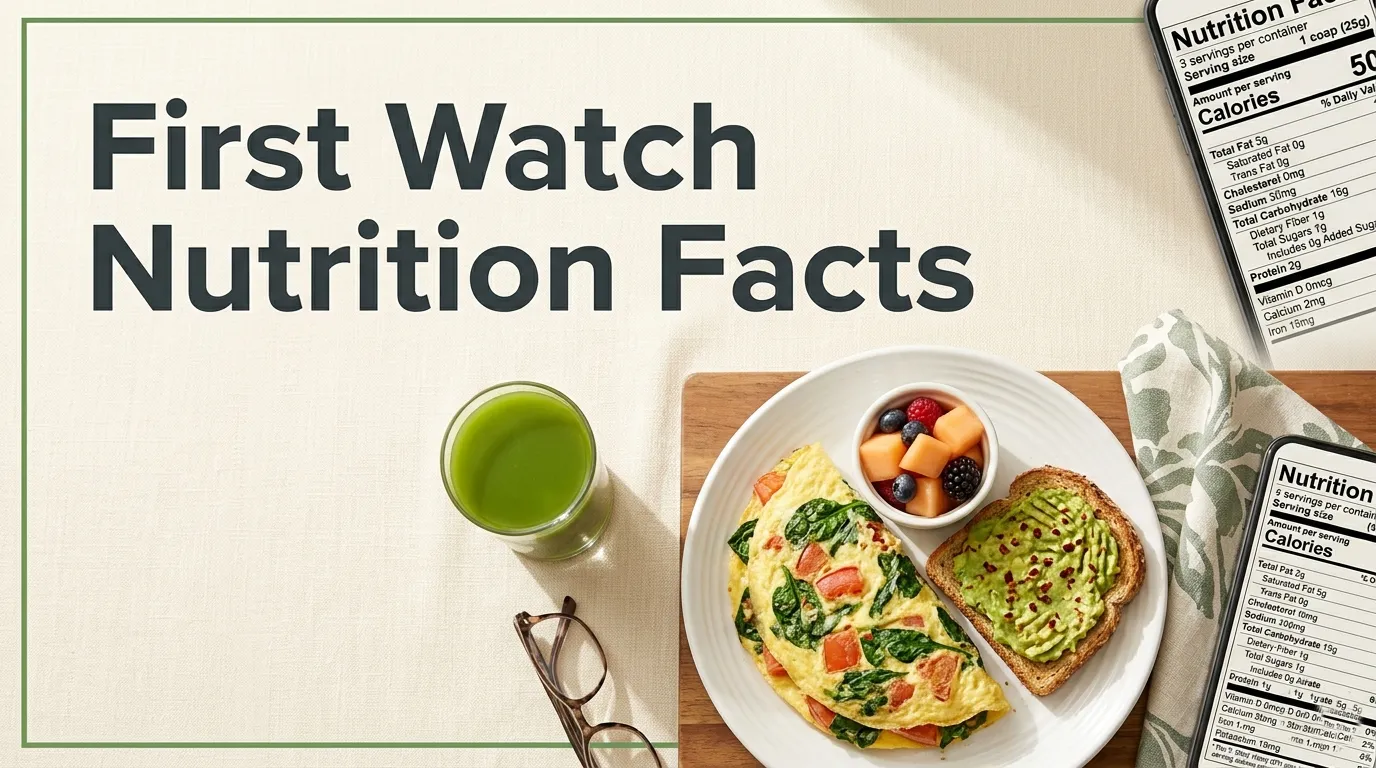
First Watch Nutrition Facts: 2026 Menu Guide & PDF Breakdown
First Watch publishes a complete nutrition and allergen guide available as a downloadable PDF on the company’s website, and the nutritional data reveals a restaurant with a genuinely wide range, from 300-calorie egg white omelets with fresh vegetables to 1,200-calorie breakfast platters loaded with bacon, potatoes, and buttered toast. The key to eating well at First Watch is understanding that the menu categories have distinct nutritional personalities. The power bowls and egg white omelets cluster at the lower-calorie, higher-protein end. The pancakes, French toast, and hashes sit at the higher-calorie end. The difference between a 400-calorie breakfast and an 800-calorie breakfast is entirely a matter of which section of the menu you order from.
First Watch is not like most breakfast chains. The company does not operate deep fryers in any of its restaurants. Eggs are cooked on a flat-top grill or scrambled in a pan. Potatoes are griddled, not fried. Bacon is baked. These preparation methods matter nutritionally because they eliminate the oil absorption that deep-frying forces into food. A First Watch breakfast potato has roughly half the fat of a deep-fried hash brown from a fast-food breakfast joint, not because the potato is different but because the cooking method is.
This article walks you through the nutritional data that First Watch publishes for every menu item, organized by menu category so you can see the patterns rather than just individual numbers. You’ll learn which sections of the menu consistently deliver the best protein-to-calorie ratios, which items carry surprisingly high sodium loads, how to find and use the official First Watch nutrition PDF, and what to order if you are eating gluten-free, dairy-free, keto, or simply trying to keep breakfast under 500 calories.
First Watch Nutrition Facts
First Watch nutrition facts are published on the company’s official website under a dedicated “Nutrition & Allergens” page, and the data covers every standard menu item with serving sizes, calories, total fat, saturated fat, trans fat, cholesterol, sodium, total carbohydrates, dietary fiber, total sugars, and protein. The chain does not publish micronutrient data such as vitamin or mineral content beyond what is included on the allergen guide, and the nutrition facts are based on standard recipes prepared according to First Watch specifications at the time of publication.
The calorie range across the First Watch menu is wider than most casual diners expect. The lightest breakfast items start at approximately 280 calories for a simple egg white omelet with vegetables and no toast. The heaviest items, including the Farmhouse Hash with two eggs, potatoes, bacon, sausage, and cheese, exceed 1,200 calories. The median breakfast entree lands around 600 to 800 calories. This means two people sitting at the same table, both ordering a breakfast plate, can differ by 900 calories based entirely on which plate they chose.
The protein content of First Watch’s egg-based dishes is a genuine strength. A standard two-egg omelet with cheese and vegetables delivers 25 to 35 grams of protein, which is roughly half of the daily protein requirement for a 150-pound adult. The quinoa power bowls and items containing chicken breast or smoked salmon push protein content above 40 grams per serving. The pancakes and French toast items, by contrast, deliver 8 to 14 grams of protein, coming primarily from the eggs and milk in the batter.
The sodium content is the single most important number to check on the First Watch nutrition guide if you monitor your sodium intake. The Dietary Guidelines for Americans 2020-2025 recommend a daily sodium limit of 2,300 milligrams for adults. Several First Watch breakfast entrees exceed 2,000 milligrams of sodium in a single serving, using an entire day’s sodium budget in one meal. The sodium comes from multiple sources: the salt in the egg preparation, the seasoning on the potatoes, the cheese, the bacon or sausage if included, and any toast with salted butter. Even items that look clean and fresh can carry significant sodium loads.
Key Takeaway: The First Watch nutrition PDF is the only source you should trust for this data, because the chain’s seasonal rotating menu changes five times per year, and third-party calorie databases may not reflect the current menu’s recipes and portion sizes.
First Watch Nutrition Facts PDF
The First Watch nutrition facts PDF is a downloadable document available on the First Watch website under the “Nutrition & Allergens” link, typically found in the website footer or accessed by searching “First Watch nutrition PDF” directly, and it contains the full nutritional breakdown for every item on the current menu in a table format with columns for calories, fat, saturated fat, trans fat, cholesterol, sodium, carbohydrates, fiber, sugar, and protein. The PDF is updated when the seasonal menu changes to reflect new items and recipe adjustments.
Accessing the PDF before visiting the restaurant is the single most effective preparation step for anyone tracking their intake. The PDF format allows you to scroll through the entire menu at once, compare items side by side, and identify your best options before the server arrives and the time pressure of ordering takes over. The PDF is organized by menu category, typically starting with breakfast classics, then omelets and frittatas, power bowls, griddle items, salads, soups, sandwiches, sides, and the juice bar. This organization mirrors the physical menu’s layout.
The PDF includes allergen information in a separate column or a separate table, identifying which of the FDA’s nine major allergens are present in each item. The allergens tracked are wheat, egg, milk, soy, tree nuts, peanuts, fish, shellfish, and sesame. The PDF also notes when an item can be modified to exclude an allergen, such as ordering avocado toast without the egg for an egg-allergic customer. The allergen information is based on ingredient lists and does not guarantee the absence of cross-contact in the kitchen.
The PDF is not a static document. First Watch operates five seasonal menus per year: Spring, Summer, Fall, Winter, and a limited-time holiday menu. Each seasonal rotation brings new items that are not on the previous season’s PDF. A nutrition fact you looked up in January for a winter seasonal item will not apply to the spring menu item that replaces it in March. Checking the PDF for the current season is necessary if you are tracking a specific dish.
First Watch Menu Nutrition
The First Watch menu is organized into distinct categories, and the nutritional profiles of these categories follow consistent patterns that allow you to make an informed choice without looking up every single number. The categories from generally lowest calorie to generally highest calorie are: egg white omelets, power bowls with quinoa or greens as the base, salads, standard omelets and frittatas, egg plates with meat and potatoes, griddle items including pancakes and French toast, and the hash platters that combine eggs, potatoes, meat, and cheese.
The egg white omelets are the menu’s nutritional anchor for anyone prioritizing protein while minimizing calories, fat, and cholesterol. These items start with egg whites, which provide pure protein without the 5 grams of fat and 185 milligrams of cholesterol that each egg yolk contributes. The vegetable additions add fiber, vitamins, and negligible calories. The whole-grain toast that accompanies most omelets adds approximately 120 to 180 calories and 3 to 5 grams of fiber. An egg white omelet with vegetables and dry whole-grain toast is a nutritionally dense breakfast under 400 calories with 25 to 30 grams of protein.
The power bowls occupy a nutritional middle ground that varies widely depending on the base grain and the protein. Bowls built on quinoa or mixed greens with grilled chicken or turkey sausage tend to land between 450 and 650 calories with strong protein and fiber numbers. Bowls built on grits or with heavier protein portions like the Farmhouse Hash can exceed 800 calories. The term “bowl” on a menu does not guarantee a specific calorie range. A quinoa power bowl with chicken and vegetables is a fundamentally different nutritional proposition than a hash bowl with eggs, potatoes, cheese, and bacon, even though both are served in a bowl.
The griddle section is where calories climb fastest. Pancakes, French toast, and Belgian waffles are built from refined flour, eggs, milk, sugar, and butter, and they deliver dense carbohydrate loads with relatively little protein or fiber. A stack of lemon ricotta pancakes with syrup can exceed 900 calories and 80 grams of carbohydrate before adding any sides. The syrup, honey, and fruit compotes served alongside griddle items add 100 to 200 calories of pure sugar that is easy to overlook when estimating intake.
| Menu Category | Calorie Range | Typical Protein | Sodium Risk | Best For |
|---|---|---|---|---|
| Egg white omelets | 280 to 450 | 25 to 35g | Moderate | High protein, lower calorie |
| Power bowls | 450 to 820 | 20 to 40g | High | Balanced meals with fiber |
| Standard omelets | 500 to 750 | 25 to 35g | High | Satisfying protein-rich breakfast |
| Egg plates with meat | 600 to 950 | 25 to 35g | Very High | Big appetite breakfast |
| Salads | 350 to 700 | 20 to 40g | High (dressing) | Lighter lunch option |
| Griddle items | 600 to 1,100 | 10 to 18g | Moderate | Occasional indulgence |
| Hash platters | 800 to 1,200 | 28 to 35g | Very High | Shared plate or rare treat |
Key Takeaway: If you remember nothing else about the First Watch menu pattern, remember this: order from the egg white or power bowl sections for a nutritionally solid meal, approach the standard omelets with awareness of their sodium, and treat the griddle and hash sections as the indulgent end of the spectrum.
First Watch Breakfast Nutrition
First Watch breakfast nutrition spans a range from 280 calories to over 1,200 calories, and the nutritional quality of any breakfast order is determined primarily by whether you build the meal around eggs for protein, vegetables for fiber and volume, and whole-grain toast for slower-digesting carbohydrate, or around refined flour, sugar, and processed meats that deliver calories with less nutritional return. The breakfast menu is large enough that two people can order completely different nutritional experiences from the same server at the same table.
The classic egg breakfast, two eggs any style with potatoes and toast, is the baseline from which other breakfast items are built. Two large eggs contribute 140 calories, 10 grams of fat, 12 grams of protein, and 370 milligrams of cholesterol. The potatoes add 150 to 200 calories depending on the portion and the amount of oil used on the griddle. The toast with butter adds 200 to 280 calories. The total for this baseline plate is approximately 500 to 620 calories with 20 grams of protein. This is a reasonable breakfast for most adults. The nutritional trouble starts when meat is added, because bacon, sausage, and Million Dollar Bacon each add 100 to 300 calories and 200 to 500 milligrams of sodium on top of the already complete plate.
The egg white substitution is the most nutritionally impactful modification available at First Watch. Replacing two whole eggs with egg whites removes 100 calories, 10 grams of fat, and 370 milligrams of cholesterol while preserving 14 grams of protein. The texture is slightly less rich, but the nutritional trade-off is substantial, especially for anyone monitoring saturated fat or cholesterol intake. The cholesterol in egg yolks is a consideration for individuals with specific cardiovascular risk factors who have been advised by their physician to limit dietary cholesterol.
The toast choice affects the final nutritional numbers more than most people realize. First Watch offers several toast options, and they are not nutritionally equivalent. The whole-grain artisan toast adds fiber and has a lower glycemic impact than the sourdough or brioche options. Requesting toast dry, without butter, saves approximately 100 calories and 10 grams of fat per slice. Two slices of buttered sourdough toast add 280 calories and 14 grams of fat to a breakfast plate. Two slices of dry whole-grain toast add 180 calories and 2 grams of fat with the added benefit of 4 to 6 grams of fiber.
First Watch Omelet Nutrition
First Watch omelets range from 330 calories for the Egg White Vegetable Omelet to 750 calories for the Bacado Omelet with bacon, avocado, cheese, and sour cream, and the nutritional spread within the omelet section is entirely a function of which ingredients are folded inside the eggs. The egg base itself is consistent. Two or three whole eggs contribute 140 to 210 calories and 12 to 18 grams of protein. Everything beyond that is ingredient math.
The vegetable-loaded omelets are the nutritionally strongest choices in the omelet section. The Egg White Vegetable Omelet at approximately 330 calories delivers egg whites, mushrooms, onions, tomatoes, and green peppers with a side of dry whole-grain toast. This is a breakfast that provides 30 grams of protein, 5 to 8 grams of fiber, and a full serving of vegetables at a calorie cost that leaves room for the rest of the day. The vegetables add volume, fiber, potassium, and phytonutrients without adding meaningful calories. This is the pattern to follow if you are building your own omelet: load it with every vegetable available and go light on the cheese and meat.
Cheese is the omelet ingredient that surprises people when they see the numbers. A standard omelet cheese portion adds 100 to 150 calories and 8 to 10 grams of fat, most of it saturated. Cheddar, Monterey Jack, and feta all land in this range. The cheese is not a garnish. It is a meaningful nutritional addition that changes the omelet’s calorie and fat profile. Requesting light cheese or no cheese is a modification that reduces the omelet’s calorie count by 100 to 150 calories without reducing the protein content or the vegetable volume.
Meat additions push omelets into higher-calorie territory. Bacon adds approximately 70 calories and 5 grams of fat per slice, and an omelet may contain two to three slices worth of crumbled bacon. Turkey sausage is a leaner alternative that maintains the protein content with roughly half the fat of pork sausage. Ham adds protein with moderate fat and significant sodium. The Million Dollar Bacon, a First Watch signature item glazed with maple and black pepper, adds sweetness and fat to an omelet in roughly equal measure to standard bacon with additional sugar.
First Watch Pancakes Calories
First Watch pancake calorie counts range from 280 to 500 calories for a single pancake depending on the variety, with the classic buttermilk pancake at approximately 310 calories per pancake, the lemon ricotta pancake at approximately 380 calories, and the multigrain pancake at approximately 350 calories, according to the chain’s published nutrition data. A standard order of two pancakes doubles these numbers before syrup, butter, or sides are added.
The pancake nutrition at First Watch is more variable than a simple flour-egg-milk formula would suggest because the chain offers several pancake varieties with distinct ingredient profiles. The multigrain pancake incorporates whole-grain flour, oats, and seeds, adding fiber and a modest amount of protein that the standard buttermilk pancake lacks. The lemon ricotta pancake adds cheese to the batter, increasing fat and protein while reducing the relative carbohydrate load. A multigrain pancake with its added fiber will produce a slower, lower blood glucose response than a buttermilk pancake of equal calorie count, even though the calorie numbers are similar.
The syrup is the nutritional multiplier that turns pancakes from a high-calorie choice into a breakfast that exceeds most people’s entire morning calorie budget. A standard 2-ounce serving of maple syrup, which is a conservative estimate for what most people pour, adds 200 calories and 50 grams of sugar. Add butter at 100 calories per tablespoon and two pancakes with syrup and butter deliver 900 to 1,100 calories with 80 to 100 grams of carbohydrate and 12 to 18 grams of protein. This is a meal that will produce a large blood sugar spike and a corresponding insulin response, followed by a glucose crash that leaves most people hungry again within a few hours.
If pancakes are what you want, the strategy that preserves the experience with less nutritional impact is to order a short stack of two multigrain pancakes with a side of eggs for protein and to use syrup sparingly rather than pouring. The eggs add protein that slows gastric emptying and reduces the glycemic impact of the pancakes. The multigrain batter adds fiber that performs the same function. Applying syrup with a light hand rather than saturating the pancakes cuts 100 to 150 calories of pure sugar from the meal.
Key Takeaway: Pancakes at First Watch are a 600 to 1,100 calorie breakfast choice depending on the variety, the stack size, and how much syrup you use, and the protein and fiber content of the meal is what determines whether you feel satisfied for two hours or hungry again by 10 a.m.
First Watch Healthy Menu Nutrition
First Watch’s menu includes a “Healthy” section with designated items that meet the chain’s nutritional criteria, and these items consistently land between 280 and 580 calories with higher protein-to-calorie ratios and more vegetables than the general menu, but the term “healthy” on the menu does not mean these items are universally appropriate for every dietary need or that they are automatically low in sodium. The Healthy menu designation reflects the chain’s internal nutritional standards, which emphasize lean proteins, vegetables, whole grains, and controlled calorie counts.
The items on the Healthy menu section include the A.M. Superfoods Bowl, the Power Breakfast Quinoa Bowl, the Egg White Vegetable Omelet, the Sunrise Granola Bowl, and several of the salads. These items share a common nutritional pattern. They are built around plant-forward ingredients, they include a protein source of at least 15 grams, they provide dietary fiber from whole grains or vegetables, and they keep total calories under approximately 600. The saturated fat content of these items is consistently lower than the general menu items because they use lean proteins and minimize cheese and butter.
The Healthy menu designation does not address sodium. The A.M. Superfoods Bowl, which is a chia pudding with fruit and granola, contains moderate sodium from the granola and any added salt. The Power Breakfast Quinoa Bowl with eggs and vegetables contains approximately 800 to 1,000 milligrams of sodium, which is a reasonable amount for a single meal but represents 35 to 45 percent of the daily limit. Healthy menu items are not low-sodium by default. They are lower in calories, saturated fat, and added sugar, but sodium is a separate consideration.
The Healthy menu section does not guarantee that modifications cannot make the item less healthy. Adding bacon, extra cheese, or a side of potatoes to a Healthy menu item moves it out of the nutritional range that earned it the designation in the first place. The Healthy menu label applies to the item as described on the menu, prepared according to the standard recipe.
First Watch Power Bowl Nutrition
First Watch power bowls range from 370 calories for the A.M. Superfoods Bowl to 820 calories for the Farmhouse Hash, with the quinoa-based bowls providing the strongest protein and fiber profiles at 450 to 650 calories and the potato-based hashes providing the highest calorie and sodium loads. The term “power bowl” at First Watch encompasses two nutritionally distinct categories: the grain and vegetable-forward bowls that align with what the term suggests, and the meat-and-potato hash bowls that use the word “bowl” but deliver a fundamentally different nutritional experience.
The Power Breakfast Quinoa Bowl is the flagship of the nutritionally stronger bowl category. It combines quinoa, eggs, vegetables, and a light dressing for approximately 500 to 580 calories with 25 to 30 grams of protein and 7 to 10 grams of fiber. The quinoa provides a complete plant protein with all nine essential amino acids and adds a fiber content that white potatoes and grits do not match. The vegetables add volume and micronutrients. This bowl is a nutritionally complete meal in a single dish.
The A.M. Superfoods Bowl is the lightest power bowl option and is essentially a chia pudding parfait with fruit, granola, and honey. At approximately 370 calories, it is more of a light breakfast or a substantial snack than a full meal for someone with a large morning appetite. The protein content is lower than the egg-based bowls at approximately 8 to 12 grams, and the carbohydrate content is higher relative to the calories due to the fruit and granola. This bowl works well for someone who wants a lighter start or who plans to eat again mid-morning.
The Farmhouse Hash and similar potato-based bowls sit at the heavier end of the power bowl category. These items combine potatoes, eggs, cheese, and meat in a bowl format and deliver 700 to 820 calories with 30 to 40 grams of fat and 1,800 to 2,100 milligrams of sodium. They are power bowls in portion size and satiety value but not in the nutritional sense that the quinoa bowls represent. The calorie and sodium load of the hash bowls is closer to the standard egg plates than to the quinoa power bowls.
First Watch Salad Calories
First Watch salad entrees range from 350 to 700 calories, with the calorie content determined primarily by the protein addition, the dressing choice, and the presence of high-calorie toppings like cheese, nuts, and croutons. The salads are a generally strong nutritional category on the First Watch menu, with most options providing substantial vegetable volume, a lean protein source, and the opportunity to control the dressing application.
The base greens on First Watch salads, mixed greens, kale, arugula, or romaine depending on the salad, contribute negligible calories and provide the fiber, volume, and phytonutrient content that makes salads nutritionally valuable. A full bowl of mixed greens contains approximately 20 to 30 calories. The greens are not where the calories in a salad come from. The calories come from everything added to the greens.
The protein additions follow a predictable pattern. Grilled chicken breast adds approximately 150 to 200 calories and 30 to 35 grams of protein. Salmon adds similar protein with additional healthy fats. The dressings are the single largest variable in salad calorie content. A standard 2-ounce portion of vinaigrette adds 120 to 180 calories. A creamy dressing like ranch or blue cheese adds 200 to 280 calories. Requesting dressing on the side and applying it by dipping each forkful rather than pouring the entire ramekin over the salad can reduce the effective dressing consumption by 30 to 50 percent.
The Superfood Kale Salad and the Chicken Avocado Chop Salad are two examples of salads that balance vegetables, protein, and healthy fats at reasonable calorie counts of approximately 500 to 650 calories. These salads provide 30 to 40 grams of protein, 8 to 12 grams of fiber, and a full day’s vegetable servings in a single entree.
Quick Tip:
Ordering salad dressing on the side is the single most effective calorie-control strategy for First Watch salads. A full pour of dressing can add 250 calories to a 400-calorie salad, nearly doubling the total. Dipping your fork rather than pouring controls the amount you actually consume without leaving you with a dry salad.
First Watch Avocado Toast Nutrition
First Watch avocado toast contains approximately 430 to 570 calories per serving depending on the variety, with the standard avocado toast coming in around 430 calories and the version with added egg or smoked salmon reaching 520 to 570 calories, according to the chain’s published nutrition data. The avocado provides the majority of the calories and nearly all of the fat, with the bread contributing the carbohydrate base and the egg or salmon adding protein.
The fat profile of avocado toast is the nutritional highlight. Avocado is rich in monounsaturated fatty acids, the same type of fat that gives olive oil its cardiovascular reputation. A standard avocado toast at First Watch uses approximately half an avocado, which provides 10 to 12 grams of monounsaturated fat and 3 to 4 grams of fiber. The saturated fat content of the avocado is low, approximately 1.5 to 2 grams. This fat profile is substantially different from buttered toast, which delivers predominantly saturated fat.
The bread base on First Watch avocado toast is a thick-cut whole-grain artisan bread that contributes approximately 180 to 220 calories and 4 to 6 grams of fiber. The bread choice matters because a refined white bread base would eliminate the fiber and increase the glycemic impact of the meal without changing the calorie count significantly. The whole-grain bread provides slower-digesting carbohydrate that works with the avocado’s fat and fiber to produce a moderate glycemic response.
Adding an egg to avocado toast adds approximately 70 calories and 6 grams of protein. Adding smoked salmon adds approximately 60 calories and 8 grams of protein with additional sodium from the curing process. The smoked salmon version is the higher-sodium choice and should be factored into daily sodium tracking. The basic avocado toast with no protein addition provides approximately 8 to 10 grams of protein from the bread and avocado combined, which is modest for a breakfast entree.
First Watch Keto Options
First Watch does not publish a dedicated keto menu, but the menu can be navigated for a ketogenic eating pattern by ordering egg-based dishes without toast or potatoes, adding avocado and bacon as fat sources, and avoiding the griddle section, power bowls with grains, and all juice bar items that contain fruit and sugar. The omelets and frittatas form the backbone of a keto-compatible First Watch order.
A keto-compatible breakfast at First Watch centers on eggs, meat, cheese, and low-carbohydrate vegetables. An omelet with bacon, cheese, avocado, and vegetables like spinach, mushrooms, and peppers, ordered without toast and without potatoes, provides approximately 500 to 700 calories with 35 to 45 grams of fat, 35 to 40 grams of protein, and 8 to 12 grams of net carbohydrate. This fits the macronutrient profile of a ketogenic meal.
The modifications required for keto ordering are straightforward. Request no toast. Request no potatoes. Substitute a side of mixed greens or sliced avocado for the starch. Request that any sauces or dressings be served on the side to control for added sugar. The standard omelet ingredients are keto-compatible. The hidden carbohydrates in a restaurant breakfast come from the starch sides, the toast, and any sweet glazes on proteins.
The Million Dollar Bacon is keto-compatible in its macronutrient profile, high in fat, moderate in protein, with the sugar in the glaze contributing a small number of carbohydrates that can be accommodated in a ketogenic daily budget if the rest of the day’s carbohydrate intake is very low. The standard bacon is also keto-compatible. Sausage and ham at First Watch are keto-compatible protein sources with the caveat that processed breakfast meats contain sodium.
First Watch Gluten Free Menu Nutrition
First Watch does not maintain a certified gluten-free kitchen, but the restaurant provides an allergen guide identifying items that are prepared without gluten-containing ingredients and offers gluten-free bread as a substitution option on several menu items. The items that can be prepared without gluten ingredients include most omelets and frittatas ordered without toast, the power bowls built on quinoa or potatoes, the salads ordered without croutons, and the hash platters that exclude bread. The allergen guide is the authoritative source for current gluten-free options.
Cross-contact with gluten is possible in the First Watch kitchen. The griddles, toasters, and prep surfaces are shared, and flour from pancakes, French toast batter, and bread is present in the kitchen environment. First Watch’s allergen statement acknowledges this reality. Individuals with celiac disease must weigh the risk of cross-contact when dining at any restaurant that is not a dedicated gluten-free facility.
The gluten-free bread option at First Watch is a commercially produced gluten-free bread that is toasted in the same toaster as wheat-based breads unless otherwise requested. Individuals with celiac disease should request that gluten-free bread be prepared in a separate pan or on a cleaned section of the griddle rather than in the shared toaster. The gluten-free bread adds approximately 120 to 180 calories to a meal, comparable to standard toast.
The griddle items, pancakes, French toast, and waffles, are not available in gluten-free versions. The batters are wheat-based, and no gluten-free batter alternative is offered. The sandwich menu is also predominantly wheat-based, though some locations may offer gluten-free bread as a substitution.
First Watch Juice Bar Nutrition
First Watch juice bar items range from 60 calories for a plain coffee to 280 calories for a 12-ounce Morning Meditation juice, with the cold-pressed juices delivering natural fruit and vegetable sugars without added sugar and the coffee beverages varying by the addition of milk, cream, and flavored syrups. The juice bar is a nutritional mixed bag that rewards careful selection.
The cold-pressed juices are the signature beverage category at First Watch. The Kale Tonic, made with kale, apple, cucumber, and lemon, contains approximately 120 to 160 calories per 12-ounce serving with 25 to 30 grams of sugar from the apple and the vegetables’ intrinsic sugars. The Day Glow, made with orange, carrot, turmeric, and ginger, contains approximately 150 to 180 calories with 28 to 35 grams of sugar. These sugar numbers are intrinsic fruit and vegetable sugars, not added sugar, but they metabolize similarly to added sugar once consumed.
The Morning Meditation juice contains orange, lemon, turmeric, ginger, and beet, delivering approximately 120 to 150 calories with a lower sugar content than the fruit-forward juices because the beet and lemon provide less sugar than apple or carrot. The turmeric and ginger add phytonutrients with anti-inflammatory properties, though the concentration in a juice serving is lower than what clinical studies of turmeric’s effects typically use.
The Project Sunrise juice is the lowest-calorie juice option, built on carrot, apple, and ginger, providing approximately 120 calories per serving. The coffee beverages follow the standard coffee shop nutritional pattern. Black coffee is essentially calorie-free. Adding whole milk, half-and-half, or oat milk adds 20 to 60 calories per serving. Flavored syrups add sugar and 50 to 100 calories per pump.
First Watch Sodium Content
The sodium content of First Watch menu items is the most concerning nutritional pattern in the chain’s published data, with several breakfast entrees exceeding 2,000 milligrams of sodium in a single serving, using 87 percent or more of the American Heart Association’s recommended 2,300-milligram daily limit in one meal. The sodium is concentrated in the egg plates with meat and potatoes, the hash bowls, and any item that combines cheese, bacon, sausage, and seasoned potatoes.
The sodium in First Watch dishes comes from identifiable sources. The eggs are seasoned with salt during cooking. The potatoes are seasoned with a salt-based blend. The bacon, sausage, and ham are cured and preserved with sodium. The cheese contains sodium both from the cheese-making process and from added salt. The bread and toast contain salt from the baking process. A breakfast plate that combines all of these elements, eggs, potatoes, bacon, cheese, and toast, accumulates sodium from every component.
The egg white vegetable omelet with dry toast is the lowest-sodium omelet option because it eliminates the cheese’s sodium, the meat’s sodium, and the butter’s sodium while keeping the vegetable volume. This item contains approximately 500 to 700 milligrams of sodium. Adding cheese adds 200 to 400 milligrams. Adding bacon or sausage adds 300 to 600 milligrams per meat portion.
The hash platters are the highest-sodium items on the menu. The Farmhouse Hash, which combines potatoes, eggs, bacon, sausage, cheese, and toast, exceeds 2,000 milligrams of sodium as a standard preparation. This is a single meal that uses essentially an entire day’s sodium budget for a healthy adult, before any other food or beverage is consumed that day.
For anyone with hypertension, heart failure, kidney disease, or a physician’s instruction to limit sodium, the strategy at First Watch is to order from the egg white omelet or power bowl section, request no added salt in preparation if the kitchen can accommodate, avoid processed meats, and skip the cheese. A registered dietitian can provide personalized sodium targets and specific First Watch recommendations.
First Watch Allergens
First Watch publishes an allergen guide alongside its nutrition information that identifies the presence of the FDA’s nine major food allergens, wheat, egg, milk, soy, tree nuts, peanuts, fish, shellfish, and sesame, in each menu item, and this guide is the only reliable source for allergen information because the seasonal menu rotations mean that an item that was safe in one season may have a different ingredient profile in the next. The allergen guide is available on the First Watch website and should be referenced before every visit by anyone with a food allergy.
Egg is the most pervasive allergen on the First Watch menu, present in the egg dishes themselves, the pancake and French toast batters, the brioche and challah breads, and as a wash on baked goods. An egg-allergic diner can navigate the menu by ordering from the power bowls with chicken or turkey as the protein, salads without egg, and the granola and yogurt bowls with verified egg-free granola.
Dairy is present in the cheese, butter, cream, milk-based dressings, pancakes, French toast batter, brioche, and many baked goods. A dairy-free diner can navigate the menu by requesting egg dishes prepared without butter, on a cleaned section of the griddle, and omitting cheese and cream-based sauces. The juice bar is dairy-free. The avocado toast without egg is dairy-free if the bread does not contain milk.
Tree nuts appear in several power bowls, the granola, salads with nut toppings, and pesto-based sauces. Pecans, almonds, and walnuts are the primary tree nuts used in the First Watch kitchen. Peanuts appear in some Thai-influenced seasonal items and sauces. Fish and shellfish appear in the smoked salmon items and in some seasonal seafood offerings. The allergen guide identifies which items contain each allergen and which can be modified.
Quick Tip:
If you have a food allergy, tell your server when you order and ask them to notify the kitchen manager. Specify whether your allergy requires an ingredient avoidance only or whether cross-contact is also a concern. First Watch’s allergen guide states that cross-contact is possible for all allergens. A person with an anaphylactic allergy should discuss the kitchen’s current preparation protocols with the manager at that specific location before ordering.
Frequently Asked Questions About First Watch Nutrition
What is the healthiest thing to eat at First Watch?
The Egg White Vegetable Omelet with dry whole-grain toast is one of the healthiest items on the First Watch menu. It provides approximately 330 calories, 30 grams of protein, and 5 to 8 grams of fiber. The vegetables add volume and phytonutrients without adding significant calories. The egg whites provide pure protein without the saturated fat and cholesterol of whole eggs.
How many calories are in First Watch avocado toast?
First Watch avocado toast contains approximately 430 calories for the standard version without added protein. The version with an added egg contains approximately 500 calories. The version with smoked salmon contains approximately 520 to 570 calories. These calorie counts are based on the chain’s published nutrition data.
Does First Watch have a nutrition calculator?
First Watch does not provide an interactive online nutrition calculator. The chain publishes a downloadable nutrition and allergen PDF on its website that contains the complete nutritional data for the current seasonal menu in a table format. Third-party calorie tracking applications may have First Watch data, but the official PDF is the most current source.
Are First Watch power bowls healthy?
The quinoa-based power bowls like the Power Breakfast Quinoa Bowl are nutritionally strong choices. They deliver 25 to 30 grams of protein, 7 to 10 grams of fiber, and balanced macronutrients at 450 to 580 calories. The potato-based hash bowls are higher in calories and sodium, reaching 800 calories and 2,000 milligrams of sodium.
What is the lowest sodium item on the First Watch menu?
The fresh fruit cup, the plain oatmeal prepared without salt, and the A.M. Superfoods Bowl are among the lowest-sodium items on the First Watch menu. The Egg White Vegetable Omelet with dry toast is the lowest-sodium cooked breakfast entree at approximately 500 to 700 milligrams of sodium.
Does First Watch use real eggs or liquid eggs?
First Watch uses shell eggs for whole-egg preparations and egg whites. The egg white omelets are made from shell eggs separated in the kitchen, not from a carton of liquid egg product. The pancakes and French toast batters also use shell eggs.
First Watch publishes honest nutrition data, and that data tells a clear story. The menu ranges from genuinely nutrient-dense meals built on egg whites, vegetables, and whole grains to indulgent breakfast platters that deliver a full day’s worth of sodium and saturated fat in a single sitting. The difference between those two experiences is not hidden in the fine print. It is in the menu category you choose, the modifications you make, and the awareness you bring to the table before the server arrives.
The single most effective thing you can do is download the current season’s nutrition PDF from the First Watch website before you go. Look at the items in the egg white and power bowl sections. Identify the protein sources that align with your goals. Note the sodium numbers on the items that look appealing. Decide what you want before you walk in, and you will order with confidence regardless of how tempting the pancake special sounds.
You do not need to order the lightest item on the menu every time. You need to know what you are ordering and account for it in the rest of your day. A 600-calorie omelet with vegetables and avocado is a satisfying breakfast that supports your nutrition goals. The same omelet with bacon, cheese, buttered toast, and a glass of orange juice becomes a 1,000-calorie meal that may or may not align with what you want from your morning. First Watch makes both possible. The nutrition PDF tells you which is which.