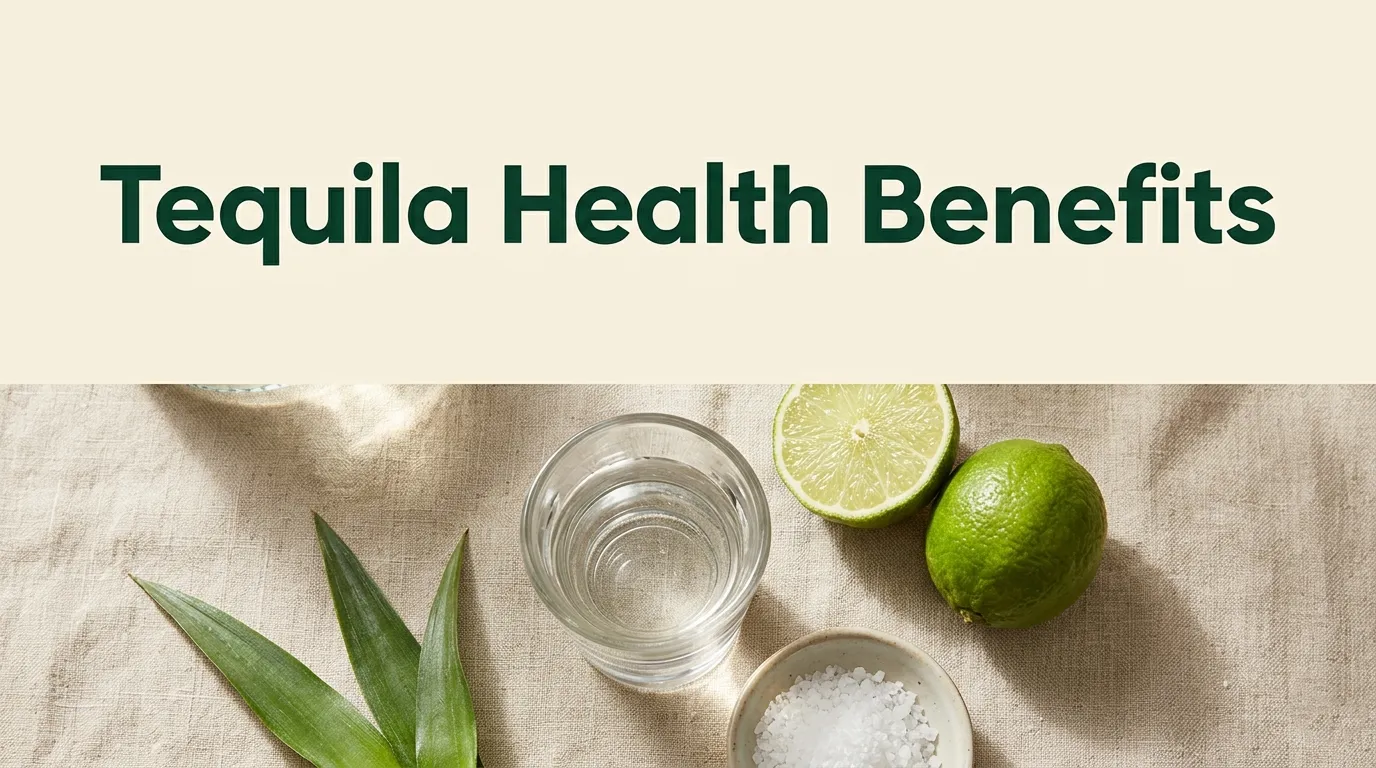
tequila health benefits
Tequila does not offer any meaningful health benefits that can ethically be recommended over simply not drinking alcohol. The viral claims you’ve seen about tequila helping with weight loss, lowering blood sugar, and improving gut health all trace back to compounds found in the raw agave plant, not in the distilled spirit that ends up in your glass. Once agave is fermented and distilled into tequila, the fiber-based bioactive compounds people cite in these claims are almost entirely removed.
That does not mean there is nothing to discuss. A 2026 understanding of alcohol and health requires us to move past “healthy alcohol” myths and into what actually happens in the body: what specific compounds survive distillation, what the liver does with ethanol regardless of its plant source, and whether choosing tequila over another spirit makes any measurable difference to your metabolic health.
Here’s what the actual science says. Not what the wellness influencers repeat. Not what the premium tequila brands want you to believe. What peer-reviewed nutrition research, the National Institutes of Health, and the USDA’s food composition databases actually document. We’ll walk through every claim, the specific compounds involved, and the real health tradeoffs of drinking tequila in 2026.
does tequila have any health benefits
Tequila has no health benefits that exist independent of the well-documented harms of ethanol, the carcinogenic compound that makes up roughly 40 percent of every shot you pour. The popular idea that tequila is a “healthy” spirit represents one of the most successful pieces of wellness misinformation circulating today. That statement sounds harsh, but staying scientifically honest means starting with the uncomfortable fact: any alcohol consumption increases health risk at a population level, and no spirit provides a net positive health outcome.
Where the confusion starts is understandable. Raw Blue Weber agave contains genuinely interesting compounds called agavins, which are branched-chain fructose polymers that function as soluble fiber. Agavins resist digestion in the human upper gastrointestinal tract and have demonstrated prebiotic effects in multiple controlled studies. A 2014 study in the Journal of Agricultural and Food Chemistry described how agavins can reach the colon intact, where gut bacteria ferment them into short-chain fatty acids. That research is legitimate. The leap from “agave contains prebiotic fiber” to “tequila is good for your gut” is not.
The fermentation and distillation process that creates tequila strips the agave plant of virtually all its fiber content. What remains after distillation is ethanol, water, and trace levels of congeners, which are chemical byproducts of fermentation that contribute to flavor and aroma. These congeners include small amounts of methanol, higher alcohols, and esters. None of them offer documented health benefits. If you want the prebiotic effects of agavins, you would need to eat raw or minimally processed agave. The spirit in your bottle contains none of it.
what are the health benefits of tequila
The only health benefit that distilled tequila can reasonably claim, when compared against other alcoholic beverages, is that it contains zero carbohydrates and zero sugar per standard 1.5-ounce serving. According to the USDA FoodData Central database, 100 percent agave tequila supplies 97 calories, all of which come from ethanol. There are no carbohydrates, no sugars, and no fats. For someone who has already decided to drink alcohol and is choosing between spirits, that carbohydrate absence is a measurable difference from beer, sweet wine, or sugary cocktails.
Beyond the macronutrient profile, there are no other health benefits supported by any randomized controlled trial in humans. Tequila does not improve digestion. It does not lower fasting blood glucose. It does not aid weight loss. Every claim you have seen about these outcomes traces back to animal studies or in vitro research on agavins, not on tequila itself. When you read a headline that says “tequila shown to lower blood sugar,” you are reading a misinterpretation of a mouse study using isolated agavins at doses that have no relationship to what a shot of tequila contains.
Table: Tequila Health Claims vs. Scientific Reality
| Claim | Origin of Claim | What Science Actually Shows |
|---|---|---|
| Tequila lowers blood sugar | Mouse studies on agavins, not tequila | Distilled tequila contains zero agavins; ethanol impairs glucose regulation |
| Tequila is a prebiotic | Fiber content of raw agave plant | Distillation removes all fiber; final product contains no prebiotic compounds |
| Tequila aids weight loss | Calorie comparison to sugary cocktails | Ethanol is metabolized preferentially, halting fat oxidation; net effect is fat storage promotion |
| Tequila improves digestion | Folk tradition of post-meal spirit consumption | Alcohol irritates the gastric mucosa and can worsen GERD symptoms |
| Tequila won’t give you a hangover | Congener content comparison | Hangovers are primarily caused by ethanol metabolism, not congener differences; all spirits cause hangovers |
health benefits of drinking tequila
The phrase “health benefits of drinking tequila” is scientifically incoherent when you examine it closely. You cannot separate the act of drinking from the ethanol exposure that defines the beverage. Ethanol is classified as a Group 1 carcinogen by the International Agency for Research on Cancer, placing it in the same category as asbestos, formaldehyde, and processed meat. That classification means there is sufficient evidence in humans that ethanol causes cancer, specifically cancers of the mouth, pharynx, larynx, esophagus, liver, colon, rectum, and breast.
This is the context within which any discussion of “benefits” must sit. When people search for the health benefits of drinking tequila, what many are really asking is, “Is there a spirit I can drink without feeling like I’m harming myself?” The answer is no. The ethanol molecule is identical whether it comes from tequila, vodka, whiskey, or wine. Your liver does not distinguish between the ethanol in a margarita and the ethanol in a beer. The metabolic pathway is the same.
Key Takeaway: Tequila’s zero-carb profile makes it a less-bad choice among alcoholic beverages for someone following a strict low-carbohydrate or ketogenic diet, but the presence of ethanol guarantees net physiological harm that no plant origin story can cancel out.
What you can say, if you are being precise, is that 100 percent agave tequila consumed as a single 1.5-ounce shot with no sugary mixer adds no dietary carbohydrate to your day. For a person with well-controlled type 2 diabetes who has discussed alcohol with their endocrinologist and received clearance, that carbohydrate absence matters. Compared to a piña colada, which can deliver 40 to 60 grams of sugar in a single serving, a tequila soda with lime is a metabolically neutral choice in terms of carbohydrate load. That is a harm-reduction comparison, not a health benefit. The distinction matters.
tequila benefits for health
The one area where tequila has a defensible position in a nutrition conversation is its role in a harm-reduction framework for people who already drink. If you are going to consume alcohol, and your goal is to minimize metabolic disruption, tequila made from 100 percent blue agave presents fewer variables to manage than many alternatives. It contains no gluten, no carbohydrates, and no sulfites at levels that typically trigger reactions. For someone with celiac disease who wants to drink, tequila is a safe choice. For someone following a ketogenic diet, tequila will not interrupt ketosis from a macronutrient perspective, though ethanol metabolism does temporarily pause ketone production.
These are not benefits. They are reduced liabilities. A food cannot properly be said to offer benefits simply because it causes less damage than another food in its category. You would not call a cigarette with lower tar “beneficial.” You would correctly call it a harm-reduction product. Tequila occupies a similar space.
Quick Tip:
If you drink, choose 100 percent agave tequila, avoid sugary mixers, stick to a single 1.5-ounce serving, and never drink on an empty stomach.
Do not allow the “tequila is healthier” narrative to become permission to drink more or more often.
The Dietary Guidelines for Americans 2020-2025 define moderate drinking as one drink or less per day for women and two drinks or less per day for men, and they explicitly state that drinking less is better for health than drinking more.
agavins in tequila
Agavins are not present in tequila. This is the single most important nutritional fact in this entire article, and it is the one that nearly every viral tequila wellness claim gets wrong. Agavins are a type of fructan, a polymer of fructose molecules linked by beta-2,1 glycosidic bonds, found naturally in the Agave tequilana plant. They function as soluble dietary fiber because humans lack the enzymes required to break those beta bonds. They pass through the stomach and small intestine undigested and arrive in the colon intact, where they serve as a food source for beneficial gut bacteria.
The research on agavins is genuinely promising. A 2014 study published in the Journal of Agricultural and Food Chemistry demonstrated that mice fed a diet supplemented with agavins showed reduced blood glucose levels, increased GLP-1 secretion, and shifts in gut microbiota composition toward more favorable bacterial populations. A 2015 follow-up study in the same journal found that agavins promoted satiety hormone release and reduced food intake in animal models.
But here is the critical step most wellness content skips: tequila is a distilled spirit. Distillation is a physical separation process that heats the fermented agave liquid to evaporate and then condense the ethanol. Dietary fiber does not evaporate. Agavins have a molecular weight far too large to become volatile and carry over into the distillate. What ends up in the tequila bottle is ethanol, water, and volatile flavor compounds. Zero grams of agavins. Zero grams of fiber. The USDA FoodData Central confirms this: tequila contains 0 grams of dietary fiber per serving.
To put this in perspective: if you wanted the prebiotic dose of agavins used in those mouse studies, you would need to consume raw agave, agave syrup, or agave inulin powder. You would need exactly zero shots of tequila. The association between tequila and gut health is entirely a category error, conflating the raw plant with the distilled product.
does tequila lower blood sugar
Tequila does not lower blood sugar. Ethanol, the active compound in tequila, actually impairs normal glucose regulation through multiple mechanisms, and any suggestion that tequila is beneficial for blood sugar control is dangerously misleading, especially for people managing diabetes or prediabetes.
The confusion originates from the agavin studies in mice. Researchers found that isolated agavins, administered as a fiber supplement, lowered blood glucose and stimulated GLP-1, an incretin hormone that enhances insulin secretion. Those findings are real. They apply to agavins. They do not apply to tequila. No human trial has ever demonstrated that tequila consumption lowers blood glucose. In fact, ethanol metabolism disrupts hepatic gluconeogenesis, which is the liver’s process of producing glucose to maintain stable blood sugar between meals. This disruption can actually cause hypoglycemia in people who drink on an empty stomach, particularly if they take insulin or sulfonylurea medications for diabetes.
The American Diabetes Association advises that people with diabetes who choose to drink alcohol should do so only when their blood glucose is well-controlled, should consume alcohol with food, and should monitor their blood glucose carefully because alcohol-induced hypoglycemia can occur hours after drinking. The risk is real. Ethanol inhibits the liver’s ability to release stored glucose, which means your blood sugar can drop unexpectedly during sleep after evening alcohol consumption. That drop is not a benefit. It is a dangerous disruption of normal metabolic homeostasis.
For a person without diabetes, the effect is less dramatic but still measurable. Alcohol consumption increases insulin sensitivity acutely, then promotes insulin resistance with chronic heavy use. The net metabolic effect of regular alcohol consumption is negative, not positive, for glucose regulation.
Key Takeaway: If you have diabetes and your blood sugar drops after drinking tequila, that is ethanol-induced suppression of liver glucose output, not a health benefit. It is a signal that your body’s normal glucose counter-regulation is being impaired.
tequila and gut health
Tequila does not improve gut health. It is more likely to harm it. The prebiotic agavins that give raw agave its gut-health potential are entirely absent from the distilled spirit. What tequila does deliver to your gastrointestinal system is ethanol, and ethanol’s effects on the gut are well-documented and predominantly negative.
Ethanol irritates the gastric mucosa directly, increasing gastric acid secretion and potentially triggering or worsening symptoms of gastroesophageal reflux disease. It increases intestinal permeability, a phenomenon often called “leaky gut,” by disrupting the tight junction proteins that keep your intestinal lining sealed. When those junctions loosen, bacterial endotoxins can cross into the bloodstream, triggering systemic inflammation. A 2022 review published in Nutrients documented the alcohol-gut barrier relationship and found that even moderate alcohol consumption increases markers of intestinal permeability.
Think of your intestinal lining like a carefully sealed ziplock bag. Ethanol acts like a solvent that gradually loosens the seal. Once microscopic gaps form, substances that belong inside the gut can leak into places they don’t belong, and your immune system responds with inflammation. This is not a theoretical concern. It is a measurable physiological effect of drinking any alcoholic beverage, tequila included.
The gut microbiome also shifts in response to regular alcohol intake. Studies consistently show that chronic alcohol consumption reduces microbial diversity and alters the ratio of beneficial to potentially harmful bacterial species. While the prebiotic fibers in raw agave feed Lactobacillus and Bifidobacterium, the ethanol in tequila does the opposite. It creates an intestinal environment less hospitable to the bacterial populations associated with positive health outcomes.
Table: Raw Agave vs. Distilled Tequila — Gut Health Effects
| Compound or Effect | Raw Agave (Plant) | Distilled Tequila (Spirit) |
|---|---|---|
| Agavins (prebiotic fiber) | Present; 15-20% of fresh weight | Absent; 0g per 1.5 oz serving |
| Gut microbiota effect | Promotes Bifidobacterium and Lactobacillus growth | Reduces microbial diversity with chronic use |
| Intestinal permeability | Not applicable | Increases permeability; disrupts tight junction proteins |
| Gastric mucosa | Not applicable | Direct irritant; increases gastric acid secretion |
| Short-chain fatty acid production | Supports SCFA production via bacterial fermentation | No positive contribution to SCFA production |
is tequila a prebiotic
Tequila is not a prebiotic. It contains zero grams of prebiotic fiber per serving. A prebiotic is defined by the International Scientific Association for Probiotics and Prebiotics as a substrate that is selectively utilized by host microorganisms conferring a health benefit. For a substance to qualify as a prebiotic, it must resist gastric acidity and mammalian enzyme hydrolysis, be fermented by intestinal microbiota, and selectively stimulate the growth or activity of beneficial gut bacteria.
Raw agavins meet every one of those criteria. Distilled tequila meets none of them. Agavins do not survive distillation. The molecular weight cutoff for a compound to vaporize during distillation is far below the size of a fructan polymer. Agavins are large polysaccharides with molecular weights in the thousands of Daltons. They remain in the stillage, the leftover liquid after distillation, which is typically discarded or used as agricultural feed.
If you have seen tequila marketed as a “prebiotic spirit” or heard someone claim that a shot of tequila after dinner aids digestion by feeding good bacteria, you are encountering one of the most successful marketing distortions in the spirits industry. The claim grafts legitimate agave research onto a product that contains none of the studied compounds. It is equivalent to claiming that a glass of orange juice and a glass of vodka are nutritionally similar because they both originate from plants.
The prebiotic research is real. The application of that research to tequila is false. If you want prebiotic benefits from agave, you would consume agave inulin powder, which is sold as a dietary fiber supplement and can be added to smoothies or baked goods. That product retains the fructans that distillation removes.
tequila vs vodka health
When compared head-to-head on nutritional metrics, tequila and vodka are essentially identical. Both are distilled spirits at approximately 40 percent alcohol by volume. Both deliver roughly 97 calories per 1.5-ounce shot. Both contain zero carbohydrates, zero protein, zero fat, and zero fiber. The differences that matter are in origin, congener profile, and practical use in mixed drinks, not in any inherent nutritional superiority of one over the other.
Tequila comes from the Blue Weber agave plant. Vodka can be made from grains (wheat, rye, corn), potatoes, or even grapes. For someone with celiac disease, this distinction matters. Tequila is inherently gluten-free because it comes from a plant that contains no gluten. Most distilled grain vodkas are also considered gluten-free by the Celiac Disease Foundation because distillation removes gluten proteins, but some individuals with celiac disease report reactions to grain-derived spirits. If you are in that group, agave-based tequila provides a botanical certainty that grain-based vodka cannot match.
Congener content is another differentiator. Congeners are chemical byproducts of fermentation that contribute to the flavor, aroma, and color of spirits. Aged tequilas (reposado and añejo) pick up additional congeners from barrel aging, including tannins, vanillin, and wood-derived polyphenols. Vodka is typically filtered to remove most congeners, which is why it is often described as more neutral. Some research suggests that spirits with higher congener content, such as brandy and whiskey, produce more severe hangovers than spirits with lower congener content, such as vodka. The evidence on this is mixed, however, and the primary driver of any hangover is dehydration and the toxic effects of acetaldehyde, ethanol’s primary metabolite.
Table: Tequila vs. Vodka — Nutritional and Compositional Comparison
| Attribute | 100% Agave Tequila (Blanco) | Vodka (Grain-Based, 80 Proof) |
|---|---|---|
| Calories per 1.5 oz | 97 | 97 |
| Carbohydrates | 0g | 0g |
| Gluten | None (agave source) | Technically gluten-free (distillation), grain source may concern some |
| Congener level | Moderate (blanco); higher in aged varieties | Low (extensive filtration) |
| Sulfites | Trace (no added sulfites) | Typically none |
| Plant origin | Agave tequilana | Wheat, rye, potato, corn, grape |
| Primary health consideration | Ethanol (identical carcinogenic risk) | Ethanol (identical carcinogenic risk) |
Key Takeaway: Nutritionally, tequila and vodka are identical. Choose tequila if gluten cross-reactivity is a concern, if you prefer the flavor, or if the agave origin matters to you. Do not choose tequila because you believe it is metabolically superior to vodka. It is not.
healthiest alcohol to drink
No alcohol is healthy, and the phrase “healthiest alcohol” is a harm-reduction framework, not a health endorsement. The World Health Organization stated in a 2023 position that no level of alcohol consumption is safe for health. That position reflects the cumulative evidence linking ethanol to at least seven types of cancer, liver disease, cardiovascular damage, and neurological harm. Within a harm-reduction framework, where the goal is to choose the alcoholic beverage that adds the fewest additional metabolic stressors to the baseline harm of ethanol, the least harmful options share a common profile: low sugar, low carbohydrate, no creamy or high-fat mixers, and minimal congeners.
The spirits that fit this profile include tequila (100 percent agave, blanco), vodka, gin, and unflavored white rum. All deliver approximately 97 to 100 calories per 1.5-ounce serving, all contain zero carbohydrates, and all can be consumed with calorie-free mixers like soda water and fresh citrus. The Academy of Nutrition and Dietetics advises that if alcohol is consumed, clear spirits with sugar-free mixers are the least metabolically disruptive option for people managing their weight or blood sugar.
Beer and sweet wine land in the middle of the harm-reduction spectrum, not because their ethanol is different, but because they add significant carbohydrate and calorie loads. A 12-ounce regular beer delivers roughly 150 calories and 12 to 15 grams of carbohydrate. A 5-ounce glass of sweet dessert wine can deliver 175 calories and 15 to 20 grams of sugar. These numbers matter for someone tracking macronutrient intake.
The worst options by any nutritional standard are sugary cocktails made with syrups, juice concentrates, cream liqueurs, and multiple types of alcohol. A single frozen margarita from a chain restaurant can contain 400 to 800 calories and 50 to 90 grams of sugar. The ethanol is the same. The metabolic burden is multiplied several times over.
If you choose tequila because you enjoy it and you drink it as a single shot or with soda water and lime, you are selecting an option at the lower end of the harm continuum. That is a reasonable personal choice. It is not a health strategy.
does tequila help with weight loss
Tequila does not help with weight loss. It works against it. Ethanol is metabolized preferentially by the liver, which means your body processes alcohol before it processes fat, carbohydrate, or protein for energy. When ethanol enters your system, fat oxidation stops. Your body puts fat-burning on hold while it clears the toxin from your bloodstream.
The calorie math is straightforward. One shot of tequila contains 97 calories. Two shots contain 194 calories. A night with three drinks adds roughly 290 calories from the alcohol alone, before any mixer calories. Those are not thermogenically neutral calories. They are calories that pause your body’s ability to burn stored fat. A 2020 study in the American Journal of Clinical Nutrition found that acute alcohol consumption suppressed whole-body lipid oxidation by approximately 35 percent over a 12-hour period following ingestion.
The idea that tequila aids weight loss likely stems from two misapplications. First, the agavin research in mice showed reduced food intake and weight gain in animals supplemented with the fiber. Second, because tequila contains zero sugar, people who switch from sugary cocktails to tequila soda may initially lose water weight and reduce their total daily calorie intake. That weight change comes from removing the sugar, not from adding the tequila. It is a caloric deficit effect, not a metabolic magic trick.
If you are actively trying to lose weight, alcohol is one of the easiest categories to reduce or eliminate because it provides no essential nutrients and directly impairs the metabolic processes that support fat loss. A registered dietitian working with a weight management client will typically suggest limiting alcohol to one or two drinks per week, consumed with food, and tracked honestly as part of the daily calorie total.
Key Takeaway: Drinking tequila will not accelerate fat loss. At best, choosing zero-carb spirits over sugary cocktails removes a source of empty calories. At worst, alcohol reduces your inhibition around food choices and pauses your body’s fat-burning machinery for hours.
tequila and digestion
The traditional belief that a shot of tequila after a large meal aids digestion is a cultural practice, not a physiological reality. In parts of Mexico and the American Southwest, tequila has long been consumed as a digestif, a post-meal drink thought to settle the stomach and promote the breakdown of food. The subjective experience people report, a sense of warmth and relaxation after a meal, is real. The mechanism behind that sensation has nothing to do with digestion and everything to do with ethanol’s effects on the central nervous system.
Ethanol is a vasodilator. It relaxes blood vessels, which creates the sensation of warmth and can temporarily relieve the feeling of fullness by reducing tension in the stomach wall. It also acts as a central nervous system depressant, which produces a subjective sense of relaxation that many people associate with digestive relief. What ethanol does not do is accelerate gastric emptying, enhance enzyme secretion in a way that improves nutrient absorption, or provide any meaningful digestive advantage.
In fact, alcohol consumed after a meal slows gastric emptying, meaning food stays in your stomach longer. This can exacerbate symptoms in people with gastroparesis or functional dyspepsia. Alcohol also relaxes the lower esophageal sphincter, the muscular valve that keeps stomach contents from flowing back into the esophagus. When that valve relaxes, acid reflux can occur, which is why alcohol is a known trigger for GERD symptoms.
There is one narrow traditional use that deserves mention. In some folk medicine traditions, a small amount of high-proof spirit was used as an antimicrobial mouth rinse or consumed with the belief that it might reduce the risk of foodborne illness from contaminated food. In the 19th and early 20th centuries, when food safety standards were limited, this practice may have had some practical effect because ethanol at concentrations above 20 percent does have antimicrobial properties. In 2026, with modern food safety standards and refrigeration, that rationale no longer applies.
Table: Tequila’s Actual Digestive Effects
| Claimed Effect | Actual Physiological Effect |
|---|---|
| Settles the stomach | Slows gastric emptying; can worsen dyspepsia |
| Aids food breakdown | Does not enhance digestive enzyme activity |
| Reduces bloating | Vasodilation and CNS depression mask the sensation; does not reduce gas volume |
| Kills foodborne pathogens | Ethanol at 40% ABV has some antimicrobial properties, but food in the stomach dilutes the concentration below effective levels |
| Relaxes digestive tract | Relaxes lower esophageal sphincter, potentially triggering or worsening acid reflux |
tequila liver damage
Tequila damages the liver through the same ethanol metabolism pathway as every other alcoholic beverage, and there is no evidence that tequila is less hepatotoxic than vodka, whiskey, wine, or beer. The liver processes approximately 90 percent of the ethanol you consume through a two-step enzymatic pathway. First, alcohol dehydrogenase converts ethanol into acetaldehyde, a toxic intermediate compound that is far more damaging than ethanol itself. Second, aldehyde dehydrogenase converts acetaldehyde into acetate, which can be further metabolized into carbon dioxide and water.
Acetaldehyde is the problem. It is highly reactive, binds to proteins and DNA, and causes oxidative stress and inflammation in liver cells. The more you drink, the more acetaldehyde your liver must process, and the more cumulative damage your hepatocytes sustain. Over time, this damage progresses through predictable stages: fatty liver (steatosis), alcoholic hepatitis, fibrosis, and cirrhosis. The progression is not unique to tequila. It is universal to ethanol.
The National Institute on Alcohol Abuse and Alcoholism defines heavy drinking as more than 14 standard drinks per week for men and more than 7 standard drinks per week for women. At these consumption levels, the risk of developing alcohol-related liver disease increases substantially. A standard drink of tequila is 1.5 fluid ounces. If you drink two shots of tequila every night, you are consuming 14 drinks per week, which places you at the NIAAA threshold for heavy drinking regardless of whether your tequila is 100 percent agave, organic, or barrel-aged.
People sometimes ask whether the plant origin of tequila makes it gentler on the liver. It does not. Ethanol is ethanol. The molecule is chemically identical whether it comes from agave, grain, potato, or grape. The liver’s CYP2E1 enzyme system, which is induced by chronic alcohol consumption and contributes to oxidative liver injury, responds to ethanol concentration and total dose, not to the botanical origin of the beverage.
A hepatologist would tell you that the single most important factor in alcohol-related liver damage is total lifetime ethanol exposure, followed by pattern of drinking (binge drinking accelerates injury), presence of comorbidities (obesity, viral hepatitis, hemochromatosis), and concurrent medication use. Acetaminophen is particularly dangerous to combine with chronic alcohol use because both are metabolized by the CYP2E1 system, and the combination dramatically increases the production of a toxic metabolite that can cause acute liver failure.
tequila calories and sugar
A standard 1.5-ounce serving of 100 percent agave tequila contains 97 calories and zero grams of sugar, according to the USDA FoodData Central database. Every calorie in a shot of plain tequila comes from ethanol, which provides approximately 7 calories per gram. No fiber, no sugar, no fat, and no protein contribute to the calorie count. This is true for all unflavored distilled spirits at 80 proof.
The calorie and sugar story changes significantly when you move from plain tequila to tequila-based cocktails or to mixto tequilas that contain added sugars. A mixto tequila must contain at least 51 percent agave-derived alcohol, with the remaining 49 percent coming from other sugar sources, typically cane sugar. Mixto tequilas are not nutritionally identical to 100 percent agave tequila. While the ethanol calorie content remains the same, mixto tequilas often contain added caramel coloring, glycerin, and sugar-based flavoring agents that can introduce small amounts of residual sugar.
The real sugar concern with tequila comes from what you mix with it. A standard margarita made with a commercial sour mix typically contains 35 to 45 grams of sugar. A tequila sunrise, with its grenadine and orange juice, pushes past 30 grams. Even a seemingly simple ranch water, if made with a sweetened lime soda, can deliver 15 to 25 grams of sugar. The tequila itself is sugar-free. The drink is often not.
Table: Calorie and Sugar Content of Tequila Drinks
| Drink | Serving Size | Calories | Sugar (g) | Carbohydrates (g) |
|---|---|---|---|---|
| 100% agave tequila, neat | 1.5 fl oz | 97 | 0 | 0 |
| Tequila soda with fresh lime | 1.5 oz tequila + soda water | ~100 | 0 | 0 |
| Ranch water (unsweetened) | 1.5 oz tequila + Topo Chico + lime | ~100 | 0 | 0 |
| Classic margarita (homemade, with light agave) | 1.5 oz tequila + 1 oz lime + 0.5 oz agave nectar | ~155 | 8 | 9 |
| Restaurant frozen margarita | 10-12 fl oz | 400-800 | 50-90 | 55-95 |
| Tequila sunrise | Standard pour with OJ and grenadine | ~230 | 32 | 34 |
Key Takeaway: A shot of plain 100 percent agave tequila is a zero-sugar, 97-calorie beverage. A frozen margarita from a restaurant can deliver more sugar than a can of soda and more calories than a full meal. The tequila is not the problem in that equation. The mixer is.
best tequila for health 2026
The best tequila, within a harm-reduction framework for someone who has decided to drink, is a 100 percent agave blanco tequila with no additives, served neat or with soda water and fresh lime. This recommendation prioritizes what is absent: no added sugars, no flavoring syrups, no caramel coloring, no glycerin, and no sugary mixers. Look for the phrase “100% agave” or “100% de agave” on the label. This designation is regulated by the Consejo Regulador del Tequila under the NORMA Oficial Mexicana and guarantees that all fermentable sugars came from Blue Weber agave, not from cane sugar or corn syrup.
Blanco tequila is the unaged expression, bottled shortly after distillation or rested briefly in stainless steel or neutral oak. It has not picked up any wood-derived compounds from barrel aging. For someone minimizing all extraneous variables, blanco is the simplest form. Reposado and añejo tequilas are aged in oak barrels, where they absorb tannins, vanillin, and trace polyphenols from the wood. These compounds are not harmful, and some may have minor antioxidant activity, but the amounts are too small to be nutritionally meaningful. If you prefer the flavor of aged tequila, drink it. Do not choose it because you believe it is healthier.
In 2026, the additive-free tequila movement has gained substantial momentum. Several producers now certify their tequilas as free of the four permitted additive categories under Mexican law: caramel coloring, glycerin, sugar-based syrup, and oak extract flavoring. While these additives are regulated and considered safe, they obscure what you are actually drinking. An additive-free certified blanco tequila is the most transparent choice available.
Numbered Guide: How to Choose Tequila with the Least Metabolic Impact
Look for “100% agave” or “100% de agave” on the front label. If the bottle does not say this, it is a mixto and may contain up to 49 percent cane sugar-derived alcohol.
Choose blanco (silver) tequila. Unaged means no wood-derived compounds, fewer congeners, and the most straightforward ingredient profile.
Check for additive-free certification or producer transparency. Brands that openly state “no additives” give you more information about what is in the bottle.
Avoid flavored tequilas. Cinnamon, vanilla, jalapeño, and fruit-flavored tequilas contain added sugars, syrups, or flavoring compounds that reintroduce the sugar you are trying to avoid.
Mix with soda water and fresh citrus. Calories stay at approximately 100 per drink. Sugar stays at zero.
Skip the salt rim. Sodium is not a health villain for everyone, but a heavily salted rim adds unnecessary sodium to a beverage that does not need it.
Frequently Asked Questions About Tequila Health Benefits
Is tequila actually good for your health?
Tequila is not good for your health in any way that outweighs the carcinogenic and hepatotoxic effects of its ethanol content.
The compounds in raw agave that show health benefits in laboratory research, primarily agavins, are entirely removed during fermentation and distillation and do not appear in the finished spirit.
Drinking tequila provides zero prebiotic fiber, zero blood sugar regulation benefit, and zero digestive aid beyond the subjective relaxation effect of alcohol on the central nervous system.
Does tequila have less sugar than other alcohol?
Plain 100 percent agave tequila contains zero grams of sugar per 1.5-ounce serving, which is identical to vodka, gin, white rum, and whiskey.
All unflavored distilled spirits at 80 proof contain no sugar and derive all of their calories from ethanol.
The sugar content of a tequila drink depends entirely on the mixer, not the spirit.
Can diabetics drink tequila safely?
Some people with well-controlled diabetes can consume a single drink of tequila with food if their physician has cleared them to do so, but alcohol introduces specific blood glucose risks including delayed hypoglycemia.
The American Diabetes Association recommends that people with diabetes only drink when their blood glucose is stable and well-controlled, always consume alcohol with food, and monitor blood glucose carefully for several hours after drinking.
A person with diabetes should consult their endocrinologist specifically about alcohol and bring a record of their glucose response to any previous drinking occasions.
Does tequila help with weight loss?
Tequila does not help with weight loss and actively works against it by pausing fat oxidation while your liver processes the ethanol.
Any weight change that occurs when someone switches from sugary cocktails to tequila soda comes from removing the sugar calories, not from adding the tequila.
Alcohol provides 7 calories per gram with no nutritional value and reduces dietary inhibition, making weight management harder overall.
What is the healthiest type of tequila?
A 100 percent agave blanco tequila with no additives, labeled “100% de agave,” is the least metabolically disruptive tequila option because it contains no added sugars, no barrel-derived compounds, and no flavoring syrups.
Blanco tequila has not been aged in wood, which means it has fewer congeners than reposado or añejo expressions.
The health difference between tequila types is small relative to the health impact of the total ethanol consumed.
Is 100% agave tequila better for you than mixto?
100 percent agave tequila is a better choice than mixto tequila because mixto can contain up to 49 percent alcohol from cane sugar or other non-agave sources and often includes caramel coloring, glycerin, and added flavoring.
The ethanol itself is chemically identical regardless of its sugar source, but mixto tequilas introduce additional variables including potential residual sugars and additives that 100 percent agave tequila does not contain.
For someone minimizing all extraneous compounds beyond ethanol, 100 percent agave tequila is the clear choice.
Tequila’s reputation as a health-promoting spirit is one of the most durable pieces of nutrition misinformation in the wellness landscape. It persists not because the science is ambiguous, but because the raw agave plant genuinely contains interesting compounds that get twisted into marketing stories about the distilled product. The disconnect between what agave contains and what tequila delivers is complete.
If you drink tequila, drink it because you genuinely enjoy the flavor. Choose a 100 percent agave blanco. Skip the sugar. Count the calories honestly. Never allow the “healthier alcohol” framing to become permission to drink more than you otherwise would. The ethanol molecule does not care what plant it came from. It does the same thing to your liver, your DNA, and your cancer risk regardless of the beautiful agave fields pictured on the label.
You now know what raw agave research actually says, what survives distillation and what does not, and where tequila sits on the harm-reduction spectrum. That knowledge lets you make an honest choice. That is the whole point.