Chipotle Bowl Nutrition Facts: Complete 2026 Guide to Calories, Macros, and Healthy Customization
A Chipotle bowl gives you complete control over your meal, and knowing the nutrition facts for each ingredient is the difference between a 400-calorie lunch and a 1,200-calorie calorie bomb. The average fully loaded Chipotle bowl with chicken, rice, beans, salsa, cheese, and sour cream contains approximately 750 to 850 calories, but that number changes dramatically based on every choice you make . The 2026 menu continues to offer the same build-your-own format, which means you can create anything from a lean high-protein meal to a heavy indulgent bowl depending on your goals.
This guide walks through every ingredient option at Chipotle Mexican Grill, pulls the exact nutrition numbers for each protein, topping, and base, and shows you how to use the Chipotle nutrition calculator to build a bowl that fits your specific diet. Whether you are counting calories for weight loss, tracking macros for muscle gain, or managing sodium intake for heart health, you will find the precise numbers you need. The 2026 menu also introduced new high-protein options designed for people on GLP-1 medications, and those same bowls work for anyone looking to maximize protein while controlling calories . Let us break down exactly what is in every scoop, spoon, and drizzle.
Chipotle Bowl Nutrition Facts: Understanding the Full Picture
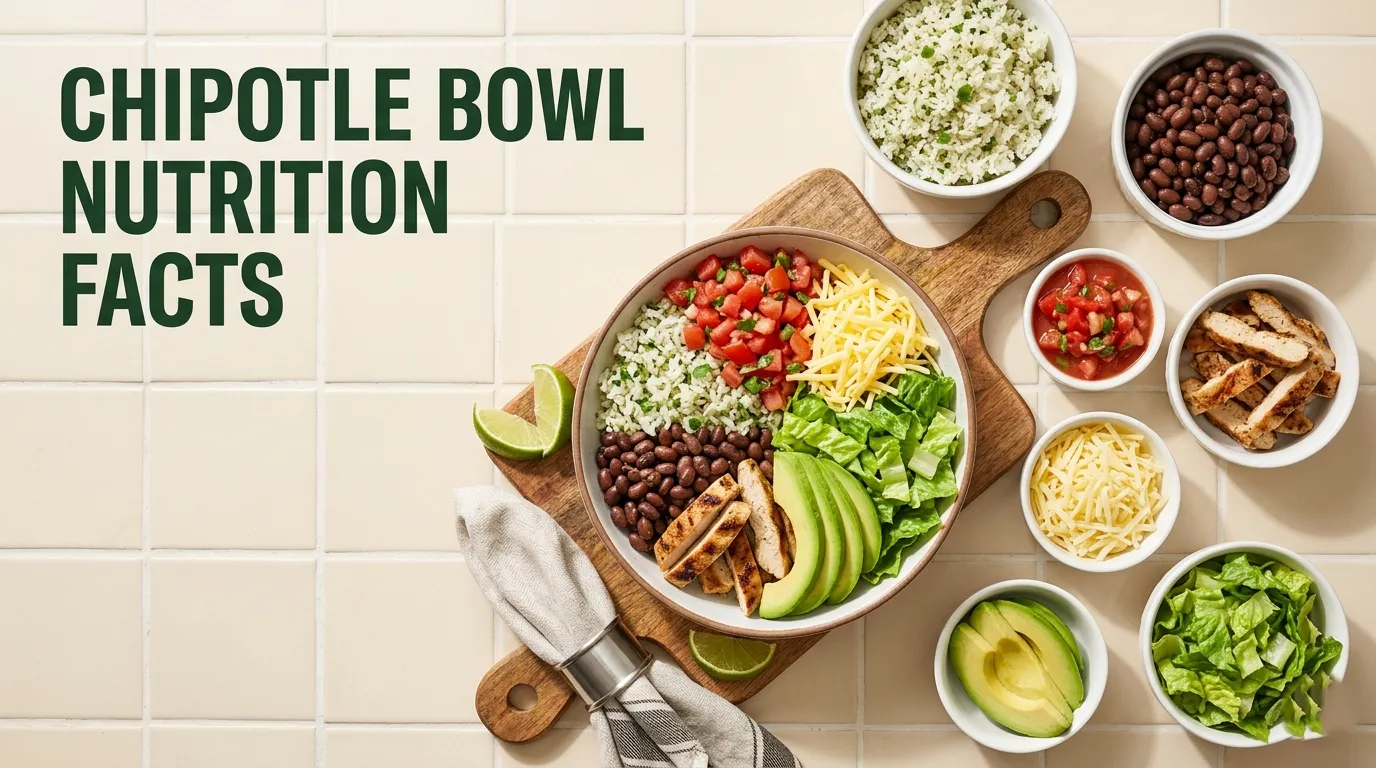
A Chipotle bowl’s nutrition facts depend entirely on your ingredient choices, but a standard bowl with white rice, black beans, chicken, pico de gallo, cheese, and lettuce contains around 750 calories with 45 grams of protein, 22 grams of fat, and 85 grams of carbohydrates. The beauty of the bowl format is that you see every ingredient going in, so you control exactly what lands on your nutrition label. Unlike a wrapped burrito where the tortilla adds 320 calories before any fillings, a bowl lets you skip that extra carb load entirely .
The nutritional values at Chipotle follow standard portion sizes that employees are trained to use. One scoop of rice equals about four ounces. One scoop of beans equals four ounces. Protein portions run approximately four ounces as well. Toppings like cheese, sour cream, and guacamole come in two-ounce scoops. These portions matter because the difference between a “regular” scoop and a “heaping” scoop can add 100 calories or more to your bowl without you realizing it.
Key Takeaway: Your bowl’s total calories can range from under 400 calories (supergreens, chicken, fajita veggies, fresh salsa) to over 1,200 calories (double rice, carnitas, queso, sour cream, cheese, guacamole). You have full control at every step.
Chipotle Chicken Bowl Nutrition Facts: The Most Popular Choice
The Chipotle chicken bowl nutrition facts show why this is the chain’s best-selling protein option. A standard chicken bowl with white rice, black beans, fresh tomato salsa, cheese, and lettuce contains approximately 750 calories with 45 grams of protein, 22 grams of fat, and 85 grams of carbohydrates. The chicken itself contributes 180 calories and 32 grams of protein per four-ounce serving, making it one of the leanest and most protein-dense choices on the menu .
Chicken stands out because of its macronutrient profile. The 32 grams of protein come with only 7 grams of fat and zero carbohydrates. This makes chicken the ideal base for anyone prioritizing protein intake while keeping calories moderate. The adobo marinade adds flavor without significant calories, though it does contribute to the sodium content. A standard chicken portion contains approximately 400 milligrams of sodium, which fits into most diets but adds up when combined with other salty ingredients like beans, salsas, and cheese.
Here is the complete breakdown of a standard chicken bowl with the most common ingredient selections:
| Ingredient | Calories | Protein (g) | Fat (g) | Carbs (g) | Sodium (mg) |
|---|---|---|---|---|---|
| White Rice | 210 | 4 | 4 | 40 | 350 |
| Black Beans | 130 | 8 | 1.5 | 23 | 220 |
| Chicken | 180 | 32 | 7 | 0 | 400 |
| Fresh Tomato Salsa | 25 | 1 | 0 | 5 | 250 |
| Cheese | 110 | 6 | 9 | 1 | 180 |
| Lettuce | 5 | 0 | 0 | 1 | 5 |
| Total | 660 | 51 | 21.5 | 70 | 1,405 |
Note: This table excludes sour cream and guacamole. Adding sour cream adds 110 calories and 10 grams of fat. Adding guacamole adds 230 calories and 22 grams of fat .
Key Takeaway: Chicken delivers the best protein-to-calorie ratio of any Chipotle protein. A double-chicken bowl can push you past 60 grams of protein while staying under 900 calories, making it an excellent post-workout meal.
Chipotle Steak Bowl Nutrition Facts: Lean and Bold
The Chipotle steak bowl nutrition facts show 590 calories for a standard bowl with steak, rice, beans, and standard toppings, with 29 grams of protein and 23.5 grams of fat . Steak comes in at 150 calories per four-ounce portion, which is actually 30 calories lower than chicken . However, the fat content runs slightly higher, with approximately 8 grams of fat per serving compared to chicken’s 7 grams.
Steak offers a different texture and flavor profile that many customers prefer. The grass-fed beef is grilled in small batches throughout the day and seasoned with chipotle adobo. The lower calorie count compared to chicken surprises most people. At 150 calories per serving, steak is the lowest-calorie protein option at Chipotle, tied with sofritas . This makes steak an excellent choice for anyone trying to reduce total calorie intake while still eating meat.
The trade-off comes in protein density. Steak provides 23 grams of protein per serving, which is 9 grams less than chicken. If your primary goal is maximizing protein, chicken outperforms steak. If your goal is minimizing calories while still getting solid protein, steak wins. The difference matters most for athletes and people on high-protein diets who need every gram they can get.
Quick Tip: Ordering steak with brown rice instead of white rice adds fiber without significantly changing the calorie count. Brown rice contains 210 calories per serving, the same as white rice, but offers 4 grams of fiber compared to white rice’s 1 gram.
Chipotle Carne Asada Bowl Nutrition Facts: The Premium Option
The Chipotle carne asada bowl nutrition facts show 570 calories with 40 grams of protein, 23 grams of fat, and 50 grams of carbohydrates for a complete bowl with standard toppings . Carne asada is the newer steak option on the menu, seasoned with a different spice blend including garlic, cumin, and lime. The protein content of 40 grams per serving makes carne asada one of the highest-protein choices available, significantly outperforming both regular steak and chicken.
Carne asada contains a different fat profile than the regular steak. The 23 grams of fat include approximately 7 grams of saturated fat, which is moderate for a fast-casual meal. The sodium content runs higher than other proteins at approximately 550 milligrams per serving, so anyone watching blood pressure should factor this into their daily intake. The 50 grams of carbohydrates in the complete bowl come primarily from the rice and beans base.
Here is the complete nutritional breakdown of a carne asada bowl:
| Nutrient | Amount per Bowl (with rice, beans, salsa) | % Daily Value (2000 calorie diet) |
|---|---|---|
| Calories | 570 | 29% |
| Protein | 40 g | 80% |
| Total Fat | 23 g | 29% |
| Saturated Fat | 7 g | 35% |
| Carbohydrates | 50 g | 18% |
| Dietary Fiber | 10 g | 36% |
| Sodium | 1,100 mg | 48% |
*Source: SnapCalorie nutrition database *
The carne asada bowl provides an impressive amount of fiber from the beans and vegetables. Ten grams of fiber covers more than one-third of the daily recommended intake. This fiber helps with satiety, blood sugar management, and digestive health. The high protein and fiber combination makes this one of the most satisfying bowls on the menu in terms of fullness per calorie.
Chipotle Veggie Bowl Nutrition Facts: Plant-Based and Fiber-Rich
The Chipotle veggie bowl nutrition facts reveal 685 calories with 20 grams of protein, 30 grams of fat, and 75 grams of carbohydrates for a standard plant-based bowl . Unlike meat-based bowls, the veggie bowl relies on beans and guacamole for protein and healthy fats. The standard veggie bowl comes with guacamole included at no extra charge, which adds 230 calories and 22 grams of fat to the base bowl.
The protein content of 20 grams comes primarily from the beans, which provide approximately 8 grams per serving, and the guacamole, which adds about 3 grams. For comparison, a chicken bowl provides 51 grams of protein with the same bean and rice base . Vegans and vegetarians can boost protein by adding sofritas, the spiced tofu option, which adds 150 calories and 8 grams of protein per serving.
The fiber content in a veggie bowl is outstanding. Between the beans (9 grams), brown rice (4 grams), fajita vegetables (2 grams), and corn salsa (3 grams), a fully loaded veggie bowl can easily exceed 20 grams of fiber in a single meal. That covers nearly 80 percent of the daily recommended fiber intake for women and more than half for men. High fiber intake supports digestive regularity, helps control blood sugar, and reduces cholesterol levels.
Key Takeaway: The veggie bowl with guacamole included is the most calorie-dense vegetarian option, but you can lighten it significantly by skipping the guac or asking for it on the side. A veggie bowl without guacamole runs approximately 455 calories.
Chipotle Sour Cream Nutrition Facts: The Calorie Dense Topping
The Chipotle sour cream nutrition facts show 110 calories and 10 grams of fat per standard two-ounce scoop, with 45 calories and 4 grams of fat for the smaller kid’s portion . Sour cream is one of the most calorie-dense toppings per fluid ounce, second only to queso and guacamole. The standard scoop adds almost as many calories as an entire serving of steak but without the protein benefit.
Sour cream contains minimal protein at 1 gram per serving and 2 grams of carbohydrates. The primary macronutrient is fat, with approximately 75 percent of its calories coming from fat. The saturated fat content runs at 6 grams per standard scoop, which is 30 percent of the daily recommended limit on a 2,000 calorie diet. People managing cholesterol or heart disease risk may want to skip sour cream entirely or ask for a half-scoop.
Here is how sour cream compares to other Chipotle toppings:
| Topping | Calories (standard scoop) | Fat (g) | Protein (g) | Best Use Case |
|---|---|---|---|---|
| Sour Cream | 110 | 10 | 1 | Flavor without spice |
| Cheese | 110 | 9 | 6 | Protein boost |
| Queso | 120 | 8 | 5 | Creamy texture |
| Guacamole | 230 | 22 | 3 | Healthy fats and flavor |
| Fresh Salsa | 25 | 0 | 1 | Low-calorie flavor |
Quick Tip: Ask for sour cream “on the side” to control exactly how much you use. Most people use half of the standard scoop when adding it themselves, saving 55 calories and 5 grams of fat.
Chipotle Chips Nutrition Facts: The Hidden Calorie Bomb
The Chipotle chips nutrition facts show 540 calories and 25 grams of fat per regular order, with 73 grams of carbohydrates and only 7 grams of protein . The chips are made in-house from corn masa, fried in sunflower oil, and seasoned with salt and fresh lime juice. A single order of chips contains almost as many calories as a full chicken bowl, making them the single biggest calorie addition you can make to your meal.
The chips provide no significant nutritional value relative to their calorie load. The 73 grams of carbohydrates are primarily refined starches with only 7 grams of fiber. The 25 grams of fat include 3.5 grams of saturated fat, which is moderate but adds up when paired with other fatty ingredients. The 540 calories represent more than one-quarter of a typical 2,000 calorie daily intake, and most people eat them as a side dish rather than a meal replacement.
If you love the chips, consider splitting an order with someone else. Half an order provides 270 calories, 12.5 grams of fat, and 36.5 grams of carbohydrates. Another strategy is to skip the chips entirely and use the bowl as your complete meal. The bowl alone typically provides enough volume and satiety without the extra calorie load from chips.
Key Takeaway: A regular order of chips plus a standard chicken bowl pushes your meal past 1,200 calories. If weight loss is your goal, skip the chips or make them an occasional treat rather than a regular side.
Chipotle Nutrition Facts Calculator: How to Use It Correctly
The Chipotle nutrition facts calculator on the official Chipotle app and website lets you build your exact bowl and see real-time nutrition updates as you add ingredients. To use the calculator effectively, open the Chipotle app, start a new order, select “Bowl” as your base, and tap on each ingredient to see the nutrition panel update. The calculator shows total calories, protein, fat, carbohydrates, fiber, and sodium for your custom creation .
The calculator is accurate to within approximately 10 to 15 percent of actual calorie content because portion sizes vary by location and by employee. A heavy-handed scoop of rice can add 50 extra calories. A light scoop of cheese might save you 30 calories. The calculator assumes standard four-ounce portions for rice, beans, and proteins, and two-ounce portions for toppings. Use it as a reliable guideline, not an absolute guarantee.
How to get the most accurate nutrition tracking:
- Open the Chipotle app and select your local store
- Choose “Bowl” as your base format (not burrito)
- Select each ingredient one at a time and watch the running total
- Use the “Customize” option to adjust portion sizes where available
- Screenshot your final nutrition panel before ordering
- Compare the app’s numbers to your weight loss or muscle gain goals
- Save your favorite bowl combinations for easy reordering
The app also allows you to save custom bowls as favorites, which saves time and ensures consistency in your tracking. People using the calculator for weight management should track their bowl’s calorie count daily, just as they would track any other meal.
How to See Nutrition Facts on Chipotle App: Step by Step
To see nutrition facts on the Chipotle app, open the app, select a store, choose “Start Order,” pick “Bowl” from the menu, tap any ingredient, and scroll down to view the complete nutrition panel including calories, protein, fat, carbs, fiber, and sodium. The nutrition information appears below each ingredient selection and updates automatically as you build your bowl.
The app’s nutrition feature includes every ingredient available in 2026, including the new high-protein options. You can toggle between “per serving” and “per container” views depending on whether you are eating the whole bowl at once or saving half for later. The app also shows allergen information, including gluten, dairy, and soy, which is useful for people with food sensitivities or celiac disease.
What you can see in the Chipotle app nutrition section:
- Calories per ingredient and running total for your entire bowl
- Full macronutrient breakdown (protein, fat, carbohydrates)
- Fiber content for each ingredient and total
- Sodium per serving with cumulative running total
- Allergen flags for dairy, gluten, eggs, and soy
- Ingredient sourcing information for meat and produce
- Customization options to remove or modify any ingredient
If you prefer not to use the app, Chipotle’s website has a full PDF nutrition facts sheet available for download. The PDF includes every standard menu item with complete nutritional information. The app is more useful for custom bowls, while the PDF works better for comparing standard menu items side by side.
Chipotle Mexican Grill Nutrition Facts: Full Ingredient Database
Chipotle Mexican Grill nutrition facts vary significantly across the 25+ ingredients you can combine in a bowl. The chain publishes complete nutrition data for every ingredient, and understanding this database is the key to building a bowl that matches your health goals. Below is the comprehensive 2026 nutrition database for every standard Chipotle ingredient, organized by category .
Base Options (per serving):
| Base | Calories | Protein | Fat | Carbs | Fiber | Sodium |
|---|---|---|---|---|---|---|
| White Rice | 210 | 4g | 4g | 40g | 1g | 350mg |
| Brown Rice | 210 | 4g | 4g | 40g | 4g | 350mg |
| Supergreens Salad Mix | 15 | 2g | 0g | 3g | 1g | 15mg |
Protein Options (per serving):
| Protein | Calories | Protein | Fat | Carbs | Sodium |
|---|---|---|---|---|---|
| Chicken | 180 | 32g | 7g | 0g | 400mg |
| Steak | 150 | 23g | 8g | 0g | 370mg |
| Carnitas | 210 | 25g | 14g | 0g | 540mg |
| Barbacoa | 170 | 25g | 8g | 2g | 530mg |
| Sofritas | 150 | 8g | 10g | 9g | 450mg |
| Carne Asada | 190 | 30g | 9g | 2g | 480mg |
Bean and Vegetable Options (per serving):
| Item | Calories | Protein | Fat | Carbs | Fiber | Sodium |
|---|---|---|---|---|---|---|
| Black Beans | 130 | 8g | 1.5g | 23g | 9g | 220mg |
| Pinto Beans | 130 | 8g | 1.5g | 23g | 8g | 250mg |
| Fajita Veggies | 20 | 1g | 0g | 5g | 2g | 80mg |
Salsa and Topping Options (per serving):
| Topping | Calories | Protein | Fat | Carbs | Sodium |
|---|---|---|---|---|---|
| Fresh Tomato Salsa | 25 | 1g | 0g | 5g | 250mg |
| Roasted Chili-Corn Salsa | 80 | 2g | 1.5g | 16g | 230mg |
| Tomatillo Green Salsa | 15 | 0g | 0g | 4g | 350mg |
| Tomatillo Red Salsa | 30 | 1g | 0g | 6g | 510mg |
| Sour Cream | 110 | 1g | 10g | 2g | 30mg |
| Cheese | 110 | 6g | 9g | 1g | 180mg |
| Guacamole | 230 | 3g | 22g | 9g | 370mg |
| Queso | 120 | 5g | 8g | 7g | 430mg |
| Lettuce | 5 | 0g | 0g | 1g | 5mg |
Key Takeaway: The difference between a minimal bowl (supergreens, chicken, fresh salsa) and a loaded bowl (rice, beans, double meat, queso, sour cream, cheese, guacamole) can exceed 1,000 calories. Choose ingredients intentionally based on your goals, not habit.
Building a Healthy Chipotle Bowl for Weight Loss in 2026
Building a healthy Chipotle bowl for weight loss starts with skipping the tortilla and chips, choosing supergreens instead of rice, picking chicken or steak for protein, loading up on fajita vegetables and fresh salsa, and adding guacamole only if you skip other high-fat toppings. This combination typically yields a bowl under 500 calories with 40-plus grams of protein and 15-plus grams of fiber.
The 2026 menu includes specific bowls designed for GLP-1 medication users that work perfectly for anyone focused on weight loss. The High Protein-Low Calorie Salad contains 470 calories with 36 grams of protein and 10 grams of fiber . This bowl combines chicken, supergreens, fajita vegetables, fresh tomato salsa, and guacamole. The high protein and fiber content promotes satiety, which means you feel full longer and are less likely to snack between meals.
Strategies for cutting calories without feeling deprived:
- Skip the rice entirely or ask for “light rice” (half portion saves 105 calories)
- Choose supergreens as your base for a 15-calorie foundation
- Double the fajita vegetables to add volume without many calories
- Use fresh salsa as your primary sauce instead of sour cream or queso
- Get guacamole on the side and use half (saves 115 calories)
- Skip cheese entirely or ask for a sprinkle instead of a full scoop
- Choose steak over carnitas to save 60 calories per serving
The volume eating approach works particularly well at Chipotle. Load up on low-calorie, high-volume ingredients like lettuce, fajita vegetables, and fresh salsa. These ingredients add bulk to your bowl without adding meaningful calories. A bowl that looks full and feels heavy in your hands can still be relatively low in calories if the bulk comes from vegetables rather than rice, cheese, and sour cream.
Frequently Asked Questions About Chipotle Bowl Nutrition Facts
How many calories are in a Chipotle chicken bowl with white rice and black beans?
A Chipotle chicken bowl with white rice, black beans, fresh tomato salsa, cheese, and lettuce contains approximately 750 calories. The chicken provides 180 calories, rice adds 210, beans add 130, cheese adds 110, salsa adds 25, and lettuce adds 5. Adding sour cream increases the total to 860 calories, while adding guacamole brings it to 980 calories .
What is the lowest calorie protein at Chipotle?
Steak and sofritas are tied as the lowest calorie proteins at Chipotle, each containing 150 calories per standard serving. Chicken contains 180 calories, barbacoa contains 170 calories, carnitas contains 210 calories, and carne asada contains 190 calories . Steak offers 23 grams of protein per serving, while sofritas provides only 8 grams, making steak the better choice for calorie-conscious protein seekers.
How do I use the Chipotle nutrition calculator on the app?
Open the Chipotle app, select a store, tap “Start Order,” choose “Bowl,” then tap any ingredient to see its nutrition information. The calculator updates your bowl’s total calories, protein, fat, carbohydrates, fiber, and sodium in real time as you add or remove ingredients. The app’s nutrition feature is available for all 2026 menu items including the new high-protein bowls .
Is a Chipotle bowl actually healthy for weight loss?
A Chipotle bowl can be very healthy for weight loss when built correctly. A bowl with supergreens, chicken, fajita vegetables, and fresh salsa contains approximately 400 calories with 35 grams of protein. The same bowl with white rice, black beans, cheese, sour cream, and guacamole exceeds 1,000 calories. The ingredient choices determine whether a Chipotle bowl supports or undermines weight loss goals.
How many calories are in Chipotle chips and guacamole together?
Chipotle chips (regular order) contain 540 calories, and a standard side of guacamole contains 230 calories, bringing the total for chips and guacamole to 770 calories. That is more calories than most standard Chipotle bowls. Sharing chips with another person reduces the calorie load to 385 calories for half the chips and half the guacamole .
What is the highest protein Chipotle bowl option?
The Double High Protein Bowl introduced in 2026 contains 81 grams of protein with 760 calories. This bowl includes double adobo chicken, white rice, black beans, fajita vegetables, fresh tomato salsa, Monterey Jack cheese, and romaine lettuce. For a single-protein option, chicken provides 32 grams of protein per serving, and double chicken provides 64 grams of protein .
Is Chipotle healthier than other fast food restaurants?
Chipotle generally offers healthier options than traditional fast food restaurants because of whole food ingredients, no artificial flavors or colors, and the ability to customize every order. A typical burger and fries meal from a fast food chain contains 1,000 to 1,500 calories with less fiber and lower quality ingredients. However, a poorly built Chipotle bowl can match or exceed those numbers. The health outcome depends entirely on the ingredient choices you make.
A Chipotle bowl gives you something most fast food restaurants do not: complete transparency and control over every ingredient. The nutrition facts are published, the calculator is accurate, and the choices you make at the counter or in the app determine whether your meal helps or hurts your health goals. Start with a clear goal, use the app to build your bowl, and stick to the portion sizes that work for your body and your diet.