Does Vitamin Water Have Electrolytes? 2026 Facts Guide
Yes, Vitamin Water does have electrolytes, but the amounts are small and the lineup is incomplete. A standard 20 fl oz bottle of Glaceau Vitaminwater contains 75 mg of potassium and 10 mg of magnesium, with no sodium at all.
Those numbers matter because context determines whether they’re useful. The NIH Office of Dietary Supplements notes that adult men need 3,400 mg of potassium daily and adult women need 2,600 mg. A single Vitamin Water bottle covers roughly 2% of either target. That’s not a rounding error — it’s a genuine gap between what the name implies and what the product delivers.
This article breaks down exactly what electrolytes Vitamin Water contains, how those amounts compare to sports drinks, coconut water, and plain water, and whether this drink actually belongs in your hydration strategy or just on the flavored beverage shelf.
Does Vitamin Water Have Electrolytes?
Vitamin Water contains electrolytes, specifically potassium (as potassium citrate) and magnesium (as magnesium lactate), but these amounts are minimal relative to established daily requirements and to what dedicated electrolyte drinks provide.
Per the USDA FoodData Central database, a 20 fl oz bottle of Glaceau Vitaminwater delivers 75 mg of potassium and approximately 10 mg of magnesium. Sodium, which is arguably the most important electrolyte for fluid regulation during exercise or illness, is listed at 0 mg on the standard Vitamin Water nutrition label.

Electrolytes are minerals that carry an electrical charge when dissolved in body fluids. They regulate fluid balance inside and outside your cells, support nerve signal transmission, and help muscles contract and relax. Without adequate sodium, potassium, magnesium, and chloride in the right proportions, your body’s fluid distribution system cannot function efficiently.
Think of electrolytes the way you’d think of a key-and-lock system at the cellular level. Water follows electrolytes across cell membranes through a process called osmosis. If the concentration of electrolytes on one side is higher, water moves toward it. That’s why the ratio and the amount of specific electrolytes in a drink determines whether it genuinely helps your cells hold onto hydration, or simply passes through.
Key facts about Vitamin Water electrolytes:
- Potassium present: 75 mg per 20 fl oz bottle (2% of the Daily Value)
- Magnesium present: approximately 10 mg per 20 fl oz bottle (2% of the Daily Value)
- Sodium present: 0 mg
- Chloride: not listed on the label
- Phosphorus: not listed on the label
People with chronic kidney disease should note that even 75 mg of potassium from a beverage adds to total daily intake from all food sources. A nephrologist can advise on appropriate potassium limits for any specific kidney function level.
What Electrolytes Are in Vitamin Water?
The electrolytes in Vitamin Water are potassium citrate and magnesium lactate, both listed as added ingredients on the product label.
Potassium citrate is the salt form of potassium combined with citric acid. It’s a well-absorbed form of potassium used both in food products and in some medical treatments for kidney stones and urinary conditions. Magnesium lactate is magnesium bonded to lactic acid, a form considered to have good gastrointestinal tolerability compared to magnesium oxide.
Neither sodium nor chloride appears in the standard Vitamin Water formula. This is a meaningful omission. Sodium is the primary electrolyte regulating fluid volume in the space outside your cells, and it drives the glucose-sodium cotransport mechanism that moves water across intestinal walls during rehydration. Without sodium, a drink’s ability to accelerate hydration is limited.
Here’s an important distinction for anyone reading the Vitamin Water label with the word “electrolytes” in mind. Potassium and magnesium are real electrolytes with real physiological functions. Potassium helps maintain resting cell membrane potential and supports heart rhythm regulation. Magnesium participates in over 300 enzymatic reactions, including those governing muscle contraction and energy production, according to the NIH Office of Dietary Supplements. The issue isn’t that they’re present. The issue is how little of each is present and what’s absent.
| Electrolyte | Form in Vitamin Water | Amount per 20 fl oz | % Daily Value |
|---|---|---|---|
| Potassium | Potassium citrate | 75 mg | 2% |
| Magnesium | Magnesium lactate | ~10 mg | 2% |
| Sodium | Not present | 0 mg | 0% |
| Chloride | Not listed | Not measurable | N/A |
| Phosphorus | Not listed | Not measurable | N/A |
People with hypokalemia (low blood potassium) or hypomagnesemia diagnosed by a physician should not rely on Vitamin Water as a corrective source. The amounts are too small to address clinical deficiencies, and a physician or registered dietitian can identify appropriate dietary or supplemental corrections.
How Much Potassium Is in Vitamin Water?
A 20 fl oz bottle of standard Glaceau Vitaminwater contains 75 mg of potassium, which equals approximately 2% of the Daily Value based on a reference intake of 4,700 mg per day used by the FDA for nutrition labeling purposes.
For comparison, a medium banana contains roughly 422 mg of potassium, and a cup of cooked spinach provides approximately 839 mg, according to the USDA FoodData Central database. A single Vitamin Water provides about one-sixth of what a banana delivers, and the potassium here comes from a listed additive rather than a whole food matrix.
The Adequate Intake for potassium, updated in 2019, is 3,400 mg per day for adult men and 2,600 mg per day for adult women, per the NIH Office of Dietary Supplements. The 75 mg in a Vitamin Water bottle covers roughly 2.2% of the men’s AI and about 2.9% of the women’s AI. For anyone using this drink specifically to replenish potassium after sweating, these amounts are not clinically meaningful in isolation.
That said, potassium citrate is a well-absorbed form. The 75 mg you consume from a bottle will be absorbed and will contribute to your total daily intake. It just won’t make a measurable dent in a genuine potassium deficit.
Quick Tip:
- If potassium is a priority for your hydration strategy, a cup of coconut water provides approximately 470 mg per 8 fl oz serving, more than six times what Vitamin Water offers.
- Pairing potassium-rich whole foods like avocado, sweet potato, or white beans with adequate fluid intake is a more effective approach for most people than relying on flavored beverages.
- People with kidney disease or those taking ACE inhibitors or potassium-sparing diuretics should consult with their prescribing physician before increasing potassium intake from any source, including beverages.
Key Takeaway: Vitamin Water contains only 75 mg of potassium and 10 mg of magnesium per bottle, with zero sodium — amounts too small to meaningfully replace electrolytes lost through sweat, illness, or physical exertion.
Does Vitamin Water Have Sodium?
Standard Glaceau Vitaminwater contains 0 mg of sodium per 20 fl oz bottle.
This is one of the most practically important facts about this product for anyone considering it as a hydration drink after exercise, illness, or heat exposure. Sodium is the dominant electrolyte in the fluid outside your cells. The kidneys use sodium concentration as the primary signal for regulating how much water the body retains or excretes. When you sweat heavily, sodium is the electrolyte you lose in the largest quantity, and it’s the one that needs to be replaced for effective rehydration.
A 2021 review published in the journal Nutrients examining exercise hydration protocols found that beverages containing at least 460 to 1,150 mg of sodium per liter significantly outperformed water alone at restoring plasma volume after exercise-induced fluid loss. Vitamin Water, with zero sodium, offers no advantage over plain water in this regard.
The American Heart Association recommends that most adults consume no more than 2,300 mg of sodium per day, with an ideal target of 1,500 mg for those with elevated blood pressure. Vitamin Water’s zero-sodium profile is not harmful from a cardiovascular standpoint. But it also means the product provides none of the specific rehydration benefit that sodium-containing drinks can deliver in high-sweat or illness situations.
People on low-sodium diets prescribed by a cardiologist or nephrologist have no additional concern with Vitamin Water from a sodium standpoint. The absence of sodium in this product does not create a risk for those populations — it simply means the drink is nutritionally closer to flavored water than to a rehydration beverage.
Vitamin Water Nutrition Facts Per Bottle
The full nutritional profile of a standard 20 fl oz Glaceau Vitaminwater bottle includes far more than just electrolytes.
This drink is also heavily fortified with B vitamins and vitamin C, which is where the “vitamin” in the name comes from. According to the USDA FoodData Central database, the nutrient breakdown per 20 fl oz bottle of Vitaminwater (using the “xxx” açaí-blueberry-pomegranate variety as a representative example) is as follows.
| Nutrient | Amount per 20 fl oz | % Daily Value |
|---|---|---|
| Calories | 120 | 6% |
| Total Carbohydrates | 32g | 12% |
| Total Sugars | 32g | — |
| Added Sugars | 32g | 64% |
| Protein | 0g | 0% |
| Total Fat | 0g | 0% |
| Sodium | 0mg | 0% |
| Potassium | 75mg | 2% |
| Magnesium | ~10mg | 2% |
| Vitamin C (ascorbic acid) | 150mg | 167% |
| Niacin (niacinamide) | 10mg | 65% |
| Vitamin B6 (pyridoxine HCl) | 0.5mg | 30% |
| Vitamin B12 (cyanocobalamin) | 1.2mcg | 50% |
| Pantothenic acid | 2.5mg | 50% |
The B vitamin content is meaningful on paper. Vitamins B3, B5, B6, and B12 all support energy metabolism, nervous system function, and red blood cell production. For someone already getting adequate B vitamins through a balanced diet, these doses add little practical benefit. For someone who is genuinely deficient in vitamin B12 (cyanocobalamin) — common in older adults and people following vegan diets — the 1.2 mcg per bottle is a small but real contribution.
People consuming multiple fortified foods and beverages daily should be aware that B vitamin totals can add up. While water-soluble B vitamins are generally excreted rather than stored when consumed in excess, very high intake of certain forms, particularly vitamin B6 (pyridoxine) at doses above 100 mg per day over long periods, is associated with peripheral neuropathy according to the NIH Office of Dietary Supplements. One bottle of Vitamin Water is far below that threshold, but stacking multiple fortified products matters.
Vitamin Water Sugar Content: What the Label Reveals
A standard 20 fl oz bottle of Glaceau Vitaminwater contains 32 grams of added sugar, entirely from crystalline fructose and sucrose.
Thirty-two grams converts to approximately 8 teaspoons of sugar. The Dietary Guidelines for Americans 2020-2025 recommend that added sugars make up no more than 10% of total daily calories. For a 2,000-calorie diet, that’s a limit of 50 grams of added sugar per day. One standard Vitamin Water accounts for 64% of that entire daily budget.
Crystalline fructose is the primary sweetener in standard Vitamin Water. It is chemically similar to the fructose portion of high-fructose corn syrup but is processed in a slightly different way. Fructose is metabolized almost entirely in the liver rather than being distributed to tissues like glucose is. A 2023 review in the journal Nutrients noted that high fructose intake from beverages is associated with elevated triglyceride levels, increased liver fat accumulation, and disrupted appetite signaling, even in people without diabetes.
The glycemic impact of Vitamin Water is real but not as sharp as a glucose-dominated drink would produce, because fructose has a lower glycemic index. However, the American Diabetes Association explicitly recommends that people with type 2 diabetes or prediabetes limit beverages with added sugars, including fructose-sweetened drinks, because of their effects on overall caloric load, liver metabolism, and long-term metabolic risk.
Quick Tip:
- Reading Vitamin Water labels requires checking both “Total Sugars” and “Added Sugars” lines. They match in this product because no naturally occurring sugar is present — all 32g are added.
- Flavors vary slightly; some Vitamin Water flavors have marginally different calorie counts, but the sugar range stays around 30-32g per 20 fl oz bottle for standard products.
- If sugar content is a concern, Vitamin Water Zero is the same product line formulated without crystalline fructose. Its sweeteners carry different considerations discussed in the next section.
Key Takeaway: One bottle of standard Vitamin Water contains 32 grams of added sugar from crystalline fructose, covering 64% of the recommended daily added sugar limit for a 2,000-calorie diet — a fact the brightly colored “vitamin” branding tends to obscure.
Does Vitamin Water Zero Have Electrolytes?
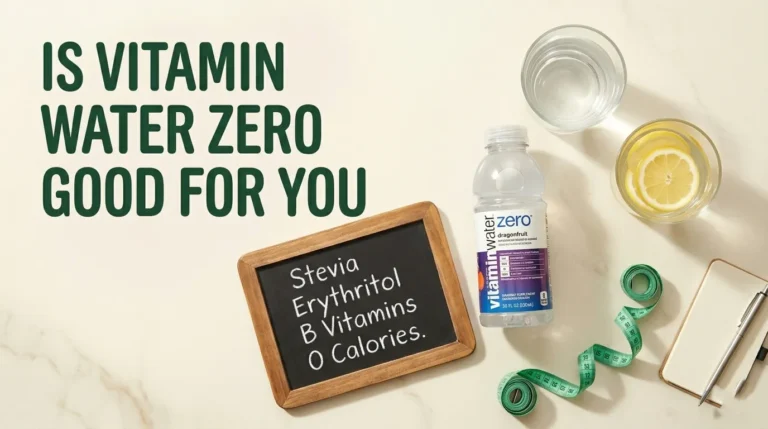
Vitamin Water Zero contains the same electrolytes as standard Vitamin Water: potassium (as potassium citrate) and magnesium (as magnesium lactate), at approximately the same amounts per 20 fl oz bottle.
The Zero version eliminates crystalline fructose and replaces it with erythritol and rebaudioside A (a purified extract of the stevia plant). Erythritol is a sugar alcohol that provides essentially zero calories and does not raise blood glucose. Rebaudioside A, the stevia-derived component, is classified as Generally Recognized as Safe (GRAS) by the FDA.
From an electrolyte standpoint, Vitamin Water Zero and standard Vitamin Water are virtually identical. Both contain approximately 75 mg of potassium and 10 mg of magnesium per bottle, and both contain 0 mg of sodium. The electrolyte content does not meaningfully change between the two product versions. The practical difference lies entirely in the sweetener system and the resulting calorie and sugar profile.
Erythritol is generally well-tolerated at the amounts present in a 20 fl oz beverage. However, a 2023 observational study published in Nature Medicine found that higher circulating erythritol levels were associated with increased risk of cardiovascular events in adults with existing cardiovascular risk factors. The study was observational and cannot establish causation, and the authors noted that endogenous erythritol production in the body may confound the results. Readers with cardiovascular risk factors should discuss all sweetener choices with their cardiologist if they are concerned.
| Feature | Vitamin Water (Standard) | Vitamin Water Zero |
|---|---|---|
| Potassium per bottle | 75 mg | ~75 mg |
| Magnesium per bottle | ~10 mg | ~10 mg |
| Sodium | 0 mg | 0 mg |
| Calories per bottle | 120 | 0-10 |
| Added sugar | 32g (crystalline fructose) | 0g |
| Sweetener system | Crystalline fructose + sucrose | Erythritol + rebaudioside A |
Is Vitamin Water Good for Electrolytes?
Vitamin Water is not a reliable or sufficient electrolyte source for any situation where electrolyte replacement genuinely matters.
The electrolyte content — 75 mg of potassium and 10 mg of magnesium per bottle, with no sodium — is too low to address electrolyte depletion from exercise, illness, or heat exposure. According to a position statement from the Journal of the International Society of Sports Nutrition, effective exercise rehydration beverages should contain sodium (to stimulate thirst and support fluid retention), potassium, and a glucose or glucose-polymer source that facilitates the sodium-glucose cotransport mechanism. Vitamin Water meets none of these criteria at clinically effective levels.
Where Vitamin Water does add a small electrolyte contribution is in the context of everyday, low-intensity hydration, where you are not sweating heavily and your primary need is simply adequate fluid intake. The 75 mg of potassium is a real nutritional addition on top of whatever else you consume that day, even if it barely moves the needle on total daily requirements.
A useful way to frame this: Vitamin Water is to a dedicated electrolyte drink what a decorative fountain is to a fire hose. Both involve water. Only one of them was designed to actually do the job.
The Academy of Nutrition and Dietetics maintains that for most healthy adults engaged in moderate physical activity, plain water remains the optimal everyday hydration choice and that flavored beverages with added vitamins and minimal electrolytes occupy a different category than true sports or rehydration drinks. The distinction matters when a person is choosing between products at a point of genuine physiological need.
Key consideration: People who are looking for actual electrolyte support should look at products specifically formulated with sodium levels of 460 mg or more per liter, meaningful potassium, and a small carbohydrate source, rather than relying on Vitamin Water’s label language as confirmation of electrolyte adequacy.
Key Takeaway: Vitamin Water is not a functionally effective electrolyte drink. Its potassium and magnesium amounts are too small, and its complete absence of sodium means it cannot replicate what a proper rehydration beverage does at the physiological level.
Vitamin Water Electrolytes vs. Gatorade
Comparing Vitamin Water to Gatorade on an electrolyte basis reveals a clear and measurable performance gap.
A 20 fl oz bottle of Gatorade Thirst Quencher contains approximately 270 mg of sodium, 75 mg of potassium, and 34g of carbohydrates (from sucrose and glucose-fructose). Vitamin Water, in the same serving size, contains 0 mg of sodium, 75 mg of potassium, and 32g of carbohydrates (from crystalline fructose). Potassium is nearly identical between the two. Every other meaningful electrolyte difference falls in Gatorade’s favor for exercise or sweat-driven rehydration.
| Nutrient | Vitamin Water (20 fl oz) | Gatorade Thirst Quencher (20 fl oz) |
|---|---|---|
| Sodium | 0 mg | ~270 mg |
| Potassium | 75 mg | ~75 mg |
| Magnesium | ~10 mg | 0 mg |
| Carbohydrates | 32g (fructose) | 34g (sucrose/glucose) |
| Calories | 120 | 130 |
| Electrolyte profile for exercise | Insufficient | Moderate |
Gatorade’s carbohydrate source — a glucose and sucrose blend — provides the glucose molecule needed for the sodium-glucose cotransport mechanism in the intestine. This mechanism is how your gut rapidly moves sodium (and water following it) into the bloodstream. Vitamin Water’s crystalline fructose does not efficiently drive this mechanism, because fructose uses a different intestinal transporter (GLUT5) that does not couple with sodium uptake in the same way.
That said, Gatorade is not a perfect product either. Its 270 mg of sodium per bottle contributes meaningfully to daily sodium intake, and the American Heart Association notes that most Americans already exceed the 2,300 mg daily sodium limit. For casual drinkers who aren’t exercising intensely, Gatorade’s sodium level is unnecessary and adds to sodium load without a physiological justification.
For people with hypertension who are advised to limit sodium, a registered dietitian familiar with their complete dietary intake can help identify when any sodium-containing sports drink is appropriate versus when plain water is the better choice.
Vitamin Water vs. Coconut Water Electrolytes
Coconut water outperforms Vitamin Water significantly on potassium and provides a more complete natural electrolyte profile overall.
An 8 fl oz (240 mL) serving of plain, unsweetened coconut water contains approximately 470 mg of potassium, 60 mg of sodium, 60 mg of magnesium, and small amounts of calcium and phosphorus, according to the USDA FoodData Central database. A 20 fl oz bottle of Vitamin Water contains 75 mg of potassium, 0 mg of sodium, and roughly 10 mg of magnesium. Coconut water provides more than six times the potassium in a smaller volume, plus sodium that Vitamin Water entirely lacks.
| Electrolyte | Vitamin Water (20 fl oz) | Coconut Water (8 fl oz) |
|---|---|---|
| Potassium | 75 mg | ~470 mg |
| Sodium | 0 mg | ~60 mg |
| Magnesium | ~10 mg | ~60 mg |
| Calcium | 0 mg | ~40 mg |
| Phosphorus | Not listed | ~40 mg |
| Added sugar | 32g | 0g (naturally occurring sugars ~6g) |
| Calories | 120 | ~45 |
Coconut water’s natural sugar content (predominantly glucose, fructose, and sucrose from the coconut itself) is roughly 6 grams per 8 fl oz, compared to Vitamin Water’s 32 grams of added crystalline fructose per 20 fl oz bottle. From both an electrolyte-density and a sugar-per-calorie standpoint, plain unsweetened coconut water is the stronger hydration choice of the two.
Coconut water is not without limitations. People with kidney disease who need to restrict potassium should treat coconut water with caution at the same level as other high-potassium beverages. Its natural potassium content, approximately 470 mg per cup, can accumulate meaningfully in someone whose kidneys cannot efficiently excrete excess potassium. A nephrologist can advise on appropriate fluid choices for any specific level of kidney impairment.
Is Vitamin Water Good for Hydration?
Vitamin Water will hydrate you in the same basic sense that any fluid-containing beverage does — it contributes to daily fluid intake, and your body will use it as such.
The question of whether it’s “good for hydration” depends on what you mean by that phrase. For everyday, resting hydration when you’re not sweating significantly and your only goal is to meet daily fluid needs, Vitamin Water functions as a flavored water. The fluid itself hydrates you. The electrolytes it contains are too minimal to accelerate or improve hydration compared to plain water.
For active hydration — replacing what you lose during exercise, illness, or prolonged heat exposure — Vitamin Water’s electrolyte profile is insufficient. The absence of sodium is the central issue. The body’s most important hydration signal is sodium concentration. When sodium levels drop (as happens during heavy sweating), the kidneys respond by retaining water to restore balance. Replenishing sodium through a beverage directly supports this process. Without sodium, a drink can satisfy thirst temporarily but does not restore the plasma volume or cellular fluid balance that a proper rehydration beverage does.
According to the Dietary Guidelines for Americans 2020-2025, water — plain water — is the recommended primary beverage for everyday hydration for all age groups. Beverages with added sugars, including Vitamin Water, are classified in the same category as other sweetened drinks and recommended only in limited amounts. Choosing Vitamin Water over water for regular daily hydration adds 120 calories and 32g of added sugar without a corresponding electrolyte benefit that justifies the trade-off.
The osmolality of a drink also influences how quickly your body absorbs it. Plain water, with near-zero osmolality, is absorbed very rapidly. Vitamin Water, with 32g of dissolved sugar per bottle, has higher osmolality than plain water, which can slow gastric emptying slightly and delay how quickly the fluid reaches your tissues.
Key Takeaway: Vitamin Water hydrates you in the same way any beverage does, but its low electrolyte content and absence of sodium mean it offers no hydration advantage over plain water, and its added sugar makes it a less efficient hydration choice by volume.
Does Vitamin Water Help With Dehydration?
Vitamin Water can contribute to rehydration in mild situations but is not an appropriate treatment for actual dehydration, particularly when electrolyte loss is the underlying cause.
Mild dehydration — defined clinically as losing approximately 1% to 2% of body weight in fluid — is typically remedied with plain water consumption and dietary electrolytes from food. In this context, drinking a Vitamin Water instead of water does no harm and may contribute marginally to electrolyte restoration via its 75 mg of potassium.
For moderate to severe dehydration — which can result from vomiting, diarrhea, fever, heat exhaustion, or prolonged heavy exercise — the clinical standard is an oral rehydration solution (ORS). The World Health Organization’s ORS formula is designed around a specific sodium-glucose ratio (approximately 2.6g of sodium chloride and 13.5g of glucose per liter) that maximizes water absorption through the glucose-sodium cotransport mechanism. Vitamin Water, with 0 mg of sodium and fructose rather than glucose as its carbohydrate source, does not replicate this mechanism.
Using Vitamin Water to manage significant dehydration caused by gastrointestinal illness, heat stroke, or heavy exercise is not appropriate. A physician should evaluate dehydration beyond mild cases, particularly in children, older adults, or people with underlying conditions, because clinical rehydration often requires specific electrolyte replacement that over-the-counter flavored beverages cannot provide.
The distinction matters in practice. Drinking a Vitamin Water when you feel mildly thirsty after a warm afternoon is fine. Reaching for one after a day of food poisoning vomiting, when your body genuinely needs sodium and glucose in the right ratio to recover, is the wrong tool for the situation.
Is Vitamin Water Good When Sick?
Vitamin Water is not recommended as a primary rehydration drink during illness, and for common illnesses involving vomiting or diarrhea, it lacks the key components that aid recovery.
When you’re sick with a gastrointestinal illness, your body loses sodium, chloride, and water rapidly through fluid losses. The priority is replacing sodium and glucose in a ratio that supports intestinal water absorption. Products like Pedialyte, Liquid IV, or the WHO Oral Rehydration Salts formula are designed specifically for this. Vitamin Water contains none of the sodium needed for this process and uses fructose rather than glucose as its carbohydrate.
For illnesses that don’t involve significant fluid loss, such as a mild cold or low-grade fever without vomiting, the hydration need is different. In those cases, any adequate fluid intake helps, and Vitamin Water can contribute to that fluid goal. The B vitamins it contains (niacinamide, pyridoxine hydrochloride, cyanocobalamin) will not accelerate recovery from a viral illness. The vitamin C (ascorbic acid) at 150 mg per bottle is a modest dose; a 2021 Cochrane Review found that regular vitamin C supplementation does not reduce the incidence of colds in the general population, though it may modestly shorten duration in some people.
For fever-driven fluid loss in adults, plain water, clear broths with natural sodium, or a properly formulated oral rehydration solution will serve the body’s needs better than Vitamin Water. If a sick adult cannot tolerate plain water and finds Vitamin Water more palatable, it is still better than nothing — but it should not be treated as the recommended option.
People caring for sick children should be particularly cautious. Pediatric dehydration guidelines from the American Academy of Pediatrics recommend age-appropriate oral rehydration solutions, not sports drinks or flavored beverages, as the first line of fluid replacement.
Is Vitamin Water Good for Athletes?
For most athletic contexts, Vitamin Water does not meet the electrolyte and carbohydrate requirements for effective exercise hydration or recovery.
The Journal of the International Society of Sports Nutrition position on exercise hydration recommends that beverages used during endurance exercise or high-intensity activity contain 20 to 30 mEq/L of sodium (roughly 460 to 690 mg/L), along with potassium and a rapidly absorbable carbohydrate source. Vitamin Water contains 0 mg of sodium per 20 fl oz, and its fructose-based carbohydrate does not drive the sodium-glucose cotransport mechanism that accelerates cellular water uptake during exercise.
For light activity — a casual walk, a yoga session, light stretching, a 20-minute bike ride — Vitamin Water’s contribution to fluid intake is adequate. You’re not sweating heavily enough to require sodium replacement, and the drink’s fluid volume hydrates normally.
For endurance athletes, high-intensity exercisers, or anyone sweating for more than 60 minutes in warm conditions, the research clearly supports sodium-containing beverages over sodium-free flavored drinks. A 2020 study published in the American Journal of Clinical Nutrition found that beverages with 50 mmol/L of sodium were significantly more effective at restoring plasma volume after exercise-induced dehydration than low-sodium or zero-sodium beverages.
Key Takeaway: Athletes training at moderate to high intensity for over 60 minutes need a drink with meaningful sodium — at minimum 460 mg per liter. Vitamin Water’s zero-sodium profile makes it unsuitable as a primary exercise hydration drink.
Athletes with specific sweat-rate concerns or sodium-loss patterns should work with a registered sports dietitian to design a hydration protocol specific to their training demands, sport, and climate conditions.
Can Kids Drink Vitamin Water?
Children should not drink standard Vitamin Water regularly, primarily because of its high added sugar content and the concentrated vitamin doses it contains relative to children’s smaller body size.
The Dietary Guidelines for Americans 2020-2025 recommend that children under 2 years consume no added sugars at all, and that children 2 to 18 years keep added sugar below 10% of their daily calorie intake. A child consuming 1,400 calories daily has a budget of approximately 35g of added sugar. A single 20 fl oz bottle of Vitamin Water delivers 32g, representing 91% of that child’s entire daily limit in one beverage.
Beyond sugar, the vitamin doses in Vitamin Water are calibrated to adult reference intakes. A child weighing 40 pounds receiving 150 mg of vitamin C (ascorbic acid) in one bottle is getting a significantly higher dose relative to body weight than an adult would. For most water-soluble vitamins, excess is excreted, but regularly consuming adult-calibrated fortified beverages is not appropriate pediatric nutrition practice.
For children, the appropriate hydration options are:
- Plain water as the primary beverage at all ages
- Plain milk (dairy or appropriate alternatives) for nutritional support in young children
- 100% fruit juice in small amounts (no more than 4 fl oz per day for children ages 1 to 3, per the American Academy of Pediatrics)
- Age-appropriate oral rehydration solutions only during genuine dehydrating illness episodes
Vitamin Water Zero is not a safer alternative for children just because it contains no sugar. Erythritol and rebaudioside A (stevia extract) are generally recognized as safe for adults, but children’s gut microbiome sensitivity to sugar alcohols is not fully characterized, and general pediatric nutrition guidance does not include artificially sweetened beverages as a recommended category.
If a parent is concerned about a child’s fluid intake and wants guidance on appropriate hydration strategies, a pediatrician or registered dietitian with pediatric expertise can build an age-appropriate hydration plan.
Is Vitamin Water Bad for You?
Vitamin Water is not harmful when consumed occasionally by healthy adults, but it’s not a nutritionally neutral drink — and regularly substituting it for plain water carries real dietary trade-offs.
The primary concern for most healthy adults is the added sugar content. Thirty-two grams of crystalline fructose per bottle is a substantial dose for a beverage. The Dietary Guidelines for Americans 2020-2025 explicitly recommend limiting added sugars from beverages, noting that liquid sugars do not trigger the same satiety signals as solid food, making it easy to consume significant caloric and sugar load without feeling full. Regular consumption of fructose-sweetened beverages has been associated in multiple observational studies with increased triglyceride levels and weight gain, though causation has not been established in controlled trial settings.
For people with specific health conditions, the risk calculus shifts more clearly:
- Type 2 diabetes or prediabetes: The 32g of fructose per bottle raises blood sugar less sharply than glucose-based drinks, but total carbohydrate load and fructose’s specific metabolic path through the liver remain concerns. The American Diabetes Association recommends water as the primary beverage and limiting all added-sugar drinks.
- Chronic kidney disease: Potassium intake from all sources adds up. The 75 mg per bottle is not high in isolation, but patients following a renal diet with a potassium restriction should count beverage potassium alongside dietary potassium. Their nephrologist can specify the appropriate total daily limit.
- Cardiovascular disease: The fructose load is a concern for anyone managing triglycerides. Additionally, the caloric contribution of 120 calories per bottle without satiety value may affect weight management efforts.
- Children: As addressed above, the sugar and vitamin doses are calibrated for adults, not pediatric populations.
Occasional consumption by healthy adults who enjoy the flavor and understand what they’re drinking is not a cause for alarm. The problem arises when Vitamin Water is treated as a health food or a superior hydration option based on its branding, because neither claim is supported by what the label actually shows.
Frequently Asked Questions About Vitamin Water and Electrolytes
Does Vitamin Water have enough electrolytes to replace a sports drink?
No, Vitamin Water does not contain enough electrolytes to replace a dedicated sports drink during or after meaningful physical exertion.
With 75 mg of potassium, 10 mg of magnesium, and zero sodium per bottle, it falls far short of the electrolyte levels research supports for exercise rehydration.
Sports drinks formulated for exercise typically provide 270 mg or more of sodium per 20 fl oz, which Vitamin Water entirely lacks.
What electrolytes does Vitamin Water actually contain?
Vitamin Water contains potassium (as potassium citrate) and magnesium (as magnesium lactate), at 75 mg and approximately 10 mg per 20 fl oz bottle respectively.
Sodium, chloride, calcium, and phosphorus are not present on the standard Vitamin Water label.
These two electrolytes are real but present in amounts too small — each at only 2% of the Daily Value — to serve as a meaningful electrolyte source.
Is Vitamin Water Zero better for hydration than regular Vitamin Water?
Vitamin Water Zero and standard Vitamin Water have virtually identical electrolyte content, so neither product is meaningfully better for hydration from an electrolyte standpoint.
Zero eliminates crystalline fructose and replaces it with erythritol and rebaudioside A, making it a lower-calorie, zero-sugar option.
The choice between them depends on sugar and calorie goals, not on hydration effectiveness, since both deliver the same minimal electrolyte profile.
Can you drink Vitamin Water when you have a stomach bug or are sick?
Vitamin Water is not recommended as a rehydration drink during a gastrointestinal illness because it contains no sodium and uses fructose rather than the glucose needed for effective intestinal water absorption.
An oral rehydration solution, such as Pedialyte or the WHO ORS formula, is designed specifically to replace the sodium, potassium, and glucose lost during vomiting and diarrhea.
During mild illness without significant fluid losses, a Vitamin Water is better than nothing as a fluid source, but a physician or registered dietitian should guide rehydration choices for anyone with moderate to severe symptoms.
Is Vitamin Water safe for kids to drink?
Standard Vitamin Water is not appropriate for children as a regular beverage because one 20 fl oz bottle contains 32g of added sugar, representing up to 91% of a child’s daily added sugar limit.
The vitamin doses are formulated to adult reference intakes and are not calibrated to children’s smaller body size and lower daily requirements.
Plain water is the recommended primary hydration source for children of all ages, with age-appropriate oral rehydration solutions reserved for illness-related dehydration episodes.
Does Vitamin Water count toward your daily water intake?
Yes, the fluid in Vitamin Water counts toward total daily fluid intake, because the water it contains is absorbed and used by the body just as plain water would be.
The Dietary Guidelines for Americans 2020-2025 acknowledge that all beverages contribute to daily hydration, but they recommend plain water as the primary source and classify added-sugar beverages as discretionary choices to limit.
Counting a Vitamin Water toward daily fluid needs is accurate, but it should not replace water as the primary hydration source, particularly given its added sugar content.
Vitamin Water contains real electrolytes, but the amounts are too small and the profile too incomplete to make it a meaningful hydration tool for anyone with a genuine electrolyte need. Seventy-five milligrams of potassium, ten milligrams of magnesium, and zero sodium per bottle puts it far closer to a flavored water than to a rehydration drink.
If you are drinking it because you like the taste, that is a reasonable choice for a healthy adult who accounts for its 120 calories and 32 grams of added sugar in their daily intake. If you are drinking it because you believe it is replacing electrolytes after a workout, an illness, or a hot day outdoors, the label does not support that use.
The most practical guidance from what the research actually shows: drink plain water as your primary daily hydration source. When you genuinely need electrolyte replacement, reach for a product specifically formulated with sodium, meaningful potassium, and an appropriate carbohydrate source. Vitamin Water fits neatly in neither of those categories, and knowing that distinction puts you in a much better position to make a hydration choice that actually matches what your body needs.