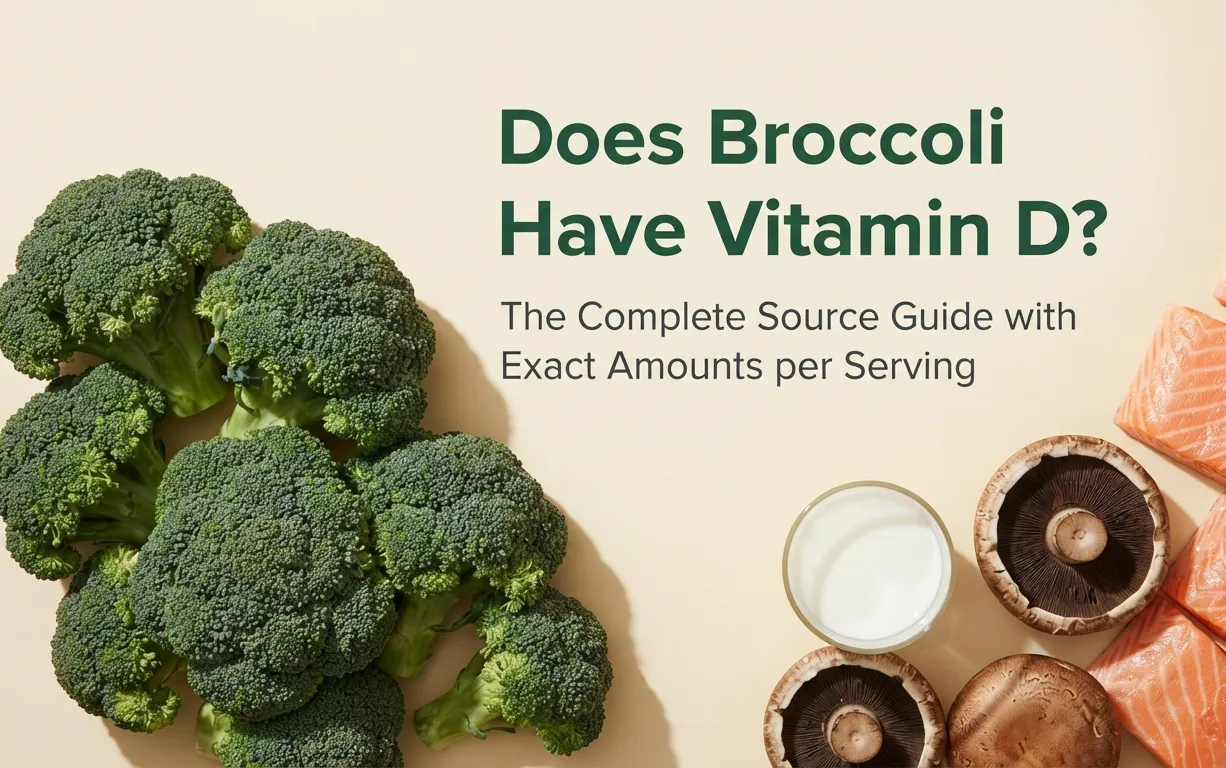
Does Broccoli Have Vitamin D? The 2026 Truth
Broccoli does not contain vitamin D. Not a trace. You can eat an entire head of raw broccoli, steam three cups of florets, or blend it into your morning smoothie and you will still get exactly zero international units of vitamin D from it. This is not a case of “small amounts” or “trace levels” that some nutrition summaries might vaguely suggest. The USDA FoodData Central database confirms that the vitamin D content of broccoli, in any preparation form, is 0 mcg (0 IU) per 100 grams.
Knowing this matters because vitamin D insufficiency is one of the most common nutrient shortfalls worldwide. The NIH Office of Dietary Supplements reports that approximately 1 in 4 adults in the United States has serum vitamin D levels below the threshold considered adequate for bone health. When people try to eat more nutrient-dense vegetables and assume they are checking the vitamin D box by adding broccoli to their plate, they are working with incomplete information. Broccoli deserves a permanent spot in your diet for reasons this article will make crystal clear. But vitamin D delivery is simply not one of those reasons.
This article answers the direct question about broccoli and vitamin D, then explains the biology behind why plants do not make this nutrient, what broccoli actually gives your body, whether spinach or other leafy greens fare any better, exactly which foods contain meaningful vitamin D amounts with specific numbers per serving, how vegans can meet their needs, and when supplementation becomes the medically appropriate path. You will finish with a complete, usable map of where vitamin D actually lives in the food supply.
Does Broccoli Have Vitamin D
Broccoli contains exactly zero vitamin D in any measurable amount. The USDA FoodData Central database, which records nutrient composition data for thousands of foods, lists the vitamin D content of raw broccoli as 0 mcg (0 IU) per 100-gram serving, and this holds true whether you measure it raw, steamed, boiled, roasted, or stir-fried. This is not a rounding-down situation where trace amounts exist below reporting thresholds. The vegetable simply does not produce, store, or accumulate vitamin D in its tissues.
Many general nutrition articles describe broccoli as “rich in vitamins” without specifying which ones. That vagueness creates the impression that a dark green vegetable probably covers most vitamin bases, including vitamin D. It does not. The vitamin profile of broccoli is genuinely impressive for certain nutrients which we will cover in detail. But the moment someone searches specifically about vitamin D and broccoli, the answer has to be a clear, unambiguous no. There is no variety of broccoli, no growing condition, and no preparation method that changes this fact.
Understanding why requires looking at how vitamin D actually gets into food in the first place. The answer sits in a fundamental biological difference between the plant and animal kingdoms that most nutrition summaries completely skip. Once you see that mechanism, you will immediately understand why no leafy green will ever be your vitamin D source.
Why Doesn’t Broccoli Contain Vitamin D
Plants do not synthesize vitamin D. The biological pathway that produces vitamin D requires a precursor molecule called 7-dehydrocholesterol, which sits in the skin of animals including humans. When ultraviolet B radiation from sunlight hits this compound, it converts into previtamin D3, which then isomerizes into cholecalciferol, the form we call vitamin D3. Broccoli and all other plants lack both the precursor molecule in their tissues and the biochemical machinery to complete this UV-dependent conversion.
Think of it like this. Your skin operates as a solar panel for vitamin D production, a capacity that broccoli leaves simply do not possess. The plant does not need vitamin D for its own physiological processes. Plants use calcium differently than vertebrates do, and they do not have the vitamin D receptor pathways that regulate calcium absorption in animal intestines and bone tissue. Evolution never gave broccoli a reason to develop vitamin D synthesis because the plant never needed the compound for its own survival.
There is one notable exception in the plant kingdom that actually proves this rule. Mushrooms, which are fungi and not plants, do contain ergosterol in their cell membranes. When mushrooms are exposed to UV light during growth or after harvest, that ergosterol converts to ergocalciferol, known as vitamin D2. Some commercially grown mushrooms are now intentionally exposed to UV light to boost their vitamin D content to meaningful levels. But leafy greens, cruciferous vegetables, root vegetables, fruits, grains, nuts, and seeds share the same limitation as broccoli. They contribute zero vitamin D to your diet.
Where Does Vitamin D Come From in Food
Vitamin D in the human diet comes almost exclusively from animal-source foods, UV-exposed mushrooms, and fortified products. The NIH Office of Dietary Supplements identifies fatty fish as the most concentrated natural dietary source, with wild-caught salmon providing 13 to 17 mcg (520 to 680 IU) per 100-gram serving. Cod liver oil delivers even more at approximately 34 mcg (1,360 IU) per tablespoon. Egg yolks, beef liver, and some cheeses contain modest amounts.
This is the point where most people realize why the broccoli question matters so much. If you are eating a plant-forward diet and counting on vegetables to provide your micronutrients, vitamin D represents a genuine blind spot. The foods that naturally contain it are the very foods that are absent from or minimized in vegetarian and vegan eating patterns. Understanding that distribution explains why fortified foods became a public health strategy in the United States starting in the 1930s, when rickets from vitamin D deficiency was widespread among children.
Fortified cow’s milk, fortified soy milk, fortified orange juice, and fortified breakfast cereals now provide a substantial portion of dietary vitamin D intake in the American food supply. The fortification levels are standardized. Fluid milk in the U.S. is fortified to contain approximately 2.5 mcg (100 IU) of vitamin D per cup. This policy, recommended by the American Academy of Pediatrics and endorsed by the FDA, dramatically reduced rickets incidence. For people who do not consume fatty fish regularly, fortified foods often represent the difference between meeting and falling short of the RDA.
Key Takeaway: Broccoli has no vitamin D because plants lack the biological machinery to make it. Your dietary vitamin D comes from fatty fish, UV-exposed mushrooms, egg yolks, and fortified foods like milk and plant milk alternatives.
What Vitamins Are in Broccoli
Broccoli delivers an extraordinary density of several vitamins that matter deeply for human health, even though vitamin D is not among them. A one-cup serving of raw chopped broccoli weighing 91 grams provides 81.2 milligrams of vitamin C, which is 90% of the Daily Value. That same serving supplies 92.8 micrograms of vitamin K1, meeting 77% of the Daily Value for a nutrient essential to blood clotting and bone mineralization. You also get 57.3 micrograms of folate, a B vitamin critical for DNA synthesis and red blood cell formation.
The vitamin A activity in broccoli comes primarily from beta-carotene, which the body converts to retinol as needed. One cup of raw broccoli provides approximately 567 IU of vitamin A in the form of carotenoid precursors. Broccoli also contains smaller but meaningful amounts of vitamin E, vitamin B6, riboflavin, and thiamin. The combination matters because these nutrients do not work in isolation. Vitamin C enhances non-heme iron absorption from plant foods. Vitamin K1 partners with vitamin D and calcium in bone metabolism, a relationship we will examine shortly.
Here is the complete vitamin profile of broccoli per one cup raw (91g):
| Vitamin | Amount per 1 cup raw (91g) | % Daily Value |
|---|---|---|
| Vitamin C | 81.2 mg | 90% |
| Vitamin K1 | 92.8 mcg | 77% |
| Folate | 57.3 mcg | 14% |
| Vitamin A (as beta-carotene) | 567 IU | 11% |
| Vitamin B6 | 0.2 mg | 9% |
| Vitamin E | 0.7 mg | 5% |
| Riboflavin | 0.1 mg | 6% |
| Thiamin | 0.1 mg | 5% |
| Vitamin D | 0 mcg (0 IU) | 0% |
This vitamin profile explains why nutrition researchers consistently associate cruciferous vegetable intake with positive health outcomes. But it also makes clear that broccoli cannot and does not contribute to vitamin D status. Different foods solve different nutritional problems, and broccoli solves several problems beautifully while leaving the vitamin D problem entirely unaddressed.
Broccoli Nutrition Facts and Bone Health Nutrients
The mineral content of broccoli tells a more interesting story about bone health than most people realize. A one-cup serving of raw chopped broccoli provides 43 milligrams of calcium, 19 milligrams of magnesium, and 60 milligrams of phosphorus. These three minerals, combined with the 92.8 micrograms of vitamin K1 in the same serving, form a bone-supporting nutrient package that works in concert with vitamin D obtained from other sources.
Here is how the bone health mechanism actually operates. Vitamin D, which you must get from sun exposure, fatty fish, fortified foods, or supplements, enables your small intestine to absorb calcium from your diet. Once that calcium enters your bloodstream, vitamin K1 and vitamin K2 help direct it into bone tissue by activating a protein called osteocalcin. Magnesium acts as a co-factor for the enzymes that convert vitamin D into its active hormonal form in the liver and kidneys. Without adequate magnesium, the vitamin D you consume or produce cannot be fully activated.
Broccoli provides three of the four key players in this system. It gives you calcium as the raw building material. It gives you vitamin K1 as the calcium-directing signal. It gives you magnesium as the enzyme activator that makes vitamin D function. What it does not give you is the vitamin D itself. Think of it this way. Broccoli builds the construction site, supplies the bricks, and hires the foreman, but you still need the electrical power to run the equipment. That power source is vitamin D, and it has to come from elsewhere.
Broccoli Mineral Content per 1 cup raw (91g):
| Mineral | Amount | % Daily Value |
|---|---|---|
| Calcium | 43 mg | 3% |
| Magnesium | 19 mg | 5% |
| Phosphorus | 60 mg | 5% |
| Potassium | 288 mg | 6% |
| Iron | 0.7 mg | 4% |
| Zinc | 0.4 mg | 3% |
| Manganese | 0.2 mg | 9% |
People taking blood-thinning medications like warfarin need to be aware that broccoli’s high vitamin K content can interfere with the medication’s mechanism. The prescribing physician should be informed about consistent broccoli intake so that dosing can be adjusted accordingly. This is not a reason to avoid broccoli. It is a reason to maintain consistent intake and communicate with your healthcare provider.
Does Spinach Have Vitamin D
Spinach contains zero vitamin D, exactly like broccoli. The USDA FoodData Central database confirms that raw spinach provides 0 mcg (0 IU) of vitamin D per 100 grams, and the same holds true for cooked spinach prepared by boiling, steaming, or sautéing. The biological limitation that applies to broccoli applies equally to spinach. As a leafy green plant, spinach lacks the precursor molecule 7-dehydrocholesterol and the UV-dependent synthesis pathway required to produce vitamin D.
Some nutrition websites and food tracking applications list spinach as containing trace amounts of various vitamins, and this imprecision can confuse readers. A database entry showing “Vitamin D 0.0 mcg” with a note that values below detection limits are listed as zero occasionally gets misread as “contains very small amounts.” It does not. The measurement is zero because the compound is absent, not because the testing method lacks sensitivity.
This clarification matters because spinach is frequently grouped with “nutrient-dense leafy greens” in dietary advice, and the mental shortcut of “dark green vegetables are rich in all vitamins” creates a false assumption about vitamin D content. Spinach provides an exceptional range of other nutrients. It is an outstanding source of vitamin K1, vitamin A precursors, folate, iron, and magnesium. But vitamin D is not on the list, and no amount of spinach consumption will move your serum 25-hydroxyvitamin D level by even one nanogram per milliliter.
Key Takeaway: Broccoli, spinach, and all leafy greens share the same vitamin D reality. They contain zero IU. Their nutritional value is real but lies in vitamin C, vitamin K, folate, calcium, magnesium, and antioxidant compounds, not in fat-soluble vitamin D.
Is Spinach High in Vitamin D
Spinach is not high in vitamin D. It is not low in vitamin D. It contains none. The question itself reveals how effectively general nutrition messaging has blurred the distinction between “this vegetable contains many vitamins” and “this vegetable contains all vitamins.” Spinach is high in vitamin K1, providing 145 micrograms per cup of raw leaves, which is 121% of the Daily Value. It is high in vitamin A precursors, delivering 2,813 IU per cup. It is high in folate at 58 micrograms per cup. But vitamin D sits at absolute zero.
The persistence of the spinach and vitamin D question appears to stem partly from a broader conflation around leafy greens and bone health. Spinach does contain calcium, though its bioavailability is limited by oxalates that bind calcium and prevent absorption. Spinach also contains magnesium and vitamin K1, both of which support bone mineralization. The presence of these bone-related nutrients leads some people to assume spinach must also contain vitamin D, since vitamin D is so strongly associated with bone health in public health messaging.
The reality is that spinach contributes to bone health through its vitamin K1 and magnesium content, both of which support the function of vitamin D obtained from other sources. The relationship is complementary, not substitutional. Eating more spinach will not reduce your need for dietary vitamin D. It will provide co-factors that make the vitamin D you do consume work more effectively, which is a genuine nutritional benefit worth recognizing without overstating what the vegetable actually contains.
Spinach vs Broccoli Nutritional Comparison
Comparing spinach and broccoli side by side reveals that both are nutritional powerhouses that excel in different categories while sharing the same vitamin D limitation. Broccoli wins decisively on vitamin C, delivering 81 milligrams per cup versus spinach’s 8 milligrams. Spinach dominates on vitamin K1, providing 145 micrograms per cup against broccoli’s 93 micrograms. Both contain zero vitamin D, and that shared reality should inform how you think about meal planning for vitamin D adequacy.
The mineral comparison tells a nuanced story. Spinach contains more iron on paper at 2.7 milligrams per cooked cup versus broccoli’s 1 milligram, but spinach’s high oxalate content significantly reduces the amount of that iron your body actually absorbs. Broccoli’s iron, while lower in absolute quantity, has better bioavailability because broccoli contains fewer oxalates and more vitamin C, which enhances non-heme iron absorption. For calcium, spinach again looks higher at 245 milligrams per cooked cup, but the oxalate problem means you absorb perhaps 5% of it. Broccoli’s 62 milligrams of calcium per cooked cup is far better absorbed, with absorption rates closer to 40 to 50%.
Nutrient Comparison per 1 cup cooked (boiled, drained):
| Nutrient | Broccoli (156g cooked) | Spinach (180g cooked) |
|---|---|---|
| Vitamin D | 0 mcg (0 IU) | 0 mcg (0 IU) |
| Vitamin C | 101 mg | 18 mg |
| Vitamin K1 | 220 mcg | 889 mcg |
| Folate | 168 mcg | 263 mcg |
| Vitamin A (RAE) | 120 mcg | 943 mcg |
| Calcium | 62 mg | 245 mg (low bioavailability) |
| Iron | 1.0 mg | 2.7 mg (low bioavailability) |
| Magnesium | 39 mg | 157 mg |
| Potassium | 457 mg | 839 mg |
| Fiber | 5.1 g | 4.3 g |
| Protein | 3.7 g | 5.3 g |
| Calories | 54 | 41 |
This comparison makes clear that neither vegetable solves the vitamin D problem. Both vegetables solve other nutritional problems extremely well. The smart dietary strategy is to include both while getting your vitamin D from actual vitamin D sources, which we will now identify with specific amounts.
What Vegetables Contain Vitamin D
Vegetables, by the standard botanical definition, contain zero vitamin D. No leafy green, crucifer, root vegetable, nightshade, allium, or gourd produces vitamin D through its own metabolic processes. The only plant-kingdom exception to this rule is not actually a plant. Mushrooms are fungi, and certain commercially grown varieties exposed to ultraviolet light during cultivation can provide substantial amounts of vitamin D2.
UV-exposed mushrooms represent the single plant-based food category that can meaningfully contribute to vitamin D intake. Maitake mushrooms exposed to UV light can provide over 1,000 IU of vitamin D2 per 100 grams. UV-exposed portobello mushrooms deliver approximately 400 to 500 IU per 100 grams. White button mushrooms, crimini mushrooms, and shiitake mushrooms all produce vitamin D2 when their ergosterol content is exposed to UV radiation, though the final amount varies significantly based on exposure duration, intensity, and whether the mushrooms were sliced to increase surface area.
The practical implication here is important. When you see a nutrition article or social media post claiming that “some vegetables contain vitamin D,” the claim is almost certainly referring to mushrooms, which the writer has incorrectly categorized as vegetables. True vegetables including broccoli, spinach, kale, collard greens, Swiss chard, romaine lettuce, arugula, cabbage, Brussels sprouts, cauliflower, asparagus, bell peppers, tomatoes, carrots, sweet potatoes, and every other vegetable you can name contain zero vitamin D. The distinction between mushrooms and vegetables is not pedantic trivia. It directly determines whether a food can help you meet your vitamin D needs through diet.
Key Takeaway: No vegetable contains vitamin D. Mushrooms are fungi, not vegetables, and UV-exposed mushrooms are the only plant-based food category that provides meaningful vitamin D in the form of ergocalciferol (D2).
Foods High in Vitamin D With Amounts per Serving
The foods that actually deliver vitamin D fall into three categories. Fatty fish provide the highest natural concentrations. UV-exposed mushrooms offer the only meaningful non-animal, non-fortified source. Fortified foods including cow’s milk, plant milks, orange juice, and breakfast cereals supply consistent, standardized amounts that make dietary planning predictable. The NIH Office of Dietary Supplements maintains reference values for all of these foods, and the numbers reveal how concentrated the animal sources truly are.
A single 100-gram serving of wild sockeye salmon provides 13 to 17 mcg (520 to 680 IU) of vitamin D3, which is 65 to 113% of the adult RDA in roughly the size of a deck of cards. Farmed Atlantic salmon contains less but still meaningful amounts at approximately 5 to 6 mcg (200 to 250 IU) per 100 grams. Cod liver oil is so concentrated that one tablespoon delivers 34 mcg (1,360 IU), which is more than double the daily RDA for adults. This concentration is precisely why cod liver oil requires careful attention to the Tolerable Upper Intake Level of 100 mcg (4,000 IU) per day.
Vitamin D Food Sources Ranked by Amount:
| Food | Serving Size | Vitamin D (mcg) | Vitamin D (IU) | % Daily Value |
|---|---|---|---|---|
| Cod liver oil | 1 tbsp (13.6g) | 34.0 | 1,360 | 170% |
| Wild sockeye salmon, cooked | 100g (3.5 oz) | 13-17 | 520-680 | 65-113% |
| UV-exposed maitake mushrooms | 100g | 25+ | 1,000+ | 125%+ |
| Farmed Atlantic salmon, cooked | 100g (3.5 oz) | 5-6 | 200-250 | 25-40% |
| UV-exposed portobello mushrooms | 100g | 10-12.5 | 400-500 | 50-83% |
| Canned light tuna, drained | 100g (3.5 oz) | 5.7 | 228 | 29% |
| Fortified cow’s milk | 1 cup (240ml) | 2.5-3 | 100-120 | 15-20% |
| Fortified soy milk | 1 cup (240ml) | 2.5-3 | 100-120 | 15-20% |
| Egg yolk (large) | 1 yolk | 0.5-1 | 20-40 | 3-7% |
| Beef liver, cooked | 100g (3.5 oz) | 1-1.25 | 40-50 | 5-8% |
| Cheddar cheese | 100g (3.5 oz) | 0.6-0.8 | 24-32 | 3-5% |
| Broccoli | Any amount | 0 | 0 | 0% |
| Spinach | Any amount | 0 | 0 | 0% |
The contrast between the top of this table and the bottom makes the dietary strategy clear. You can eat salmon twice a week and cover your vitamin D needs. You can eat broccoli at every meal and make zero progress on vitamin D. Both foods deserve a place on your plate. They serve different purposes.
Vitamin D2 vs D3 Food Sources
Vitamin D exists in two primary dietary forms that differ in their chemical origin and their biological potency. Vitamin D3, called cholecalciferol, comes from animal-source foods including fatty fish, egg yolks, beef liver, and cod liver oil. It is identical to the form your skin produces when exposed to UVB sunlight. Vitamin D2, called ergocalciferol, comes from UV-exposed mushrooms, yeast, and some fortified foods. Both forms can raise serum 25-hydroxyvitamin D levels, but they are not equally effective at doing so.
A 2012 meta-analysis published in the American Journal of Clinical Nutrition compared D2 and D3 supplementation across multiple randomized controlled trials and found that vitamin D3 was significantly more effective at raising and maintaining serum 25-hydroxyvitamin D concentrations over time. The D3 form binds more tightly to the vitamin D binding protein in your bloodstream, which means it circulates longer before being metabolized and excreted. D2 is cleared more rapidly, which means it raises levels initially but may not sustain them as well between doses.
This distinction has practical implications for food choices. If you rely on UV-exposed mushrooms as your primary dietary vitamin D source, you are consuming vitamin D2, and you may need to consume it more consistently to maintain serum levels. If you eat fatty fish, you are consuming vitamin D3, which provides more sustained elevation. Most fortified foods in the United States use vitamin D3 sourced from lanolin, a sheep’s wool derivative, although some plant-based products use vitamin D2 from yeast sources to maintain vegan certification. Checking the label tells you which form you are getting.
How Much Vitamin D Do You Need Daily
The Recommended Dietary Allowance for vitamin D is 15 mcg (600 IU) per day for adults aged 19 to 70 years, and 20 mcg (800 IU) per day for adults aged 71 and older, according to the NIH Office of Dietary Supplements. These values assume minimal sun exposure, meaning they are set to meet the needs of someone who gets little to no vitamin D from sunlight. The RDA represents the intake level sufficient to maintain serum 25-hydroxyvitamin D levels at or above 20 ng/mL (50 nmol/L), which is the threshold the Institute of Medicine considers adequate for bone health in most healthy individuals.
The Tolerable Upper Intake Level sits at 100 mcg (4,000 IU) per day for adults. This is not a target. It is a ceiling. Consistently exceeding this amount increases the risk of vitamin D toxicity, which causes hypercalcemia, a condition where blood calcium rises to dangerous levels that can damage the kidneys, heart, and blood vessels. Toxicity from dietary sources alone is extremely rare because natural food sources, even the most concentrated ones, do not approach the UL in normal serving sizes. Toxicity almost always results from high-dose supplement errors.
Vitamin D RDA and UL by Age Group (NIH Office of Dietary Supplements):
| Age Group | RDA (mcg/IU) | UL (mcg/IU) |
|---|---|---|
| 0-12 months | 10 mcg (400 IU) | 25 mcg (1,000 IU) |
| 1-13 years | 15 mcg (600 IU) | 75 mcg (3,000 IU) |
| 14-18 years | 15 mcg (600 IU) | 100 mcg (4,000 IU) |
| 19-70 years | 15 mcg (600 IU) | 100 mcg (4,000 IU) |
| 71+ years | 20 mcg (800 IU) | 100 mcg (4,000 IU) |
| Pregnancy/Lactation | 15 mcg (600 IU) | 100 mcg (4,000 IU) |
Individual vitamin D needs vary substantially based on skin pigmentation, latitude of residence, season, time spent outdoors, use of sunscreen, body weight, and the presence of conditions that impair fat absorption. A registered dietitian or a physician who can order a 25-hydroxyvitamin D serum test can help determine whether your current intake and sun exposure are adequate for your specific circumstances.
Key Takeaway: Adults need 600 to 800 IU of vitamin D daily from food, sun, or supplements combined. The safe upper limit is 4,000 IU. Testing your serum level is the only way to know whether your personal intake strategy is working.
Vitamin D Deficiency and Dietary Sources
Vitamin D deficiency is defined by the NIH Office of Dietary Supplements as a serum 25-hydroxyvitamin D concentration below 20 ng/mL (50 nmol/L). Levels between 21 and 29 ng/mL are considered insufficient. At these serum concentrations, the body begins to increase production of parathyroid hormone, which pulls calcium from bone to maintain blood calcium levels. Over months and years, this compensatory mechanism leads to decreased bone mineral density and increased fracture risk.
The clinical consequences of prolonged deficiency include osteomalacia in adults, a condition where bones become soft and painful. In children, the same process manifests as rickets, with characteristic bowing of the legs and delayed growth. Beyond bone outcomes, low vitamin D status has been associated in observational studies with increased risk of respiratory infections, though randomized controlled trials have produced mixed results on whether supplementation reduces infection incidence. The Endocrine Society notes that at-risk groups for deficiency include older adults, people with dark skin pigmentation, individuals who cover most of their skin for cultural or religious reasons, people living in northern latitudes during winter months, and those with gastrointestinal conditions that impair fat absorption.
Diet alone can correct mild insufficiency in some people if they consistently consume fatty fish multiple times per week plus fortified foods. For moderate to severe deficiency, dietary changes are rarely sufficient on their own. The amount of salmon you would need to eat daily to correct a serum level of 15 ng/mL is not practical for most people. This is the clinical scenario where supplementation under medical supervision becomes the appropriate evidence-based intervention, which we will address in the final section.
Vegan Sources of Vitamin D
Vegans have exactly two dietary sources of vitamin D: UV-exposed mushrooms and fortified foods. No other plant foods contain any vitamin D. This dietary reality means that vegan meal planning requires deliberate attention to vitamin D intake in a way that omnivorous meal planning with regular fatty fish consumption does not. The Academy of Nutrition and Dietetics, in its position paper on vegetarian diets, acknowledges that vitamin D intake is lower among vegans who do not use fortified foods or supplements and recommends attention to this nutrient.
UV-exposed mushrooms offer the advantage of being a whole food source with no processing involved. The vitamin D2 they contain is bioavailable and does raise serum levels, even if it is cleared faster than D3. Looking for mushrooms specifically labeled as UV-treated or vitamin D-enhanced is necessary because conventionally grown mushrooms kept in the dark contain negligible amounts. Some producers now list the vitamin D content directly on the package, with amounts ranging from 400 to over 1,000 IU per serving depending on the mushroom variety and UV exposure protocol.
Fortified plant milks, including soy, almond, oat, and coconut milk, typically provide 2.5 to 3 mcg (100 to 120 IU) of vitamin D per cup. Fortified orange juice and fortified breakfast cereals add additional options. Reading labels is essential because fortification is voluntary for these products, and not all brands choose to add vitamin D. A vegan consuming two cups of fortified soy milk daily plus one serving of UV-exposed mushrooms several times per week can meet the RDA through food alone. A vegan not consuming any fortified products or UV-treated mushrooms will almost certainly require supplementation to maintain adequate serum levels.
How to Increase Vitamin D Intake Without Sun
Increasing dietary vitamin D intake without relying on sun exposure starts with identifying the highest-density food sources and building them into your weekly eating pattern consistently. The strategy differs depending on whether you eat animal products. For omnivores, the most efficient path is eating fatty fish at least twice per week. A 100-gram serving of wild sockeye salmon provides more than the full daily RDA in a single meal. Canned salmon and canned sardines with bones offer the added benefit of calcium alongside vitamin D.
To build an effective vitamin D eating strategy, follow these five steps.
- Identify your vitamin D target. Start with the RDA for your age group. If you are 19 to 70, that is 15 mcg (600 IU) per day. If you are over 70, it is 20 mcg (800 IU) per day. This is your baseline, not including any additional needs identified through blood testing.
- Audit your current intake honestly. Track what you actually eat for one week. Do you eat fatty fish? How often? Do you drink fortified milk or fortified plant milk? How many cups per day? Do you eat UV-exposed mushrooms? Most people discover they are falling significantly short once they check real intake against the RDA.
- Identify your highest-leverage food additions. For omnivores, adding two servings of fatty fish per week closes most of the gap. For vegans, switching to fortified plant milks and adding UV-exposed mushrooms to meals makes the difference. A single serving of UV-exposed maitake mushrooms can provide more than 1,000 IU.
- Pair vitamin D foods with dietary fat. Vitamin D is fat-soluble. Consuming it without fat significantly reduces absorption. Cook your salmon with olive oil. Add avocado to your mushroom dish. Drink your fortified milk with a meal that contains some fat. The presence of 10 to 15 grams of fat in the meal improves absorption measurably.
- Monitor your status with a blood test if you are in an at-risk group. The 25-hydroxyvitamin D test provides the only objective measure of whether your dietary strategy is working. If your level remains below 20 ng/mL despite consistent dietary effort, you have your answer about whether food alone is sufficient for your body.
For people who do not consume animal products and do not have consistent access to UV-exposed mushrooms or fortified foods, meeting vitamin D needs through diet alone becomes genuinely difficult. This reality does not reflect a failure of plant-based eating. It reflects the biological fact that vitamin D is not abundant in the plant kingdom, a fact that supplementation was developed to address.
Key Takeaway: Eating fatty fish twice a week plus using fortified milk daily is the most straightforward dietary strategy for vitamin D. For vegans, the combination of fortified plant milks and UV-exposed mushrooms is the evidence-based dietary path.
When to Consider Vitamin D Supplements
Vitamin D supplementation becomes appropriate when dietary intake plus sun exposure consistently falls short of maintaining serum 25-hydroxyvitamin D levels at or above 20 ng/mL. The decision to supplement should ideally be guided by a blood test result, not by general wellness trends or assumptions. The NIH Office of Dietary Supplements recommends that individuals concerned about their vitamin D status request a 25-hydroxyvitamin D test from their primary care physician, who can interpret the result in the context of age, bone density, kidney function, and medication use.
Certain populations are sufficiently likely to need supplementation that some health organizations recommend routine use. The American Academy of Pediatrics recommends that exclusively breastfed infants receive 400 IU of vitamin D daily from the first days of life, since breast milk contains very little vitamin D. The Endocrine Society recommends that older adults, people with dark skin, individuals with osteoporosis, and those taking medications that interfere with vitamin D metabolism be evaluated for supplementation at doses that may exceed the RDA but remain below the UL.
Supplement label reading requires attention to form and dose. Vitamin D3 (cholecalciferol) is the preferred supplemental form for most people based on the 2012 meta-analysis showing superior serum level maintenance compared to D2. The dose listed on the label is usually in IU, and it should match the amount recommended by your healthcare provider. Doses above 4,000 IU daily exceed the UL and increase toxicity risk without proportional benefit for most people. A registered dietitian can help evaluate whether your combined intake from food, fortified products, and any supplements is appropriate for your individual needs.
People with hypercalcemia, sarcoidosis, certain lymphomas, or primary hyperparathyroidism should not supplement vitamin D without direct medical supervision because of the risk of dangerously elevating blood calcium levels. Vitamin D increases calcium absorption, and in these conditions, the body already struggles to regulate calcium properly.
Frequently Asked Questions About Broccoli and Vitamin D
Does broccoli have any vitamin D at all?
Broccoli contains exactly zero vitamin D in any measurable amount. The USDA FoodData Central database confirms 0 mcg (0 IU) per 100 grams of raw, cooked, or prepared broccoli. This is not a trace-amount situation. The vegetable simply does not contain the nutrient.
Why do people think broccoli contains vitamin D?
The confusion likely comes from the fact that broccoli is often described as being “rich in vitamins” without specification, and it does contain calcium and vitamin K, both of which are associated with the same bone health outcomes that vitamin D supports. This nutrient overlap around bone health creates a false impression that broccoli must also contain vitamin D.
What has more vitamin D, broccoli or spinach?
Neither has more. Broccoli and spinach both contain zero vitamin D. Comparing them on vitamin D content is comparing two zeros. Both vegetables excel at providing other nutrients including vitamin C, vitamin K, folate, and minerals, but they are equally absent as vitamin D sources.
Which vegetable has the most vitamin D?
No true vegetable contains vitamin D. Mushrooms are fungi, not vegetables, and UV-exposed mushrooms are the only plant-based food category that provides meaningful vitamin D, in the form of vitamin D2 (ergocalciferol). UV-exposed maitake mushrooms can provide over 1,000 IU per 100 grams.
How can vegans get vitamin D without supplements?
Vegans can obtain vitamin D from UV-exposed mushrooms and fortified foods including soy milk, almond milk, oat milk, and fortified orange juice. Consuming two cups of fortified plant milk daily plus several servings of UV-exposed mushrooms weekly can meet the RDA. Without consistent access to these specific foods, supplementation becomes the evidence-based recommendation from the Academy of Nutrition and Dietetics.
Can you get enough vitamin D from food alone?
Getting enough vitamin D from food alone is possible but requires deliberate planning. Eating fatty fish such as wild salmon twice per week plus using fortified milk daily can meet the RDA for omnivores. For vegans, combining UV-exposed mushrooms with fortified plant milks can work. Many people in northern latitudes or with limited sun exposure find that food alone is insufficient and need supplementation confirmed by a 25-hydroxyvitamin D blood test.
Broccoli earns its reputation as one of the most nutrient-dense foods available, but vitamin D is not part of that story and never will be. The plant kingdom simply does not produce this nutrient, and eating more leafy greens or cruciferous vegetables will never change that biological fact. What broccoli gives you instead is a powerful combination of vitamin C, vitamin K1, folate, calcium, magnesium, and bioactive compounds that support your health in ways that genuinely matter.
The practical path forward is straightforward. Keep broccoli on your plate for what it actually delivers. Add fatty fish, UV-exposed mushrooms, or fortified foods for what broccoli cannot provide. If you are unsure whether your current strategy is working, ask your physician for a 25-hydroxyvitamin D test. The number that comes back will tell you whether your food choices, sun exposure, and any supplements are adding up to adequacy or falling short. That is information worth having. Now you know exactly which foods produce which results, and you can build your plate accordingly.