How Often Can You Drink Liquid IV Hydration in 2026? Safety Guide
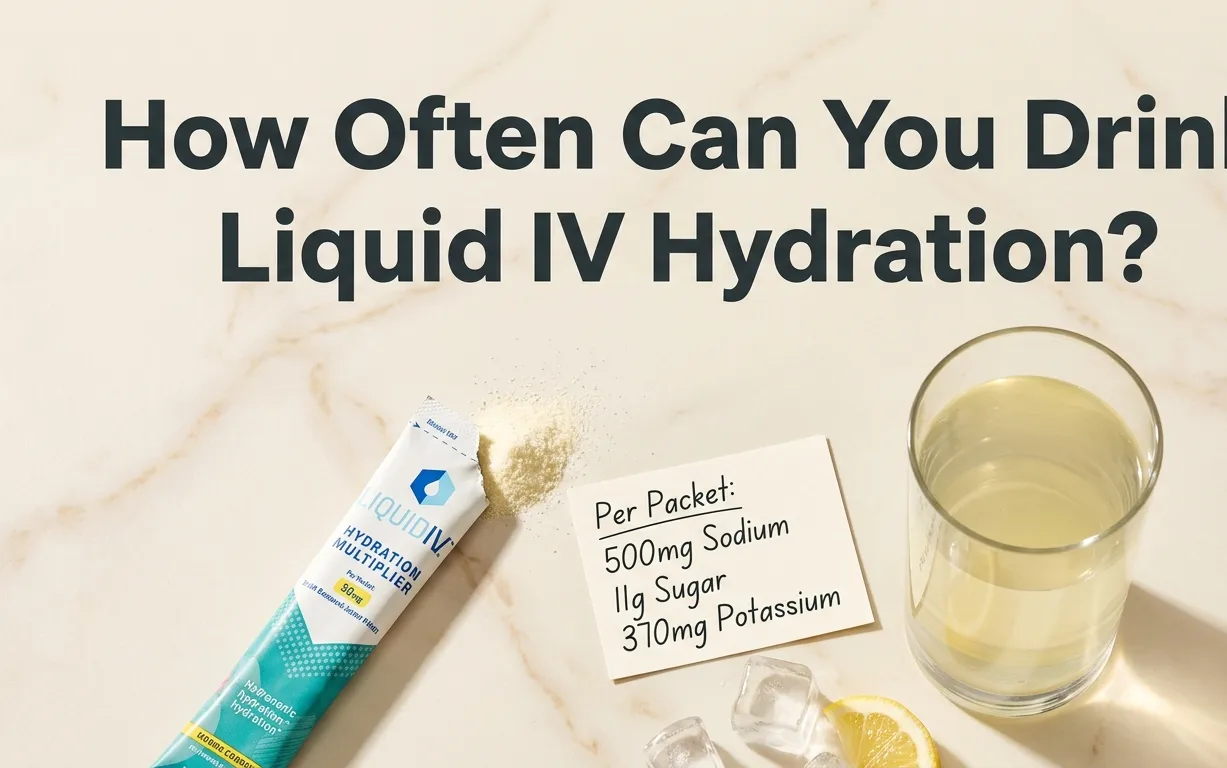
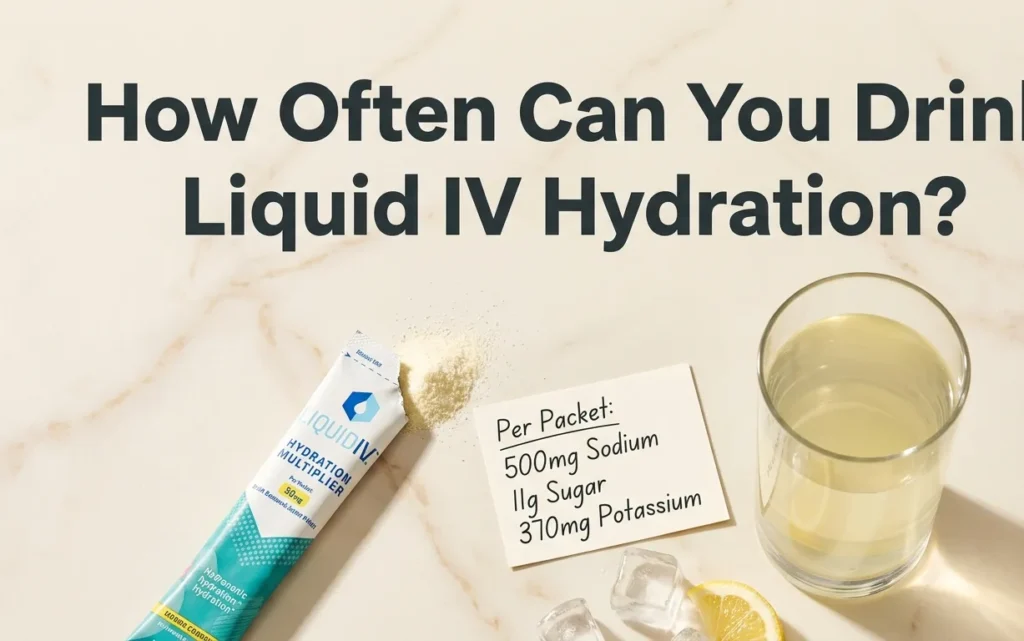
Most healthy adults can safely drink one packet of Liquid IV Hydration Multiplier per day, but exceeding this amount moves you into sodium and sugar territory that requires a genuine hydration need to justify rather than casual consumption. One packet contains 500 milligrams of sodium and 11 grams of added sugar, which is 22 percent of the daily sodium limit and nearly half the daily added sugar limit for women.
The American Heart Association recommends limiting added sugar to no more than 25 grams per day for women and 36 grams for men. A single Liquid IV packet uses 44 percent of a woman’s daily sugar allowance. The National Academies of Sciences, Engineering, and Medicine set the Chronic Disease Risk Reduction level for sodium at 2,300 milligrams per day. One packet delivers over one-fifth of that limit in a single drink.
What follows is a complete analysis of what is actually inside a Liquid IV packet, how the sodium and sugar compare to daily limits, when this product genuinely helps hydration versus when plain water works just as well, who should avoid it entirely, and how to choose an electrolyte drink that matches your actual needs rather than marketing claims.
How Often Can You Drink Liquid IV Hydration
Liquid IV can be consumed once daily for general hydration by most healthy adults, with additional packets reserved for situations involving heavy sweating, illness with fluid loss, or prolonged exercise where the electrolyte and glucose content serves a functional hydration purpose.
The product’s own packaging recommends one packet per day for general use. This recommendation aligns with the nutritional profile. A second packet doubles the sodium to 1,000 milligrams and the sugar to 22 grams. That sodium level approaches half the daily limit. That sugar level nearly hits the entire daily allowance for women. A third packet pushes sodium to 1,500 milligrams and sugar to 33 grams, exceeding the daily sugar limit for women and reaching 65 percent of the sodium limit from hydration drinks alone, before any food is consumed.
The question of frequency separates into two distinct answers. For everyday hydration in a person with a typical activity level, the answer is zero to one packet per day because plain water handles everyday needs without the sodium and sugar load. For genuine dehydration from exercise, heat exposure, or illness, the answer shifts to using the product as needed during the period of fluid loss, which may mean two or even three packets in a single day of heavy sweating or gastrointestinal fluid loss. The context determines the appropriate frequency.
Liquid IV Ingredients and Nutrition Facts Per Serving
A single 16-gram packet of Liquid IV Hydration Multiplier contains 45 calories, 11 grams of carbohydrate from pure cane sugar and dextrose, 500 milligrams of sodium, 370 milligrams of potassium, and added vitamins C, B3, B5, B6, and B12 dissolved in 16 ounces of water.
The ingredient list reads: pure cane sugar, dextrose, citric acid, salt, potassium citrate, sodium citrate, dipotassium phosphate, silicon dioxide, rebaudioside A (stevia leaf extract), natural flavors, vitamin C (ascorbic acid), vitamin B3 (niacinamide), vitamin B5 (calcium D-pantothenate), vitamin B6 (pyridoxine hydrochloride), and vitamin B12 (cyanocobalamin). The core functional ingredients are the sodium and glucose, which drive the cellular hydration mechanism. The potassium supports fluid balance. The vitamins are present at levels above the daily value and function as a marketing differentiator more than a hydration necessity.
The product uses the sodium-glucose cotransport mechanism. This is the same physiological principle behind the World Health Organization oral rehydration solution formula used to treat dehydration from cholera and other diarrheal diseases. Glucose in the small intestine facilitates sodium absorption, and water follows sodium across the intestinal membrane through osmosis. The 11 grams of sugar per packet is not there for flavor. It is there because glucose is functionally necessary for the rapid absorption mechanism to work.
Liquid IV Hydration Multiplier Full Nutrition Facts (1 packet, 16g)
| Nutrient | Amount | Percentage of Daily Value | Daily Reference Limit |
|---|---|---|---|
| Calories | 45 | N/A | 2000-calorie diet |
| Total Carbohydrate | 11g | 4% | 275g (based on 2000 cal) |
| Total Sugars | 11g | N/A | 25g women / 36g men (AHA) |
| Added Sugars | 11g | 22% | 50g (FDA DV) |
| Sodium | 500mg | 22% | 2300mg (CDRR) |
| Potassium | 370mg | 8% | 3400mg men / 2600mg women (AI) |
| Vitamin C | 135mg | 150% | 90mg men / 75mg women (RDA) |
| Vitamin B3 (Niacin) | 11.4mg | 71% | 16mg men / 14mg women (RDA) |
| Vitamin B5 (Pantothenic Acid) | 5.7mg | 114% | 5mg (AI) |
| Vitamin B6 | 1.4mg | 82% | 1.3mg (RDA) |
| Vitamin B12 | 2.7mcg | 113% | 2.4mcg (RDA) |
Key Takeaway: One Liquid IV packet is a functional hydration product built around the sodium-glucose cotransport system. It is not a vitamin supplement despite the B-vitamin content. It is not a low-sodium drink. It is not a sugar-free beverage. It works as designed for dehydration, and that same design makes it inappropriate as an all-day water replacement.
Liquid IV Sodium and Potassium Amounts
A single Liquid IV packet delivers 500 milligrams of sodium and 370 milligrams of potassium, providing a sodium-to-potassium ratio of approximately 1.35 to 1 that is designed to replace electrolytes lost in sweat during exercise or heat exposure.
Sodium is the primary electrolyte lost in sweat. Sweat sodium concentration varies widely between individuals, from roughly 200 milligrams per liter in people who are heat-acclimated and genetically low-sodium sweaters to over 1,500 milligrams per liter in heavy, salty sweaters. The 500 milligrams of sodium in a Liquid IV packet represents what a moderate sweater might lose in 30 to 60 minutes of exercise. For a heavy sweater, one packet may not cover an hour of loss. For a light sweater sitting at a desk, 500 milligrams of sodium is entirely unnecessary and simply adds to the daily sodium total that most Americans already exceed.
Potassium at 370 milligrams per packet is a meaningful contribution toward the Adequate Intake of 2,600 milligrams per day for women and 3,400 milligrams for men. Most Americans underconsume potassium while overconsuming sodium. The potassium content in Liquid IV is a legitimate nutritional positive, providing roughly 11 to 14 percent of the daily goal. However, potassium is abundant in whole foods like potatoes, bananas, spinach, and beans. A diet adequate in fruits and vegetables does not need supplemental potassium from a hydration packet.
Liquid IV Sugar Content Analysis
Liquid IV contains 11 grams of added sugar per packet, which is 44 percent of the American Heart Association’s daily added sugar limit for women and 31 percent of the limit for men, making the sugar content the most nutritionally consequential aspect of this product for daily users.
The sugar in Liquid IV is functional rather than purely flavor-driven. The glucose and dextrose serve as the cotransport partner for sodium absorption in the small intestine. Without glucose, the rapid water absorption mechanism does not work. The WHO oral rehydration solution uses a specific glucose-to-sodium ratio to optimize this process, and Liquid IV follows the same physiological principle. The question is not whether the sugar serves a purpose. It does. The question is whether your situation requires the mechanism that the sugar enables.
For a person with dehydration from a stomach virus who cannot keep fluids down, the 11 grams of sugar is a worthwhile trade-off for effective rehydration. For a person drinking Liquid IV at their desk as a flavored water alternative, the 11 grams of sugar is empty calories and added sugar consumption without a functional benefit. The sugar content is appropriate for rehydration scenarios and excessive for everyday casual consumption. This is the single most important distinction in understanding how often to use this product.
Liquid IV Sugar Compared to Daily Limits
| Reference | Daily Limit | One Packet (11g) | Two Packets (22g) |
|---|---|---|---|
| AHA women | 25g added sugar | 44% | 88% |
| AHA men | 36g added sugar | 31% | 61% |
| FDA Daily Value | 50g added sugar | 22% | 44% |
| WHO free sugar recommendation | Under 10% of calories (50g for 2000 cal) | 22% | 44% |
Hydration Packets Per Day Safety Limits
One hydration packet per day is safe for most healthy adults, two packets per day should be reserved for situations involving significant fluid and electrolyte loss, and three or more packets per day exceeds prudent sodium and sugar intake for anyone except athletes or workers in extreme conditions.
The safety limit for hydration packets is driven primarily by sodium. The National Academies set 2,300 milligrams per day as the level above which chronic disease risk increases for the general population. Most American adults already consume 3,400 milligrams of sodium per day from food, according to CDC data. Adding 500 to 1,500 milligrams from hydration packets on top of a typical diet pushes sodium intake further beyond the recommended range.
The sugar limit provides a second constraint. The American Heart Association’s 25-gram limit for women means that two packets of Liquid IV nearly reach the entire daily sugar allowance. Any other source of added sugar that day, a flavored yogurt, a salad dressing, a piece of toast with jam, puts the total over the recommended limit. The sugar accumulates quickly.
Secondary considerations include the B-vitamin content. The levels in one packet are high but not concerning. Two packets deliver 226 percent of the daily value for vitamin B12 and 228 percent for vitamin B5, which are water-soluble and generally well-tolerated. Three packets push these numbers higher but still remain below levels associated with toxicity for water-soluble vitamins in healthy individuals. The sodium and sugar are the rate-limiting factors, not the vitamins.
Can You Drink Liquid IV Every Day
You can drink one packet of Liquid IV every day if you have a genuine need for electrolyte replacement, but daily consumption without a corresponding hydration need adds 500 milligrams of sodium and 11 grams of sugar to your daily intake with no functional benefit over plain water.
Daily Liquid IV consumption makes sense for specific groups. Outdoor workers in hot climates lose liters of sweat per shift and need to replace both water and electrolytes. Endurance athletes training daily for over an hour need consistent electrolyte replenishment. People with medical conditions that cause chronic fluid loss may have a physician-directed reason for daily use. People living at high altitude lose more fluid through respiration and may benefit from electrolyte-enhanced hydration.
Daily Liquid IV consumption does not make sense for a person with a sedentary job in an air-conditioned office who drinks it because plain water is boring. That person is consuming medically unnecessary sodium and sugar. The same hydration result can be achieved with plain water and a diet that includes fruits and vegetables for potassium. The product solves a specific problem. Using it daily when the problem does not exist does not provide hidden benefits. It provides hidden sodium and sugar.
Quick Tip: If you genuinely prefer the taste of Liquid IV to plain water and want it daily, consider using half a packet in 16 ounces of water. You get the flavor and half the sodium and sugar. The glucose content is still sufficient to activate the cotransport mechanism for the sodium present.
Key Takeaway: Daily use of Liquid IV is appropriate for daily electrolyte loss through sweat or illness. It is inappropriate as a flavored water alternative. The sodium and sugar content only justify themselves when the hydration mechanism they enable is actually needed.
Is Liquid IV Safe to Drink Daily
Liquid IV is safe to drink daily for healthy adults without hypertension, heart failure, kidney disease, or diabetes who have a corresponding need for electrolyte replacement, but it is not risk-free and should not be treated as equivalent to plain water.
The safety profile of daily Liquid IV consumption depends entirely on the individual’s baseline health, dietary pattern, and activity level. A marathon runner training in summer heat can safely consume one to two packets daily because they are losing sodium and fluid that genuinely need replacing. Their baseline risk of sodium excess is low because sweat losses offset the intake. A person with well-controlled hypertension who eats a low-sodium diet and exercises moderately may tolerate one packet daily without blood pressure effects, but this requires individual monitoring.
The safety concern that applies broadly is the normalization of sugared beverages as hydration. Liquid IV is marketed as a wellness product. Its packaging and messaging position it as a health-enhancing choice. The 11 grams of sugar per packet is chemically identical to the sugar in soda. It is a smaller amount than a can of soda’s 39 grams, but it is still added sugar consumed in liquid form, which the body absorbs rapidly without the fiber, fat, or protein that would slow gastric emptying and moderate the blood glucose response. Daily consumption of sugared beverages, even in small amounts, is a dietary pattern the American Heart Association explicitly advises against.
Liquid IV Side Effects and Who Should Avoid It
The primary side effects of Liquid IV include gastrointestinal discomfort from the high sodium concentration, bloating from rapid fluid shifts, and potential blood pressure elevation in sodium-sensitive individuals, while groups who should avoid it include people with hypertension, heart failure, chronic kidney disease, and those on sodium-restricted or potassium-restricted diets.
Gastrointestinal side effects are the most common complaint among Liquid IV users. The 500 milligrams of sodium dissolved in 16 ounces of water creates a concentrated solution that can cause stomach discomfort, nausea, or a sensation of bloating if consumed too quickly. Sipping the drink over 30 to 60 minutes rather than drinking it all at once reduces this effect. The osmolality of the solution, while designed to optimize absorption, can pull water into the intestinal lumen temporarily, causing a feeling of fullness or mild cramping.
Medical contraindications are more serious than GI discomfort. People with hypertension should be aware that 500 milligrams of sodium represents a significant fraction of the daily sodium budget on a sodium-restricted diet. People with heart failure must carefully manage fluid and sodium intake because excess sodium drives fluid retention that can worsen heart failure symptoms. People with chronic kidney disease often have restrictions on both sodium and potassium, making the 370 milligrams of potassium in one packet a concern if potassium intake is already elevated from diet or medications.
Medical Conditions and Liquid IV Safety
| Condition | Concern | Recommendation |
|---|---|---|
| Hypertension | 500mg sodium per packet | Consult primary care physician before use |
| Heart failure | Sodium and fluid load | Generally avoid without cardiologist approval |
| Chronic kidney disease | Sodium and potassium content | Consult nephrologist before use |
| Diabetes | 11g sugar per packet | Factor into carbohydrate counting; may not be appropriate |
| Potassium-restricted diet | 370mg potassium per packet | Avoid unless cleared by physician |
| Pregnancy | Generally safe in moderation | Consult obstetric provider for individual guidance |
Does Liquid IV Hydrate Better Than Water
Liquid IV hydrates more rapidly than plain water in situations involving dehydration, heavy sweating, or fluid loss from illness, but it does not hydrate better than water for everyday hydration needs in a person with adequate electrolyte status.
The scientific basis for Liquid IV’s hydration claim is the sodium-glucose cotransport mechanism. Sodium absorption in the small intestine is coupled to glucose absorption through the SGLT1 transporter. When both sodium and glucose are present in the intestinal lumen, water is absorbed alongside them through osmosis. This mechanism evolved to maximize water extraction from food and is the physiological basis for oral rehydration therapy that has saved millions of lives from cholera and diarrheal disease. Liquid IV uses this same mechanism. In a dehydrated person, the rapid absorption provided by the glucose-sodium cotransport system is measurably faster than plain water absorption.
In a normally hydrated person, the difference between Liquid IV and water is physiologically negligible. The body’s hydration regulation systems, including antidiuretic hormone and the renin-angiotensin-aldosterone system, maintain fluid balance within a narrow range regardless of whether you drink plain water or an electrolyte solution. The additional sodium is excreted by the kidneys. The sugar is metabolized. The water is absorbed. The net hydration result is identical. Paying for faster absorption when your body has no urgent need for faster absorption is like paying for express shipping on a package you do not need for two weeks.
Liquid IV vs Sports Drinks Comparison
Liquid IV contains more sodium per serving than Gatorade or Powerade, less sugar than traditional sports drinks but more sugar than sugar-free electrolyte options, and positions itself between medical-grade oral rehydration solutions and casual sports beverages.
A 12-ounce serving of Gatorade Thirst Quencher provides 160 milligrams of sodium and 21 grams of sugar. A 16-ounce serving of Powerade contains 250 milligrams of sodium and 21 grams of sugar. Liquid IV in 16 ounces of water provides 500 milligrams of sodium and 11 grams of sugar. The sodium-to-sugar ratio in Liquid IV is 45 milligrams of sodium per gram of sugar compared to roughly 8 milligrams per gram in Gatorade. This higher sodium-to-sugar ratio more closely approximates the WHO oral rehydration solution formula, making Liquid IV functionally closer to a medical rehydration product than a sports drink.
The trade-off is palatability. Sports drinks with higher sugar and lower sodium taste better to most people. Liquid IV’s higher sodium content is detectable in the taste, which the company masks with stevia and natural flavors. Neither product is appropriate for everyday hydration in a sedentary person. Both are designed for fluid replacement during or after significant sweat or fluid loss. The choice between them depends on whether you need more sodium (choose Liquid IV) or prefer less sodium with more sugar (choose a traditional sports drink) or want electrolytes without sugar (choose a zero-sugar electrolyte option).
Electrolyte Drink Comparison (per serving)
| Product | Sodium (mg) | Potassium (mg) | Sugar (g) | Calories | Best Use |
|---|---|---|---|---|---|
| Liquid IV | 500 | 370 | 11 | 45 | Moderate to heavy sweat loss |
| Gatorade Thirst Quencher | 160 | 45 | 21 | 80 | Light to moderate exercise |
| Powerade | 250 | 65 | 21 | 80 | Light to moderate exercise |
| Pedialyte Classic | 370 | 280 | 9 | 35 | Illness rehydration |
| Nuun Sport tablet | 300 | 150 | 1 | 15 | Low-sugar electrolyte replacement |
| WHO Oral Rehydration Salts | 345 | 195 | 13.5 (glucose) | Varies | Clinical dehydration |
Key Takeaway: Liquid IV sits between sports drinks and medical oral rehydration solutions. It has more sodium than Gatorade and less sugar, but the sugar it contains is still enough to matter for daily users. The product you choose should match your actual electrolyte loss, not your flavor preference.
When to Use Liquid IV for Dehydration
Liquid IV is appropriate for dehydration caused by exercise lasting over one hour, heat exposure with visible sweating, illness with vomiting or diarrhea, air travel longer than four hours, and hangover recovery where both fluid and electrolyte replenishment are needed.
Exercise dehydration is the most common appropriate use case. During exercise lasting beyond 60 minutes, particularly in heat, sweat sodium losses accumulate to levels that plain water cannot replace quickly enough to prevent performance decline and post-exercise fatigue. One packet of Liquid IV before, during, or after a long workout replaces the sodium lost in roughly one to two liters of sweat for an average sweater. Heavy or salty sweaters may need more.
Illness-related dehydration from vomiting or diarrhea creates a genuine medical need for the glucose-sodium cotransport mechanism. The WHO specifically recommends this formulation for diarrheal dehydration because the glucose enables sodium and water absorption even when the gut is inflamed and absorption is compromised. Liquid IV approximates this formulation and can be used for mild to moderate illness-related dehydration. Severe dehydration with signs like sunken eyes, rapid heart rate, or confusion requires medical attention, not a hydration packet.
Situations where Liquid IV is not necessary include post-yoga hydration, drinking after a normal night’s sleep, everyday water intake at a desk job, and any situation where you are not significantly fluid-depleted. In these scenarios, the product functions as an expensive, sugary, high-sodium flavored water.
Can Kids Drink Liquid IV
Liquid IV is formulated for adults and is not recommended for children, whose lower body weight, lower sweat sodium losses, and different electrolyte requirements make the adult sodium and vitamin concentrations inappropriate for pediatric use.
Children’s electrolyte needs differ from adults in several ways. Children have a lower total body water volume, meaning the 500 milligrams of sodium in one packet represents a larger relative dose. The vitamin levels formulated for adult daily values exceed what a child needs. The sugar content of 11 grams represents a larger fraction of a child’s lower daily caloric and sugar allowance.
Pediatric electrolyte replacement products like Pedialyte are specifically formulated for children’s lower body weight and different electrolyte balance. These products contain less sodium per serving and are designed for the smaller fluid volumes that children drink. For a child with mild dehydration from a stomach bug, Pedialyte or a generic pediatric oral electrolyte solution is the appropriate product. For a child who simply needs to drink more water, plain water or water with a splash of juice for flavor is appropriate. Liquid IV is an adult product and should be treated as such. Parents who are considering Liquid IV for a child should consult their pediatrician rather than extrapolating from the adult recommendation.
Liquid IV While Pregnant or Breastfeeding
Pregnant and breastfeeding individuals can use Liquid IV occasionally for dehydration but should consult their obstetric provider before regular use because pregnancy alters fluid balance, sodium sensitivity, and nutrient needs in ways that make electrolyte supplementation less straightforward.
Pregnancy increases total body water and blood volume by approximately 50 percent. Sodium handling changes as the kidneys filter more blood and the hormonal environment shifts. Some pregnant individuals develop increased sodium sensitivity. Others experience nausea and vomiting that create genuine dehydration needs where an electrolyte drink could help. The individual variation is wide enough that blanket guidance is inappropriate.
Breastfeeding increases fluid requirements by roughly 700 milliliters per day above non-lactating needs. The sodium and sugar in Liquid IV transfer into breast milk in amounts proportional to maternal intake. Occasional use for dehydration from illness or inadequate fluid intake is reasonable. Daily use adds sodium and sugar to the maternal diet that may not be necessary and provides B vitamins at levels well above the pregnancy and lactation RDAs. The safest approach is using Liquid IV when genuinely dehydrated and relying on water and whole-food electrolyte sources for everyday hydration during pregnancy and breastfeeding.
Liquid IV for Older Adults
Older adults should approach Liquid IV with more caution than younger adults because age-related changes in kidney function, higher prevalence of hypertension and heart failure, and common use of medications that affect electrolyte balance make the sodium and potassium content more consequential.
Kidney function declines with age. The glomerular filtration rate drops by roughly 1 milliliter per minute per year after age 40. Older kidneys are less efficient at excreting excess sodium and potassium. The 500 milligrams of sodium in a Liquid IV packet that a 25-year-old kidney handles easily may challenge a 75-year-old kidney with reduced functional capacity. Older adults also have a higher prevalence of conditions that require sodium restriction, including hypertension, heart failure, and chronic kidney disease.
Medication interactions are another concern. Many older adults take diuretics for blood pressure control that alter sodium and potassium balance. Potassium-sparing diuretics like spironolactone reduce potassium excretion, making the 370 milligrams of potassium in Liquid IV a potential contributor to hyperkalemia in susceptible individuals. ACE inhibitors and angiotensin receptor blockers also affect potassium handling. An older adult taking multiple medications should have a clear conversation with their primary care physician before adding a daily electrolyte drink to their routine.
Liquid IV With High Blood Pressure or Kidney Concerns
People with hypertension should limit or avoid Liquid IV because the 500 milligrams of sodium per packet represents a large fraction of the daily sodium budget on a blood pressure management plan, and people with kidney disease should avoid it without nephrologist approval due to both sodium and potassium content.
The sodium in one Liquid IV packet is equivalent to roughly one-third of a teaspoon of salt. For a person with hypertension following the DASH diet sodium guidelines of 1,500 to 2,300 milligrams per day, one packet uses 22 to 33 percent of the entire daily sodium allowance. If the same person adds Liquid IV to a diet that is already moderate in sodium, the packet can push total intake above the recommended range. The effect of sodium on blood pressure is dose-dependent and occurs over days to weeks of intake, not from a single packet, but daily use of a high-sodium product works against the goal of blood pressure reduction.
Chronic kidney disease adds the potassium concern. Damaged kidneys cannot excrete potassium efficiently. The 370 milligrams of potassium in one packet is not dangerous for a person with normal kidney function, but for someone with stage 3 or 4 chronic kidney disease who may already be borderline hyperkalemic, that potassium load could be clinically meaningful. Nephrologists frequently restrict dietary potassium in advanced kidney disease. An electrolyte drink with added potassium is contraindicated in this population unless the treating nephrologist has specifically approved it.
Bullet points for medical provider consultation before using Liquid IV:
- A primary care physician can review your blood pressure and sodium intake to determine if 500mg of additional sodium is appropriate
- A nephrologist can assess your kidney function and potassium handling before you add electrolyte drinks
- A cardiologist managing heart failure can advise on fluid and sodium limits that may preclude electrolyte drink use
- A registered dietitian can evaluate your total dietary sodium, potassium, and sugar intake to determine if Liquid IV fits your overall pattern
- A pharmacist can review your medication list for potential interactions with the potassium and sodium in electrolyte drinks
Key Takeaway: The decision to use Liquid IV regularly is a medical decision if you have hypertension, kidney disease, or heart failure. The sodium and potassium that make the product effective for dehydration are the same ingredients that can worsen these conditions. The appropriate healthcare provider for this conversation is the physician managing the condition, not a wellness influencer or product marketing page.
How to Choose an Electrolyte Drink for Your Needs
Choosing an electrolyte drink requires matching the product’s sodium, sugar, and potassium content to your actual electrolyte loss situation, with higher sodium for heavy sweating and lower sugar for everyday use as the guiding principle.
A person who runs marathons in summer heat needs a different product than a person who takes a 30-minute walk and wants something flavored. The marathoner loses 500 to 1,500 milligrams of sodium per liter of sweat and needs replacement. The walker loses minimal sodium and needs water. The product selection process starts with an honest assessment of whether you need electrolyte replacement at all.
Once you establish a genuine need, compare products by their sodium-to-sugar ratio. A higher ratio, more sodium per gram of sugar, generally indicates a product formulated for functional rehydration rather than a flavored sugar water with a small electrolyte addition. Liquid IV’s ratio of approximately 45 milligrams of sodium per gram of sugar places it in the functional rehydration category. Gatorade’s ratio of 8 to 1 places it closer to a sweetened beverage with some electrolytes. A zero-sugar electrolyte tablet like Nuun provides electrolytes without the sugar, sacrificing the cotransport absorption advantage for a lower-calorie profile. There is no single best product. There is the product that matches your specific situation.
Numbered steps to choose the right electrolyte drink:
- Determine if you genuinely need electrolyte replacement based on sweat loss, illness, or dehydration
- Estimate your sweat sodium loss: light sweater (under 500mg/L) or heavy sweater (over 1000mg/L)
- Check the sodium content per serving and match it to your estimated loss
- Check the sugar content and decide if you need the glucose for rapid absorption or can use a sugar-free option
- Review potassium and other ingredients for any medical contraindications
- For everyday hydration without electrolyte loss, choose plain water
Frequently Asked Questions About Liquid IV Hydration
Can I drink 2 Liquid IV packets in one day?
Two Liquid IV packets in one day deliver 1,000 milligrams of sodium and 22 grams of sugar.
This is appropriate for heavy sweating during prolonged exercise, heat exposure, or illness-related fluid loss.
For everyday hydration without significant electrolyte loss, two packets is excessive sodium and sugar intake.
Is it bad to drink Liquid IV every day?
Drinking Liquid IV every day is not harmful for healthy adults who have a corresponding need for electrolyte replacement.
For sedentary individuals or those with hypertension, heart failure, or kidney concerns, daily use adds unnecessary sodium and sugar.
Plain water is the appropriate daily hydration choice when you are not losing significant electrolytes through sweat or illness.
Does Liquid IV have too much sugar?
Liquid IV contains 11 grams of sugar, which is functional for the sodium-glucose cotransport mechanism but represents 44 percent of the American Heart Association’s daily added sugar limit for women.
The sugar is not excessive for a rehydration product used during genuine dehydration.
It is excessive when the product is used as a casual flavored water alternative.
What happens if you drink too much Liquid IV?
Drinking too much Liquid IV, meaning three or more packets in a day without corresponding electrolyte loss, can cause sodium intake to exceed recommended limits, gastrointestinal discomfort, bloating, and in susceptible individuals, elevated blood pressure.
The B-vitamin levels from multiple packets are water-soluble and generally well-tolerated but unnecessary.
Sodium and sugar overload are the primary concerns from overconsumption.
Is Liquid IV just salt water with sugar?
Liquid IV is a precisely formulated electrolyte drink that uses the same sodium-glucose cotransport mechanism as World Health Organization oral rehydration solution.
It contains sodium, potassium, and glucose in specific ratios designed to accelerate water absorption in the small intestine.
Calling it salt water with sugar undersells the physiological design, but the core functional ingredients are indeed sodium, sugar, and potassium.
Who should not drink Liquid IV?
People with hypertension, heart failure, chronic kidney disease, or sodium-restricted diets should not drink Liquid IV without physician approval.
Children should not drink Liquid IV because it is formulated for adult electrolyte concentrations and vitamin levels.
People with diabetes should account for the 11 grams of sugar per packet in their carbohydrate management plan.
Liquid IV is a well-designed product for a specific purpose. It uses real physiological mechanisms that work. The problem is not the product. The problem is using a rehydration tool as an everyday beverage. One packet contains enough sodium and sugar to require justification. The justification is sweat. The justification is illness. The justification is genuine fluid loss.
Use Liquid IV when you need it. A long run in the heat, a stomach bug that has you losing fluids, a hangover that needs more than water, a flight that left you dehydrated. Those situations call for the sodium-glucose cotransport system and you will benefit from what the product actually does. On an ordinary Tuesday at your desk, drink water. Your kidneys and your daily sodium and sugar budgets will handle the rest without help from a packet.
You now know the exact numbers, the physiological mechanism, the safety boundaries, and the populations who need more caution. Make your hydration choice based on your actual needs, not on product marketing.