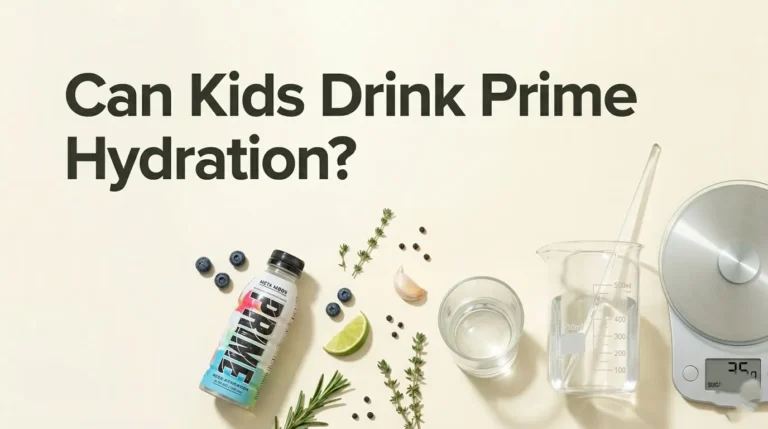
Can 12 Year Olds Drink Prime Hydration? 2026 Safety Guide
A 12-year-old can occasionally drink Prime Hydration without immediate harm because the product contains no caffeine and its electrolyte levels remain below pediatric toxicity thresholds, but the drink offers no meaningful hydration advantage over water for routine use and introduces artificial sweeteners, vitamins in adult-oriented doses, and branched-chain amino acids with no established safety data in children.
The American Academy of Pediatrics has explicitly stated that sports drinks are unnecessary for most children and adolescents during routine physical activity and should be reserved for prolonged, vigorous exercise exceeding 60 to 90 minutes in hot conditions. The AAP further recommends water as the primary hydration source for children. Prime Hydration is not categorized as a sports drink by its manufacturer, but its electrolyte and vitamin formulation functions similarly.
This article walks through every ingredient in Prime Hydration measured against pediatric dietary reference intakes for 9 to 13 year olds. You will see exactly how much sodium, potassium, and vitamins one bottle contributes to your child’s daily limits, what the research says about artificial sweeteners and developing bodies, when electrolyte drinks genuinely make sense for young athletes, and what to offer instead when water is the better answer, which is most of the time.
Can 12 Year Olds Drink Prime Hydration
A 12-year-old can drink Prime Hydration occasionally as a flavored beverage without acute safety risk, but the drink is not formulated for pediatric physiology, provides no hydration benefit over water for everyday activities, and introduces ingredients including artificial sweeteners and branched-chain amino acids that lack long-term safety data in children.
The product is caffeine-free, which removes the most obvious pediatric safety concern. Prime Hydration is legally distinct from Prime Energy, which contains 200 milligrams of caffeine per can and is unequivocally inappropriate for children and adolescents. The American Academy of Pediatrics recommends zero caffeine for children under 12 and no more than 100 milligrams per day for adolescents aged 12 to 18. Prime Energy far exceeds this threshold. Prime Hydration contains none.
The safety question for 12-year-olds is not about acute toxicity. It is about whether a beverage formulated for adult marketing, with adult-oriented electrolyte concentrations, adult-oriented vitamin doses, artificial sweeteners with Acceptable Daily Intake values calculated for adult body weight, and branched-chain amino acids studied only in adult populations, belongs in a child’s regular beverage rotation.
The answer depends heavily on frequency and context. One bottle at a weekend basketball tournament where your child has been sweating heavily for two hours is a different risk calculation than one bottle every day in a lunchbox for a child who spends most of the school day indoors. The AAP sports drink policy applies to the latter scenario: sports drinks are not indicated for routine hydration. The occasional use scenario is less studied, and parents must weigh the absence of proven benefit against the absence of documented acute harm.
How Old to Drink Prime Hydration
There is no FDA or American Academy of Pediatrics established minimum age for Prime Hydration specifically, but pediatric electrolyte recommendations and the product’s adult-oriented formulation suggest that children under 9 gain no benefit and face disproportionate ingredient exposure relative to body weight, while adolescents 13 and older are physiologically closer to the adult population for whom the product was designed.
The manufacturer has not published an official age recommendation for Prime Hydration. This absence of guidance leaves parents making decisions without clear labeling. The product’s marketing features professional athletes and social media influencers popular with teenage audiences, which signals an intended demographic older than elementary school children.
Age-based guidance drawn from pediatric electrolyte and artificial sweetener safety data:
| Age Group | Recommendation | Rationale |
|---|---|---|
| Under 9 | Should avoid | Electrolyte formulation designed for larger body mass. Artificial sweetener exposure higher per kilogram body weight. No hydration need water cannot meet. |
| 9-11 | Occasional use only with parental awareness | AAP sports drink guidance applies. Acceptable for rare prolonged exercise contexts. Not for routine lunchbox or everyday hydration. |
| 12-14 | Can consume occasionally | Body mass approaching adult reference ranges. Still no advantage over water for routine use. Artificial sweetener concern remains relevant. |
| 15+ | Moderate consumption reasonable | Closer to adult physiology. Same caveats apply: not a water replacement, not a daily necessity, monitor total daily artificial sweetener intake. |
The American Academy of Pediatrics position on sports drinks applies to the broader category into which Prime Hydration functionally falls. The AAP states that sports drinks are rarely indicated for children and adolescents, that water is the appropriate first-line hydration source, and that routine consumption of sports drinks contributes to excessive added sugar intake (though Prime Hydration contains minimal sugar, the artificial sweetener concern replaces the sugar concern rather than eliminating health considerations).
Key Takeaway: Prime Hydration was formulated for adults and marketed to teens. Kids under 9 should skip it. Kids 9 to 13 can have it occasionally, but there is no documented scenario where Prime Hydration hydrates a child better than water for everyday activities. The age question is less about a specific cutoff and more about whether a hydration need exists that water cannot meet. For most kids, it does not.
Prime Hydration Ingredients and Nutrition Facts Breakdown
One 16.9 fluid ounce (500 milliliter) bottle of Prime Hydration contains approximately 20 to 25 calories, 4 to 5 grams of carbohydrates, zero added sugar, 700 milligrams of potassium, 125 milligrams of magnesium, 10 milligrams of sodium, and a blend of fat-soluble vitamins, B vitamins, zinc, branched-chain amino acids, coconut water concentrate, and two artificial sweeteners, sucralose and acesulfame potassium.
The ingredient list, in descending order of predominance per FDA labeling requirements, reads as follows: filtered water, coconut water concentrate, citric acid, dipotassium phosphate, trimagnesium citrate, natural flavors, sucralose, acesulfame potassium, and then the vitamin, mineral, and amino acid blend including retinol palmitate (vitamin A), cholecalciferol (vitamin D3), alpha-tocopheryl acetate (vitamin E), pyridoxine hydrochloride (vitamin B6), cyanocobalamin (vitamin B12), zinc aspartate, and branched-chain amino acids (L-isoleucine, L-leucine, L-valine).
The product’s electrolyte profile appears in a specific configuration worth noting:
| Electrolyte | Amount per Bottle (16.9 oz) | % DV (Adult) | Function |
|---|---|---|---|
| Sodium | 10 mg | <1% | Fluid balance, nerve function |
| Potassium | 700 mg | 15% | Intracellular fluid balance, muscle contraction |
| Magnesium | 125 mg | 30% | Enzyme cofactor, muscle relaxation |
| Chloride | Not listed as added | N/A | Extracellular fluid balance |
| Phosphate | Present from dipotassium phosphate, amount unlisted | N/A | Bone mineralization, energy metabolism |
The sodium content deserves immediate attention. At 10 milligrams per bottle, Prime Hydration provides essentially no sodium. This is the opposite of what a rehydration beverage typically provides. Clinical oral rehydration solutions contain sodium in specific ratios with glucose to drive fluid absorption through the sodium-glucose cotransport mechanism in the small intestine. Prime Hydration bypasses this mechanism entirely. It hydrates like flavored water hydrates, not like an oral rehydration solution hydrates.
The Dietary Guidelines for Americans 2020-2025 does not set specific intake recommendations for coconut water or branched-chain amino acids, and neither ingredient appears in pediatric nutrition guidance as necessary or recommended for children. The vitamin and mineral additions provide nutrients that a balanced diet already supplies for most American children.
Prime Hydration Sodium Content and Pediatric Daily Limits
One bottle of Prime Hydration contains 10 milligrams of sodium, representing less than 1 percent of the adult Daily Value and approximately 0.8 percent of the sodium Adequate Intake (AI) of 1,200 milligrams for 9 to 13 year old children, making it a negligible sodium source that does not contribute meaningfully to either hydration or electrolyte replenishment in pediatric contexts.
Sodium is the primary extracellular electrolyte. It drives fluid retention, maintains blood volume, and facilitates the sodium-glucose cotransport mechanism that makes clinical rehydration solutions effective. A beverage with 10 milligrams of sodium per 500 milliliters is functionally water from a sodium perspective.
The National Academies of Sciences, Engineering, and Medicine establishes the following sodium AI values for children:
| Age Group | Sodium AI (mg/day) | Potassium AI (mg/day) | One Prime Bottle Na % AI | One Prime Bottle K % AI |
|---|---|---|---|---|
| 4-8 years | 1,000 mg | 2,300 mg | 1.0% | 30.4% |
| 9-13 years | 1,200 mg | 4,500 mg (boys), 4,500 mg (girls) | 0.8% | 15.6% |
| 14-18 years | 1,500 mg | 4,700 mg (boys), 4,700 mg (girls) | 0.7% | 14.9% |
The sodium contribution is trivial at every age. The potassium contribution is meaningful, particularly for younger children. A 7-year-old consuming one bottle of Prime Hydration ingests over 30 percent of their daily potassium AI from a single beverage. For context, one medium banana provides approximately 420 milligrams of potassium along with fiber, vitamins, and no artificial sweeteners.
The Cleveland Clinic notes that healthy kidneys efficiently excrete excess potassium, so a single bottle does not present a toxicity risk for children with normal renal function. The concern is not acute harm. It is the pattern of meeting nutrient needs through artificially sweetened beverages rather than food, which teaches a flavor-palatability expectation that whole foods cannot match.
Prime Hydration Potassium and Electrolyte Profile for Children
Prime Hydration delivers 700 milligrams of potassium primarily from dipotassium phosphate and coconut water concentrate, representing approximately 15 percent of the adult Daily Value and a larger proportion of the pediatric AI, with a potassium concentration that surpasses what most children need from a beverage during routine daily activities.
Potassium functions as the primary intracellular cation. It maintains cell membrane potential, enables nerve impulse transmission, and supports muscle contraction including cardiac muscle function. Dietary potassium is abundant in fruits, vegetables, dairy products, and meats. The typical American child’s diet is more likely to be low in potassium than dangerously high, but supplementation through beverages is unnecessary for dietary gap closure when food sources exist.
The electrolyte comparison between Prime Hydration, water, and a clinical oral rehydration solution illustrates the functional differences:
| Beverage (per 500ml) | Sodium (mg) | Potassium (mg) | Magnesium (mg) | Carbohydrates (g) | Osmolality |
|---|---|---|---|---|---|
| Prime Hydration | 10 | 700 | 125 | 4-5 | Hypotonic to mildly isotonic |
| Water | 0-20 (varies by source) | 0-5 | 0-30 | 0 | Hypotonic |
| Pedialyte (oral rehydration) | 510-520 | 390 | 0 | 12-14 | Isotonic (245-260 mOsm/L) |
| Gatorade | 270 | 75 | 0 | 34 | Isotonic (280-300 mOsm/L) |
The World Health Organization oral rehydration solution formula specifies a sodium-to-glucose ratio of approximately 1:1 on a molar basis, with sodium at 75 millimoles per liter and glucose at 75 millimoles per liter. This ratio optimizes the sodium-glucose cotransport mechanism that actively pulls water across the intestinal epithelium. Prime Hydration does not approximate this ratio. It is not designed for clinical rehydration.
The high potassium and near-zero sodium formulation reflects marketing rather than pediatric hydration science. No pediatric hydration guideline recommends high-potassium, low-sodium beverages for any common childhood hydration scenario. The electrolyte profile is distinctive but not physiologically matched to any specific pediatric need.
Key Takeaway: The 700 milligrams of potassium in one Prime Hydration bottle is the electrolyte number parents should notice. It represents a substantial portion of a child’s daily potassium intake in a single beverage. For a 7-year-old, one bottle delivers nearly a third of the daily potassium AI through an artificially sweetened drink. A banana and a glass of water accomplish hydration and potassium intake without the ingredient concerns.
Prime Hydration Artificial Sweeteners and Children’s Health
Prime Hydration contains two artificial sweeteners, sucralose and acesulfame potassium, that provide sweetness without calories but expose children to compounds with limited long-term pediatric safety data, potential effects on taste preference development, and theoretical concerns regarding gut microbiome disruption that remain actively researched as of 2026.
Sucralose is a chlorinated sucrose derivative approximately 600 times sweeter than sugar. The FDA has established an Acceptable Daily Intake (ADI) of 5 milligrams per kilogram of body weight per day. Acesulfame potassium is approximately 200 times sweeter than sugar with an FDA ADI of 15 milligrams per kilogram of body weight per day. Neither sweetener is absorbed in significant quantities. Both pass through the digestive tract largely unchanged and are excreted in urine and feces.
The weight-based ADI calculation produces different safety margins for children than adults:
| Child Weight | Sucralose ADI (mg/day) | Ace-K ADI (mg/day) | Bottles to Reach Sucralose ADI (estimated) |
|---|---|---|---|
| 30 lbs (13.6 kg, ~2-3 years) | 68 mg | 204 mg | Unknown (manufacturer does not disclose sucralose mg per bottle) |
| 55 lbs (25 kg, ~7-8 years) | 125 mg | 375 mg | Unknown |
| 90 lbs (40.8 kg, ~12 years) | 204 mg | 612 mg | Unknown |
| 130 lbs (59 kg, ~15-16 years) | 295 mg | 885 mg | Unknown |
The undisclosed quantity of sucralose and acesulfame potassium in Prime Hydration prevents parents from calculating their child’s exposure relative to the ADI. The manufacturer does not list the milligram amount of either sweetener on the label. The “less than 1 percent” declaration under total carbohydrates provides no quantitative information about sweetener exposure.
The American Academy of Pediatrics has not issued a blanket prohibition on artificial sweeteners for children. The AAP position acknowledges that non-nutritive sweeteners may play a role in reducing added sugar intake when used appropriately. The concern is not about acute toxicity within ADI limits. It is about the displacement of water and milk as primary beverages, the reinforcement of intense sweetness preferences that make unsweetened foods less acceptable, and the unknown metabolic effects of chronic low-dose consumption during developmental years.
The Academy of Nutrition and Dietetics recommends that children’s beverage intake come primarily from water and milk, with limited contribution from other sources. A beverage containing two artificial sweeteners, regardless of ADI compliance, does not qualify as a recommended pediatric beverage under this guidance.
Prime Hydration Vitamin Content and Pediatric Upper Limits
One bottle of Prime Hydration contains a blend of fat-soluble vitamins A, D, and E along with water-soluble vitamins B6 and B12 and the mineral zinc, with each nutrient contributing 8 to 21 percent of the adult Daily Value in doses that are not toxic for 12-year-olds but represent unnecessary supplementation for children eating a balanced diet.
The vitamin and mineral content per bottle mapped against pediatric Dietary Reference Intakes:
| Nutrient | Amount per Bottle | % Adult DV | RDA/AI Ages 9-13 | UL Ages 9-13 | One Bottle % RDA/AI |
|---|---|---|---|---|---|
| Vitamin A (retinol palmitate) | 90 mcg RAE | 10% | 600 mcg RAE | 1,700 mcg RAE | 15% |
| Vitamin D (cholecalciferol) | 1.5 mcg (60 IU) | 8% | 15 mcg (600 IU) | 100 mcg (4,000 IU) | 10% |
| Vitamin E (alpha-tocopheryl) | 1.5 mg | 10% | 11 mg | 800 mg | 14% |
| Vitamin B6 (pyridoxine HCl) | 0.3 mg | 18% | 1.0 mg | 60 mg | 30% |
| Vitamin B12 (cyanocobalamin) | 0.5 mcg | 21% | 1.8 mcg | No UL established | 28% |
| Zinc (zinc aspartate) | 1.1 mg | 10% | 8 mg | 23 mg | 14% |
The NIH Office of Dietary Supplements confirms that none of these amounts approach the Tolerable Upper Intake Level for 9 to 13 year olds from a single bottle. The safety concern is not acute vitamin toxicity. It is the cumulative intake from a multivitamin-supplemented beverage consumed alongside fortified foods (breakfast cereals, milk, protein bars) and possibly a separate multivitamin supplement.
The fat-soluble vitamins A, D, and E appear in a beverage matrix with zero grams of fat. Absorption of fat-soluble vitamins requires dietary fat for micelle formation and intestinal uptake. A child drinking Prime Hydration alone without food absorbs a fraction of the labeled vitamin A, D, and E content. The vitamins are present on the label but not necessarily bioavailable in the bloodstream.
For a 12-year-old eating a varied diet, none of these vitamin additions addresses a likely deficiency. The Dietary Guidelines for Americans 2020-2025 identifies nutrients of concern for American children as calcium, vitamin D, potassium, and fiber. Prime Hydration provides vitamin D at 10 percent of the RDA and potassium at 15 percent of the AI. It provides no calcium and no fiber. The nutritional gaps it partially addresses are better filled by milk (calcium and vitamin D) and whole fruits and vegetables (potassium and fiber).
Prime Hydration BCAA Content and Safety for Adolescents
Prime Hydration contains a proprietary blend of three branched-chain amino acids (L-leucine, L-isoleucine, and L-valine) in undisclosed amounts, compounds that have been studied in adult athletes for muscle protein synthesis support but have no established pediatric dosing guidelines and no long-term safety data in children or adolescents.
Branched-chain amino acids, or BCAAs, are essential amino acids found naturally in protein-containing foods including meat, dairy, eggs, and legumes. A 12-year-old eating a standard diet already consumes BCAAs in food. The Prime Hydration addition provides supplementary BCAA in isolated form without the protein matrix that food provides.
The safety gap for pediatric BCAA supplementation is substantial. BCAAs compete with other large neutral amino acids for transport across the blood-brain barrier. This competition influences neurotransmitter precursor availability in the central nervous system. In developing brains, the effects of chronically elevated isolated BCAA intake on neurotransmitter balance are unknown. No regulatory body has established a pediatric safe intake level for supplemental BCAAs.
The Academy of Nutrition and Dietetics position on pediatric sports nutrition does not recommend BCAA supplementation for young athletes. The protein needs of active adolescents are met through dietary protein intake. Whole food protein sources provide BCAAs in their naturally occurring proportions alongside other amino acids, vitamins, and minerals that isolated supplements lack.
For a 12-year-old consuming Prime Hydration, the BCAA dose in one bottle is likely well below the doses studied in adult athletes, which typically range from 5 to 20 grams. The undisclosed amount prevents confirmation, but the bottle’s 4 to 5 grams of total carbohydrate and 20 to 25 calories suggests the BCAA content is in the milligram to low-gram range, not the multi-gram range studied in adult supplementation research. The concern is less about acute toxicity and more about the principle of adding compounds with unstudied pediatric safety profiles to a beverage marketed to an audience that includes children.
Key Takeaway: BCAAs in Prime Hydration are a research gap, not a confirmed risk. The amounts are likely small, and food provides BCAAs safely. But no parent should have to guess about pediatric safety because a beverage company added adult supplement ingredients to a drink children are asking for. The BCAA addition provides no benefit to a 12-year-old that a turkey sandwich does not also provide with better safety data.
Pediatric Hydration Physiology and When Electrolytes Are Needed
Children regulate fluid balance differently than adults, with higher body water percentage, faster fluid turnover, less efficient sweating mechanisms, and greater susceptibility to dehydration during illness, but routine daily activities and casual sports participation almost never require electrolyte supplementation beyond what a normal diet provides.
Total body water in a 12-year-old is approximately 55 to 65 percent of body weight, compared to 50 to 60 percent in adults. Children produce more metabolic heat per kilogram of body weight during exercise yet sweat less efficiently. Their thirst mechanism is less reliable as a hydration cue. These physiological differences make children more vulnerable to dehydration in specific high-risk scenarios including prolonged exercise in heat, illness with vomiting or diarrhea, and extended outdoor activity without fluid access.
The National Academies of Sciences, Engineering, and Medicine recommends total daily water intake from all sources (beverages and food) of approximately 2.4 liters for boys and 2.1 liters for girls aged 9 to 13. Food contributes roughly 20 percent of total water intake. The remaining 80 percent comes from beverages.
Situations where electrolyte supplementation is clinically appropriate for children:
Gastroenteritis with significant vomiting and diarrhea causing fluid and electrolyte losses. Oral rehydration solution (Pedialyte) is the evidence-based intervention, not a sports drink.
Prolonged endurance exercise exceeding 90 minutes in heat with heavy sweating and limited food intake. Even here, water plus a salty snack often meets the need.
Exertional heat illness prevention during multi-hour outdoor activities in high temperatures with high humidity.
Medical conditions including cystic fibrosis, certain renal tubular disorders, or adrenal insufficiency where electrolyte losses are pathologically elevated and managed under specialist supervision.
For the remaining 95 percent of childhood hydration scenarios, water is the physiologically correct answer. The school day, the 45-minute soccer practice, the weekend bike ride, the indoor basketball game. None of these situations deplete electrolytes beyond what the next meal replaces. The American Academy of Pediatrics states this directly. The science is settled on this point.
Prime Hydration vs Water for Everyday Hydration in Kids
Water hydrates a 12-year-old equivalently to Prime Hydration for everyday activities, school day hydration, and recreational sports under 60 minutes, while carrying zero artificial sweeteners, zero undisclosed amino acid doses, zero unnecessary vitamins, and zero cost, making it the superior everyday hydration choice by every meaningful pediatric health metric.
The hydration comparison between water and Prime Hydration for a typical 12-year-old’s day:
| Hydration Scenario | Water Performance | Prime Hydration Performance | Winner |
|---|---|---|---|
| School day indoor hydration | Complete hydration | Complete hydration | Water (no additives, zero cost) |
| 45-minute basketball practice | Complete hydration | Complete hydration | Water |
| Weekend recreational activity | Complete hydration | Complete hydration | Water |
| Lunchbox beverage | Complete hydration | Complete hydration with artificial sweeteners | Water |
| Dinner beverage | Complete hydration | Complete hydration | Water |
| 2-hour soccer tournament in 90°F heat | May benefit from electrolyte + carb addition | Partial electrolyte profile (low Na) | Neither ideal; water + salty snack preferred |
The theoretical advantage of electrolyte-containing beverages for fluid retention relies on sodium content that facilitates water retention in the intravascular space. At 10 milligrams of sodium per bottle, Prime Hydration does not achieve this. The potassium and magnesium content does not compensate for the absent sodium. The beverage hydrates like water because, from a sodium perspective, it essentially is water.
The Dietary Guidelines for Americans 2020-2025 recommends that children’s beverage intake come primarily from water and unsweetened milk. This recommendation is not arbitrary. It reflects decades of pediatric nutrition research demonstrating that beverages are a major source of excess calories, added sugars, and artificial ingredients in children’s diets, and that water and milk are the beverages with the strongest evidence base for pediatric health.
For a parent standing in a store while a 12-year-old asks for Prime Hydration, the honest answer is that water hydrates equally well for anything the child is likely doing that day. Prime Hydration is a want, not a need. Treating it as an occasional flavored beverage rather than a hydration solution aligns the product with its actual function in a child’s diet.
Prime Hydration vs Pediatric Electrolyte Solutions for Illness
Prime Hydration is not a substitute for pediatric oral rehydration solutions like Pedialyte when a child has gastroenteritis with vomiting or diarrhea, because its sodium content of 10 milligrams per bottle is insufficient to drive the sodium-glucose cotransport mechanism that makes clinical rehydration solutions effective at replacing fluid and electrolyte losses.
Pediatric oral rehydration solutions are formulated to meet specific World Health Organization and American Academy of Pediatrics standards. The sodium-to-glucose ratio, total osmolality, and electrolyte concentrations are designed to maximize water absorption while replacing gastrointestinal losses. Prime Hydration meets none of these clinical specifications.
Direct comparison of illness-appropriate rehydration:
| Characteristic | Pedialyte (per 500ml) | Prime Hydration (per 500ml) | Clinical Requirement |
|---|---|---|---|
| Sodium | 510-520 mg | 10 mg | High (replaces GI losses) |
| Potassium | 390 mg | 700 mg | Moderate |
| Glucose/Carbs | 12-14 g | 4-5 g | Present for cotransport |
| Osmolality | 245-260 mOsm/L | Not disclosed (likely hypotonic) | Isotonic to mildly hypotonic |
| Artificial sweeteners | None (sweetened with glucose, sucralose in some variants) | Sucralose, ace-K | None preferred |
The Cleveland Clinic recommends oral rehydration solution for pediatric dehydration from gastroenteritis. Sports drinks and electrolyte waters are explicitly identified as inappropriate substitutes because their sodium content is too low and their sugar content is too high. Prime Hydration solves the sugar problem but creates a sodium problem. At 10 milligrams of sodium, it fails the most basic requirement of a rehydration beverage for illness.
A parent managing a child with vomiting or diarrhea should use a commercial oral rehydration solution like Pedialyte or a generic equivalent, or contact their pediatrician for guidance if the child cannot keep fluids down. A pediatrician can assess dehydration severity, recommend the appropriate rehydration strategy, and determine whether in-office or emergency department evaluation is necessary based on the child’s clinical status.
Key Takeaway: Prime Hydration belongs in the flavored beverage category, not the rehydration category. For illness with fluid losses, use Pedialyte or the generic equivalent. The sodium in oral rehydration solution is not a flaw. It is the mechanism. Prime Hydration has essentially no sodium, which means it hydrates without replacing the electrolyte that vomiting and diarrhea deplete most.
Dehydration Signs in Children and Proper Rehydration Strategy
Clinical dehydration in children progresses through measurable stages from mild thirst and dry mouth to decreased urine output, sunken eyes, and lethargy, with the most reliable parental assessment tool being urine color, which should remain pale yellow to clear in an adequately hydrated child.
The American Academy of Pediatrics identifies the following dehydration assessment signs in children, listed from mild to severe:
Mild dehydration (3-5% body weight loss): slight thirst, dry lips and mouth, normal or slightly decreased urine output, normal behavior and activity level.
Moderate dehydration (6-9% body weight loss): increased thirst, dry mucous membranes, decreased urine output with darker color, irritability, slightly sunken eyes, delayed skin turgor (skin pinch returns slowly).
Severe dehydration (10%+ body weight loss): intense thirst or inability to drink, very dry mucous membranes, significantly decreased or absent urine output for 6-8 hours, sunken eyes, sunken fontanelle in infants, lethargy or unresponsiveness, rapid heart rate, rapid breathing, cold extremities. This is a medical emergency requiring immediate emergency department evaluation.
For mild dehydration in the context of illness, the appropriate rehydration strategy follows these steps:
Offer small, frequent volumes of oral rehydration solution (Pedialyte or generic equivalent). Start with 5 milliliters (one teaspoon) every 5 minutes and gradually increase as tolerated.
Continue breastfeeding or formula feeding for infants. Do not dilute formula.
Avoid plain water as the sole rehydration fluid in moderate dehydration because water does not replace electrolyte losses and can worsen hyponatremia if consumed in large volumes without electrolytes.
Avoid sports drinks, electrolyte waters, juice, soda, and Prime Hydration as illness rehydration fluids. These beverages do not match the sodium and glucose specifications of clinical oral rehydration solutions.
Monitor urine output. The child should produce urine at least every 4 to 6 hours. Pale yellow urine indicates improving hydration status.
If vomiting prevents oral rehydration, if diarrhea is profuse and ongoing, if the child shows signs of moderate or severe dehydration, or if the parent is uncertain about the child’s status, the pediatrician should be contacted immediately. A pediatrician can determine whether outpatient management or emergency department care for intravenous fluid administration is necessary.
Exercise Hydration Guidelines for 12 Year Old Athletes
A 12-year-old athlete should hydrate with plain water before, during, and after exercise lasting under 60 to 90 minutes, add a small salty snack like pretzels or cheese after prolonged activity exceeding 90 minutes in hot conditions, and reserve commercial electrolyte drinks for the rare scenario of multi-hour endurance exercise in high heat where both fluid and electrolyte losses exceed what water and food can promptly replace.
The American Academy of Pediatrics sports hydration guidelines for young athletes provide a structured approach:
Pre-exercise: Drink 4 to 8 ounces of water 1 to 2 hours before activity. Then drink 4 to 8 ounces of water 10 to 15 minutes before starting. This ensures the child begins activity euhydrated without gastric discomfort from excessive volume.
During exercise: Drink 3 to 8 ounces of water every 15 to 20 minutes depending on body size, sweat rate, and environmental conditions. A 12-year-old of average size benefits from roughly 4 to 6 ounces every 15 to 20 minutes. Forced overdrinking is unnecessary and can cause gastrointestinal discomfort.
Post-exercise: Drink 16 to 24 ounces of water for every pound of body weight lost during activity. Weighing the child before and after exercise provides an objective measure of fluid loss. Most children do not require post-exercise weighing outside of organized sports settings with high heat index.
When electrolyte drinks are appropriate for 12 year olds:
The activity exceeds 90 minutes of continuous or near-continuous exertion.
The environment has a high heat index (above 90 degrees Fahrenheit with high humidity).
The child is sweating heavily with visible salt residue on skin or clothing.
Multiple same-day sessions make between-session rehydration time-limited.
Even in these scenarios, water plus a salty snack often meets the electrolyte need without requiring a commercial electrolyte drink. Pretzels, salted nuts, cheese sticks, or crackers with peanut butter provide sodium, potassium, and other electrolytes in a food matrix that also provides protein and carbohydrate for recovery.
The Academy of Nutrition and Dietetics reinforces that young athletes do not need specialized sports nutrition products. Whole foods and water meet their hydration and fueling needs in virtually all youth sports contexts. Chocolate milk has research support as a post-exercise recovery beverage for young athletes due to its carbohydrate-to-protein ratio and electrolyte content, and it avoids the artificial sweeteners and unstudied additives in products like Prime Hydration.
Can Kids Drink Prime Hydration Every Day
Children should not drink Prime Hydration every day because daily consumption transforms an occasional flavored beverage into a routine source of artificial sweeteners, unnecessary vitamins, and branched-chain amino acids with no long-term pediatric safety data, while potentially displacing water and milk as the primary beverages that pediatric health organizations recommend for daily intake.
Daily consumption changes the risk calculation from “occasional exposure within ADI limits” to “chronic low-dose exposure with cumulative effects that have not been studied in pediatric populations.” The artificial sweetener exposure accumulates across daily bottles. The vitamin doses that are benign as a single exposure become continuous supplementation that may interact with other fortified foods and any multivitamin the child takes.
The beverage displacement effect is the most concrete concern with daily use. The Dietary Guidelines for Americans 2020-2025 recommends water and unsweetened milk as the primary beverages for children and adolescents. A 12-year-old drinking one bottle of Prime Hydration daily replaces approximately 16.9 ounces of water or milk intake that would otherwise contribute to hydration without additives or to calcium and vitamin D intake critical for peak bone mass accrual during adolescence.
The American Academy of Pediatrics has not evaluated daily Prime Hydration consumption specifically, but the organization’s sports drink policy statement provides applicable guidance: sports drinks and electrolyte beverages are not recommended for routine consumption by children and adolescents. Daily use is routine consumption by definition.
For parents whose children request Prime Hydration daily, the response that aligns with pediatric nutrition guidance is that this is an occasional beverage, not an everyday beverage. Water is for every day. Milk is for every day. Prime Hydration is for the rare occasion when a flavored drink is the treat, not the routine.
Key Takeaway: Daily Prime Hydration consumption is not supported by any pediatric health organization. The ingredients that are probably fine once a week accumulate in ways that are unstudied when consumed every day. Water and milk are the daily beverages. Prime Hydration is the occasional alternative, not the routine default.
Prime Hydration Side Effects and Who Should Avoid It
Reported and potential side effects of Prime Hydration in children include gastrointestinal discomfort from magnesium and artificial sweeteners, possible headache or allergic reaction to specific ingredients including coconut, and theoretical risks from chronic artificial sweetener intake that remain under investigation, while children with kidney disease, cardiac conditions, coconut allergy, or phenylketonuria have specific contraindications that warrant complete avoidance.
Gastrointestinal side effects are the most commonly reported concern. Magnesium citrate, one of the magnesium sources in Prime Hydration, has osmotic laxative properties. At 125 milligrams per bottle, the dose is below the typical laxative threshold for most individuals, but some children are more sensitive to magnesium-induced gastrointestinal effects. Artificial sweeteners including sucralose and acesulfame potassium can cause bloating, gas, and loose stools in sensitive individuals, particularly with larger volumes or daily consumption.
Groups with specific medical contraindications:
Children with chronic kidney disease have reduced potassium and magnesium excretion capacity. The 700 milligrams of potassium and 125 milligrams of magnesium per bottle can contribute to hyperkalemia or hypermagnesemia in children with impaired renal function. A pediatric nephrologist managing the child’s kidney disease can provide individual guidance on electrolyte restrictions.
Children with cardiac conditions affecting potassium regulation, including those on ACE inhibitors, angiotensin receptor blockers, or potassium-sparing diuretics, may need to limit potassium intake from all sources. The cardiologist managing the child’s condition should be consulted about any electrolyte-containing beverage.
Children with diagnosed coconut allergy should avoid Prime Hydration. The coconut water concentrate in the ingredient list is derived from coconut. The allergen status is clearly stated.
Children with phenylketonuria (PKU) should verify BCAA content with the manufacturer before consumption. The branched-chain amino acid blend may contain phenylalanine or interact with the dietary phenylalanine management that is central to PKU treatment. A metabolic dietitian managing the child’s PKU can provide individual guidance.
For the generally healthy 12-year-old with no medical conditions, the most likely side effects are mild and gastrointestinal, occurring primarily with rapid consumption of a full bottle or consumption on an empty stomach. Sipping slowly with food reduces the likelihood of gastrointestinal symptoms.
Healthier Hydration Alternatives for Children and Teens
The healthiest hydration alternatives for 12 year olds are plain water for everyday hydration, cold water with fruit slices for flavor variety, milk for post-exercise recovery and bone health, coconut water for occasional natural electrolyte replacement, and water plus a small salty snack for genuine electrolyte replenishment after prolonged exercise, with commercial electrolyte drinks reserved for the narrow clinical and athletic scenarios where they are indicated.
Water with fruit infusion provides flavor without artificial sweeteners. Adding lemon slices, lime wedges, cucumber rounds, strawberry halves, or mint leaves to a water bottle overnight creates naturally flavored water that children are more likely to drink in adequate amounts. Frozen fruit pieces serve as both flavoring and ice cubes. This approach addresses the flavor preference issue without introducing artificial ingredients.
Milk, including both dairy and fortified soy milk, provides hydration alongside calcium, vitamin D, protein, and potassium in a matrix that supports bone mineralization during the adolescent peak bone mass accrual window. The Dietary Guidelines for Americans recommends milk or fortified soy beverage as a primary beverage for children alongside water.
For exercise recovery, chocolate milk has research support as an effective post-exercise beverage for young athletes. It provides carbohydrate for glycogen replenishment, protein for muscle repair, sodium and potassium for electrolyte replacement, and calcium and vitamin D in a familiar, palatable format without artificial sweeteners.
Comparison of hydration alternatives for a 12-year-old:
| Beverage | Best Use | Key Nutrients | Concerns |
|---|---|---|---|
| Water | Everyday hydration, all activities | None (hydration only) | None |
| Fruit-infused water | Everyday hydration with flavor preference | None (hydration plus trace fruit compounds) | None |
| Milk (dairy or fortified soy) | Meals, post-exercise recovery | Calcium, vitamin D, protein, potassium | Lactose intolerance (use lactose-free or soy alternative) |
| Coconut water (unsweetened) | Occasional natural electrolyte source | Potassium (400-600mg per cup), magnesium | Lower sodium than oral rehydration needs; still not illness-appropriate |
| Water + salty snack (pretzels, cheese, nuts) | Post-prolonged exercise | Sodium, potassium, protein, carbohydrate | None; food-first approach endorsed by AAP |
| Homemade electrolyte drink (water + pinch salt + splash juice) | Homemade alternative to commercial products | Customizable electrolytes | Requires parent preparation |
| Prime Hydration | Occasional flavored beverage (not hydration necessity) | Potassium, magnesium, vitamins | Artificial sweeteners, BCAAs, low sodium for rehydration |
The Academy of Nutrition and Dietetics recommends that parents model water consumption, keep water accessible, and offer water as the default beverage with meals and during physical activity. A pediatric registered dietitian can provide individualized guidance for children with specific hydration needs, food allergies, or medical conditions affecting fluid and electrolyte balance.
Key Takeaway: Water is the answer for 95 percent of childhood hydration needs. For the other 5 percent, whole food sources of electrolytes outperform commercial products with cleaner ingredient profiles and better long-term safety data. The best thing a parent can do for a 12-year-old’s hydration is make water the default, make it taste acceptable with fruit, and keep milk in the rotation for meals and recovery.
Frequently Asked Questions About Prime Hydration and Kids
Is Prime Hydration safe for a 12 year old to drink?
A 12-year-old can safely drink Prime Hydration occasionally as a flavored beverage, as it contains no caffeine and its electrolyte and vitamin levels remain below pediatric toxicity thresholds for a single bottle.
The product is not formulated for children, and daily consumption raises concerns about chronic artificial sweetener intake and unnecessary vitamin supplementation with unstudied long-term pediatric effects.
The American Academy of Pediatrics recommends water as the primary hydration source for children and does not recommend routine sports drink or electrolyte beverage consumption.
What age is appropriate for Prime Hydration?
There is no official age recommendation from the manufacturer or any regulatory body for Prime Hydration.
Children under 9 should avoid the product because the electrolyte and vitamin formulation is designed for adult body mass and physiology.
Adolescents 13 and older can consume the product occasionally with fewer body-weight-based exposure concerns, but water remains the superior hydration choice for all ages in routine situations.
Does Prime Hydration have caffeine?
Prime Hydration contains zero caffeine and is legally and formulationally distinct from Prime Energy, which contains 200 milligrams of caffeine per can.
The American Academy of Pediatrics recommends zero caffeine for children under 12 and no more than 100 milligrams per day for adolescents.
Parents should verify they are purchasing Prime Hydration, not Prime Energy, as the packaging is visually similar and both products share the Prime brand name.
Is Prime Hydration better than water for kids who play sports?
Prime Hydration is not better than water for kids playing recreational or school sports lasting under 60 to 90 minutes.
Water hydrates equivalently for these activities without artificial sweeteners or unnecessary additives.
For prolonged exercise exceeding 90 minutes in hot conditions, water plus a salty snack like pretzels or cheese provides electrolyte replacement with better long-term safety data than commercial electrolyte drinks.
Can kids drink Prime Hydration instead of Pedialyte when sick?
Prime Hydration should never replace Pedialyte or generic oral rehydration solution when a child is sick with vomiting or diarrhea.
Pedialyte contains approximately 510 milligrams of sodium per 500 milliliters to drive the sodium-glucose cotransport mechanism that replaces gastrointestinal fluid and electrolyte losses.
Prime Hydration contains only 10 milligrams of sodium per bottle and does not function as a clinical rehydration solution.
What are the side effects of Prime Hydration in children?
The most commonly reported side effects include gastrointestinal discomfort, bloating, and loose stools from the magnesium citrate and artificial sweeteners.
Children with kidney disease should avoid the product due to potassium and magnesium loads that may exceed their renal excretion capacity.
Children with coconut allergy should avoid the product, and children on cardiac medications affecting potassium should consult their cardiologist before consumption.
Prime Hydration is safe for a 12-year-old to drink occasionally, but “safe occasionally” is not the same as “recommended daily” or “better than water.” The product contains no caffeine, which removes the most serious pediatric safety concern. The electrolytes do not approach toxicity thresholds from a single bottle. The vitamins sit well below Upper Limits. For an occasional flavored beverage, Prime Hydration passes a basic safety screen.
What it does not pass is the “why would a child need this” test. Water hydrates equivalently for everyday life and casual sports. Milk provides calcium, vitamin D, and protein that Prime Hydration lacks. A banana and a glass of water provide potassium without artificial sweeteners. The scenarios where a commercial electrolyte drink genuinely benefits a 12-year-old are rare, specific, and better addressed with products designed for pediatric use or with food-based electrolyte sources.
If your 12-year-old wants Prime Hydration because friends drink it, treat it like any other occasional treat. Not dangerous. Not necessary. Not an everyday beverage. Water is still the answer to every hydration question childhood asks, and it always will be.