Is Prime Hydration Bad for You? 2026 Ingredient Review
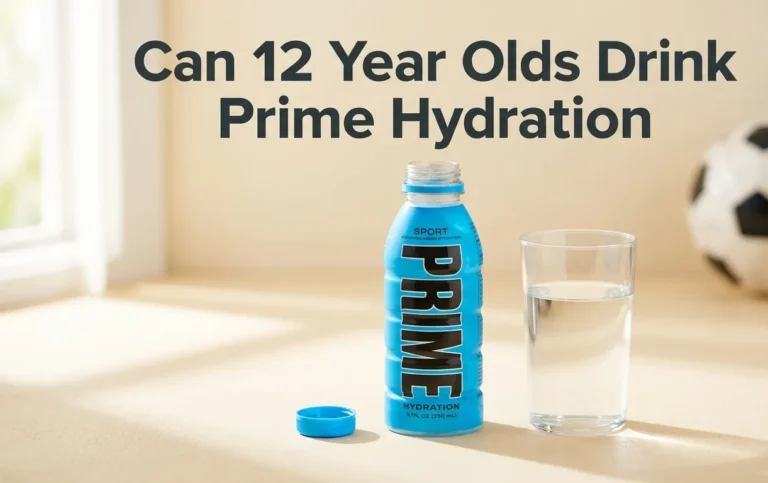
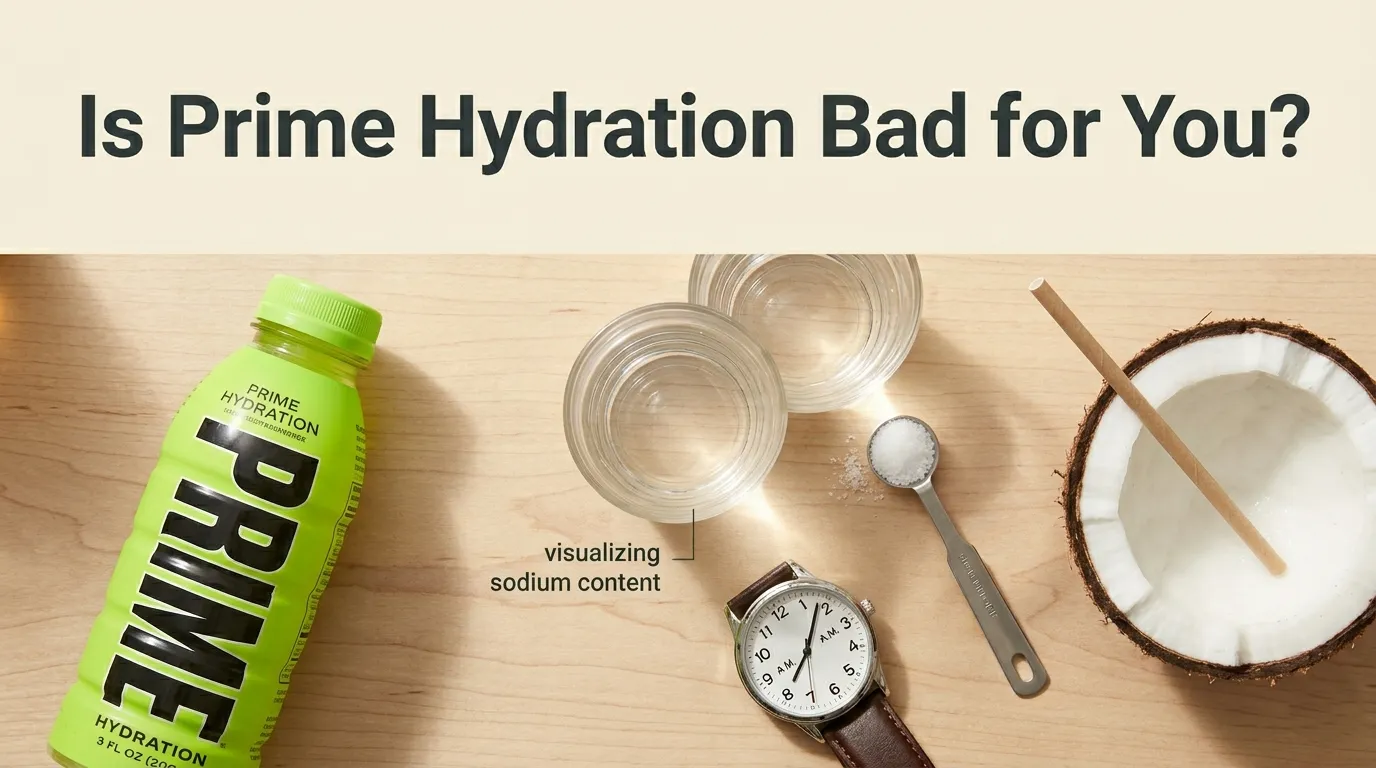
Prime Hydration is not bad for you in the sense of being acutely dangerous or toxic, but it is an unnecessary product for most people that adds artificial sweeteners, adult-formulated vitamin doses, and marketing-driven electrolyte levels to what would otherwise be plain water. For a healthy adult drinking it occasionally, the risk is low. For a child, the calculus changes.
The concern is not that one bottle will cause harm. It is that Prime Hydration markets itself with the visual language and influencer cachet that appeals specifically to children and teenagers, yet its nutritional profile is built for adults. The American Academy of Pediatrics has consistently advised that sports drinks and electrolyte beverages are unnecessary for children during routine physical activity and that water should be the default hydration source.
This article dissects every ingredient in the bottle, evaluates the electrolyte levels against what your body actually needs, explains what the artificial sweeteners do inside your gut, and answers the one question that keeps getting lost in the influencer noise: should your kid be drinking this? No wellness fluff. No brand loyalty. Just the nutrition facts panel, the research, and the numbers.
is prime hydration bad for you
Prime Hydration is not acutely bad for a healthy adult who drinks it occasionally, but it is not a health product either. It occupies a strange middle ground where it is too low in sodium to function as a legitimate sports rehydration drink and too loaded with artificial sweeteners and adult-dose vitamins to qualify as a simple thirst quencher. The answer depends entirely on who is drinking it, how often, and what they would be drinking instead.
For a healthy 25-year-old who drinks one bottle after a workout, the risk is minimal. The artificial sweeteners are well within the FDA acceptable daily intake. The vitamin levels, while unnecessary for someone eating a balanced diet, do not exceed safety thresholds in a single bottle. The electrolyte levels are unremarkable. There is no caffeine in Prime Hydration, which is a critical distinction from its sister product Prime Energy.
For a 10-year-old who wants Prime because their favorite YouTuber drinks it, the risk profile shifts. The vitamin A and zinc levels are formulated for adult daily values. A child consuming Prime Hydration alongside a standard multivitamin and fortified breakfast cereal could easily exceed the Tolerable Upper Intake Level for several micronutrients over time. The artificial sweeteners, while legally approved, introduce a sweetness-intensity exposure that shapes taste preferences during developmental years. The Academy of Nutrition and Dietetics has noted that regular consumption of artificially sweetened beverages in childhood may condition a preference for highly sweet foods and beverages.
is prime hydration safe
Prime Hydration is safe for healthy adults when consumed in moderation, but it is not a beverage that anyone needs, and calling it a hydration product obscures the fact that water hydrates perfectly well without the additives. The safety question hinges on three factors: the artificial sweetener content, the adult-formulated vitamin doses, and the sodium level that is paradoxically too low for actual electrolyte replacement in dehydration scenarios.
The artificial sweeteners in Prime Hydration, sucralose and acesulfame potassium, are both FDA-approved and have been studied extensively. The FDA has set acceptable daily intake levels for sucralose at 5 mg per kilogram of body weight per day and for acesulfame potassium at 15 mg per kilogram of body weight per day. For a 150-pound adult, that means you could consume roughly 340 mg of sucralose or 1,020 mg of acesulfame potassium daily before approaching the ADI. Prime Hydration does not disclose the exact milligram amounts per bottle, but they are well below these thresholds. You would need to drink an implausible number of bottles daily to exceed the ADI from Prime Hydration alone.
The safety question becomes more nuanced for children. A 60-pound child has a proportionally lower ADI for both sweeteners. More to the point, the American Academy of Pediatrics recommends that children’s beverage intake should center on water and milk, with no role for artificially sweetened sports drinks or electrolyte beverages in routine hydration. The organization’s 2011 clinical report on sports drinks and energy drinks for children and adolescents, reaffirmed in subsequent guidance, explicitly states that sports drinks are unnecessary for most young athletes and should not be consumed during meals or as a routine beverage.
prime hydration ingredients
The ingredients in Prime Hydration are filtered water, coconut water from concentrate, citric acid, dipotassium phosphate, magnesium citrate, trimagnesium citrate, natural flavor, sucralose, acesulfame potassium, sodium chloride, zinc aspartate, vitamin A (as retinyl palmitate), vitamin E (as alpha-tocopheryl acetate), vitamin B6 (as pyridoxine hydrochloride), vitamin B12 (as cyanocobalamin), and branched-chain amino acids in some flavor variants. The ingredient list reads more like a diluted multivitamin supplement than a hydration beverage.
Filtered water is the base and makes up the vast majority of the bottle’s volume. That is true of every hydration drink on the market. Coconut water from concentrate provides a small amount of natural carbohydrate and electrolytes, though the concentration level is not disclosed on the label. Citric acid provides tartness and acts as a preservative. Dipotassium phosphate, magnesium citrate, and trimagnesium citrate are the electrolyte salts that supply the potassium and magnesium content.
The sweetening system uses two artificial sweeteners in combination. Sucralose is approximately 600 times sweeter than table sugar. Acesulfame potassium is approximately 200 times sweeter. Food manufacturers often blend multiple non-nutritive sweeteners to create a sweetness profile that more closely resembles sugar while masking the aftertaste that each sweetener has individually. The combination is effective at creating a palatable zero-sugar beverage. It also exposes the drinker to two distinct artificial compounds with every sip.
Branched-chain amino acids appear in some Prime Hydration flavors as a marketing-driven inclusion. BCAAs are leucine, isoleucine, and valine, amino acids that play a role in muscle protein synthesis. The amount in Prime Hydration is undisclosed and almost certainly below the threshold required for any physiological effect. BCAAs in a hydration drink are what nutrition scientists call label dressing. They sound impressive on the back of the bottle. They contribute nothing meaningful to hydration or muscle function at the doses used.
prime hydration nutrition facts
Prime Hydration’s nutrition facts panel reveals a beverage that is low in calories, zero in sugar, surprisingly high in certain vitamins, and oddly low in the one electrolyte that matters most for actual rehydration: sodium. A single 16.9-ounce bottle contains 20 to 25 calories, 4 to 5 grams of total carbohydrate, 0 grams of added sugar, and 0 grams of protein and fat.
The carbohydrate comes from the coconut water concentrate and is minimal at roughly one teaspoon of carbohydrate per entire bottle. For context, a 16.9-ounce bottle of Gatorade contains approximately 140 calories and 36 grams of sugar. Prime Hydration’s zero-sugar, low-calorie profile is its primary nutritional distinction in the sports drink category and the reason some adults choose it as a flavored water alternative.
The vitamin content is where the nutrition facts panel raises eyebrows. One bottle delivers 100 percent of the adult Daily Value for vitamin A, vitamin E, vitamin B6, and vitamin B12. These vitamins have nothing to do with hydration. They are present because the product is designed to feel more like a supplement than a beverage, which aligns with the branding that Prime is a lifestyle product, not just a drink. For an adult eating a varied diet, these additional vitamins are unnecessary and are excreted. For a child, the vitamin A content is particularly notable because it comes in the preformed retinol form, which accumulates in the body and has a Tolerable Upper Intake Level of 3,000 mcg RAE per day for adults and substantially lower for children based on body weight.
Table: Prime Hydration Nutrition Facts per 16.9 oz (500 ml) Bottle
| Nutrient | Amount | Adult % DV | Notes |
|---|---|---|---|
| Calories | 20-25 | N/A | From coconut water concentrate carbohydrate |
| Total Carbohydrate | 4-5g | 1-2% | No added sugar |
| Added Sugar | 0g | N/A | Sweetened with sucralose and ace-K |
| Sodium | 10 mg | <1% | Extremely low for a “hydration” product |
| Potassium | 700 mg | 15% | From dipotassium phosphate and coconut water |
| Magnesium | 124 mg | 30% | From magnesium citrate and trimagnesium citrate |
| Zinc | 1 mg | 10% | From zinc aspartate |
| Vitamin A | 900 mcg RAE | 100% | Preformed retinol; fat-soluble and accumulates |
| Vitamin E | 15 mg | 100% | Fat-soluble; limited absorption without dietary fat |
| Vitamin B6 | 1.7 mg | 100% | Water-soluble; excess excreted |
| Vitamin B12 | 2.4 mcg | 100% | Cyanocobalamin form; water-soluble |
Key Takeaway: Prime Hydration is a zero-sugar, low-calorie flavored water with adult-dose vitamins and oddly low sodium. It is not a sports drink, not a rehydration solution, and not a daily multivitamin substitute. It is a lifestyle beverage that hydrates because water hydrates, not because the additives add hydration value.
prime hydration sugar content
Prime Hydration contains zero grams of added sugar per 16.9-ounce bottle, which is the single strongest nutritional argument in its favor and the primary reason some nutrition professionals consider it an acceptable occasional alternative to sugar-sweetened sports drinks. The total carbohydrate content is 4 to 5 grams, which comes from the coconut water concentrate and represents naturally occurring sugars rather than added refined sugar.
The absence of added sugar matters in a beverage market where a single 20-ounce Gatorade delivers 36 grams of sugar. The Dietary Guidelines for Americans 2020-2025 recommend that added sugars make up no more than 10 percent of total daily calories, which translates to approximately 50 grams for a 2,000-calorie diet. One regular sports drink uses up more than 70 percent of that daily limit. Prime Hydration uses none of it.
The zero-sugar achievement comes from the sucralose and acesulfame potassium blend. Whether replacing sugar with artificial sweeteners represents a net health improvement is a subject of ongoing scientific debate. A 2023 systematic review published in the BMJ found that short-term substitution of sugar-sweetened beverages with artificially sweetened beverages was associated with modest weight loss and improved glycemic control. The same review noted that long-term observational data show mixed results and that artificially sweetened beverages are not associated with the same health benefits as water.
The practical reality is that zero sugar is not the same as healthy. It is a harm-reduction feature for someone who would otherwise be drinking sugar-sweetened beverages. For someone who currently drinks water, switching to Prime Hydration does not represent a health improvement. It introduces artificial sweeteners and unnecessary vitamins without adding hydration benefits beyond what water already provides.
does prime hydration hydrate you
Prime Hydration does hydrate you because its primary ingredient is water, but it does not hydrate you better than plain water for everyday purposes, and its sodium content is too low for the product to function as a meaningful rehydration tool during illness or intense exercise. The hydration claim on the bottle is true in the same sense that coffee, tea, milk, and watermelon all hydrate you. Anything that is mostly water will hydrate you.
The physiology of hydration involves more than just water intake. Effective hydration requires that the water you consume stays in your body long enough to reach your cells. Sodium plays the lead role in that process by maintaining extracellular fluid volume and triggering the thirst mechanism that drives you to drink. Water without electrolytes can pass through you quickly, which is why oral rehydration solutions for clinical dehydration contain sodium at levels of 45 to 75 millimoles per liter, roughly 1,000 to 1,700 mg of sodium per liter.
Prime Hydration contains 10 mg of sodium per 16.9-ounce bottle, which is approximately 0.6 percent of the adult daily value. That is effectively zero in physiological terms. For a beverage marketed on hydration, the sodium level is inexplicably low. It means Prime Hydration hydrates like water, not like a sports drink. It will quench your thirst. It will not meaningfully replace sweat losses during prolonged exercise or help you retain fluid during illness.
Coconut water, by comparison, contains approximately 252 mg of sodium per liter in its natural state, or about 126 mg per 16.9 ounces, more than twelve times the sodium content of Prime Hydration. Gatorade contains approximately 450 mg of sodium per liter, or about 225 mg per 16.9 ounces. Prime Hydration is not in the same category as either product for electrolyte replacement. It is flavored water with a hydration marketing budget.
prime hydration electrolytes
Prime Hydration contains potassium, magnesium, and zinc as its primary electrolyte minerals, but the amounts and ratios do not reflect what the human body loses in sweat or needs during dehydration. The electrolyte panel is designed for label appeal, not for physiological replacement.
Potassium is present at 700 mg per bottle, which is approximately 15 percent of the adult Daily Value. This is the most meaningful electrolyte contribution in the product. Potassium is the primary intracellular cation and plays a role in nerve signal transmission, muscle contraction, and fluid balance within cells. A potassium-rich beverage can theoretically help replenish intracellular fluid after exercise, though the amount lost in sweat is modest. Most people lose 200 to 600 mg of potassium per liter of sweat, well within the amount provided by one bottle of Prime Hydration.
Magnesium is present at 124 mg per bottle, approximately 30 percent of the adult Daily Value. Magnesium is involved in over 300 enzymatic reactions in the body, including energy production and muscle function. It is not a primary electrolyte in the hydration sense. It does not drive fluid shifts the way sodium and potassium do. Its inclusion in Prime Hydration is nutritionally legitimate but not hydration-critical.
Zinc is present at 1 mg per bottle, approximately 10 percent of the adult Daily Value. Zinc has no role in acute hydration. It is an essential mineral for immune function, wound healing, and protein synthesis. Its presence in a hydration beverage is difficult to justify from a physiological standpoint and appears to be another supplement-style addition aimed at making the product feel more nutritionally complete.
The electrolyte that is conspicuously absent in meaningful quantity is sodium. Human sweat contains approximately 900 to 1,300 mg of sodium per liter on average. A beverage designed for rehydration after significant sweat loss should contain sodium in proportion to what was lost. Prime Hydration contains 10 mg. The product’s electrolyte profile is disproportionately weighted toward minerals that do not drive rehydration while neglecting the one that does.
prime hydration artificial sweeteners
Prime Hydration contains two artificial sweeteners, sucralose and acesulfame potassium, which work together to create the sweet taste of the product without adding sugar or calories. These compounds are FDA-approved and have undergone safety evaluation, but their long-term metabolic effects and their impact on children’s developing taste preferences remain areas of active research and legitimate debate.
Sucralose is a chlorinated sugar derivative created by replacing three hydroxyl groups on a sucrose molecule with chlorine atoms. The body does not recognize it as a carbohydrate and does not metabolize it for energy. Most ingested sucralose passes through the gastrointestinal tract unabsorbed and is excreted in feces. The approximately 15 percent that is absorbed is excreted unchanged in urine. The FDA acceptable daily intake is 5 mg per kilogram of body weight. For a 150-pound adult, the ADI is approximately 340 mg per day.
Acesulfame potassium, often abbreviated as ace-K, is a potassium salt of a sulfonamide compound. It is approximately 200 times sweeter than sucrose by weight. Like sucralose, it is not metabolized by the body and is excreted unchanged in urine. The FDA acceptable daily intake is 15 mg per kilogram of body weight. For a 150-pound adult, the ADI is approximately 1,020 mg per day.
The research controversy around artificial sweeteners centers on three areas. First, studies in rodent models and preliminary human research suggest that non-nutritive sweeteners may alter the composition and function of the gut microbiome. A 2014 study published in Nature found that saccharin and sucralose altered gut microbiota composition in mice, leading to glucose intolerance. Translation to humans is ongoing and inconsistent. Second, observational studies have found associations between artificially sweetened beverage consumption and increased risk of type 2 diabetes and cardiovascular disease, but these studies cannot establish causation and are confounded by the fact that people who consume diet beverages often have higher baseline health risks. Third, some research suggests that non-nutritive sweeteners may condition a preference for sweetness that makes whole foods, including vegetables and unsweetened grains, less palatable by comparison.
sucralose in prime hydration
Sucralose in Prime Hydration is present at an undisclosed concentration, but it is almost certainly the primary sweetener in the product based on its position on the ingredient list and its sweetening potency relative to acesulfame potassium. The safety profile of sucralose at the doses consumed from occasional Prime Hydration use is well-established for adults. The concerns that exist are about cumulative exposure, frequency of consumption, and the developing gut microbiome in children.
The Acceptable Daily Intake for sucralose is 5 mg per kilogram of body weight per day. To exceed the ADI, a 70-pound child would need to consume approximately 160 mg of sucralose daily. Commercial sucralose-sweetened beverages typically contain 30 to 60 mg of sucralose per 16-ounce serving, though Prime Hydration’s exact content is proprietary. A child would need to drink several bottles daily to approach the ADI from Prime Hydration alone. The concern is cumulative exposure across multiple artificially sweetened products: diet sodas, sugar-free gum, low-calorie flavored waters, protein bars, and other “zero sugar” products that a child might consume in a day.
A 2022 study published in the Journal of Toxicology and Environmental Health reviewed the available sucralose safety data and concluded that while acute toxicity is well below any plausible consumption level, gaps remain in the understanding of long-term chronic exposure on metabolic health and gut microbial ecology. The study’s authors recommended that children and pregnant individuals limit sucralose intake out of an abundance of caution until more definitive long-term data are available.
For an adult who drinks one Prime Hydration a few times a week, the sucralose exposure is almost certainly benign. For a child who drinks one daily alongside other artificially sweetened products, the long-term safety picture is less clear, and the precautionary principle suggests erring toward water.
Key Takeaway: Sucralose in Prime Hydration is safe at the doses consumed by adults with occasional use. The concern is children drinking it daily and accumulating sucralose from multiple “zero sugar” products, where the long-term safety data are less established and the taste-preference conditioning is a separate developmental consideration.
prime hydration vs gatorade
Prime Hydration and Gatorade are fundamentally different beverages that happen to share shelf space in the sports drink aisle. Gatorade is a sugar-sweetened, sodium-containing sports drink designed for electrolyte and carbohydrate replacement during prolonged exercise. Prime Hydration is an artificially sweetened, low-sodium flavored water with added vitamins that is marketed as a lifestyle hydration product. The distinction matters for anyone choosing between them.
Gatorade contains approximately 140 calories and 36 grams of sugar per 20-ounce bottle, along with 270 mg of sodium and 80 mg of potassium. The sugar is functional in a sports context. It provides rapidly absorbed carbohydrate for working muscles and facilitates sodium and water absorption in the small intestine through the sodium-glucose cotransport mechanism. For an athlete exercising intensely for more than 60 to 90 minutes in heat, Gatorade’s formulation has a physiological rationale.
Prime Hydration contains 20 to 25 calories, 0 grams of sugar, 10 mg of sodium, and 700 mg of potassium per 16.9-ounce bottle. The electrolyte profile does not support exercise recovery. The absence of sodium and carbohydrate means it does not facilitate fluid retention or glycogen replenishment. For an athlete in a prolonged exercise scenario, Prime Hydration underperforms Gatorade as a sports drink because it was not designed to be one.
For a sedentary person choosing between the two as a flavored beverage, Prime Hydration has the advantage of not delivering 36 grams of sugar. For an athlete mid-game, Gatorade has the functional advantage. For a child, neither is recommended by the American Academy of Pediatrics as a routine beverage. Water is the answer for everyday hydration, and milk is the answer for childhood nutrition. Both Prime and Gatorade occupy niches that most people, especially children, do not need filled.
Table: Prime Hydration vs. Gatorade vs. Plain Water per 16.9 oz (500 ml)
| Attribute | Prime Hydration | Gatorade Thirst Quencher | Plain Water |
|---|---|---|---|
| Calories | 20-25 | 120 | 0 |
| Sugar | 0g | 30g | 0g |
| Sodium | 10 mg | 225 mg | 0-5 mg |
| Potassium | 700 mg | 65 mg | 0 mg |
| Magnesium | 124 mg | 0 mg | 0-5 mg |
| Sweetener | Sucralose, ace-K | Sugar, dextrose | None |
| Vitamins added | A, E, B6, B12 (100% DV each) | None | None |
| Caffeine | 0 mg | 0 mg | 0 mg |
| Best use case | Flavored water alternative | Prolonged exercise over 60 min | Everyday hydration for all ages |
prime hydration vs prime energy
Prime Hydration and Prime Energy are separate products from the same brand, and confusing them is the single most common and dangerous error people make when evaluating Prime’s safety. Prime Hydration contains zero caffeine and is sold in 16.9-ounce plastic bottles. Prime Energy contains 200 milligrams of caffeine per 12-ounce can, which is equivalent to roughly two cups of coffee or two and a half standard Red Bull cans, and has been the subject of regulatory scrutiny specifically because of its appeal to minors.
The caffeine content of Prime Energy is the health concern, not a minor footnote. A single can delivers more caffeine than the American Academy of Pediatrics recommends adolescents consume in an entire day. The AAP advises that children under 12 consume zero caffeine and that adolescents aged 12 to 18 limit caffeine intake to no more than 100 mg per day. Prime Energy contains double that amount in one can. In 2023, Senator Chuck Schumer publicly called on the FDA to investigate Prime Energy’s marketing to children precisely because the branding and packaging made Prime Energy difficult for parents to distinguish from the caffeine-free Prime Hydration.
Prime Hydration contains no caffeine, no stimulants of any kind, and no ingredients that are acutely psychoactive. It is a flavored water product with electrolytes and vitamins. The FDA’s concern, and the concern of pediatric health organizations, has been directed at Prime Energy, not Prime Hydration. The two products share a brand name, a similar visual design, and a marketing ecosystem that targets the same young demographic. A parent who sees “Prime” in their child’s hand needs to check the label to determine which product it is.
This distinction needs to be stated with absolute clarity because the lawsuits and regulatory scrutiny surrounding Prime Energy have spilled into public perception of the entire Prime brand. If you are evaluating the safety of Prime Hydration specifically, the caffeine question has a short answer: there is none. If your child has a can of Prime, check whether it says Hydration or Energy. The difference matters more than any other fact in this article.
Key Takeaway: Prime Hydration has zero caffeine. Prime Energy has 200 mg of caffeine. If you are a parent worried about what your child is drinking, the brand name is not enough. Read the word after “Prime” on the can or bottle. It changes everything about the safety assessment.
can kids drink prime hydration
Kids can physically drink Prime Hydration and a single bottle is unlikely to cause acute harm in a healthy child over the age of eight, but the product is not formulated for children, is not recommended by pediatric health organizations, and regular consumption introduces concerns about artificial sweetener exposure and excessive vitamin intake that parents should understand before saying yes.
The American Academy of Pediatrics recommends water and plain pasteurized milk as the primary beverages for children and adolescents. The organization’s policy statement on sports drinks and energy drinks for children explicitly states that sports drinks and electrolyte beverages are unnecessary for most children during routine physical activity. The statement does not name Prime Hydration specifically because the policy predates the brand, but the principle applies. A beverage formulated with adult Daily Value percentages, artificial sweeteners, and a marketing campaign that targets youth does not fit into the pediatric nutrition framework that the AAP endorses.
The vitamin content creates a pediatric-specific concern. A 10-year-old child weighing 70 pounds who drinks one bottle of Prime Hydration receives 100 percent of the adult Daily Value for vitamin A, vitamin E, vitamin B6, and vitamin B12. The adult DV for vitamin A is 900 mcg RAE. The Recommended Dietary Allowance for a child aged 9 to 13 is 600 mcg RAE. A single bottle of Prime Hydration provides 150 percent of that child’s RDA for vitamin A. If the same child also takes a daily multivitamin, eats fortified breakfast cereal, and consumes other vitamin-fortified foods, cumulative intake of preformed vitamin A can exceed safe levels over time.
A pediatrician is the appropriate healthcare provider to ask about your specific child’s beverage consumption. Bring the Prime Hydration bottle or a photo of the nutrition facts panel to the appointment. Ask specifically about the vitamin A and zinc content in the context of your child’s overall diet and any supplements they take. That conversation will give you personalized guidance that no general article can provide.
is prime hydration safe for children
Prime Hydration is not formulated for children, and the safety profile for pediatric use has not been specifically studied by independent researchers. The product’s nutritional content, adult-formulated vitamin doses, artificial sweetener blend, and coconut allergen status all introduce variables that parents should evaluate critically rather than assuming safety based on the brand’s ubiquity.
The vitamin A content deserves the most parental attention. Preformed vitamin A, the retinyl palmitate form listed in Prime Hydration’s ingredients, is fat-soluble and accumulates in the liver. Unlike water-soluble vitamins that are excreted when consumed in excess, vitamin A builds up over time. The Tolerable Upper Intake Level for vitamin A is 1,700 mcg RAE per day for children aged 4 to 8 and 2,800 mcg RAE per day for children aged 9 to 13. One bottle of Prime Hydration contains 900 mcg RAE. Combined with a typical children’s multivitamin, which often contains 400 to 600 mcg RAE, a child could approach the UL from just two products before eating any food.
The coconut water base introduces an allergen that parents need to be aware of. Coconut is classified as a tree nut by the FDA for labeling purposes, although true coconut allergy is rare. A child with a known tree nut allergy should not consume Prime Hydration without clearance from their allergist.
The sweetener issue is less about acute safety and more about developmental exposure. Children have a higher density of sweet taste receptors than adults, which makes them more sensitive to sweet tastes and more susceptible to sweet-preference conditioning. A 2015 study in the American Journal of Clinical Nutrition found that children who regularly consumed artificially sweetened beverages showed a greater preference for sweet tastes in general. The long-term dietary pattern implications of that preference shift are worth considering when a child asks for a daily Prime Hydration.
is prime hydration good for you
Prime Hydration is not good for you in the sense that it provides a health benefit you cannot get from water, and calling it a health product misrepresents what it is: a flavored beverage with added vitamins and electrolytes that you do not need unless you have a specific deficiency or are engaging in prolonged intense exercise in heat. The product is not unhealthy in moderation, but it is also not health-promoting. It is neutral at best, unnecessary for most, and introduces variables that water does not.
The fat-soluble vitamins A and E in Prime Hydration are present at 100 percent of the adult Daily Value. These are vitamins that some Americans do get enough of and others do not. Vitamin A deficiency is rare in developed countries. The NIH Office of Dietary Supplements states that most Americans consume adequate amounts of vitamin A from diet alone. Adding 100 percent DV from a beverage to an already adequate diet does not provide a benefit. It provides excess that the body must process and, in the case of vitamin A, store.
The water-soluble B vitamins in Prime Hydration are excreted when consumed in excess, which means they literally go down the toilet. Your body takes what it needs from the bloodstream, and your kidneys filter out the rest. A person eating a varied diet with adequate protein and whole grains is almost certainly getting enough B vitamins from food. The 100 percent DV of B6 and B12 in Prime Hydration is nutritionally redundant for them. They are paying for vitamins their urine will dispose of within hours.
Quick Tip:
If you enjoy the taste of Prime Hydration and want a zero-sugar flavored drink, drink it occasionally as you would a diet soda.
Do not drink it because you believe it provides a hydration advantage or a nutritional benefit you are missing from food.
For daily hydration, water is superior in every health-relevant metric: zero artificial sweeteners, zero unnecessary vitamins, zero cost, and zero questions about whether it belongs in a child’s diet.
prime hydration sodium
Prime Hydration contains 10 mg of sodium per 16.9-ounce bottle, which is less than one percent of the adult Daily Value and is physiologically trivial for hydration purposes. The near-absence of sodium is the single biggest disconnect between Prime Hydration’s marketing as a hydration beverage and its actual functional profile.
Sodium is the primary extracellular cation and the electrolyte most responsible for fluid balance, blood volume maintenance, and the thirst mechanism that drives hydration behavior. When you sweat, you lose sodium. When you are dehydrated from illness, you lose sodium. Rehydration without sodium replacement results in diluted blood sodium levels, which triggers the kidneys to excrete the water you just drank rather than retaining it. This is why oral rehydration solutions formulated for clinical dehydration contain sodium at concentrations far higher than Prime Hydration provides.
For everyday hydration in a sedentary person, the low sodium content is irrelevant. Plain water also contains essentially no sodium, and it hydrates perfectly well because the body’s baseline sodium stores are adequate to maintain fluid balance between meals. The issue is not that Prime Hydration is bad because it is low in sodium. The issue is that Prime Hydration markets itself as a hydration-focused product while delivering an electrolyte profile that is functionally indistinguishable from water for sodium content.
For exercise hydration, where sodium replacement matters, Prime Hydration’s 10 mg of sodium per bottle is inadequate. A person exercising for 90 minutes in heat can lose 1,000 to 3,000 mg of sodium through sweat. Replacing that with Prime Hydration would be like trying to refill a swimming pool with a teaspoon.
prime hydration health risks
The health risks associated with Prime Hydration are not acute toxicity risks for a healthy adult drinking the product occasionally. They are cumulative, context-dependent risks that arise from overconsumption, consumption by vulnerable populations, and the displacement of healthier beverage choices in the diet.
The first risk is hypervitaminosis A from chronic overconsumption in the context of a diet that already provides adequate or excessive vitamin A from food and supplements. Preformed vitamin A toxicity is rare but real, and it presents with symptoms that include headache, nausea, dizziness, and liver stress. This risk is almost entirely limited to people who drink multiple bottles of Prime Hydration daily or who combine one daily bottle with a high-dose multivitamin and vitamin A-rich foods like liver.
The second risk is artificial sweetener exposure in children, where the long-term metabolic and microbiome effects are not fully characterized and where the developmental taste-preference conditioning is a documented concern. This is a risk of regular consumption, not of an occasional bottle at a party.
The third risk is the displacement risk. Every bottle of Prime Hydration a child drinks is a bottle of water or milk they are not drinking. Milk provides calcium, vitamin D, protein, and potassium in a whole-food matrix that supports bone development during the years when peak bone mass is being established. Water hydrates without additives, sweeteners, or questions. When Prime Hydration takes up beverage slots in a child’s day, it displaces beverages that the evidence base clearly supports.
The fourth risk is allergen exposure. The coconut water base is a tree nut-derived ingredient, and while coconut allergy is uncommon, it exists. A child with an undiagnosed coconut allergy who drinks Prime for the first time could experience a reaction. Parents should introduce any new packaged beverage to a child with known food allergies only after checking the full ingredient list.
Frequently Asked Questions About Prime Hydration
Is Prime Hydration safe for a 10-year-old to drink?
An occasional bottle of Prime Hydration is unlikely to cause acute harm in a healthy 10-year-old, but the product is not formulated for children and the American Academy of Pediatrics recommends water and milk as the primary beverages for this age group.
One bottle delivers 150 percent of a 10-year-old’s vitamin A RDA and introduces artificial sweeteners that the AAP does not recommend as part of routine pediatric beverage intake.
A parent with specific concerns should bring the Prime Hydration nutrition facts panel to their pediatrician for personalized guidance.
Does Prime Hydration actually hydrate better than water?
Prime Hydration does not hydrate better than water for everyday purposes because hydration is determined primarily by total fluid intake, and water is the most efficient delivery system.
The sodium content in Prime Hydration is too low to provide meaningful fluid retention advantages over water during exercise or illness.
The product hydrates because it is mostly water, not because the added electrolytes and vitamins enhance the hydration process.
What is the difference between Prime Hydration and Prime Energy?
Prime Hydration is a caffeine-free flavored water with electrolytes and vitamins sold in 16.9-ounce bottles.
Prime Energy is a high-caffeine energy drink containing 200 mg of caffeine per 12-ounce can, equivalent to two cups of coffee, and has been the subject of FDA scrutiny regarding its marketing to minors.
The two products share a brand name and visual design but have completely different safety profiles.
Why is Prime Hydration being sued in 2026?
Lawsuits involving the Prime brand have primarily targeted Prime Energy over its caffeine content and marketing practices, with regulatory attention focused on whether the product was inappropriately marketed to children.
Prime Hydration as a caffeine-free product has faced less legal scrutiny, though some class-action lawsuits have challenged the labeling and marketing of both products.
Checking current news sources for the most recent legal developments in 2026 will provide the most up-to-date information on any active litigation.
Does Prime Hydration contain caffeine?
Prime Hydration contains zero milligrams of caffeine per bottle.
The product’s stimulant-free formulation distinguishes it from Prime Energy, which contains 200 mg of caffeine per can.
Anyone concerned about caffeine exposure from Prime products should check which specific product they have because the Hydration and Energy lines have entirely different ingredient profiles.
Can I drink Prime Hydration every day?
Drinking Prime Hydration every day is unlikely to cause harm in a healthy adult, but it provides no health benefit that water does not provide and introduces unnecessary artificial sweeteners and vitamins into your daily intake.
If you enjoy the taste and it replaces a sugar-sweetened beverage in your diet, daily consumption is a reasonable personal choice from a harm-reduction perspective.
If you are drinking it because you believe you need the electrolytes or vitamins, a conversation with a registered dietitian can help you evaluate whether your diet is genuinely lacking in those nutrients.
Prime Hydration is a flavored water with a marketing budget that vastly exceeds its nutritional necessity. It is not poison. It is not a health drink. It is a zero-sugar beverage that hydrates because it is mostly water and adds vitamins you probably do not need, sweeteners you did not ask for, and a sodium level too low to matter.
For an adult who likes the taste, drinks it occasionally, and understands what is in the bottle, the risk is low. For a child who wants it because their favorite influencer holds it up to the camera, the answer should usually be no, or at least not every day. The pediatric evidence does not support routine consumption of artificially sweetened, vitamin-fortified adult beverages in children’s diets.
Read the label. Check whether it says Hydration or Energy. Know that water does the same job better, cheaper, and with zero asterisks. That is the honest nutritional assessment of Prime Hydration in 2026.