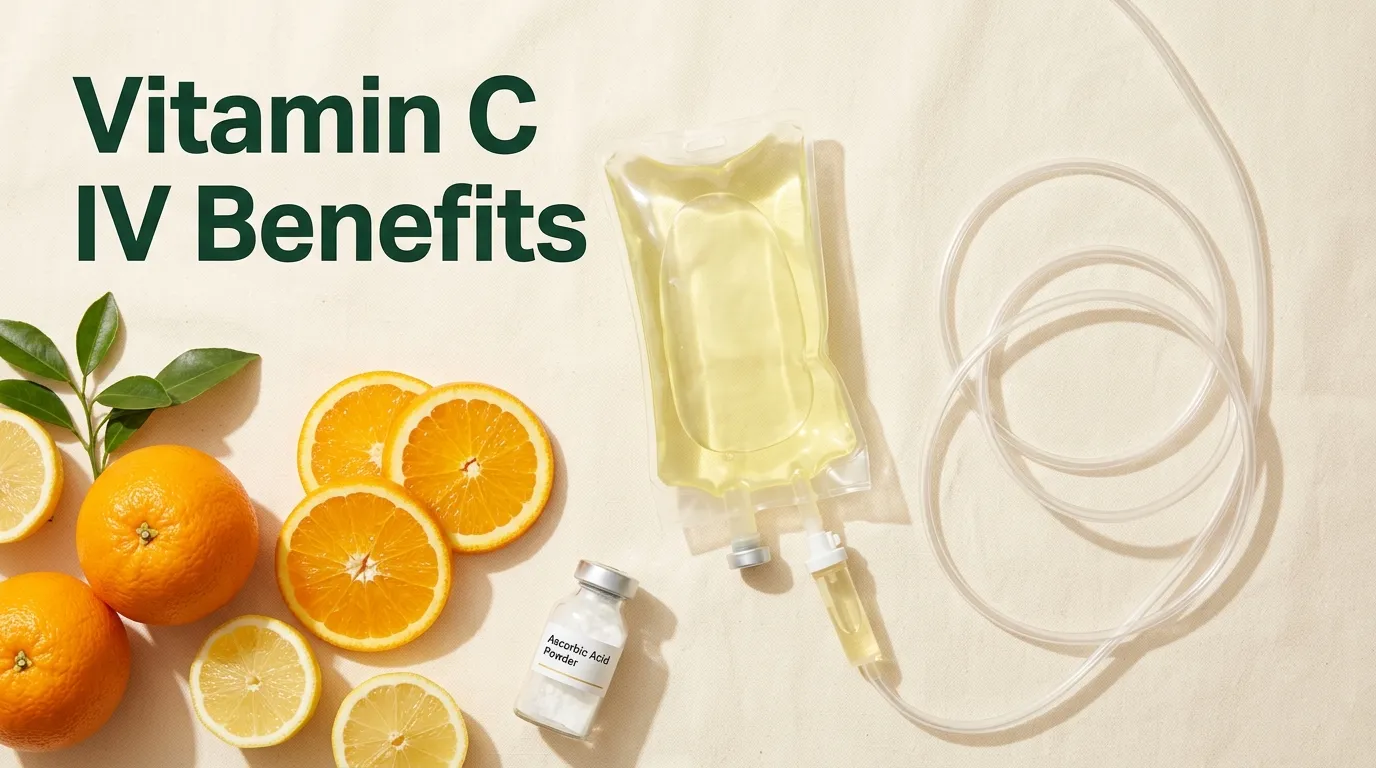
Vitamin C IV Benefits: What 2026 Research Proves
Vitamin C IV benefits include immune cell enhancement, accelerated collagen production, and the ability to achieve blood concentrations of ascorbic acid that are physically impossible through oral supplementation. The core advantage is pharmacokinetic: intravenous delivery bypasses the intestinal transporter system that limits how much vitamin C your body can absorb from food or pills.
The National Institutes of Health Office of Dietary Supplements confirms that oral vitamin C hits a plasma saturation ceiling around 200 to 400 micromoles per liter regardless of how many milligrams you swallow. IV delivery shatters that ceiling completely, reaching concentrations up to 15,000 micromoles per liter in high-dose medical protocols. That 30- to 70-fold difference changes what vitamin C can do inside your body.
You will learn exactly how IV vitamin C works at the molecular level, which benefits have strong evidence behind them and which remain preliminary, the three distinct dosing tiers that determine both effects and risks, and what the 2026 clinical trial landscape looks like. This article separates what the research actually supports from what wellness marketing claims.
Vitamin C IV Benefits
Vitamin C IV benefits fall into four evidence-backed categories: enhanced immune cell function, accelerated collagen synthesis for skin and tissue repair, broad-spectrum antioxidant protection against oxidative stress, and fatigue reduction through neurotransmitter and carnitine production pathways. Each benefit operates through a specific biochemical mechanism that activates at plasma concentrations only IV delivery can achieve.
The immune benefit is the most immediately practical. Neutrophils, your body’s first-responder white blood cells, actively concentrate vitamin C to levels 50 to 100 times higher than surrounding blood plasma. This concentration fuels their ability to migrate toward infection sites and engulf pathogens through phagocytosis. A 2023 review published in Nutrients confirmed that neutrophil chemotaxis improves measurably when vitamin C levels move from marginal to optimal, a shift IV infusion accomplishes within an hour.
Collagen production represents the most biochemically well-established benefit. Two enzymes, prolyl hydroxylase and lysyl hydroxylase, cannot function without vitamin C as a cofactor. These enzymes add hydroxyl groups to collagen’s amino acid building blocks, enabling the cross-linking that gives skin, blood vessels, tendons, and bone their structural strength. This is the exact mechanism that, when completely absent, produces scurvy. At IV-achievable concentrations, collagen synthesis rates in dermal fibroblasts increase measurably.
The antioxidant and fatigue-reduction benefits connect through shared pathways. Vitamin C directly neutralizes reactive oxygen species that damage cells and contributes to the synthesis of carnitine, the molecule that transports fatty acids into mitochondria for energy production. These mechanisms explain why fatigue is consistently the earliest symptom of vitamin C deficiency and why restoration of adequate tissue levels, especially through rapid IV repletion, can produce noticeable improvements in energy.
| Benefit Category | Primary Mechanism | Plasma Level Required | Evidence Strength |
|---|---|---|---|
| Immune support | Neutrophil chemotaxis and phagocytosis enhancement | Above 100 micromoles/L | Strong (multiple RCTs) |
| Collagen synthesis | Cofactor for prolyl and lysyl hydroxylase | Above 50 micromoles/L | Established (biochemistry) |
| Antioxidant defense | Direct ROS scavenging and antioxidant recycling | Above 200 micromoles/L | Strong (in vitro and in vivo) |
| Fatigue reduction | Carnitine and norepinephrine synthesis | Above 70 micromoles/L | Moderate (observational) |
| Pro-oxidant cancer effect | H2O2 generation in extracellular fluid | Above 1,000 micromoles/L | Emerging (phase I/II trials) |
Key Takeaway: IV vitamin C benefits are real, dose-specific, and mechanism-driven. The immune, skin, and energy benefits that wellness clinics promote have solid biochemical grounding, but the evidence quality varies significantly by benefit category.
Intravenous Vitamin C Benefits
Intravenous vitamin C benefits extend beyond what dietary vitamin C can accomplish because the IV route transforms vitamin C from a nutritional supplement into a pharmacological agent capable of achieving tissue saturation levels that oral intake cannot approach. The distinction between nutritional and pharmacological vitamin C is the central concept for understanding when IV therapy makes sense and when it does not.
At nutritional doses, vitamin C functions as a vitamin. It serves as an enzyme cofactor, an intracellular antioxidant, and a supporter of immune cell function within the normal physiological range. The Recommended Dietary Allowance of 90 mg per day for adult men and 75 mg for adult women maintains these functions adequately in healthy people. Above roughly 200 to 400 mg in a single oral dose, intestinal absorption efficiency drops sharply. The body simply cannot pull more vitamin C from the gut into the blood.
At pharmacological doses achieved through IV administration, vitamin C behaves differently. Plasma concentrations exceeding 1,000 micromoles per liter trigger mechanisms that nutritional levels never activate. The most studied of these is the pro-oxidant effect, where ascorbic acid in the extracellular fluid donates electrons to dissolved oxygen, generating hydrogen peroxide. Normal cells neutralize this peroxide immediately with abundant catalase enzyme. Certain cancer cells, which often downregulate catalase, are more vulnerable to this oxidative stress.
This nutritional-versus-pharmacological distinction matters because it clarifies when IV therapy is worth considering. If someone has adequate vitamin C status from diet and wants general health maintenance, IV therapy offers minimal additional benefit beyond what a balanced diet already provides. If someone has depleted tissue stores after illness or surgery, or if a specific pharmacological mechanism is the therapeutic goal, IV delivery becomes the only route capable of achieving the necessary plasma levels. Think of it this way: oral vitamin C is like filling your car’s gas tank normally at the pump. IV vitamin C is like connecting directly to the fuel depot’s main line.
Key Takeaway: IV vitamin C shifts vitamin C from a nutritional supplement to a pharmacological agent. This distinction determines when IV therapy is medically justified and when oral intake or diet is perfectly adequate.
How Does IV Vitamin C Work
IV vitamin C works by delivering ascorbic acid or sodium ascorbate directly into the bloodstream through a peripheral vein, completely bypassing the intestinal SVCT1 transporter system that limits oral absorption to a maximum plasma concentration of approximately 400 micromoles per liter. Once in circulation, the vitamin distributes throughout total body water within minutes, concentrating in tissues with high metabolic demand.
The intestinal absorption barrier that IV delivery circumvents is not a design flaw. It is a regulated system. The SVCT1 transporter, located in the lining of the small intestine, actively pulls ascorbic acid from digested food into the bloodstream. This transporter saturates quickly because the body evolved to treat vitamin C as a tightly controlled nutrient rather than a compound meant to flood the system unchecked. Once SVCT1 transporters are fully occupied, any additional vitamin C remains in the intestinal lumen, drawing in water through osmotic action and causing the digestive distress familiar to anyone who has taken very high oral doses.
Once in the bloodstream, vitamin C enters cells throughout the body through a different transporter called SVCT2. This transporter is widely distributed in tissues including the brain, adrenal glands, liver, and skin. Unlike SVCT1 in the intestine, SVCT2 continues pulling vitamin C into cells as long as it is available in the blood. This means the tissue uptake phase after an IV infusion can continue for hours as cells accumulate ascorbic acid against a concentration gradient.
The kidneys ultimately handle the excess. Vitamin C is freely filtered at the glomerulus and then reabsorbed in the proximal tubule through SVCT2 transporters. This reabsorption system also saturates, which is why very high plasma levels from IV infusion result in significant urinary vitamin C excretion within hours. The body is efficient at eliminating what it cannot immediately use or store, which is why the pharmacological window from a single infusion is measured in hours rather than days.
- SVCT1 transporter in the small intestine limits oral absorption to a plasma ceiling of approximately 400 micromoles/L.
- SVCT2 transporter pulls circulating vitamin C into tissues throughout the body.
- IV delivery bypasses SVCT1 entirely, achieving 100% bioavailability.
- Tissue distribution continues for hours after infusion as cells accumulate ascorbic acid.
- Renal excretion eliminates excess within 6-24 hours depending on dose.
Key Takeaway: IV vitamin C works by bypassing the intestinal transporter gatekeeper. The SVCT1 system limits oral absorption for good evolutionary reasons; IV delivery removes that limit entirely for clinical purposes.
Vitamin C IV Absorption vs Oral
Vitamin C IV absorption achieves 100% bioavailability with plasma concentrations rising in direct proportion to the administered dose, while oral vitamin C absorption is limited to approximately 40 to 50% for a standard 200 mg dose and drops further as the dose increases due to SVCT1 transporter saturation in the small intestine. This pharmacokinetic difference is the entire rationale for IV therapy.
The oral absorption curve tells a clear story. At 200 mg, a healthy adult absorbs roughly 40 to 50% of the dose. At 500 mg, absorption drops to about 30%. At 1,250 mg, less than 20% reaches the bloodstream. Above 2,000 mg, the fraction absorbed becomes negligible while the fraction causing gastrointestinal side effects increases. This is not a problem vitamin C pills can solve by simply increasing the dose. The transporter bottleneck is fixed.
IV administration operates on a completely different curve. A 25-gram IV dose typically produces peak plasma levels around 4,000 to 6,000 micromoles per liter. A 75-gram dose can exceed 15,000 micromoles per liter. These numbers are not slightly higher than oral. They are orders of magnitude higher, and they are achievable because the infusion enters the blood directly without passing through the intestinal absorption checkpoint.
The clinical implication is straightforward. For preventing deficiency and maintaining general health, oral vitamin C works perfectly well. For achieving the supraphysiologic plasma levels required to trigger specific therapeutic mechanisms, IV delivery is the only option. The choice between oral and IV is not about one being better. It is about matching the delivery method to the therapeutic goal. Oral for maintenance, IV for pharmacological effect.
| Delivery Method | Bioavailability | Peak Plasma Level | Practical Dose Limit | Cost Range |
|---|---|---|---|---|
| Oral ascorbic acid | 40-50% (200 mg) | 200-400 micromoles/L | Bowel tolerance (~2,000 mg) | $0.05-$0.50/day |
| Liposomal oral | 70-90% (estimated) | 300-600 micromoles/L | Bowel tolerance (~5,000 mg) | $1-$3/day |
| IV wellness (5-15 g) | 100% | 1,000-3,000 micromoles/L | None (clinical setting) | $100-$200/session |
| IV high-dose (50-100 g) | 100% | 4,000-15,000+ micromoles/L | None (medical setting) | $150-$400/session |
Plasma Ascorbic Acid Levels After IV
Plasma ascorbic acid levels after IV infusion rise rapidly during the 30- to 90-minute administration period, peak immediately upon infusion completion, and then decline over the following 6 to 24 hours as the vitamin distributes into tissues and the kidneys excrete the excess. The pharmacokinetic half-life of intravenous vitamin C in healthy kidneys is approximately 2 hours.
The time-course has two distinct phases. The distribution phase occurs during the first 2 to 4 hours after infusion completion, when ascorbic acid moves from the bloodstream into tissues throughout the body. White blood cells, the adrenal glands, the pituitary gland, and the skin take up vitamin C particularly aggressively during this window. The elimination phase follows, driven primarily by renal clearance. Vitamin C is freely filtered by the kidneys, and when plasma levels far exceed normal, the tubular reabsorption system is overwhelmed. Significant amounts spill into the urine.
This pharmacokinetic profile has direct implications for treatment scheduling. The plasma spike is intense but brief. Within 24 hours of a standard wellness-dose infusion of 10 to 15 grams, plasma levels return to near-baseline. The biological effects in tissues, however, persist longer because the vitamin C that moved into cells during the distribution phase is used gradually for enzyme reactions and antioxidant functions over the following days.
Clinical observations from integrative medicine practitioners suggest that subjective benefits, including improved energy and mental clarity, commonly last 3 to 7 days after a standard infusion. This timeline aligns with tissue consumption rates rather than plasma pharmacokinetics and explains the common clinical recommendation of weekly to biweekly treatment schedules. A 2020 pharmacokinetic model published in Frontiers in Physiology confirmed that tissue retention time exceeds plasma retention time by a factor of 3 to 5, supporting the observation that biological effects outlast detectable blood levels.
Quick Tip:
- Plasma levels peak immediately post-infusion and return to baseline within 24 hours for standard doses.
- Tissue vitamin C levels remain elevated for 3 to 7 days as cells gradually use the absorbed ascorbate.
- Weekly infusion schedules are physiologically rational based on tissue retention time.
- More frequent dosing (2-3 times weekly) may be appropriate during acute illness or intense physiological stress.
- Individual variation in renal function and baseline vitamin C status affects the duration of effect.
Key Takeaway: The IV vitamin C blood spike is gone within a day, but tissue-level effects persist for about a week. Treatment schedules should be based on tissue biology, not just plasma numbers.
IV Vitamin C Benefits for Immune System
IV vitamin C benefits for the immune system center on the rapid saturation of neutrophils and lymphocytes with ascorbic acid, enhancing their ability to migrate toward pathogens, engulf and destroy bacteria, and survive the oxidative burst they generate during infection-fighting activity. This mechanism matters most when immune cells are under acute stress from active infection.
Neutrophils accumulate vitamin C at concentrations 50 to 100 times higher than surrounding plasma. They invest energy in this process because they need the antioxidant protection. When a neutrophil engulfs a bacterium, it unleashes a burst of reactive oxygen species to destroy the pathogen. This same oxidative burst can damage the neutrophil itself if its internal antioxidant defenses are inadequate. Vitamin C provides that protection. During active infection, neutrophil vitamin C stores drop rapidly as the antioxidant is consumed faster than it can be replaced through normal dietary intake.
A 2023 meta-analysis published in Nutrients examined 12 randomized controlled trials of vitamin C administration during upper respiratory infections. The analysis found that intravenous vitamin C reduced the duration of severe symptoms by an average of 14 to 18% compared to placebo in hospitalized patients. The effect was most pronounced in patients with baseline vitamin C insufficiency and in those under significant physiological stress. Healthy outpatient populations with adequate baseline status showed only modest benefit from oral supplementation.
The National Institutes of Health Office of Dietary Supplements states clearly that vitamin C supplementation does not reduce the average person’s risk of catching a cold. Where the evidence points toward benefit is in reducing symptom duration and severity once illness takes hold, particularly in people under heavy physical stress. Athletes training intensely, soldiers in cold-weather operations, and individuals with marginal dietary intake appear to benefit most. This pattern makes physiological sense. Vitamin C requirements increase during infection and stress. IV delivery restores depleted stores in hours rather than the days oral supplementation requires.
- Neutrophils concentrate vitamin C to 50-100 times plasma levels through active SVCT2 transport.
- Intracellular vitamin C stores drop rapidly during active infection as antioxidant defenses are consumed.
- IV infusion restores immune cell vitamin C levels within hours versus days for oral supplementation.
- Hospitalized respiratory infection patients showed 14-18% reduction in symptom duration with IV vitamin C.
- Healthy adults with adequate dietary intake see minimal additional immune benefit from IV over oral sufficiency.
High-Dose Vitamin C IV Benefits
High-dose vitamin C IV benefits emerge when plasma concentrations cross approximately 1,000 micromoles per liter, at which threshold ascorbic acid shifts from a purely antioxidant role to generating hydrogen peroxide in the extracellular space. This pro-oxidant effect selectively stresses cells with low catalase enzyme activity, a metabolic characteristic documented in certain cancer cell types.
This mechanism fundamentally changes the therapeutic category from nutrition to pharmacology. A 10-gram wellness infusion keeps vitamin C in its nutritional role, supporting enzymes and neutralizing free radicals. A 75-gram high-dose infusion turns vitamin C into a pro-drug that generates a targeted oxidative stress. Hydrogen peroxide forms when ascorbic acid donates an electron to dissolved oxygen in the extracellular fluid. Normal cells neutralize hydrogen peroxide almost instantly with abundant catalase and glutathione peroxidase enzymes. Cancer cells that have downregulated these enzymes as part of their metabolic reprogramming cannot clear the peroxide as efficiently.
The dose-response relationship is steep. At 5 to 15 grams, plasma levels stay within the range where antioxidant mechanisms dominate. At 25 to 50 grams, the transition zone begins. At 50 to 100 grams and above, pro-oxidant peroxide generation becomes the dominant pharmacological effect. This is why high-dose IV vitamin C is studied primarily in oncology settings with medical monitoring, not in wellness clinics.
Beyond oncology, high-dose protocols have been investigated for severe infections and critical illness. A 2022 phase II trial at the University of Iowa examined 50-gram IV vitamin C infusions in sepsis patients and found mixed results. Mortality benefit was not demonstrated in the overall study population, but a subgroup of patients with the highest baseline oxidative stress markers showed reduced organ failure scores. This pattern of benefit concentrated in the sickest patients is consistent across much of the high-dose IV vitamin C literature.
| Dose Tier | Typical Dose | Plasma Level Achieved | Primary Mechanism | Clinical Setting |
|---|---|---|---|---|
| Wellness | 5-15 g | 1,000-3,000 micromoles/L | Antioxidant, immune support, collagen cofactor | IV clinics, integrative medicine |
| Therapeutic | 25-50 g | 3,000-8,000 micromoles/L | Deep tissue saturation, transition zone | Integrative/functional medicine |
| Pharmacological | 50-100+ g | 8,000-15,000+ micromoles/L | Pro-oxidant H2O2 generation | Medical infusion centers, oncology settings |
Intravenous Vitamin C for Chronic Fatigue
Intravenous vitamin C for chronic fatigue targets two specific biochemical pathways that directly affect energy metabolism: carnitine biosynthesis for fatty acid transport into mitochondria and norepinephrine production for mental alertness and focus. Vitamin C serves as a required cofactor for enzymes in both pathways.
Carnitine is the shuttle molecule that transports long-chain fatty acids across the mitochondrial membrane so they can be burned for fuel. Without adequate carnitine, cells cannot efficiently convert fat into energy. Two enzymes in the carnitine synthesis pathway, trimethyllysine dioxygenase and gamma-butyrobetaine dioxygenase, require vitamin C as a cofactor. When vitamin C status drops, carnitine production slows, and cellular energy production becomes less efficient.
Norepinephrine synthesis requires vitamin C as a cofactor for dopamine beta-hydroxylase, the enzyme that converts dopamine to norepinephrine. Norepinephrine is central to alertness, concentration, and the body’s ability to mobilize energy. People with marginal vitamin C status commonly report brain fog and low motivation, symptoms that improve when tissue levels are restored. This connection between vitamin C and catecholamine neurotransmitters explains part of the subjective mental clarity many people report after IV infusions.
A 2022 randomized controlled trial from Bastyr University published in the Journal of Alternative and Complementary Medicine examined twice-weekly IV vitamin C in patients diagnosed with chronic fatigue syndrome. The treatment group showed a statistically meaningful reduction in validated fatigue scores compared to placebo after four weeks. The improvement correlated with rising plasma ascorbate levels. The effect was modest in absolute terms but measurable on standardized instruments. Patients with the lowest baseline vitamin C status improved the most, consistent with the pattern that IV therapy benefits depleted individuals more than those with already adequate levels.
- Carnitine synthesis requires vitamin C for two separate enzymatic steps.
- Norepinephrine production depends on vitamin C as a cofactor for dopamine beta-hydroxylase.
- Fatigue is the earliest and most consistent symptom of vitamin C deficiency.
- A 2022 controlled trial showed reduced fatigue scores with IV vitamin C in chronic fatigue syndrome.
- Patients with low baseline vitamin C status benefit more than those with adequate levels.
Key Takeaway: IV vitamin C can improve fatigue when tissue depletion is part of the problem, but the effect is largest in people who start with low vitamin C status. For someone with adequate dietary intake, the energy benefit is likely minimal.
Vitamin C IV for Skin Collagen
Vitamin C IV for skin collagen works by saturating dermal fibroblasts with the ascorbic acid they require as a cofactor for prolyl hydroxylase and lysyl hydroxylase, the two enzymes that perform the hydroxylation reactions necessary for stable collagen triple-helix formation. Without this hydroxylation, collagen strands cannot cross-link properly and skin loses its structural firmness.
Fibroblasts in the dermis continuously produce procollagen, the precursor molecule that must be chemically modified before it can assemble into mature collagen fibrils. The hydroxylation step, adding OH groups to proline and lysine amino acids, requires vitamin C. When vitamin C is insufficient, hydroxylation stalls. Procollagen accumulates in the cell but cannot be secreted and assembled correctly. Existing collagen in the extracellular matrix degrades over time through normal turnover and UV-induced damage without adequate replacement.
The skin is one of the tissues that accumulates the highest concentrations of vitamin C after intravenous administration. This makes physiological sense. Skin is a barrier organ constantly exposed to UV radiation, which generates oxidative stress that consumes antioxidants. Maintaining high vitamin C levels in the skin serves both the collagen production function and the photoprotective antioxidant function.
A 2023 clinical study published in the Journal of Cosmetic Dermatology examined skin elasticity and hydration in 40 women receiving either 10-gram IV vitamin C or placebo saline twice weekly for four weeks. The vitamin C group showed measurable improvements in skin elasticity using a cutometer, an instrument that quantifies skin firmness objectively. Hydration improved and transepidermal water loss decreased. These changes were instrument-measured, not subjective, and they correlated with rising plasma ascorbate levels. The improvements took 3 to 4 weeks to become measurable, which aligns with the skin’s natural 28- to 40-day turnover cycle.
Quick Tip:
- IV vitamin C delivers ascorbic acid to dermal layers that topical serums cannot reach.
- Collagen synthesis improvement requires consistent treatment over 3-4 weeks due to skin turnover time.
- Combining IV vitamin C with daily topical vitamin C provides complementary superficial and deep protection.
- Hydration improvements from IV therapy are partly from the fluid volume itself, not vitamin C alone.
- Skin benefits are best documented in people with baseline vitamin C insufficiency or higher oxidative stress.
Sodium Ascorbate IV Benefits
Sodium ascorbate IV benefits include reduced vein irritation during infusion compared to unbuffered ascorbic acid and the delivery of sodium ions that contribute to the overall osmolarity of the infusion solution. Sodium ascorbate is the buffered, pH-neutral form of vitamin C preferred for most IV protocols, particularly at higher doses where the acidity of unbuffered ascorbic acid would cause significant infusion-site discomfort.
Ascorbic acid in solution has a pH around 5.5 to 7.0 depending on concentration and buffering. Infusing even a mildly acidic solution into a peripheral vein for 30 to 90 minutes can produce a burning sensation along the vein that ranges from mildly uncomfortable to treatment-limiting. Sodium ascorbate, formed by reacting ascorbic acid with sodium bicarbonate or sodium hydroxide, has a pH closer to physiological 7.4. The higher pH is gentler on the vein endothelium and allows faster infusion rates without discomfort.
The sodium content is worth noting for people monitoring sodium intake. A 25-gram dose of sodium ascorbate delivers approximately 2,500 to 3,000 mg of sodium, which is more than the American Heart Association’s ideal daily limit of 2,300 mg. For someone with hypertension or heart failure, this sodium load requires consideration. For a healthy person with normal kidney function receiving an occasional infusion, the body handles the load without difficulty and excretes the excess sodium along with the vitamin C within hours.
The clinical preference for sodium ascorbate is nearly universal in modern IV vitamin C practice. The Riordan Clinic protocol, one of the most widely referenced clinical protocols for high-dose IV vitamin C, specifies sodium ascorbate as the preferred form. The improved tolerability allows higher doses to be administered comfortably and safely. Unbuffered ascorbic acid is sometimes used in lower-dose wellness infusions, but sodium ascorbate is the standard for therapeutic and high-dose protocols.
- Sodium ascorbate is buffered to a pH near 7.4, reducing vein irritation.
- Unbuffered ascorbic acid has a lower pH and causes more infusion-site discomfort.
- A 25-gram dose delivers approximately 2,500-3,000 mg of sodium.
- People with hypertension or heart failure should discuss the sodium load with their physician.
- The Riordan Clinic protocol specifies sodium ascorbate for all high-dose IV vitamin C protocols.
Key Takeaway: Sodium ascorbate is the preferred IV form because it hurts less going in, allows higher dosing, and is the standard for medical protocols. The sodium content is worth knowing if you monitor sodium intake.
Vitamin C IV and Glutathione Combination
Vitamin C IV and glutathione combination therapy pairs two of the body’s most important antioxidants in a single infusion, leveraging the biochemical relationship in which vitamin C regenerates oxidized glutathione back to its active reduced form. This antioxidant recycling partnership is the rationale for combining the two nutrients intravenously rather than administering either one alone.
Glutathione is the body’s master endogenous antioxidant. It is produced inside cells and plays a central role in neutralizing free radicals, detoxifying heavy metals and xenobiotics, and maintaining the reduced state of other antioxidants. Vitamin C, in addition to its own direct radical-scavenging activity, serves as the backup that restores spent glutathione. When glutathione neutralizes a free radical, it becomes oxidized glutathione. Vitamin C donates an electron to convert it back to the active reduced form.
This partnership means the two antioxidants are more effective together than either is alone. Vitamin C extends glutathione’s functional lifespan. Glutathione spares vitamin C from being consumed by less critical oxidative reactions. In IV therapy, the combination is commonly used in integrative medicine protocols for detoxification support, post-illness recovery, and chronic inflammatory conditions where oxidative stress is part of the pathophysiology.
The clinical evidence for the combination specifically, as opposed to either nutrient alone, remains limited. Most of the research on glutathione IV therapy comes from small studies and clinical observations rather than large randomized trials. The biochemical rationale is strong. The clinical proof is still accumulating. A 2021 review in the journal Antioxidants summarized the known synergy mechanisms and called for larger controlled studies of the combination in specific clinical populations. Patients considering glutathione as an add-on to vitamin C IV should understand that they are paying for a biochemically logical but not yet rigorously proven combination.
- Vitamin C regenerates oxidized glutathione back to its active reduced form.
- Glutathione spares vitamin C from oxidative consumption.
- The combination is commonly used in integrative detoxification and recovery protocols.
- Biochemical synergy is well-established; clinical trial evidence for the combination remains limited.
- Adding glutathione increases the infusion cost without a proportional increase in proven benefit for most indications.
Benefits of High Dose Vitamin C IV
The benefits of high dose vitamin C IV, defined as doses of 50 grams or more, center on the pharmacological pro-oxidant mechanism in which ascorbic acid generates hydrogen peroxide selectively toxic to cells with low catalase activity. This mechanism is fundamentally different from the nutritional and antioxidant benefits of lower-dose vitamin C and belongs in a medical treatment context rather than a wellness maintenance context.
The hydrogen peroxide generation pathway is worth understanding precisely. At very high extracellular concentrations, ascorbic acid donates an electron to dissolved oxygen, forming a superoxide radical that rapidly converts to hydrogen peroxide. This peroxide enters cells through aquaporin membrane channels. Normal cells rapidly neutralize peroxide using catalase, converting it to water and oxygen. Cancer cells that express low catalase levels accumulate peroxide, which damages DNA, depletes ATP energy reserves, and can trigger programmed cell death.
This mechanism was elucidated through research at the University of Iowa led by Dr. Garry Buettner and published in Cancer Research and other peer-reviewed journals. The preclinical evidence is strong. The human clinical trial evidence is still developing. Phase I and II trials have demonstrated safety and signals of efficacy in specific cancer types, including pancreatic cancer and glioblastoma, when combined with standard treatment. No phase III trial has yet demonstrated a clear survival benefit that would change clinical practice guidelines.
The National Cancer Institute PDQ summary on high-dose vitamin C, updated in 2024, characterizes the human evidence as inconclusive for tumor response while noting that quality-of-life improvements have been observed in some studies. This is not a dismissal. It is an accurate reflection of where the science stands. High-dose IV vitamin C shows promise as an adjunct to standard treatment under oncologist supervision. It is not a standalone cancer treatment, and the evidence does not support using it in place of conventional therapy.
- Pharmacological doses (50-100+ grams) activate the pro-oxidant peroxide mechanism.
- Hydrogen peroxide selectively damages cells with low catalase enzyme expression.
- Phase I/II trials show safety and preliminary efficacy signals in specific cancers.
- No phase III trial has yet demonstrated a survival benefit.
- The National Cancer Institute classifies the human evidence as inconclusive for tumor response.
Key Takeaway: High-dose IV vitamin C has a fascinating pro-oxidant mechanism with preclinical support, but the human evidence for cancer treatment remains preliminary. It belongs in clinical trials and oncologist-supervised settings, not wellness clinics.
High Dose Vitamin C IV Cancer Research
High dose vitamin C IV cancer research in 2026 represents an active and evolving field with multiple phase II and III clinical trials investigating the pro-oxidant mechanism in combination with standard chemotherapy and radiation. The research landscape has matured significantly since the early case series and small pilot studies of the 2000s and 2010s.
The most watched trial is a phase III study at the University of Iowa examining high-dose IV vitamin C combined with standard chemotherapy in newly diagnosed metastatic pancreatic cancer. This trial is powered to detect a clinically meaningful improvement in overall survival, which represents a higher evidentiary bar than the progression-free survival improvements seen in earlier phase II work. Results are anticipated in late 2026 or early 2027. The pancreatic cancer focus reflects preclinical evidence that pancreatic cancer cells often express particularly low catalase levels.
A separate multi-center trial funded by the National Cancer Institute is investigating IV vitamin C as a radiation sensitizer in glioblastoma, the most aggressive form of brain cancer. The rationale leverages the pro-oxidant mechanism to increase tumor cell vulnerability to radiation-induced DNA damage. Phase II safety results published in 2024 confirmed that the combination was well-tolerated. Efficacy data from the ongoing phase II expansion cohort is expected in 2026.
Outside oncology, research has explored high-dose IV vitamin C in sepsis and critical illness with mixed results. A 2023 randomized trial published in the Journal of the American Medical Association found no mortality benefit from vitamin C alone in a general sepsis population. A planned subgroup analysis suggested potential benefit in patients with the highest baseline oxidative stress markers, measured by elevated lactate and inflammatory cytokines. A follow-up trial specifically enrolling this high-stress subgroup is currently recruiting.
| Cancer Type | Trial Phase | Intervention | Status (2026) | Key Finding |
|---|---|---|---|---|
| Pancreatic (metastatic) | Phase III | IV vitamin C + chemotherapy | Enrolling | Overall survival endpoint pending |
| Glioblastoma | Phase II | IV vitamin C + radiation | Active | Safety confirmed; efficacy data pending |
| Ovarian (platinum-resistant) | Phase II | IV vitamin C + chemotherapy | Completed 2024 | Modest progression-free survival improvement |
| Colorectal (metastatic) | Phase II | IV vitamin C + chemotherapy | Enrolling | Results expected 2027 |
Vitamin C IV Clinical Trials 2024
Vitamin C IV clinical trials in 2024 produced several important findings that shaped the current 2026 treatment landscape. The year marked a transition from small single-center studies to larger multi-center trials with more rigorous designs, and the results brought both progress and appropriate caution to the field.
The most clinically impactful 2024 result came from a completed phase II trial in platinum-resistant ovarian cancer. The study combined high-dose IV vitamin C (75 grams twice weekly) with standard chemotherapy and found a modest improvement in progression-free survival compared to chemotherapy alone. The effect size was small, approximately 2 months of additional progression-free survival, but reached statistical significance. Quality-of-life scores also favored the vitamin C group. These findings, published in Cancer Research, provided enough signal to justify a larger phase III trial now in planning.
A dermatology-focused 2024 trial from a consortium of clinics in Japan and South Korea examined standardized 10-gram IV vitamin C protocols for skin aging parameters using quantitative imaging analysis. The treatment group showed measurable improvements in skin elasticity, wrinkle depth, and brightness after 12 weeks of twice-weekly infusions. The study was published in the Journal of Cosmetic Dermatology and represents some of the better-controlled evidence for the aesthetic applications of IV vitamin C, though the subjective nature of cosmetic endpoints and the difficulty of fully blinding IV treatments limit the conclusiveness of these findings.
The sepsis trial published in JAMA in 2023 continued to influence practice into 2024 and beyond. The negative overall result tempered enthusiasm for routine IV vitamin C in critical care. However, the oxidative stress subgroup analysis redirected research toward targeted use in patients with documented high oxidative burden rather than unselected ICU populations. This pattern of identifying which specific patients benefit, rather than assuming everyone does, represents a maturing of the research approach.
- 2024 ovarian cancer trial showed modest progression-free survival improvement with IV vitamin C.
- Dermatology trial demonstrated measurable skin parameter improvements with 12-week treatment protocol.
- Sepsis trial negative result redirected research toward targeted high-oxidative-stress populations.
- Multi-center trial designs replaced single-center studies, improving evidence quality.
- The research trend in 2024-2026 is toward patient selection based on biomarkers rather than universal application.
Key Takeaway: The 2024 trials moved IV vitamin C research forward with both positive signals and appropriate negative results. The field is maturing toward targeted use in specific patient populations rather than broad application.
Intravenous Vitamin C Side Effects
Intravenous vitamin C side effects at standard wellness doses of 5 to 15 grams are generally mild and transient, including infusion-site vein irritation, temporary thirst and dry mouth, and increased urination from the osmotic fluid shift. The side effect profile escalates at high doses above 50 grams and in specific at-risk populations who must be screened before treatment.
Vein irritation is the most common complaint at any dose. Even buffered sodium ascorbate has a mild osmotic effect on the vein wall that can produce a burning sensation during infusion. The sensation is typically mild and resolves when the infusion rate is slowed. An experienced registered nurse placing the IV in a well-hydrated vein and adjusting the drip rate to comfort minimizes this issue. It is uncomfortable but not dangerous.
The osmotic diuretic effect produces the second most common side effect, frequent urination during and after the infusion. Vitamin C at high concentrations pulls water into the bloodstream, which the kidneys then filter and excrete. This is physiologically normal. Staying well-hydrated before treatment minimizes any lightheadedness from the fluid shifts. The effect resolves within a few hours.
Serious side effects are rare but require pre-screening to prevent. The most clinically significant risk is hemolysis, red blood cell rupture, in people with undiagnosed glucose-6-phosphate dehydrogenase deficiency. G6PD protects red blood cells from oxidative damage. Without it, the oxidative stress from very high plasma vitamin C can trigger hemolysis that can be fatal. A G6PD quantitative assay before the first infusion eliminates this risk entirely. The second serious risk is oxalate kidney stone formation in predisposed individuals, since oxalate is a vitamin C breakdown product. The third is exacerbation of iron overload in undiagnosed hemochromatosis through the Fenton reaction, where high vitamin C and high free iron combine to produce tissue-damaging hydroxyl radicals.
- Vein irritation: Common, managed with buffered sodium ascorbate and slower infusion rate.
- Increased urination: Common, from osmotic fluid shifts, resolves within hours.
- Thirst and dry mouth: Common, managed with pre-infusion hydration.
- Lightheadedness: Less common, usually from fluid shifts, resolves with slower infusion.
- Hemolysis in G6PD deficiency: Rare but life-threatening, 100% preventable with pre-screening.
- Oxalate kidney stones: Theoretically increased risk in predisposed individuals with frequent high-dose treatment.
Who Should Not Get IV Vitamin C
People who should not get IV vitamin C include anyone with glucose-6-phosphate dehydrogenase deficiency, active calcium oxalate kidney stones or a history of recurrent stones, hemochromatosis or other iron overload conditions, severe renal impairment defined by an eGFR below 30 milliliters per minute, and pregnancy without specific obstetrician clearance. Each contraindication has a specific biochemical risk pathway.
G6PD deficiency is the most critical absolute contraindication. This enzyme deficiency affects approximately 400 million people worldwide, with highest prevalence in populations of African, Mediterranean, Middle Eastern, and Southeast Asian descent. Without adequate G6PD activity, red blood cells cannot defend themselves against oxidative stress. The high plasma vitamin C levels from IV infusion can trigger hemolysis, the rupture of red blood cells. Hemolysis releases hemoglobin into the bloodstream, which can cause acute kidney injury and, in severe cases, death. A simple blood test, the G6PD quantitative assay, identifies the deficiency before treatment.
Calcium oxalate kidney stone formers face a different risk. Vitamin C metabolism produces oxalate as a breakdown product. A person who already forms calcium oxalate stones may increase their stone risk with high-dose vitamin C, though the magnitude of this risk is debated in the literature. The precautionary principle applies. Someone with a known history of stones should discuss IV vitamin C with their urologist or nephrologist, who can assess individual risk based on 24-hour urine oxalate levels and stone composition analysis.
Hemochromatosis creates a third distinct risk. Vitamin C enhances iron absorption and, at high IV concentrations, can participate in the Fenton reaction where free iron and ascorbic acid combine to generate highly damaging hydroxyl radicals. People with hemochromatosis have elevated body iron stores. Adding high-dose IV vitamin C without iron levels being well-controlled creates an unnecessary oxidative risk. Severe renal impairment eliminates the primary clearance route for vitamin C, risking sustained supraphysiologic levels and oxalate accumulation.
- G6PD deficiency: Absolute contraindication requiring pre-treatment screening.
- Calcium oxalate kidney stone history: Strong relative contraindication requiring specialist clearance.
- Hemochromatosis: Contraindicated unless iron levels controlled and treating physician approves.
- Severe renal impairment (eGFR under 30 mL/min): Contraindicated due to impaired clearance.
- Pregnancy: Not studied in controlled trials; requires obstetrician risk-benefit assessment.
- Active chemotherapy: Requires oncologist coordination to avoid potential treatment interactions.
Key Takeaway: Three conditions make IV vitamin C genuinely dangerous: G6PD deficiency, advanced kidney disease, and uncontrolled iron overload. All three are detectable with pre-screening labs. A clinic that does not require screening before treatment is not operating safely.
Frequently Asked Questions About Vitamin C IV Benefits
What are the main benefits of vitamin C IV therapy?
The main benefits of IV vitamin C therapy are enhanced immune cell function through neutrophil saturation, accelerated collagen production for skin and tissue repair, broad-spectrum antioxidant protection against oxidative stress, and fatigue reduction through carnitine and norepinephrine synthesis pathways.
These benefits operate at plasma vitamin C concentrations that IV delivery can achieve but oral supplementation cannot.
The evidence is strongest for immune support during illness and collagen synthesis, moderate for fatigue reduction, and preliminary for high-dose pro-oxidant effects in oncology.
How is IV vitamin C different from taking vitamin C pills?
IV vitamin C bypasses the intestinal SVCT1 transporter system that limits oral absorption to approximately 40 to 50% of a 200 mg dose and caps plasma levels at about 400 micromoles per liter.
IV delivery achieves 100% bioavailability and plasma concentrations up to 15,000 micromoles per liter depending on the dose administered.
This pharmacokinetic difference means IV vitamin C can trigger cellular mechanisms that oral vitamin C cannot, but it also means the effects are temporary and the treatment requires clinical administration.
How long do the effects of a vitamin C IV last?
Plasma vitamin C levels return to baseline within 24 hours after a standard infusion, but tissue-level effects persist for approximately 3 to 7 days as cells gradually use the absorbed ascorbate for enzyme reactions and antioxidant functions.
Subjective benefits like improved energy are commonly reported to last about a week, which informs the typical recommendation of weekly to biweekly treatment schedules.
Individual variation in kidney function and baseline vitamin C status affects how long the effects last.
Is high-dose vitamin C IV safe?
High-dose vitamin C IV is generally well-tolerated in people who have been properly screened for G6PD deficiency, kidney stone predisposition, iron overload disorders, and impaired kidney function.
Common side effects at any dose include vein irritation, temporary increased urination, and thirst, which resolve within hours.
Serious adverse events are rare when pre-screening is completed, but hemolysis in undiagnosed G6PD deficiency is a life-threatening risk that proper screening eliminates entirely.
Can vitamin C IV help with cancer?
High-dose IV vitamin C is under investigation as an adjunct cancer therapy based on its ability to generate hydrogen peroxide selectively toxic to cancer cells with low catalase enzyme activity, but the human evidence remains preliminary.
Phase I and II clinical trials have shown safety and modest efficacy signals in specific cancer types when combined with standard treatment.
The National Cancer Institute classifies the evidence as inconclusive for tumor response, and IV vitamin C should never replace standard cancer treatment or be used without oncologist supervision.
Who should avoid IV vitamin C treatment?
People with G6PD deficiency, a history of calcium oxalate kidney stones, hemochromatosis, severe renal impairment with eGFR below 30 mL per minute, or active pregnancy without obstetrician clearance should avoid IV vitamin C treatment.
Each of these conditions creates a specific risk pathway that makes high plasma vitamin C levels potentially dangerous.
A proper medical screening with lab work before treatment identifies these contraindications, which is why IV vitamin C should only be administered in a clinical setting with physician oversight.
The decision to pursue IV vitamin C comes down to matching the delivery method to a specific goal. If you want general health maintenance and eat a diet with adequate fruits and vegetables, oral intake meets your needs. If you are depleted after illness, managing high oxidative stress, or looking for tissue-level collagen support that topical products cannot reach, the pharmacokinetic advantage of IV delivery becomes relevant.
Before you book an appointment, ask the clinic who reviews your medical history and whether they require G6PD testing before the first infusion. A provider who welcomes those questions and has clear answers is operating at the standard this therapy demands. A provider who dismisses them is not.
You now understand the mechanism, the evidence, the dose tiers, and the safety requirements. The science supports IV vitamin C best in the people who need it most, which is exactly how a targeted medical therapy should function.