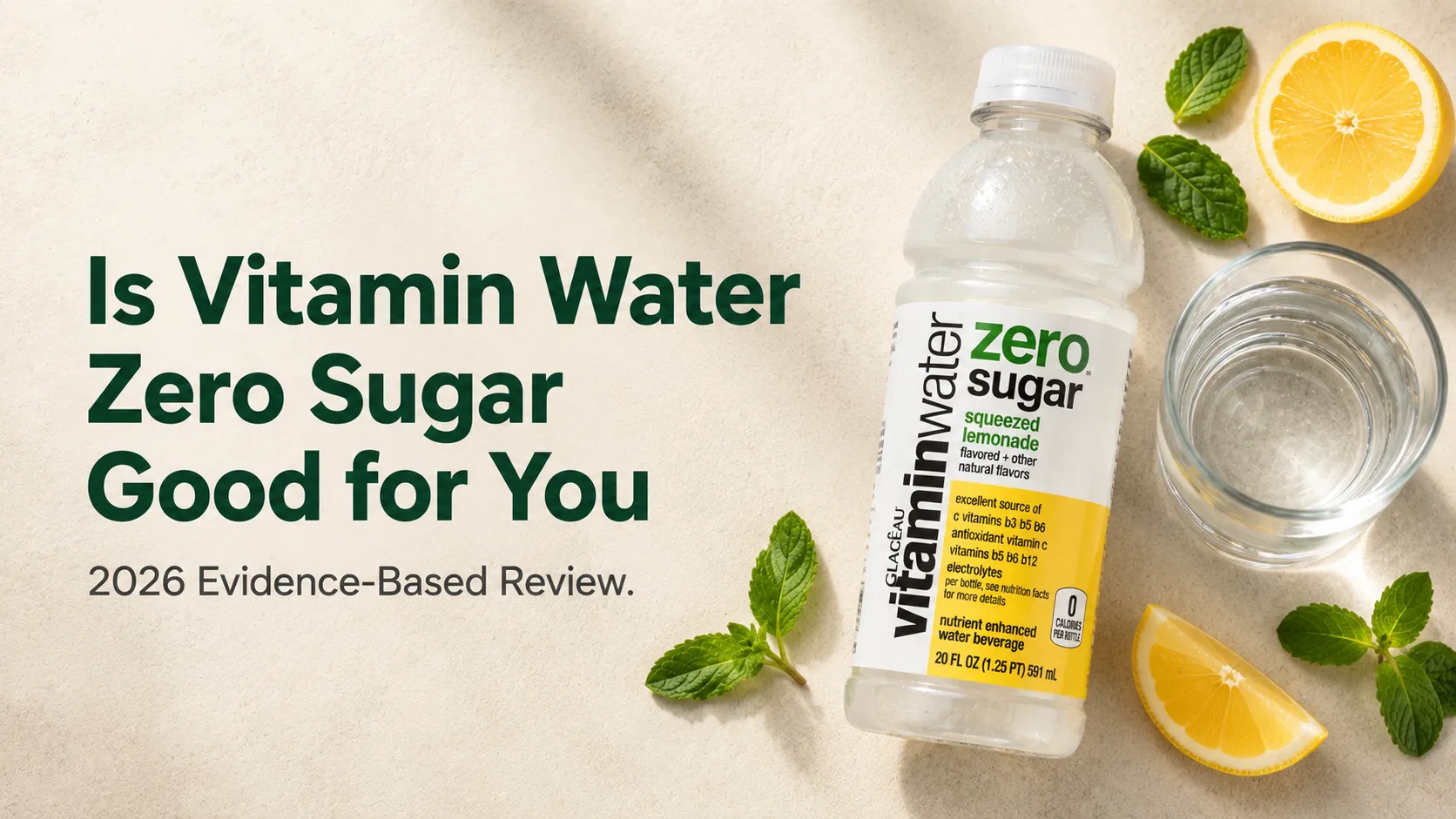
Is Vitamin Water Zero Sugar Good for You? 2026 Review
Vitamin Water Zero Sugar is a reasonable occasional flavored beverage choice that provides decent hydration and a modest vitamin boost without sugar or calories, but it is not a health food, it is not a substitute for plain water, and the sweeteners and additives it contains make it a middle-ground option between plain water and sugary drinks rather than a product you should consume without thought. The full answer depends on who you are, why you are drinking it, and what you are comparing it to.
The Academy of Nutrition and Dietetics position on hydration is straightforward: plain water should be the primary beverage for daily fluid needs. Flavored, sweetened beverages, even zero-calorie ones, are not direct replacements for water in a healthy dietary pattern. The Dietary Guidelines for Americans 2020-2025 recommend that beverages with non-nutritive sweeteners be consumed in moderation within an overall healthy eating pattern, not as a dominant fluid source.
This article gives you a complete 2026 evidence-based analysis of Vitamin Water Zero Sugar. You will learn exactly what is in the bottle, how well it hydrates you compared to plain water, what each sweetener does in your body, whether the vitamins are meaningful or marketing, and the specific situations and populations where this product makes sense or should be avoided.
Is Vitamin Water Zero Sugar Good for You
Vitamin Water Zero Sugar is a neutral-to-slightly-positive beverage choice when used as an occasional replacement for sugar-sweetened drinks, but it is not actively good for you in the way that plain water, unsweetened tea, or whole fruit are good for you, and its health value depends entirely on what you would be drinking instead. If the alternative is a 120-calorie sugar-sweetened beverage, this is the better choice. If the alternative is plain water, this is the worse choice.
The product occupies a specific niche. It is not a health drink, despite the vitamin fortification and the word “vitamin” in the name. It is a flavored, sweetened beverage that happens to have zero sugar and zero calories. The vitamin content is additive rather than foundational. You are drinking water with added vitamins, sweeteners, and flavoring compounds. The question of whether that is good for you depends on whether those additions provide net benefit or introduce net concerns.
The NIH Office of Dietary Supplements establishes that most vitamins added to this product, vitamin C, several B vitamins, are water-soluble and have a wide safety margin. The amounts provided per bottle generally fall within or slightly above the RDA, not approaching the Tolerable Upper Intake Level. From a vitamin safety perspective, the fortification is not harmful for most people. The question is whether it is helpful, and that depends on whether you are actually deficient in these vitamins.
For someone with a reasonably balanced diet that includes fruits, vegetables, whole grains, and some animal products or fortified foods, the vitamin contribution from this beverage is redundant. Your body will excrete the excess water-soluble vitamins in your urine. You are paying for vitamins you do not need. For someone with a restricted diet, malabsorption condition, or documented deficiency risk, the vitamin content could provide a small supplemental benefit, but a standard multivitamin or targeted supplement would be more reliable and less expensive per dose.
Is Sugar Free Vitamin Water Good for You
Sugar free Vitamin Water is good for you relative to sugar-sweetened beverages and neutral relative to plain water, with the sweeteners erythritol and stevia replacing the high fructose corn syrup or cane sugar found in regular Vitamin Water, which eliminates the 120 calories and 32 grams of sugar per bottle while preserving the flavored experience that many consumers prefer over unflavored water.
The sugar elimination matters because the Dietary Guidelines for Americans 2020-2025 identify added sugar as a nutrient to limit strictly. The average American adult consumes approximately 17 teaspoons of added sugar per day, well above the recommended limit of 12 teaspoons for a 2,000-calorie diet. A single bottle of regular Vitamin Water containing 32 grams of sugar (8 teaspoons) represents two-thirds of that daily limit. Switching from regular to zero sugar eliminates that entire sugar load.
The Academy of Nutrition and Dietetics recognizes that non-nutritive sweeteners can serve as a transitional tool for people reducing sugar intake. If you currently drink regular soda, sweet tea, or full-sugar Vitamin Water, switching to the zero-sugar version is a net positive dietary change. The goal is harm reduction. You are removing 100 to 150 calories and 25 to 40 grams of sugar from your daily intake with each swap. Over weeks and months, that calorie and sugar reduction matters for weight management and metabolic health.
The qualification is that this improvement is relative, not absolute. You are choosing the healthier option between two processed flavored beverages. You are not choosing a health food. Plain water, sparkling water with a squeeze of citrus, unsweetened tea, or infused water with fresh fruit are all objectively healthier choices than any version of Vitamin Water. The zero-sugar version narrows the gap but does not close it.
The sweetener swap from sugar to erythritol and stevia is the core of this product’s appeal and its primary point of nutritional debate. These sweeteners are generally recognized as safe by the FDA. They provide sweetness without calories. They do not raise blood glucose or insulin in the way sugar does. They also maintain the expectation of sweetness that can make plain water less satisfying by comparison. This is a behavioral consideration rather than a toxicological one.
Key Takeaway: Vitamin Water Zero Sugar is a harm-reduction choice, significantly better than full-sugar beverages, slightly worse than plain water, and a reasonable occasional option for people who understand it as a flavored drink rather than a health product.
Is Vitamin Water No Sugar Good for You
Vitamin Water with no sugar, which is the same product as Vitamin Water Zero Sugar marketed with different phrasing, is a better choice than sugary drinks and a less optimal choice than plain water, with its health impact determined by your overall dietary pattern, your tolerance for the specific sweeteners used, and your reasons for choosing it over water.
The no-sugar formulation relies entirely on erythritol and stevia to provide sweetness. Erythritol is a sugar alcohol with approximately 0.24 calories per gram, which rounds to zero on nutrition labels. Stevia is a zero-calorie sweetener derived from the Stevia rebaudiana plant. Together, they create a sweet taste profile that attempts to mimic the mouthfeel and sweetness of sugar without the caloric or glycemic consequences.
This product is not a vitamin supplement in a meaningful sense. The vitamins are present at levels that contribute to daily intake but are not therapeutic doses for deficiency correction. A registered dietitian would not recommend this product to address a diagnosed vitamin deficiency. The vitamin content serves a marketing function as much as a nutritional one. The name “Vitamin Water” implies health, but the product is fundamentally flavored water with a light vitamin dusting.
For someone asking whether this product is good for them, the honest answer requires context. Here is a framework for making that determination:
| Your Situation | Verdict |
|---|---|
| You currently drink regular soda or sugary drinks daily | Yes, switching to this is a positive change |
| You drink mostly plain water and want occasional flavor | Neutral, a fine occasional choice |
| You have IBS or FODMAP sensitivity | May cause symptoms, test tolerance carefully |
| You have kidney disease | Consult your nephrologist first |
| You are pregnant | Safe in moderation, track total vitamin intake |
| You are giving it to children routinely | Not recommended, water and milk are preferred |
| You think it is a health food | Adjust your expectations downward |
The bottom line is that the product is what it is. It is not poison. It is not medicine. It is a zero-calorie flavored beverage that will not harm most people who consume it occasionally and will not help most people beyond providing fluid and a small amount of vitamins they probably already get from food.
Vitamin Water Zero Sugar Nutrition Facts
Vitamin Water Zero Sugar nutrition facts per 20 fluid ounce bottle include 0 to 5 calories, 0 grams of sugar, 4 to 5 grams of total carbohydrate from erythritol, 0 grams of protein, 0 grams of fat, and a blend of water-soluble vitamins including vitamin C, several B vitamins, magnesium, and zinc at amounts that range from 4 percent to 133 percent of the Daily Value depending on the specific nutrient and flavor variant.
Here is the complete nutritional breakdown for a typical 20-ounce bottle of Vitamin Water Zero Sugar based on the most common flavor formulations:
| Nutrient | Amount per 20 oz Bottle | % Daily Value |
|---|---|---|
| Calories | 0-5 | <1% |
| Total Fat | 0 g | 0% |
| Sodium | 0-15 mg | <1% |
| Total Carbohydrate | 4-5 g | 1-2% |
| Total Sugars | 0 g | — |
| Erythritol (sugar alcohol) | 4-5 g | — |
| Protein | 0 g | 0% |
| Vitamin C (ascorbic acid) | 60-120 mg | 67-133% |
| Niacin (B3 as niacinamide) | 8-16 mg | 50-100% |
| Pantothenic Acid (B5) | 2-5 mg | 40-100% |
| Vitamin B6 (pyridoxine HCl) | 0.5-1 mg | 29-59% |
| Vitamin B12 (cyanocobalamin) | 1-2.4 mcg | 42-100% |
| Magnesium | 15-30 mg | 4-7% |
| Zinc | 1-2 mg | 9-18% |
The macronutrient profile is essentially empty. The 4 to 5 grams of carbohydrate come entirely from erythritol, which is not metabolized as a typical carbohydrate. Erythritol is absorbed in the small intestine and excreted unchanged in urine without entering normal carbohydrate metabolic pathways. This is why the caloric contribution rounds to zero despite the carbohydrate listing on the label.
The sodium content is negligible at 0 to 15 milligrams per bottle. This is relevant for hydration context because sodium is the primary electrolyte that drives fluid retention. A beverage with very low sodium will not retain fluid in the body significantly better than plain water. The Beverage Hydration Index research published in the American Journal of Clinical Nutrition found that beverages with higher sodium content (approximately 400 to 800 mg per liter) had measurably better fluid retention at two hours compared to plain water. Vitamin Water Zero Sugar does not approach these sodium levels.
The vitamin content varies by flavor. The numbers above represent a range across the product line. Some flavors emphasize vitamin C more heavily. Others have a broader B-vitamin blend. The specific amounts per bottle are listed on the nutrition facts panel for each flavor, and consumers who are tracking vitamin intake from multiple sources should read the label of the specific flavor they are drinking.
Vitamin Water Zero Sugar Ingredients
Vitamin Water Zero Sugar ingredients include reverse osmosis water, erythritol, citric acid, natural flavors, stevia leaf extract (steviol glycosides), and added vitamins and minerals including ascorbic acid (vitamin C), niacinamide (vitamin B3), calcium pantothenate (vitamin B5), pyridoxine hydrochloride (vitamin B6), cyanocobalamin (vitamin B12), magnesium gluconate or magnesium lactate, and zinc gluconate, with specific electrolyte minerals in small amounts.
The ingredient list, in descending order of predominance, reveals the product’s formulation priorities. Water is the first ingredient, which is true of all bottled water products. Erythritol is the second ingredient, indicating it is the most abundant component after water. This confirms that the product is primarily water sweetened with erythritol, with flavoring, acidification, and vitamin fortification added in smaller amounts.
Reverse osmosis water is purified water that has been filtered to remove dissolved solids, minerals, and potential contaminants. This creates a neutral base with consistent taste across production batches. The minerals removed during reverse osmosis are not added back, which is why the electrolyte content is low unless specifically fortified. The product starts with essentially mineral-free water and then adds back small amounts of magnesium and trace sodium and potassium depending on the flavor.
Citric acid serves multiple functions. It provides tartness that balances the sweetness from erythritol and stevia. It acts as a preservative by lowering the pH of the solution, making it less hospitable to microbial growth. It also has implications for dental health. Frequent consumption of acidic beverages, even sugar-free ones, can erode tooth enamel over time. The pH of most Vitamin Water Zero Sugar flavors falls in the range of 3.0 to 3.5, which is acidic enough to contribute to enamel demineralization with frequent exposure.
Natural flavors is a proprietary term that can encompass dozens of individual flavoring compounds derived from plant or animal sources. The specific composition is not disclosed on the label. For most consumers, this is an acceptable level of opacity. For individuals with specific food allergies or sensitivities, the lack of transparency can be frustrating. The FDA regulates natural flavors under the GRAS framework, and major allergens must be disclosed separately on the label regardless of their inclusion in natural flavors.
The vitamin and mineral additions use specific chemical forms. Ascorbic acid is the most common form of vitamin C in fortified products. Niacinamide is the non-flushing form of niacin, preferred in supplements and fortified foods because it does not cause the vasodilation and skin flushing that nicotinic acid can cause. Pyridoxine hydrochloride is the standard supplemental form of vitamin B6. Cyanocobalamin is the synthetic, stable form of vitamin B12 commonly used in fortified foods. These are all standard, well-absorbed forms.
Vitamin Water Zero Sugar Sweeteners
Vitamin Water Zero Sugar sweeteners are erythritol and stevia leaf extract (steviol glycosides), a combination of a sugar alcohol and a plant-derived high-intensity sweetener that together provide sweetness equivalent to approximately 32 grams of sugar per bottle without calories, blood glucose impact, or insulin response. This sweetener blend is the defining feature that allows the product to carry a zero-sugar claim.
Erythritol is a four-carbon sugar alcohol produced through fermentation of glucose by yeast or fungi. It occurs naturally in small amounts in fruits like watermelon, pears, and grapes. Commercial erythritol is produced at scale through fermentation and purification. It provides approximately 60 to 70 percent of the sweetness of sucrose (table sugar) with nearly zero calories. The human body absorbs erythritol in the small intestine but lacks the enzymes to metabolize it. Absorbed erythritol enters the bloodstream and is excreted unchanged in urine within 24 hours.
Stevia is extracted from the leaves of the Stevia rebaudiana plant, native to South America. The sweet compounds are steviol glycosides, primarily rebaudioside A (Reb A) and stevioside. These compounds are approximately 200 to 300 times sweeter than sucrose, so only tiny amounts are needed. Stevia provides sweetness without calories and without glycemic impact. The FDA has issued GRAS notifications for high-purity steviol glycosides, and the acceptable daily intake established by the WHO Joint Expert Committee on Food Additives is 4 mg per kg of body weight per day, expressed as steviol equivalents.
The combination of erythritol and stevia addresses a sensory limitation of each sweetener alone. Erythritol provides bulk and mouthfeel that approximates sugar, but it produces a cooling sensation in the mouth due to its negative heat of solution. Stevia provides high-intensity sweetness but can have a licorice-like or bitter aftertaste when used alone. Together, erythritol provides body and stevia provides sweetness intensity, and each partially masks the other’s off-notes. This is why the combination is common in zero-calorie beverages.
The safety profile of this sweetener combination is well-established for the general population. Neither erythritol nor stevia raises blood glucose or insulin in human studies. A 2020 systematic review published in the journal Nutrients examined stevia’s metabolic effects and found no adverse impact on glucose homeostasis, insulin sensitivity, or blood pressure at typical intake levels. Erythritol has been studied extensively and holds GRAS status with no upper limit established by the FDA, though gastrointestinal tolerance limits practical intake.
Key Takeaway: Erythritol provides bulk and mouthfeel, stevia provides sweetness intensity, and together they deliver a sugar-like taste without calories or glycemic impact, with well-established safety profiles for the general population.
Does Vitamin Water Zero Hydrate You
Yes, Vitamin Water Zero Sugar hydrates you, and research on the Beverage Hydration Index suggests it may hydrate marginally better than plain water due to the small amounts of electrolytes and the slight caloric content from erythritol, though the difference is not meaningful for everyday hydration and plain water remains the standard against which all hydration is measured.
Hydration is the process of absorbing fluid from the gastrointestinal tract into the bloodstream and then retaining that fluid rather than excreting it rapidly through urine. The Beverage Hydration Index, developed by researchers at Loughborough University and published in the American Journal of Clinical Nutrition, measures how much of a consumed beverage is retained in the body two hours after consumption compared to plain water, which is assigned an index of 1.0. Beverages with an index above 1.0 hydrate better than water. Beverages below 1.0 hydrate less well.
The key finding from this research is that beverages with small amounts of electrolytes, particularly sodium and potassium, and a small caloric content had indices of approximately 1.03 to 1.08, meaning they were retained 3 to 8 percent better than plain water at the two-hour mark. Oral rehydration solutions with optimal glucose-sodium ratios scored highest, around 1.2 to 1.3. Plain water was the baseline at 1.0. The differences for beverages like Vitamin Water Zero Sugar would be small, likely in the range of 1.01 to 1.03 given the low sodium and minimal caloric content.
For everyday hydration, this difference is negligible. If you drink a 20-ounce bottle of Vitamin Water Zero Sugar or a 20-ounce glass of water, your hydration status two hours later will be nearly identical. Your kidneys regulate fluid balance exquisitely, and the small differences in electrolyte content between these beverages are within the range that normal renal function handles without difficulty.
The practical hydration question is not whether this product hydrates you. It does. The question is whether it hydrates you better enough to matter. For someone sitting at a desk, the answer is no. For someone doing prolonged endurance exercise in heat who needs sodium replacement to maintain fluid balance, the answer is also no, but for the opposite reason: this product has too little sodium for exercise hydration, not too much. For exercise, a beverage with 200 to 500 milligrams of sodium per serving is appropriate. Vitamin Water Zero Sugar does not provide this.
The Academy of Nutrition and Dietetics recommends plain water as the primary hydration source for sedentary to moderately active adults. Electrolyte-enhanced beverages become relevant during prolonged exercise exceeding 60 to 90 minutes, heavy sweating in hot environments, or clinical situations involving fluid and electrolyte losses from illness. Vitamin Water Zero Sugar does not replace plain water for daily needs and does not replace sports drinks for athletic needs.
Vitamin Water Zero Sugar Electrolytes
Vitamin Water Zero Sugar contains electrolytes including a small amount of sodium at approximately 0 to 15 milligrams per bottle, potassium at approximately 20 to 60 milligrams, and magnesium at approximately 15 to 30 milligrams, which are amounts far below what is needed for meaningful electrolyte replacement during exercise or illness but sufficient to marginally improve fluid retention compared to plain water in a research setting.
Electrolytes are minerals that dissociate into charged ions when dissolved in water. Sodium is the primary extracellular cation. It regulates fluid distribution between body compartments and is the main driver of fluid retention. Potassium is the primary intracellular cation. It works with sodium to maintain the electrochemical gradient across cell membranes that allows nerve transmission and muscle contraction. Magnesium is a cofactor for over 300 enzymatic reactions and also plays a role in neuromuscular stability.
Here is how the electrolyte content of Vitamin Water Zero Sugar compares to other hydration contexts:
| Hydration Source | Sodium (mg per 20 oz) | Potassium (mg per 20 oz) | Best Use |
|---|---|---|---|
| Plain water | 0-5 | 0-5 | Everyday hydration |
| Vitamin Water Zero Sugar | 0-15 | 20-60 | Everyday hydration, flavored alternative to water |
| Sports drink (Gatorade) | 250-270 | 75-80 | Exercise over 60 minutes, heavy sweating |
| Oral rehydration solution (Pedialyte) | 370-390 | 280-310 | Illness with vomiting or diarrhea |
| Coconut water | 50-160 | 400-600 | Light exercise, everyday hydration with electrolytes |
The electrolyte content of Vitamin Water Zero Sugar is closer to plain water than to any product designed for actual electrolyte replacement. The amounts are nutritionally trivial. A single medium banana provides approximately 422 milligrams of potassium, roughly seven to twenty times what a bottle of this product provides. A quarter-teaspoon of salt provides approximately 575 milligrams of sodium, roughly forty times what this product provides.
The electrolyte labeling on this product functions partially as marketing. Consumers associate electrolytes with hydration and health. The presence of electrolytes on the label implies functional benefit. The reality is that the amounts are too low to matter for any clinical or athletic hydration scenario. For everyday hydration, they are irrelevant because your diet provides all the electrolytes you need without contribution from a flavored water product.
People with chronic kidney disease or those on potassium-restricted diets should be aware of the potassium content even though it is low. For someone with severely compromised kidney function who is on a strict potassium restriction of 2,000 milligrams per day, every source counts. A nephrologist can provide individualized guidance on whether even small amounts of electrolyte-fortified beverages are appropriate.
Vitamin Water Zero Sugar vs Water
Vitamin Water Zero Sugar compares to plain water as a hydration source that is nearly equivalent in effectiveness, slightly inferior in purity, and measurably more expensive, with the trade-off being that it provides flavor variety, sweetness, and a small vitamin contribution that plain water does not offer. Water is the healthier choice. Vitamin Water Zero Sugar is the more interesting choice.
The comparison breaks down across multiple dimensions that matter for real-world consumption decisions:
| Feature | Plain Water | Vitamin Water Zero Sugar |
|---|---|---|
| Calories | 0 | 0-5 |
| Sugar | 0 g | 0 g |
| Sweeteners | None | Erythritol, stevia |
| Electrolytes | None/minimal | Trace sodium, potassium, magnesium |
| Vitamins | None | C, B3, B5, B6, B12, magnesium, zinc |
| Acidity (pH) | Neutral (~7) | Acidic (~3.0-3.5) |
| Dental safety | Safe | Enamel erosion risk with frequent exposure |
| Cost per 20 oz | ~$0.00-0.10 (tap) | ~$1.00-1.50 |
| Ingredients | 1 (water) | 10+ |
| Digestive tolerance | Universal | May trigger IBS/FODMAP symptoms |
Plain water has one ingredient. It is chemically simple, universally tolerated, essentially free from the tap, and chemically neutral. It is the beverage that your kidneys evolved to handle as the primary fluid source. Every major health organization, including the Academy of Nutrition and Dietetics, the CDC, and the Dietary Guidelines for Americans, recommends plain water as the primary beverage for daily hydration.
Vitamin Water Zero Sugar has ten or more ingredients. It is chemically complex, not universally tolerated due to the sugar alcohol content, costs roughly one to two dollars per bottle, and is acidic enough to contribute to dental erosion with frequent consumption. It tastes better than water to many people, which is both its advantage and its risk. People drink more fluid when the fluid tastes good, which can improve hydration status. People also condition themselves to expect sweet flavors from beverages, which can make plain water less satisfying by comparison over time.
The vitamin contribution is not meaningless, but it is not a compelling reason to choose this product over water. The vitamins are present at meaningful percentages of daily requirements, but a balanced diet provides them without the sweeteners, acidity, and cost. If you need vitamins, a standard multivitamin costs less per dose and provides a broader nutrient spectrum without the beverage matrix.
Vitamin Water Zero Sugar Vitamins
Vitamin Water Zero Sugar vitamins include vitamin C at 60 to 120 milligrams (67 to 133 percent DV), niacin (B3) at 8 to 16 milligrams (50 to 100 percent DV), pantothenic acid (B5) at 2 to 5 milligrams (40 to 100 percent DV), vitamin B6 at 0.5 to 1 milligram (29 to 59 percent DV), and vitamin B12 at 1 to 2.4 micrograms (42 to 100 percent DV), along with magnesium at 15 to 30 milligrams and zinc at 1 to 2 milligrams per 20-ounce bottle.
These vitamins are all water-soluble, meaning excess amounts are excreted in urine rather than stored in body fat. This makes them safe for fortification because reaching toxic levels through beverage consumption alone is essentially impossible. The Tolerable Upper Intake Level for vitamin C is 2,000 milligrams per day. You would need to drink roughly 17 to 33 bottles in a day to approach that limit from this product alone. The UL for vitamin B6 is 100 milligrams per day. You would need roughly 100 to 200 bottles to approach that limit.
The specific chemical forms used are well-absorbed. Ascorbic acid for vitamin C, niacinamide for B3, calcium pantothenate for B5, pyridoxine hydrochloride for B6, and cyanocobalamin for B12 are standard, bioavailable forms used across the supplement and fortified food industries. The NIH Office of Dietary Supplements confirms that these forms are effective at raising serum levels of their respective vitamins.
Whether these vitamins benefit you depends entirely on your baseline status. For someone with adequate intake from diet, the additional vitamins are excreted. You are producing more expensive urine. For someone with marginal intake or increased needs, the contribution could be meaningful. A vegan who does not supplement B12 would benefit from the 1 to 2.4 micrograms of cyanocobalamin per bottle, though a dedicated B12 supplement would be more reliable and more cost-effective. Someone with low fruit and vegetable intake might benefit from the vitamin C, though an actual piece of fruit would provide fiber, polyphenols, and phytonutrients along with the vitamin.
The vitamins are the product’s strongest nutritional feature. They are real, they are present in meaningful amounts, and they are in bioavailable forms. The issue is not the vitamins themselves. The issue is that vitamins dissolved in sweetened flavored water do not make the beverage a health product. Vitamins can be added to candy, soda, or pastries. The fortification does not transform the base product. Evaluate the whole product, not just the nutrient additions.
Key Takeaway: The vitamin fortification is real and at meaningful levels, but vitamins in a sweetened acidic beverage do not convert that beverage into a health product, and you can get the same nutrients from food or a standard multivitamin without the sweeteners and cost.
Is Erythritol in Vitamin Water Zero Bad for You
Erythritol in Vitamin Water Zero Sugar is not bad for most people at the 4 to 5 grams per bottle dose and is generally recognized as safe by the FDA, but it can cause digestive symptoms including bloating, gas, and osmotic diarrhea in sensitive individuals, particularly those with irritable bowel syndrome or FODMAP intolerance, and very high habitual intake may pose concerns that research is still evaluating as of 2026.
Erythritol is unique among sugar alcohols because most of it is absorbed in the small intestine rather than passing to the large intestine for fermentation. Approximately 90 percent of ingested erythritol enters the bloodstream and is excreted unchanged in urine. Only about 10 percent reaches the colon, where gut bacteria can ferment it, producing gas as a byproduct. This is why erythritol causes fewer GI symptoms than other sugar alcohols like sorbitol, maltitol, or xylitol at equivalent doses. A 2020 study published in the European Journal of Clinical Nutrition found that erythritol at doses up to 1 gram per kilogram of body weight was well-tolerated, with only mild GI symptoms at the highest doses tested.
The amount in one bottle of Vitamin Water Zero Sugar, 4 to 5 grams, is well below the typical threshold for GI distress in most people. For a 70-kilogram (154-pound) adult, 1 gram per kilogram would be 70 grams, roughly 14 to 18 bottles consumed in a short period. That is not a realistic consumption scenario. The practical tolerance concern is for individuals with heightened sensitivity to polyols. People with IBS, particularly those with diarrhea-predominant IBS, may react to smaller amounts. Monash University, which maintains the FODMAP database used clinically, classifies erythritol as a polyol to be limited during the elimination phase of the low-FODMAP diet.
Recent research has raised a separate question about erythritol and cardiovascular risk. A 2023 study published in Nature Medicine found an association between higher circulating erythritol levels and increased risk of major adverse cardiovascular events. This study was observational and cannot establish causation. People with higher erythritol levels may have had those elevated levels because their bodies produced more erythritol endogenously as part of metabolic dysfunction, not because they consumed erythritol. The research is preliminary and does not constitute evidence that dietary erythritol at typical intake levels causes cardiovascular events. This is an active research area as of 2026, not settled science.
For the average consumer drinking Vitamin Water Zero Sugar occasionally, the erythritol content is not a health concern based on current evidence. For someone drinking multiple bottles daily, the cumulative erythritol intake plus the lack of long-term high-intake safety data suggests moderation is appropriate.
Stevia in Vitamin Water Zero Sugar
Stevia in Vitamin Water Zero Sugar is present as steviol glycosides extracted from the Stevia rebaudiana plant, and at the tiny amounts needed to sweeten a 20-ounce bottle, it is generally recognized as safe by the FDA, has no caloric or glycemic impact, and is well-tolerated by most people, though some individuals report a bitter aftertaste or mild digestive effects.
Stevia sweeteners are derived from the leaves of the stevia plant through water extraction and purification. The resulting steviol glycosides, primarily rebaudioside A (Reb A) and stevioside, are 200 to 300 times sweeter than sucrose. This means the amount of stevia in a bottle of Vitamin Water Zero Sugar is measured in milligrams, not grams. The actual weight of steviol glycosides in the bottle is so small that it falls near the end of the ingredient list despite providing a large portion of the perceived sweetness.
The FDA has issued GRAS notifications for high-purity steviol glycosides (95 percent purity or higher). The acceptable daily intake established by the Joint FAO/WHO Expert Committee on Food Additives is 4 milligrams per kilogram of body weight per day, expressed as steviol equivalents. For a 70-kilogram adult, that is 280 milligrams of steviol equivalents per day. A bottle of Vitamin Water Zero Sugar contains a small fraction of that amount. Reaching the ADI through this product alone would require consuming an unrealistic number of bottles daily.
Stevia has been studied for metabolic effects beyond sweetness. A 2019 systematic review and meta-analysis published in the journal Nutrients examined randomized controlled trials of stevia and found no adverse effects on blood glucose, insulin, blood pressure, or body weight. Some studies suggest stevia may have a small beneficial effect on post-meal blood glucose compared to sucrose or placebo, possibly mediated through incretin hormone effects, but the findings are not consistent enough to make clinical claims.
The practical concern with stevia is sensory rather than toxicological. Some people experience a bitter, licorice-like, or metallic aftertaste from steviol glycosides. This is a genetic difference in taste receptor sensitivity. People who perceive stevia as bitter are not experiencing an adverse reaction. They are tasting a compound that their bitter taste receptors (TAS2R family) detect. The erythritol in the product partially masks this aftertaste, which is why the combination is used.
Can You Drink Vitamin Water Zero Sugar Every Day
You can drink Vitamin Water Zero Sugar every day without acute health risk for most people, but daily consumption is not recommended as a primary hydration strategy because it conditions a preference for sweet-flavored beverages, exposes you to unnecessary additives, contributes to dental acid exposure, and costs significantly more than plain water without providing health benefits that justify daily use.
The safety question and the optimal health question have different answers. Safety asks whether daily consumption will cause harm. For most healthy adults, one bottle per day of this product is safe. The sweeteners are within acceptable intake ranges. The vitamins are at supplemental, not pharmacological, doses and are water-soluble with wide safety margins. The product is FDA-compliant and the ingredients are GRAS.
Optimal health asks whether daily consumption is the best choice among available options. The answer is no. Plain water is the optimal daily hydration beverage. It provides everything your body needs for fluid balance with zero additives, zero sweeteners, zero acidity concerns, and zero cost beyond your water bill. The Academy of Nutrition and Dietetics recommends that the majority of daily fluid intake come from plain water, with other beverages including tea, coffee, and flavored waters playing supportive rather than primary roles.
Daily consumption of sweet-tasting beverages, even zero-calorie ones, can influence taste preferences and dietary behaviors. A 2021 review in the journal Appetite examined the behavioral effects of regular non-nutritive sweetener consumption and found that consistent exposure to sweet tastes, regardless of caloric content, maintained a preference for sweetness that could displace the acceptance of less-sweet whole foods like vegetables and plain dairy. The behavioral concern is not about toxicity. It is about palate conditioning.
The dental consideration also argues against daily consumption. The pH of Vitamin Water Zero Sugar is approximately 3.0 to 3.5, which is acidic enough to contribute to enamel demineralization over time. Each exposure to an acidic beverage drops the oral pH below the critical threshold where enamel begins to dissolve. Saliva buffers this acid and restores pH over 30 to 60 minutes. Frequent daily exposure without adequate recovery time between exposures increases cumulative enamel loss. The American Dental Association recommends limiting acidic beverage consumption and rinsing with water afterward.
Vitamin Water Zero Sugar While Pregnant
Vitamin Water Zero Sugar is generally safe for occasional consumption during pregnancy, but pregnant individuals should track the vitamin contribution from this product alongside prenatal vitamins and any other supplements to ensure total intake does not exceed the Tolerable Upper Intake Levels for vitamins B6 and niacin, and should prioritize plain water as the primary hydration source throughout pregnancy.
Pregnancy increases the Recommended Dietary Allowance for several vitamins and minerals, which is why prenatal supplements are standard. The RDA for vitamin B6 increases from 1.3 mg to 1.9 mg during pregnancy. The RDA for vitamin B12 increases from 2.4 mcg to 2.6 mcg. The vitamin content in one bottle of Vitamin Water Zero Sugar is generally consistent with these increased needs and does not pose a direct toxicity risk from a single bottle.
The concern is cumulative intake. A pregnant person taking a standard prenatal vitamin that provides 100 percent DV for B vitamins plus consuming a bottle of this product that provides 50 to 100 percent DV for those same vitamins is consuming 150 to 200 percent of the RDA. For water-soluble B vitamins, this is generally safe because excess is excreted. The exception is vitamin B6, which has a UL of 100 mg per day for adults. Long-term intake above the UL, which would require far more than one bottle plus a prenatal, has been associated with sensory neuropathy. A single bottle plus a prenatal does not approach the UL, but the principle is to account for all sources.
The NIH Office of Dietary Supplements advises that pregnant individuals should not consume supplemental doses of vitamins and minerals above the RDA without specific medical indication and supervision from an obstetric provider. This guidance applies to fortified beverages as well as supplements. The vitamin content of this product is supplemental in nature, not food-based, and should be counted toward total daily supplemental intake.
Plain water is the recommended primary hydration source during pregnancy. The American College of Obstetricians and Gynecologists recommends approximately 8 to 12 cups (64 to 96 ounces) of fluid per day during pregnancy, primarily from water. Flavored, sweetened zero-calorie beverages can be used occasionally for variety but should not displace the majority of water intake. Adequate hydration during pregnancy reduces the risk of constipation, urinary tract infections, and preterm labor associated with dehydration.
Vitamin Water Zero Sugar for Diabetics
Vitamin Water Zero Sugar is a diabetes-friendly beverage option because erythritol and stevia do not raise blood glucose or stimulate insulin secretion in clinically meaningful ways, making it a safe alternative to sugar-sweetened beverages for people with type 1 or type 2 diabetes who are looking for flavored beverage variety without glycemic impact.
The American Diabetes Association recognizes non-nutritive sweeteners, including erythritol and stevia, as useful tools for reducing added sugar and total carbohydrate intake in diabetes management. The ADA’s 2023 Standards of Medical Care in Diabetes notes that replacing sugar-sweetened beverages with water or beverages sweetened with non-nutritive sweeteners can reduce post-meal glucose excursions and total daily calorie and carbohydrate intake.
Erythritol has a glycemic index of zero and an insulin index near zero. Multiple human studies, including a 2018 randomized controlled trial published in the journal Diabetes Care, have confirmed that erythritol does not raise blood glucose or serum insulin in people with or without diabetes. The 4 to 5 grams of erythritol in one bottle of Vitamin Water Zero Sugar will not affect blood glucose readings or insulin requirements for someone with diabetes.
Stevia similarly has no glycemic impact. A 2020 meta-analysis in the Journal of Nutrition examined acute feeding studies with stevia and found no increase in post-meal blood glucose or insulin compared to water placebo. Some studies have even suggested stevia may have a mild beneficial effect on post-meal glucose through enhanced glucagon-like peptide-1 secretion, though this finding is not consistent enough across studies to change clinical recommendations.
The practical consideration for people with diabetes extends beyond glycemic response. Many people with diabetes also manage cardiovascular risk factors. The current question about erythritol and cardiovascular risk, discussed earlier in this article, is not resolved and is based on observational data that cannot establish causation. A person with diabetes who is concerned about this preliminary research can simply choose other zero-calorie beverages like plain water, sparkling water, or unsweetened tea, or discuss the evidence with their endocrinologist or a registered dietitian who specializes in diabetes care.
Key Takeaway: Vitamin Water Zero Sugar has zero glycemic impact and is safe for people with diabetes as an occasional flavored beverage, with plain water remaining the preferred daily hydration source per American Diabetes Association guidance.
Does Vitamin Water Zero Sugar Break a Fast
Vitamin Water Zero Sugar does not break a fast in the strict biochemical sense because it contains negligible calories from erythritol (which is not metabolized) and the amino acids and glucose required to activate mTOR, suppress AMPK, or stimulate insulin are absent, but the sweet taste may trigger a cephalic phase insulin response in some individuals, which is a theoretical concern for fasting purists without strong clinical evidence that it meaningfully disrupts fasting benefits.
Fasting is the voluntary abstention from caloric intake for a defined period. The physiological state of fasting is characterized by low insulin, elevated glucagon, glycogen depletion progressing to ketogenesis, and activation of autophagy (cellular cleanup processes). Breaking a fast means consuming something that shifts the body out of this fasting physiology. The metabolic switch that ends fasting is primarily triggered by carbohydrate and protein intake that raises insulin and provides substrate for energy metabolism.
Erythritol is not metabolized as energy. It does not raise insulin. It does not provide substrate for glycolysis or the citric acid cycle. Stevia does not raise insulin or glucose in feeding studies. The water, citric acid, natural flavors, and vitamins in the product are non-caloric or trivial in energy content. By the biochemical definition of fasting, this product does not break a fast.
The cephalic phase insulin response is the theoretical counterargument. The sweet taste on the tongue can trigger a small, transient insulin release through vagal nerve signaling to the pancreas before any nutrients enter the bloodstream. This response is well-documented for sugar, which tastes sweet and then provides glucose that the insulin helps manage. For non-nutritive sweeteners, the evidence is mixed. Some studies detect a small cephalic insulin response to sweet taste alone. Other studies find no effect. A 2019 review in the journal Physiology and Behavior concluded that the cephalic phase insulin response to non-nutritive sweeteners is small, inconsistent across individuals, and of uncertain clinical relevance.
For intermittent fasting for weight loss or metabolic health, the caloric deficit and the extended period without insulin elevation are the primary mechanisms of benefit. A bottle of Vitamin Water Zero Sugar during the fasting window will not introduce calories, will not meaningfully raise insulin beyond a possible transient and small cephalic response, and is unlikely to affect weight loss or insulin sensitivity outcomes. For therapeutic fasting for specific medical conditions, or for individuals tracking autophagy markers closely, any variable beyond plain water is an unnecessary introduction.
Frequently Asked Questions About Vitamin Water Zero Sugar
Is Vitamin Water Zero Sugar actually healthy?
Vitamin Water Zero Sugar is healthier than sugar-sweetened drinks but not as healthy as plain water. It provides zero calories and zero sugar while delivering a small amount of water-soluble vitamins. The sweeteners erythritol and stevia are generally recognized as safe by the FDA. The product is a reasonable occasional choice, not a health food.
Does Vitamin Water Zero Sugar hydrate you as well as water?
Yes, Vitamin Water Zero Sugar hydrates you nearly identically to plain water. The small electrolyte content may provide a marginal improvement in fluid retention of 1 to 3 percent based on Beverage Hydration Index research. For everyday hydration, the difference is negligible and plain water remains the preferred hydration source recommended by the Academy of Nutrition and Dietetics.
What are the sweeteners in Vitamin Water Zero Sugar?
Vitamin Water Zero Sugar is sweetened with erythritol, a sugar alcohol, and stevia leaf extract (steviol glycosides), a plant-derived high-intensity sweetener. Erythritol provides bulk and mouthfeel with nearly zero calories. Stevia provides sweetness intensity at 200 to 300 times the sweetness of sugar. Both are FDA GRAS and have zero glycemic impact.
Can diabetics drink Vitamin Water Zero Sugar?
Yes, people with diabetes can drink Vitamin Water Zero Sugar because erythritol and stevia do not raise blood glucose or insulin levels. The American Diabetes Association recognizes non-nutritive sweeteners as useful tools for reducing sugar intake in diabetes management. One bottle contains 4 to 5 grams of erythritol, which has a glycemic index of zero.
Is it safe to drink Vitamin Water Zero Sugar every day?
Daily consumption is safe for most healthy adults but not recommended as a primary hydration strategy. Daily use of sweetened beverages can condition a preference for sweet tastes over plain water. The acidic pH (3.0 to 3.5) can contribute to dental enamel erosion with frequent exposure. The Academy of Nutrition and Dietetics recommends plain water as the primary daily beverage.
Does Vitamin Water Zero Sugar contain electrolytes?
Yes, Vitamin Water Zero Sugar contains small amounts of electrolytes including sodium (0 to 15 mg per bottle), potassium (20 to 60 mg), and magnesium (15 to 30 mg). These amounts are too low for meaningful electrolyte replacement during exercise or illness. For comparison, a sports drink contains approximately 250 to 270 mg of sodium per 20 ounces.
Vitamin Water Zero Sugar is a well-executed zero-calorie flavored beverage that delivers on its promise: sweet taste without sugar, a few vitamins you probably do not need, and hydration that is nearly equivalent to plain water. It is a better choice than regular Vitamin Water, soda, or sweet tea. It is a less optimal choice than plain water, sparkling water, or unsweetened tea.
If you enjoy the taste and it helps you avoid sugary drinks, drink it occasionally without guilt. If you are drinking multiple bottles daily, you are spending money on sweetened water your body does not need, exposing your teeth to acid, and conditioning your palate to expect sweetness from every beverage. Switch some of those bottles to plain water or unsweetened alternatives.
You now know exactly what is in the bottle, what it does in your body, and where it fits in your overall hydration and nutrition picture. The product is not a villain and not a health hero. It is what it appears to be: flavored water with a vitamin garnish and a reasonable safety profile for most people, best enjoyed sometimes rather than all the time.