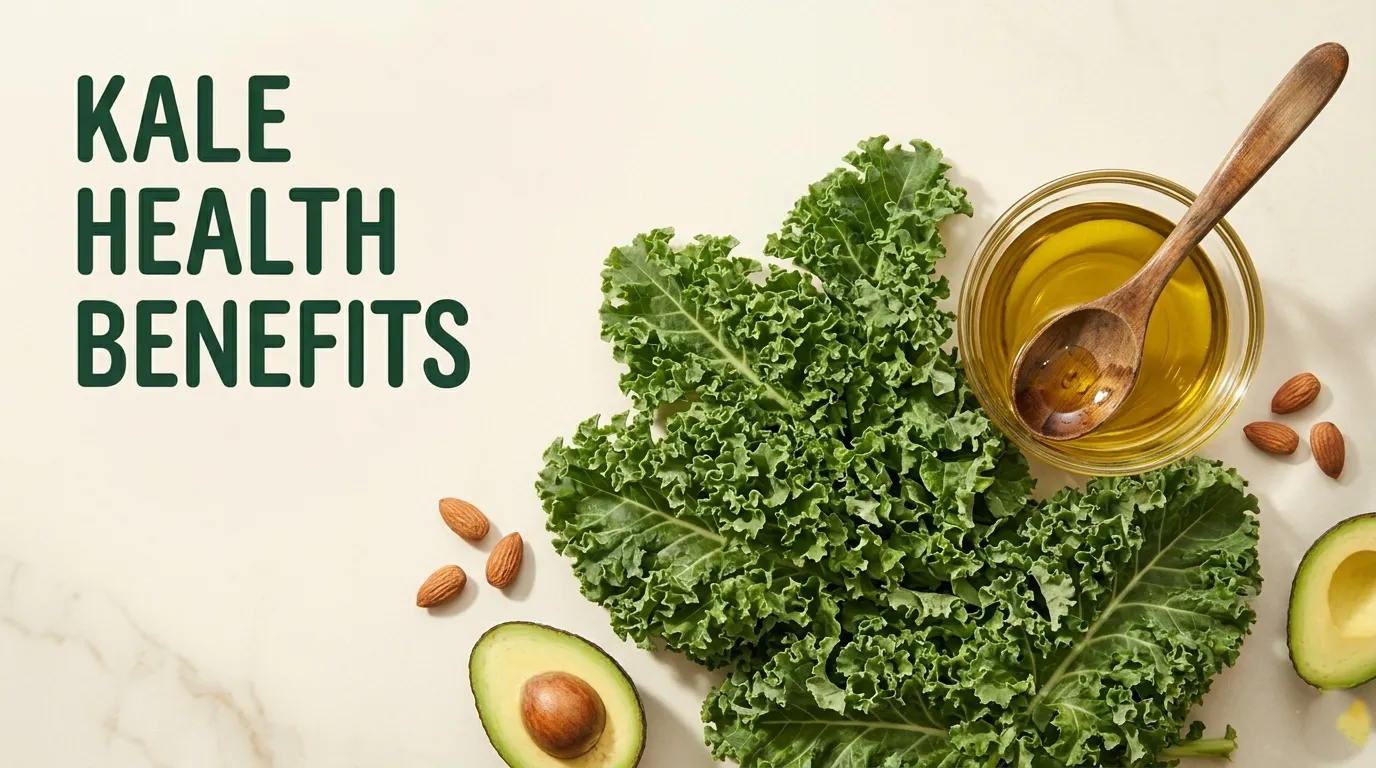
Kale Health Benefits: Science-Backed Guide 2026
Kale provides several well-established health benefits including cardiovascular protection, anti-inflammatory effects, bone health support, and antioxidant defense against oxidative stress. A 2026 comprehensive review published in the FAO/Agris database confirms kale’s protective role in coronary artery disease, anti-inflammatory activity, and positive effects on gut microbes .
The nutritional density of kale is remarkable. One cup of raw kale contains more than 600 percent of the daily value for vitamin K, over 130 percent for vitamin C, and significant amounts of vitamin A, calcium, and potassium — all for only 49 calories per 100 grams . Research published in 2026 also demonstrates that how you prepare kale dramatically affects how well your body absorbs these nutrients .
This guide covers every major health benefit of kale with evidence ratings, explains the specific compounds responsible for each effect, provides practical preparation guidance for maximum absorption, and addresses important safety considerations for people with certain medical conditions.
kale health benefits
Kale offers scientifically documented health benefits across multiple body systems including cardiovascular, inflammatory, bone, eye, and digestive health. A 2026 review in the FAO/Agris database identifies protective roles in coronary artery disease, anti-inflammatory activity, antigenotoxic ability, and positive effects on gut microbes .
Documented kale benefits with evidence ratings:
| Benefit | Key Compound | Mechanism | Evidence Strength |
|---|---|---|---|
| Heart health | Fiber, potassium, antioxidants | Reduces LDL cholesterol, lowers blood pressure | Well-established |
| Anti-inflammatory | Glucosinolates, flavonoids | Inhibits pro-inflammatory cytokines | Well-established |
| Bone health | Vitamin K1, calcium | Supports bone mineralization, calcium absorption | Well-established |
| Eye health | Lutein, zeaxanthin | Protects against age-related macular degeneration | Well-established |
| Immune support | Vitamin C, vitamin A | Enhances immune cell function | Well-established |
| Digestive health | Fiber, prebiotic carbohydrates | Promotes regularity, feeds beneficial gut bacteria | Well-established |
| Cancer protection | Sulforaphane, glucosinolates | Activates phase II detoxification enzymes | Emerging |
The 2026 review notes that kale contains prebiotic carbohydrates that positively affect gut microbes, along with bioactive compounds that inhibit the formation of carcinogenic compounds . However, researchers also note that kale contains anti-nutritional factors including oxalates, tannins, and phytates in relatively higher concentrations .
Key Takeaway: Kale delivers well-established benefits for heart, bone, eye, and immune health. Evidence for cancer prevention is emerging but not yet conclusive.
health benefits of kale
The health benefits of kale stem from its unique combination of vitamins, minerals, fiber, and bioactive phytochemicals. According to the FAO/Agris 2026 review, kale is a good source of fiber, potassium, and calcium with higher calcium bioavailability than milk .
Primary health benefits by body system:
| Body System | Benefit | Mechanism |
|---|---|---|
| Cardiovascular | Reduced blood pressure | Potassium acts as a vasodilator |
| Cardiovascular | Lower LDL cholesterol | Fiber binds cholesterol in digestive tract |
| Inflammatory | Reduced chronic inflammation | Flavonoids inhibit NF-kB pathway |
| Skeletal | Increased bone density | Vitamin K activates osteocalcin |
| Ocular | Protection from UV damage | Lutein and zeaxanthin filter blue light |
| Immune | Enhanced pathogen defense | Vitamin C supports white blood cell function |
Kale also contains unsaturated fatty acids including omega-3s, with 0.18 grams per 100 grams . A 2026 study on subcritical water extraction of kale antioxidants confirmed that kale contains substantial levels of phytochemicals including phenolic compounds, flavonoids, carotenoids, and glucosinolates that contribute to antioxidant activity and have been associated with prevention of oxidative stress-related diseases .
The review also documents antimicrobial activity against specific microorganisms and gastroprotective activity . A 2026 study on urban gardening conditions found that kale grown in direct sunlight produces higher concentrations of phenolics and carotenoids, though lutein levels remained consistent across all growing locations .
Key Takeaway: Kale’s benefits come from multiple compounds working together — not just one “super” nutrient. Regular consumption provides cumulative protective effects.
kale antioxidants benefits
Kale’s antioxidant benefits come primarily from flavonoids (kaempferol and quercetin derivatives), carotenoids (lutein and beta-carotene), and vitamin C. A 2026 study published in ScienceDirect identified kaempferol-3-O-sophoroside and other acylated kaempferol glycosides as the predominant flavonoid fraction responsible for kale’s antioxidant activity .
Key antioxidants in kale and their functions:
| Antioxidant | Amount per 100g | Primary Function |
|---|---|---|
| Vitamin C | 120 mg (133% DV) | Neutralizes free radicals, regenerates vitamin E |
| Beta-carotene | 3,120 mcg (provitamin A) | Protects cell membranes, supports immune function |
| Lutein | 4,980 mcg | Protects eyes from blue light damage |
| Kaempferol | 40-50 mg | Reduces inflammation, protects heart cells |
| Quercetin | 20-25 mg | Inhibits histamine release, reduces oxidative stress |
| Vitamin E (alpha-tocopherol) | 1.5 mg | Protects cell membranes from lipid peroxidation |
The 2026 antioxidant extraction study demonstrated that kale extracts exhibit 82.67% DPPH radical scavenging activity at optimized extraction conditions, indicating strong free radical neutralization capacity . The researchers also confirmed the presence of phenolic and sulphur-containing functional groups via FTIR analysis, with dietary fiber (0.8 g kg⁻¹) and trace glucosinolates (0.38 μmol g⁻¹) retained during processing .
According to Endeavor Health clinical nutrition manager Jill Whitney, RD, “The antioxidants in kale can also support eye health and protect against age-related diseases such as cataract and macular degeneration” .
Key Takeaway: Kale contains multiple antioxidant classes that work through different mechanisms. Eating kale regularly provides broad-spectrum protection against oxidative damage.
kale anti-inflammatory properties
Kale exhibits anti-inflammatory properties through its glucosinolate-derived compounds, particularly sulforaphane, and flavonoid content. According to the 2026 ScienceDirect review, glucosinolate-derived products (especially sulforaphane) of kale have demonstrated anti-inflammatory and neuroprotective effects in research studies .
How kale reduces inflammation:
Recent research shows that fermented kale and fermented kale juice have been shown to inhibit pro-inflammatory cytokines interleukin-6 and interleukin-1 (IL-6, IL-1) and other inflammatory mediators, both in vitro and in vivo. Supplementation with whole kale has been shown to prevent diet-induced inflammation in animal models .
Inflammatory markers affected by kale consumption:
| Inflammatory Marker | Effect | Mechanism |
|---|---|---|
| IL-6 (interleukin-6) | Reduced production | Inhibition of NF-kB pathway |
| IL-1 (interleukin-1) | Reduced production | Suppression of inflammasome activation |
| TNF-alpha | Decreased circulating levels | Modulation of macrophage activity |
| CRP (C-reactive protein) | Lowered in intervention studies | Reduced hepatic acute phase response |
Chronic low-grade inflammation underlies many modern diseases including cardiovascular disease, type 2 diabetes, and neurodegenerative conditions. By reducing inflammatory markers through multiple pathways, regular kale consumption may help mitigate these risks.
The FAO/Agris 2026 review independently confirms the anti-inflammatory activity of kale based on research studies compiled from multiple sources .
Key Takeaway: Kale’s anti-inflammatory effects are well-documented in research and work through multiple mechanisms. The effects are strongest with consistent, regular consumption.
kale for heart health
Kale supports heart health through three primary mechanisms: cholesterol reduction, blood pressure regulation, and oxidative stress reduction in blood vessels. According to the FAO/Agris 2026 review, research studies have reported kale’s protective role in coronary artery disease .
Kale’s cardiovascular protective mechanisms:
| Mechanism | Effect on Heart Health | Key Nutrient |
|---|---|---|
| LDL cholesterol binding | Reduces circulating LDL | Soluble fiber |
| Vasodilation | Lowers blood pressure | Potassium (491 mg/100g) |
| LDL oxidation prevention | Reduces arterial plaque formation | Antioxidants (flavonoids, vitamin C) |
| Endothelial function support | Improves blood flow | Nitrate compounds |
The 2026 ScienceDirect review states that kale contains substantial levels of phytochemicals that have been associated with the prevention of oxidative stress-related diseases and inflammation associated with chronic illnesses such as cancer and cardiovascular disease .
A 2026 study on urban gardening conditions confirmed that carotenoid concentration in kale benefits from sun-exposed growing locations, while nutritionally important lutein did not differ among locations, suggesting that even shaded home-grown kale retains heart-healthy lutein content .
The fiber content in kale (3.6 grams per 100 grams) binds to cholesterol in the digestive tract, preventing absorption and reducing circulating LDL levels. The American Heart Association recommends 25-30 grams of dietary fiber daily for cardiovascular protection.
Key Takeaway: Kale’s combination of fiber, potassium, and antioxidants provides triple protection for your heart — lowering cholesterol, reducing blood pressure, and preventing arterial damage.
kale cholesterol reduction
Kale helps reduce cholesterol levels through its soluble fiber content and bile acid binding capacity. A 2026 study on subcritical water extraction of kale noted that kale’s fiber content has been depicted to help in reducing Low-Density Lipoprotein (LDL) cholesterol, reducing the threat to heart health .
How kale lowers cholesterol:
| Mechanism | Process | Effect |
|---|---|---|
| Bile acid binding | Fiber binds bile acids in intestine | Liver uses cholesterol to make more bile acids |
| Cholesterol absorption reduction | Fiber traps dietary cholesterol | Less cholesterol enters bloodstream |
| Short-chain fatty acid production | Gut bacteria ferment fiber | SCFAs inhibit liver cholesterol synthesis |
The 2026 FAO/Agris review confirms that kale contains prebiotic carbohydrates that positively affect gut microbes . These prebiotic fibers are fermented by beneficial gut bacteria into short-chain fatty acids, which have been shown to inhibit cholesterol synthesis in the liver.
For people with elevated LDL cholesterol, replacing less nutrient-dense foods with kale may improve lipid profiles. A standard serving of 1-2 cups of kale daily provides approximately 3-7 grams of fiber, contributing meaningfully to the recommended 25-30 grams per day.
The cholesterol-lowering effect is most pronounced when kale replaces processed foods and refined carbohydrates rather than simply being added to an already high-calorie diet.
Key Takeaway: Kale reduces cholesterol through fiber-dependent mechanisms including bile acid binding and SCFA production. Consistent daily intake provides the greatest benefit.
kale vitamin K benefits
Kale provides one of the highest dietary sources of vitamin K1 (phylloquinone) among all foods. One hundred grams of raw kale contains 817 micrograms of vitamin K — approximately 681 percent of the Daily Value .
Vitamin K functions in the body:
| Function | Mechanism | Health Outcome |
|---|---|---|
| Blood clotting activation | Activates coagulation factors II, VII, IX, X | Normal wound healing, prevents bleeding disorders |
| Bone mineralization | Activates osteocalcin (calcium-binding protein) | Increased bone density, reduced fracture risk |
| Vascular protection | Activates matrix Gla-protein | Prevents calcium deposition in arteries |
| Brain health | Supports sphingolipid synthesis | Emerging research on cognitive function |
Regarding bone health specifically, the vitamin K in kale activates osteocalcin, a protein that binds calcium to the bone matrix. Without adequate vitamin K, osteocalcin remains inactive and calcium cannot be properly incorporated into bone tissue.
Endeavor Health clinical nutrition manager Jill Whitney, RD, notes: “Kale is rich in vitamin K, which plays a key role in blood clotting and calcium absorption which strengthens bones” .
Important caution: The high vitamin K content in kale can interfere with warfarin (Coumadin) and other anticoagulant medications. People taking blood thinners should maintain consistent vitamin K intake rather than avoiding kale entirely, and any changes should be discussed with their physician .
Key Takeaway: Kale’s vitamin K supports both blood clotting and bone health. People on blood thinners need medical guidance — but should not necessarily avoid kale entirely.
kale for bone health
Kale supports bone health through multiple nutrients including vitamin K, calcium, and magnesium. According to the FAO/Agris 2026 review, kale contains good sources of fiber and minerals like potassium with higher calcium bioavailability than that of milk .
Bone health nutrients in kale per 100g:
| Nutrient | Amount | % Daily Value | Role in Bone Health |
|---|---|---|---|
| Vitamin K | 817 mcg | 681% | Activates osteocalcin for calcium binding |
| Calcium | 150 mg | 12% | Primary mineral in bone structure |
| Magnesium | 47 mg | 11% | Supports vitamin D activation |
| Potassium | 491 mg | 10% | Reduces calcium excretion in urine |
Calcium bioavailability from kale is higher than from dairy products because kale contains lower levels of oxalates compared to other leafy greens like spinach. Oxalates bind to calcium and prevent absorption. While kale does contain oxalates as an anti-nutritional factor , the amount is significantly lower than in spinach, making kale a more efficient calcium source.
The 2026 ScienceDirect review notes that kale contains essential minerals such as calcium, potassium, manganese, and iron, which are “crucial for maintaining bone health, supporting the cardiovascular system, and regulating overall metabolic processes” .
For postmenopausal women and older adults at risk for osteoporosis, regular kale consumption provides bone-supporting nutrients without the saturated fat found in many dairy products.
Key Takeaway: Kale provides highly bioavailable calcium along with vitamin K and magnesium — a complete bone health nutrient package. It is an excellent dairy-free calcium source.
kale lutein for eyes
Kale is one of the richest dietary sources of lutein and zeaxanthin, two carotenoids that concentrate in the macula of the human eye and protect against age-related macular degeneration (AMD).
Lutein and zeaxanthin in kale:
| Carotenoid | Amount per 100g | Function |
|---|---|---|
| Lutein | 4,980 mcg | Filters blue light, neutralizes free radicals in retina |
| Zeaxanthin | 320 mcg | Provides central macular protection |
| Beta-cryptoxanthin | 46 mcg | Converts to vitamin A, supports night vision |
According to Endeavor Health’s registered dietitian Jill Whitney, “The antioxidants in kale can also support eye health and protect against age-related diseases such as cataract and macular degeneration” .
How lutein protects your eyes:
- Lutein absorbs blue light before it can damage photoreceptor cells
- Lutein neutralizes singlet oxygen and other free radicals in the retina
- Lutein stabilizes cell membranes in the macula
- Higher dietary lutein intake correlates with lower AMD risk
The 2026 urban gardening study found that lutein concentrations in kale did not differ significantly among growing locations, meaning even kale grown in shaded conditions retains its lutein content. Total carotenoid concentration did benefit from sun exposure, but lutein — the most important carotenoid for eye health — remained consistent regardless of light conditions .
Regular consumption of lutein-rich foods like kale (2-3 servings per week) has been associated with reduced risk of developing advanced AMD in multiple observational studies.
Key Takeaway: Kale provides abundant lutein and zeaxanthin, which protect your eyes from age-related damage. Even homegrown kale in partial shade retains eye-protective lutein levels.
kale immune support
Kale supports immune function through exceptionally high levels of vitamin C and vitamin A (as beta-carotene). One hundred grams of raw kale contains 120 milligrams of vitamin C — exceeding the vitamin C content of an orange by approximately 33 percent .
Immune-supporting nutrients in kale:
| Nutrient | Amount per 100g | Immune Function |
|---|---|---|
| Vitamin C | 120 mg (133% DV) | Supports white blood cell production and function |
| Vitamin A (beta-carotene) | 681 mcg (76% DV) | Maintains mucosal barrier integrity |
| Vitamin B6 | 0.27 mg (16% DV) | Supports antibody production |
| Folate | 141 mcg (35% DV) | Required for immune cell division |
| Iron | 1.5 mg (8% DV) | Supports T-cell proliferation |
Vitamin C enhances the production and function of white blood cells including neutrophils, lymphocytes, and phagocytes. It also acts as an antioxidant to protect immune cells from oxidative damage during infection response.
The FAO/Agris 2026 review notes that kale contains different vitamins including immune-supporting vitamins A and C .
A 2026 study on iron-enriched kale published in Nature Scientific Reports found that kale contains ascorbic acid (vitamin C) which enhances iron absorption, and combination-MEF treatment increased ascorbic acid threefold compared to untreated kale . This vitamin C-iron synergy is particularly relevant for plant-based eaters, as vitamin C significantly increases absorption of non-heme iron.
Key Takeaway: Kale provides exceptional amounts of vitamins C and A, both essential for healthy immune function. One cup provides more than a full day’s vitamin C requirement.
kale fiber benefits
Kale provides 3.6 grams of dietary fiber per 100 grams, including both soluble and insoluble fiber types . This fiber content supports digestive health, blood sugar regulation, and weight management.
Types of fiber in kale and their benefits:
| Fiber Type | Approximate % | Benefits |
|---|---|---|
| Insoluble fiber (cellulose, lignin) | 60-70% | Adds bulk to stool, prevents constipation |
| Soluble fiber (pectin, mucilage) | 30-40% | Slows glucose absorption, lowers cholesterol |
| Prebiotic carbohydrates | Trace amounts | Feeds beneficial gut bacteria |
According to Endeavor Health’s clinical nutrition manager, “Kale aids in digestion with its high fiber and water content, which prevents constipation and provides a feeling of fullness” .
The FAO/Agris 2026 review confirms that kale contains prebiotic carbohydrates that have a positive effect on gut microbes . These prebiotics selectively feed beneficial bacteria such as Bifidobacterium and Lactobacillus species, supporting a healthy gut microbiome.
For blood sugar management, the soluble fiber in kale forms a gel-like substance in the digestive tract that slows glucose absorption. This prevents rapid blood sugar spikes after meals. The 2026 ScienceDirect review notes that kale consumption has been associated with modulating blood sugar levels, potentially lowering the risk of metabolic syndrome and type 2 diabetes .
Quick Tip: To maximize fiber benefits, eat kale stems as well as leaves. The stems contain concentrated insoluble fiber and can be chopped finely for salads or added to smoothies.
Key Takeaway: Kale’s fiber supports digestion, blood sugar control, and gut microbiome health. Eating stems and leaves together provides the full fiber benefit.
kale juice health benefits
Kale juice provides concentrated nutrients but lacks the fiber of whole kale. This trade-off means faster absorption but reduced satiety and blood sugar benefits.
Whole kale vs kale juice comparison:
| Factor | Whole Kale (1 cup) | Kale Juice (8 oz) |
|---|---|---|
| Kale required | 1 cup | 2-3 cups |
| Fiber | 3.6g | 0-1g |
| Vitamin K | 817 mcg | ~1,600 mcg |
| Vitamin C | 120 mg | ~250 mg |
| Calories | 49 | ~120 |
| Satiety | High | Low |
| Blood sugar impact | Minimal (fiber slows absorption) | Potential spike (concentrated sugars) |
The 2026 subcritical water extraction study demonstrated that antioxidant compounds from kale can be effectively extracted using water-based methods, which is essentially what juicing accomplishes — separating bioactive compounds from the fiber matrix .
Research on fermented kale juice has specifically shown anti-inflammatory effects. The 2026 ScienceDirect review reports that “fermented kale or fermented kale juice has been tested to inhibit pro-inflammatory cytokines interleukin-6, interleukin-1 (IL-6, IL-1) and other inflammatory mediators, both in vitro and in vivo” .
For people with digestive conditions that make high-fiber foods difficult to tolerate, kale juice provides access to kale’s vitamins and phytochemicals without the fiber. However, for most people, whole kale is preferred because the fiber provides its own health benefits and slows nutrient absorption.
Key Takeaway: Kale juice concentrates nutrients but removes fiber. It works for certain situations but whole kale is generally better for everyday health.
kale preparation for absorption
How you prepare kale dramatically affects how well your body absorbs its nutrients. A 2025 study published in the journal Food Nutrition found that kale’s nutrients are significantly better absorbed when consumed with fat — specifically olive oil .
The science of kale absorption:
Kale contains many fat-soluble nutrients including vitamins A, E, K, and carotenoids (lutein, zeaxanthin, beta-carotene). These compounds do not dissolve well in the watery environment of the gastrointestinal tract when kale is eaten alone. As a result, their absorption is limited without dietary fat.
Preparation methods ranked by nutrient absorption:
| Preparation Method | Fat Needed? | Absorption Efficiency | Best For |
|---|---|---|---|
| Massaged with olive oil | Yes | Highest | Raw salads |
| Sauteed in oil | Yes | Very high | Warm dishes |
| Steamed with oil drizzle | Yes | High | Gentle cooking |
| Steamed plain | No | Moderate | When limiting fat |
| Raw in smoothie with nuts/seeds | Yes | Moderate-High | Breakfast |
| Raw plain salad without dressing | No | Low | Not recommended |
Study coauthor Ruojie Vanessa Zhang, PhD, explains: “When kale is consumed with a dressing or emulsion that includes olive oil, the oil is digested in the gut, forming tiny particles called ‘mixed micelles’ that carry carotenoids and other fat-soluble nutrients through the gastrointestinal tract and across the intestinal lining. This process greatly enhances their absorption and overall bioavailability” .
How to prepare kale for maximum absorption:
- Massage raw kale leaves with 1-2 teaspoons of olive oil per 2 cups
- Let the oiled kale rest for 5-10 minutes before adding other ingredients
- For cooked kale, add oil during or immediately after cooking
- Alternative fat sources: avocado, nuts, seeds, or full-fat dressing work as well
The study authors note that the fat does not need to be olive oil specifically — other healthy oils like canola oil work similarly .
Key Takeaway: Always eat kale with a source of fat. Without fat, your body cannot absorb most of kale’s valuable vitamins and carotenoids.
kale side effects and cautions
While kale is highly nutritious, certain individuals should exercise caution due to specific compounds that can interact with medications or exacerbate certain health conditions .
Who should be cautious with kale consumption:
| Population | Concern | Recommended Action |
|---|---|---|
| People on warfarin (Coumadin) | High vitamin K interferes with blood thinning | Maintain consistent intake; consult physician |
| Calcium oxalate kidney stone formers | Oxalates bind calcium, may contribute to stones | Limit intake; drink adequate water |
| People with hypothyroidism | Goitrogens may interfere with thyroid function | Cook kale (reduces goitrogens); avoid massive amounts |
| People with existing iron overload | Kale’s vitamin C increases iron absorption | Monitor intake; consult physician |
The FAO/Agris 2026 review notes that anti-nutritional factors in kale include oxalates, tannins, and phytate, which are present in higher concentrations .
Regarding thyroid function, kale contains goitrogens — compounds that can interfere with iodine uptake by the thyroid gland. However, cooking significantly reduces goitrogen content, and moderate consumption is generally safe for people with normal thyroid function. Those with hypothyroidism should cook kale rather than eating it raw and avoid excessive portions.
For kidney stone formers, the oxalate content of kale is moderate. While lower than spinach, it is still present. The 2026 FAO/Agris review specifically identifies oxalates as an anti-nutritional factor in kale . People with a history of calcium oxalate stones should discuss kale consumption with their physician.
Quick Tip: Cooking kale reduces oxalates and goitrogens by 30-50 percent. If you have thyroid or kidney concerns, eat cooked kale rather than raw.
Key Takeaway: Kale is safe for most people but requires consideration for those on blood thinners, with kidney stones, or with thyroid disorders.
how much kale per day
A reasonable daily intake of kale is 1 to 2 cups (approximately 70-140 grams raw or 130-260 grams cooked). This amount provides substantial nutritional benefits without excessive intake of anti-nutritional factors.
Recommended kale intake by goal:
| Health Goal | Recommended Weekly Intake | Daily Equivalent |
|---|---|---|
| General health maintenance | 3-5 cups | 1/2 to 3/4 cup daily |
| Cardiovascular support | 5-7 cups | 3/4 to 1 cup daily |
| Bone health support | 4-6 cups | 2/3 to 1 cup daily |
| Eye health protection | 3-4 cups | 1/2 to 2/3 cup daily |
| Maximum safe intake (healthy adults) | 14 cups | 2 cups daily |
One cup of raw kale (approximately 67 grams) provides:
- 49 calories
- 4.3g protein
- 3.6g fiber
- 817 mcg vitamin K (681% DV)
- 120 mg vitamin C (133% DV)
- 681 mcg vitamin A (76% DV)
- 150 mg calcium (12% DV)
For people on blood thinners, consistency matters more than specific amount. A physician may recommend limiting kale to 2-3 servings per week with consistent portion sizes.
The 2026 antioxidant extraction study used dried kale as the research material, noting that the concentration of bioactive compounds can vary significantly based on growing conditions, variety, and preparation . This means the nutritional impact of “one cup” can vary.
Key Takeaway: One cup of kale daily provides exceptional nutrition for most healthy adults. People with specific medical conditions should follow their physician’s guidance on portion limits.
Frequently Asked Questions About Kale Health Benefits
Is kale healthier raw or cooked?
Raw kale retains more vitamin C, which is heat-sensitive, but cooked kale may be easier to digest and has lower oxalate and goitrogen levels. For both raw and cooked kale, adding a fat source like olive oil is essential for absorbing fat-soluble vitamins A, E, K, and carotenoids .
How much kale should I eat per day for health benefits?
Most healthy adults can eat 1 to 2 cups of kale daily. This amount provides excellent nutrition without excessive intake of oxalates or goitrogens. People on blood thinners, with kidney stones, or with thyroid conditions should discuss appropriate intake with their physician .
Does kale help lower cholesterol?
Yes. Kale’s soluble fiber binds to bile acids and cholesterol in the digestive tract, preventing absorption and lowering circulating LDL cholesterol. The 2026 ScienceDirect review confirms kale has been shown to help reduce LDL cholesterol and reduce the threat to heart health .
Can kale interfere with blood thinners?
Yes. Kale is extremely high in vitamin K (817 mcg per 100g), which plays a key role in blood clotting. People taking warfarin (Coumadin) or other anticoagulants should maintain consistent vitamin K intake and consult their physician before making dietary changes .
Is kale good for your eyes?
Yes. Kale is one of the richest dietary sources of lutein and zeaxanthin, carotenoids that concentrate in the macula and protect against age-related macular degeneration and cataracts. One cup of kale provides approximately 5,000 mcg of lutein .
What is the best way to prepare kale for nutrient absorption?
Always eat kale with a source of fat. A 2025 study found that kale’s fat-soluble nutrients are poorly absorbed without fat. Massaging raw kale with olive oil, sautéing in oil, or adding avocado or nuts to a kale salad significantly increases absorption of vitamins A, E, K, and carotenoids .
Kale delivers on its reputation. The research from 2025-2026 confirms that regular kale consumption supports heart health, reduces inflammation, strengthens bones, protects eyes, and bolsters immune function. These are real benefits supported by peer-reviewed science, not marketing hype.
But kale is not magic. Its nutrients require fat for absorption — always eat it with olive oil, avocado, or nuts. And for people on blood thinners, with kidney stones, or with thyroid conditions, medical guidance matters. Know your body and your medications.
For most people, one cup of kale daily, prepared with healthy fat, represents one of the best nutritional investments you can make. Massage it, sauté it, or blend it. Just do not eat it plain.