Health Benefits of Cloves: 2026 Evidence-Based Guide
The health benefits of cloves are primarily driven by their active compound eugenol, which provides powerful antioxidant, anti-inflammatory, and antimicrobial effects . Modern research confirms that this small spice may support digestion, oral health, blood sugar regulation, and liver protection when used appropriately .
According to a 2026 systematic review published in Letters in Functional Foods, cloves (Syzygium aromaticum) exhibit a wide range of pharmacological properties including antidiabetic, antioxidant, anticancer, antibacterial, anti-inflammatory, analgesic, hepatoprotective, and hypolipidemic effects . A 2025 NIH study found that clove compounds effectively neutralize free radicals with approximately 80% radical scavenging activity in laboratory testing . Additionally, a randomized double-blinded comparative study published in 2026 demonstrated that clove bud polyphenol extract enhanced antioxidant status by sixfold in adults with metabolic syndrome .
This guide breaks down each scientifically supported benefit of cloves. You will learn which benefits are well-established versus emerging, how to use cloves safely, what dosage is appropriate, and who should exercise caution. All information is sourced from peer-reviewed research published between 2025 and 2026.
Key Takeaway: Cloves are one of the most antioxidant-rich spices on the planet, but they are potent medicine, not just a flavoring. Use in moderation and be aware of potential interactions with blood thinning medications .
The Science Behind Cloves: Active Compounds
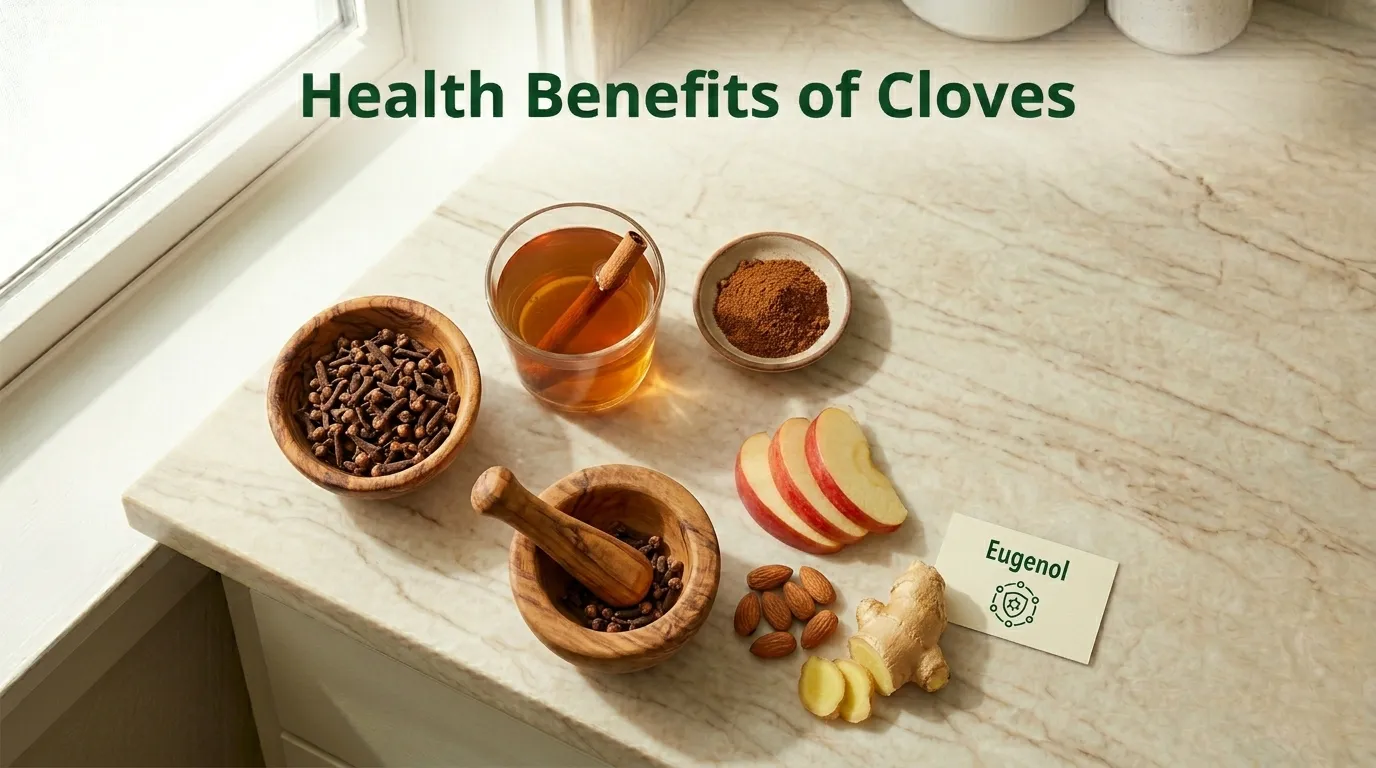
The health benefits of cloves come from a concentrated blend of bioactive compounds, with eugenol being the star player. Clove essential oil contains 45-90% eugenol, a phenolic compound responsible for most of its anti-inflammatory, antioxidant, and analgesic properties . A 2026 dental research study confirmed that eugenol makes up approximately 72.5% of clove extract’s active components .
Beyond eugenol, cloves contain several other beneficial compounds. These include flavonoids (plant antioxidants), tannins, rhamnetin, vanillin, and small amounts of vitamin C and fiber . Cloves also provide manganese, a mineral important for bone formation and brain function .
What makes cloves unique is their extraordinary polyphenol content. A study ranking the 100 foods richest in polyphenols placed cloves at the very top, with 15,188 mg of polyphenols per 100 grams of cloves . For context, this is dramatically higher than berries, dark chocolate, or green tea. These polyphenols act as powerful antioxidants that neutralize harmful free radicals and reduce oxidative stress throughout the body .
Key Takeaway: You would have to eat pounds of blueberries to match the antioxidant content of a single teaspoon of cloves. A little goes a very long way.
Antioxidant Properties of Cloves (Well-Established)
Cloves demonstrate exceptional antioxidant activity through multiple mechanisms. A 2025 in vitro study published in ACS Omega (NIH-indexed) tested eugenol, bis-eugenol, and clove essential oil at concentrations of 5, 10, and 25 μg/mL . The results showed that at 25 μg/mL, all three compounds effectively neutralized free radicals with DPPH radical scavenging activity of approximately 80%. The ferric reducing antioxidant power (FRAP) values ranged from 200 to 300 μM Fe2+ equivalents, indicating strong reducing capacity .
In cellular models, clove compounds demonstrated protective effects against oxidative stress. Under hydrogen peroxide-induced oxidative stress in RAW 264.7 macrophages, all extracts maintained cell viability above 70%. Bis-eugenol at 25 μg/mL showed the highest protective effect, preserving superoxide dismutase (SOD) and catalase activity .
A 2026 human clinical trial added real-world evidence to these lab findings. In a randomized double-blinded comparative study of 70 adults with metabolic syndrome, clove bud polyphenol extract (Clovinol) enhanced plasma glutathione (GSH) concentration by sixfold compared to baseline . The extract also provided statistically significant enhancement in Nrf2 (a master regulator of antioxidant defense) and improved the GSH/GSSG ratio, a key marker of cellular redox balance .
Quick Tip: The antioxidant effects of cloves are well-established across laboratory, animal, and human studies. This is the strongest evidence category for clove benefits.
Anti-Inflammatory Effects (Well-Established)
Cloves reduce inflammation through multiple biochemical pathways, making them valuable for conditions driven by chronic inflammation. The 2025 NIH study demonstrated that clove compounds downregulate toll-like receptor 4 (TLR-4) expression, a key trigger of inflammatory responses . All extracts tested decreased tumor necrosis factor alpha (TNF-α) levels, a primary inflammatory cytokine .
Bis-eugenol (a dimer form of eugenol) showed particularly impressive anti-inflammatory effects. It was the only compound tested that simultaneously suppressed TLR4/nuclear factor kappa B (NF-κB) pathways while upregulating NRF2 and the anti-inflammatory cytokine IL-10 . This dual action means bis-eugenol both reduces inflammatory triggers and activates the body’s natural protective pathways.
In the 2026 human metabolic syndrome study, Clovinol significantly reduced inflammatory markers including IL-1β and TNF-α . The treatment also lowered the neutrophil/lymphocyte ratio, a clinical marker of systemic inflammation. Importantly, the extract showed no significant side effects or toxic deviations in blood parameters .
Evidence rating: Well-established. Multiple peer-reviewed studies from 2025-2026 confirm anti-inflammatory effects across in vitro, animal, and human models.
Key Takeaway: Cloves don’t just mask inflammation symptoms; they actually interrupt the inflammatory signaling pathways at a cellular level.
Antimicrobial and Oral Health Benefits (Well-Established)
Cloves have a long history in dental care, and modern research strongly supports their antimicrobial applications. A 2026 study published in the Dental Research Journal investigated the antimicrobial synergy of clove extract against oral pathogens . The minimum inhibitory concentration (MIC) of clove against Streptococcus mutans (the primary bacteria responsible for tooth decay) was 9 mg/mL, demonstrating moderate but meaningful antibacterial activity .
When combined with propolis and Salvadora persica (miswak), clove extract showed synergistic effects with fractional inhibitory concentration indexes ranging from 0.3 to 1.5 against both S. mutans and Candida albicans . This means the combination was more effective than any single extract alone, offering potential for natural mouthwash formulations.
A 2026 NIH study on clove extract-loaded nano-hydroxyapatite provided even more compelling evidence. The composite material showed inhibition zones of 50 ± 0.8 mm against Streptococcus mutans, significantly outperforming conventional antibiotics . The composite also exhibited sustained eugenol release and maintained stability over 30 days, making it a promising biomaterial for dental caries prevention .
Traditional and modern applications for oral health:
- Temporary relief of tooth pain (eugenol acts as a mild anesthetic)
- Reduction of harmful oral bacteria, particularly S. mutans
- Support for gum health and reduced plaque formation
- Potential as a natural alternative to synthetic antimicrobials in dental products
Important safety note: Clove oil must be diluted before oral use. Never swallow pure clove oil in large amounts, as it can irritate tissues and cause toxicity .
Key Takeaway: Clove extract outperformed conventional antibiotics against cavity-causing bacteria in 2026 laboratory testing. This is a remarkable finding for natural medicine.
Blood Sugar and Metabolic Health (Emerging but Promising)
Emerging research suggests cloves may offer meaningful benefits for blood sugar regulation and metabolic syndrome. The 2026 randomized double-blinded comparative study of 70 adults with metabolic syndrome found that clove bud polyphenol extract (Clovinol) improved multiple markers of glucose metabolism . These included:
- Fasting blood sugar (FBS)
- Postprandial glucose (PPG)
- Hemoglobin A1c (HbA1c)
- Homeostatic Model Assessment for Insulin Resistance (HOMA-IR)
- Insulin levels
The extract modulated insulin resistance, suggesting cloves may help cells use insulin more effectively . Additionally, Clovinol caused a significant reduction in total cholesterol, triglycerides, and LDL (bad) cholesterol, while increasing HDL (good) cholesterol. Synthetic glutathione (s-GSH) used as a control showed no significant effect on blood glucose or lipid metabolism, highlighting the unique properties of clove polyphenols .
A 2026 systematic review in Letters in Functional Foods confirmed antidiabetic and hypolipidemic effects among clove’s pharmacological profile . However, the review noted that results vary across extract types, dosages, and experimental models, emphasizing the need for standardized human trials .
Evidence rating: Emerging but promising. One high-quality human trial shows positive results, but more research is needed before cloves can be recommended as a diabetes treatment.
Important warning: Cloves may lower blood sugar. People with diabetes should monitor their levels when adding significant amounts of cloves to their diet, as excessive amounts could cause hypoglycemia (dangerously low blood sugar) . Never replace prescribed diabetes medication with cloves without medical supervision.
Key Takeaway: The 2026 human trial on metabolic syndrome is groundbreaking, but this is just one study. Consider cloves a supportive measure, not a primary treatment for diabetes.
Liver Protection (Emerging)
Animal research suggests clove extract may protect the liver from damage. A 2026 study published in Medical Oncology (Springer) investigated the anti-fibrotic effect of clove ethanolic extract combined with Silymarin on carbon tetrachloride (CCl4)-induced liver fibrosis in rats . The combination successfully reduced CCl4-induced liver fibrosis, as evidenced by a large increase in serum CD4 and albumin levels and increased activity of hepatic antioxidant enzymes .
The treatment also reduced several hepatic inflammation markers and supported structural restoration of the liver’s histological images . The researchers concluded that the combination exerted a hepatoprotective effect attributed to the synergistic action of clove extract and Silymarin .
In vitro testing showed that the combination significantly reduced nitric oxide levels and increased superoxide dismutase activity in lipopolysaccharide (LPS)-inflamed HepG-2 cells more than either compound alone .
Evidence rating: Early/animal only. These results are from rat studies, not human trials. Human research is needed to confirm liver-protective effects.
Quick Tip: If you have existing liver disease, do not take clove supplements without discussing with your hepatologist. While animal studies are promising, safety in human liver disease is not established.
Digestive Health Support (Traditional Use with Some Evidence)
Cloves have been used traditionally to relieve digestive discomfort, and modern research provides partial support. Cloves may encourage the production of digestive enzymes, helping break down food more effectively, which could reduce bloating, gas, and indigestion .
Animal studies suggest that compounds in cloves may help protect the stomach lining and support mucus production, potentially reducing irritation . Clove tea is traditionally used to calm mild nausea and stomach upset.
However, the 2026 systematic review noted that while cloves show gastroprotective potential in animal models, high-quality human trials are limited . Most digestive health evidence remains at the level of traditional use and preliminary research.
Evidence rating: Traditional use with limited modern evidence. May help mild symptoms, but not a substitute for medical treatment of serious digestive conditions.
Seek medical care immediately if you experience severe abdominal pain, persistent vomiting, blood in stool, or unexplained weight loss .
Key Takeaway: A cup of clove tea may settle mild nausea, but do not rely on cloves to treat diagnosed digestive disorders like IBS or Crohn’s disease.
How to Use Cloves Safely
Cloves can be consumed in several forms, each with different potency levels and safety considerations.
Dietary/Culinary Use (Safest):
- Whole cloves in cooking (rice, curries, stews)
- Ground clove powder in food or tea
- 1-3 whole cloves or 1/4 teaspoon ground per day is generally safe for most adults
Clove Tea:
- Grind 1 tablespoon of whole cloves
- Steep the powder in boiling water for 3-4 minutes
- Strain before drinking
Clove Oil (Use with extreme caution):
- For topical use only (diluted with carrier oil)
- Never swallow pure clove oil
- Clove oil contains much higher concentrations of eugenol than whole cloves and can be toxic if ingested in large amounts
Clove Supplements (Extracts):
- Follow manufacturer dosing instructions
- The 2026 human study used 250 mg/day of clove bud polyphenol extract (Clovinol) for 84 days
- Consult a healthcare provider before starting any supplement regimen
Key Takeaway: Culinary use of cloves is very safe. Supplements and essential oils require much more caution due to higher concentrations of active compounds.
Who Should Be Cautious with Cloves
While cloves are safe for most people in culinary amounts, certain populations should exercise caution.
People on blood thinning medications (Warfarin, etc.): Eugenol may affect blood clotting. If you take blood thinners, avoid consuming clove oil or clove tea in medicinal amounts. Small culinary amounts are generally considered safe, but discuss with your doctor .
People with diabetes: Cloves may lower blood sugar. Monitor your glucose levels when adding significant amounts of cloves to your diet. Excessive amounts could cause hypoglycemia .
Pregnant or breastfeeding individuals: Consult a healthcare provider before using medicinal amounts of cloves or clove supplements. Culinary use is generally considered safe .
People scheduled for surgery: Stop taking clove supplements at least two weeks before surgery due to potential effects on blood clotting and blood sugar .
Children: Clove oil should never be ingested by children. Culinary use in small amounts is generally safe .
People with iron deficiency: Polyphenols in cloves can interfere with iron absorption. If you have iron deficiency anemia, avoid consuming large amounts of cloves close to iron-rich meals or iron supplements .
Key Takeaway: “Natural” does not mean “no side effects.” Cloves are potent medicine that can interact with medications and health conditions.
Clove Nutrition Facts and Dosage
Cloves are nutritionally dense despite being consumed in small quantities. Two teaspoons (approximately 4 grams) of ground cloves contain:
| Nutrient | Amount per 4g serving | % Daily Value |
|---|---|---|
| Calories | 11-15 | <1% |
| Carbohydrates | 2.5-3g | 1% |
| Fiber | 1.5g | 5-6% |
| Manganese | 2.5mg | 110-125% |
| Vitamin K | 6-8mcg | 5-8% |
| Vitamin C | <1mg | <1% |
Note: Cloves are not a significant source of protein, fat, vitamin D, calcium, or iron.
Recommended daily intake guidelines:
- Culinary use: 1-3 whole cloves or 1/4-1/2 teaspoon ground cloves (safe for everyone)
- Therapeutic tea: 1 cup daily made from 1 tablespoon whole cloves (short term only)
- Supplement/extract: Follow product labeling; typical research dose is 250mg daily
- Essential oil: External use only; never ingest undiluted
The National Institutes of Health does not provide a Tolerable Upper Intake Level (UL) for cloves as a food, but clove oil toxicity has been documented at high doses. Symptoms of clove oil overdose include dizziness, difficulty breathing, and loss of consciousness .
Quick Tip: Because cloves are so potent, more is definitely not better. Stick to culinary amounts for everyday use and reserve higher doses for short-term therapeutic purposes under guidance.
Frequently Asked Questions About Health Benefits of Cloves
H3: What are the main health benefits of cloves?
The main health benefits of cloves include powerful antioxidant protection, anti-inflammatory effects, antimicrobial activity against oral pathogens, potential blood sugar support, and possible liver protection . These effects come primarily from the active compound eugenol and the spice’s exceptionally high polyphenol content .
H3: How many cloves can I take daily for health benefits?
For general health, 1-3 whole cloves or 1/4 teaspoon of ground cloves daily is safe for most adults. For therapeutic purposes, a 2026 human study used 250 mg of clove bud polyphenol extract daily for 84 days . Always consult a healthcare provider before starting any supplement regimen.
H3: Can cloves help with tooth pain?
Yes, cloves have been used for centuries as a natural remedy for tooth pain. Eugenol acts as a mild anesthetic . However, clove oil must be diluted before use and should never be swallowed in large amounts. Severe tooth pain requires dental evaluation .
H3: Are cloves good for diabetes?
Emerging research from a 2026 human trial suggests cloves may improve insulin sensitivity and blood sugar markers in people with metabolic syndrome . However, cloves should not replace prescribed diabetes medication. People with diabetes should monitor blood sugar when adding cloves to their diet, as excessive amounts could cause hypoglycemia .
H3: Can cloves interact with medications?
Yes. Cloves (particularly eugenol) may interact with blood thinning medications like Warfarin, affecting clotting . Cloves may also lower blood sugar, potentially interacting with diabetes medications. If you take prescription medications, discuss clove supplementation with your doctor before starting .
H3: Is clove oil safe to ingest?
No. Pure clove essential oil should never be ingested in large amounts. It contains very high concentrations of eugenol and can be toxic, causing symptoms ranging from dizziness to coma . Clove oil is for external/topical use only when properly diluted. Culinary cloves (whole or ground) are safe for consumption.
The health benefits of cloves are supported by a growing body of modern scientific research, from the 2025 NIH study confirming their antioxidant activity to the 2026 human trial demonstrating metabolic benefits . However, it is important to distinguish between well-established effects (antioxidant, anti-inflammatory, antimicrobial) and emerging effects (blood sugar regulation, liver protection) that require more human research.
The single most practical takeaway is this: incorporate cloves into your diet in culinary amounts for their antioxidant and anti-inflammatory benefits, but do not rely on them as a primary treatment for any medical condition. A quarter teaspoon of ground cloves in your tea, curry, or oatmeal a few times per week is a safe and flavorful way to access their benefits.
If you have diabetes, take blood thinners, or are pregnant, speak with your doctor before using clove supplements or medicinal amounts. For everyone else, enjoy this tiny spice with confidence, knowing that modern science is validating what traditional healers have known for centuries.